UCP Knowledge NetworkApplied knowledge for action
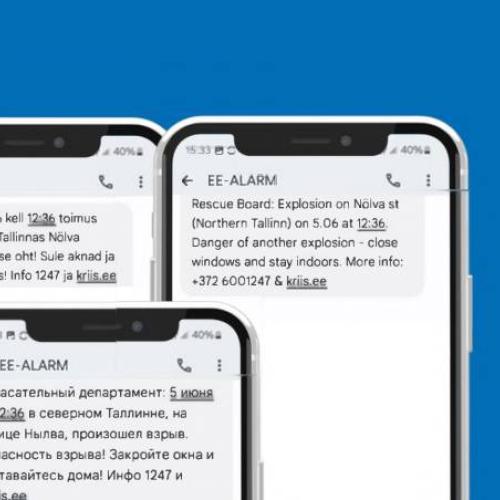
Three phones showing different alert messages in different languages.

Celebrating European 112 Day: Lessons from Estonia’s PwinPLan project

By Knowledge Network – Staff memberPublished on

European 112 Day, held annually on 11/2, celebrates the EU-wide emergency number 112. Since 1991, the number has enabled anyone in need to reach emergency services free of charge, wherever they are in the EU. While 112 enables citizens to request assistance, effective preparedness also requires that authorities communicate emergency warnings clearly, timely, and in a language citizens understand.
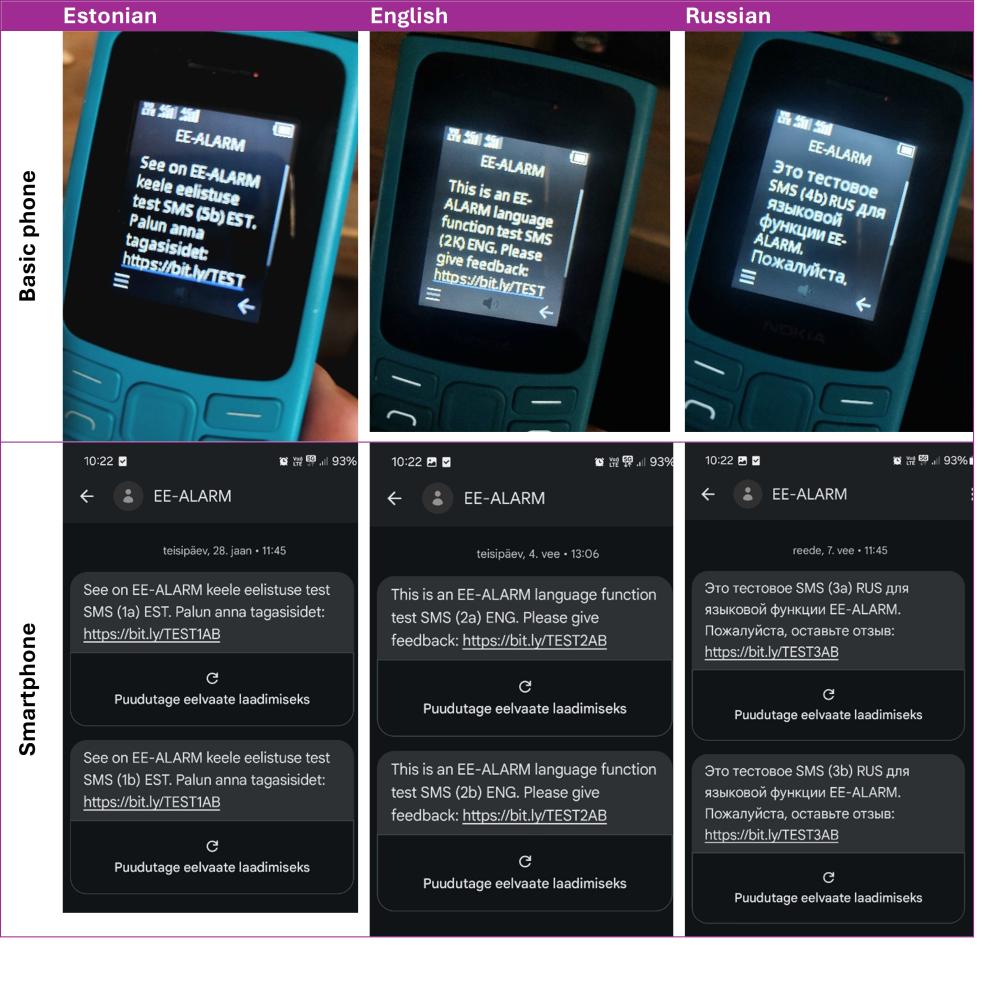
In multilingual societies like Estonia, where a significant part of the population speaks a language other than Estonian, this posed a real challenge. The PwinPLan projectopens in new tab, funded under the UCPM’s Track 1 and finalised in May 2025, addressed this by enabling location-based SMS alerts to be sent in each recipient’s preferred language. Previously, alerts were often sent in multiple languages simultaneously, causing delays, higher costs, and information overload. By integrating language-preference data from mobile operators, PwinPLan made warnings faster, clearer, and more effective. 

To better understand the project’s impact and challenges, we spoke with Hedi Arukase, Head of the Civil Protection Department at Estonia’s Ministry of the Interior, who shared her insights on the project’s development and implementation.  

Another challenge was integrating language-preference data from mobile operators into the national alerting system while respecting data protection requirements. Close cooperation was required between the Ministry of the Interior, the State Infocommunication Foundation (RIKS), mobile operators, and broadcast partners.  

Communication around the introduction of this change was a challenge in itself. Although for the majority of users the language preference was already correctly set, it was still necessary to actively encourage people to check and confirm their settings and to provide clear guidance on how to do so. This required strong cooperation with mobile network operators, who developed user-friendly instructions, as well as proactive engagement with media outlets to ensure that the information reached as many people as possible. 

During system testing, nearly 5 million messages were sent to around 1.5 million users, and 98% of recipients received the alert in their preferred language. Without this solution, the same test would have required almost 25 million messages.

Together, these results confirm both the human impact and the technical effectiveness of the solution, demonstrating faster delivery, improved readability, reduced burden on emergency call centres, and significant savings of public resources. 

What lessons could be useful for other Member States seeking to develop accessible and multilingual early warning systems for all citizens? 

The most important lesson is to adopt a people-centred approach. Early warning systems must be designed around how people actually receive, understand, and act on information under stress. Language choice is not a convenience feature – it directly affects comprehension, reaction speed, trust, and ultimately safety.

Second, multilingual accessibility should be treated as a core performance factor from the outset. Technical limitations of SMS, particularly character encoding and message length, need to be considered early in system design. Delivering alerts based on users’ language preferences can dramatically improve speed, clarity, and system efficiency. 

Third, strong partnerships with mobile network operators are essential, as they manage language-preference data and play a central role in technical implementation. 

Finally, large-scale testing and transparency with citizens are critical. Estonia’s experience shows that testing at scale helps identify real-world bottlenecks and builds confidence in system reliability, while encouraging people to verify their language preferences in advance strengthens trust and overall resilience before real emergencies occur. 

1 Like

Sectors

Risk awareness & communication