Building the path to results
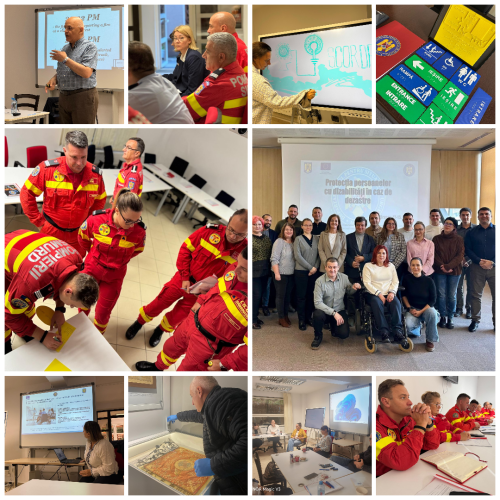
In a digital era in which everything happens fast, results are prioritized and the contribution of the people behind them tends to fade, the workshops organized under the three work packages, covering the core components of the Department for Emergency Situations (DSU) – decision support, medical emergencies and civil protection – created a framework in which the pace allowed for reflection, genuine dialogue and joint construction. Attention shifted to human relationships and to the people who set in motion the mechanism of the integrated emergency management system. Participants reported that they felt listened to and professionally valued, which stimulated active engagement and high-quality contributions.
Their experience, expertise and the lessons learned from the situations they face daily provided essential input for improving the strategic coordination processes at the level of DSU, of the structures within its composition and coordination, as well as in relation with the other actors involved in disaster risk management. Face-to-face interaction and discussions which, in many cases, continued even after the scheduled sessions ended, facilitated a shared understanding and a common approach to specific processes, procedures and legislation. At the same time, these meetings strengthened inter-institutional cooperation, contributing to the reduction of vulnerabilities and to increasing the efficiency of the national disaster risk management system.
Among the topics addressed during the workshops were:
- Basic notions on the implementation of projects financed from European funds, in support of the disaster risk management system, which laid the foundation for understanding the mechanisms needed for the efficient implementation of projects;
- Management of mass-casualty events, with the participation of national paramedic trainers, coordinating nurses and specialists from structures responsible for emergency situations, focusing on good practices and the standardization of procedures for managing incidents involving multiple victims;
- Protection of cultural heritage in case of disaster – intervention, cooperation, resilience, a workshop that brought together specialists from DSU, the National Institute of Heritage, IGSU, county inspectorates for emergency situations and County Directorates for Culture, aiming to strengthen intervention capacity and the protection of cultural heritage in emergencies and civil protection, through exchange of experience, applied training and the development of inter-institutional cooperation. Facilitating this workshop represents an essential step in building a culture of prevention and protection of cultural assets in Romania, contributing to strengthening institutional capacity and increasing community resilience to current challenges;
- Adjustment, harmonisation and operationalisation of communication in the context of disaster risk management, aiming to create an integrated and functional communication framework, adapted to current realities and based on unified coordination between DSU and the structures under its coordination;
- Strengthening institutional capacity for risk prevention and reduction and for correcting dysfunctions in operational activities carried out by the structures with responsibilities in emergency situations under DSU coordination, through consolidating control mechanisms and strengthening the decision-making process within DSU and the coordinated structures;
- Operational partnership in emergency medical assistance, aiming to ensure a unified medical response system in disasters and its integration into the national disaster risk management framework;
- Protection of persons with disabilities in disasters, which brought together representatives of DSU, IGSU, ISU Bucharest-Ilfov and Brașov, the World Bank, ANPDPD, DGASMB, DGASPC Brașov, UPU-SMURD Târgu Mureș, NGOs and representative organisations of persons with disabilities, with the aim of identifying and prioritising the actions needed to adapt the legislative, institutional and operational framework to the needs of persons with disabilities, as well as integrating specialised partners throughout the entire disaster risk management cycle.
Following these events, the main current and emerging challenges were outlined, along with concrete solutions for improving intra- and inter-institutional cooperation and strengthening strategic coordination mechanisms.
This year, within the workshops planned to start in February, the focus will be on consolidating and validating the tools and results obtained in the first sessions, through testing and practical application, to ensure that they are effective, functional and easy to use in the operational and decision-making activity of the actors involved in disaster risk management.
SCOR-DRM contributes to a more cohesive and prepared national disaster risk management system by reinforcing DSU’s institutional role, improving inter-agency processes, and advancing Romania’s alignment with European standards in the field of civil protection.
This project is funded by the European Union. However, the views and opinions expressed are those of the author(s) only and do not necessarily reflect those of the European Union or the granting authority. Neither the European Union nor the granting authority can be held responsible for them.