UCP Knowledge NetworkApplied knowledge for action
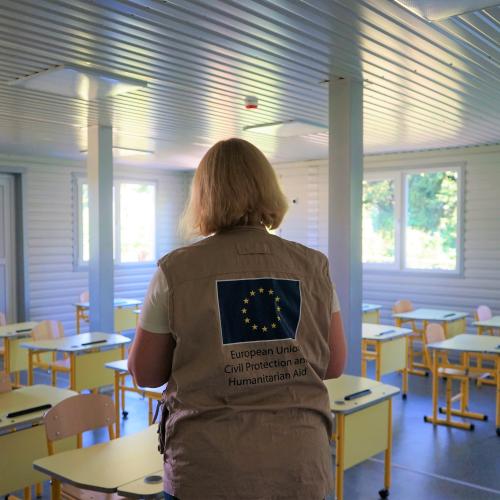
Woman wearing a EU vest stands in front of an empty classroom.

New survey shows importance of strengthening school preparedness in the EU

By Knowledge Network – Staff memberPublished on

Amid growing complex crises, the Commission adopted the Preparedness Union Strategy in March 2025. The Strategy calls for a whole-of-society approach to foster a culture of preparedness and resilience, including through education. Schools and teachers are recognised as key actors in strengthening resilience from an early age and supporting communities before, during and after emergencies.

Under the Preparedness Union Strategy, the European Commission is advancing work to strengthen preparedness from an early age. In this context, the Commission is developing a mapping of best practices in early childhood and primary education curricula across Member States and Participating States, alongside a voluntary roadmap and a set of practical guidelines that will be available later this year. Together, these initiatives aim to support schools in systematically integrating preparedness into learning environments, helping children acquire age-appropriate knowledge, skills, and awareness to better anticipate, prevent, and respond to crises. 

As part of this strategy, Directorate-General European Civil Protection and Humanitarian Aid Operations (DG ECHO) and the Directorate-General for Education, Youth, Sport and Culture (DG EAC) are leading work on the development of guidelines for the integration of preparedness in school curricula. 

The survey gathered almost 300 responses from over 36 countries, mainly from teachers in secondary, primary and pre-primary education. Italy and Türkiye accounted for the largest shares of responses, followed by Greece and Romania. 

While the survey confirms broad agreement that schools have a key role to play in emergency preparedness, it also exposes a clear gap between this shared commitment and current implementation. Preparedness is widely recognised as important, yet it is not consistently embedded in everyday school systems or national curricula. 

The findings suggest that the main obstacles are structural rather than attitudinal. Lack of funding, limited time and insufficient training opportunities are identified as the key barriers. Accordingly, respondents indicate to prioritise professional training, dedicated financial resources, clearer guidelines and stronger leadership as the most effective levers for improvement. 

For a closer look at the survey findings, explore the full survey results on DG EAC’s websiteopens in new tab. Later this year, a repository of best practices for teachers’ training will be published on the Union Civil Protection Knowledge Network, offering practical insights and inspiration for schools across Europe. 

1 Like