UCP Knowledge NetworkApplied knowledge for action
MAarten

Preparedness Union Strategy (PUS): a look behind the scenes 

By Knowledge Network – Staff memberPublished on

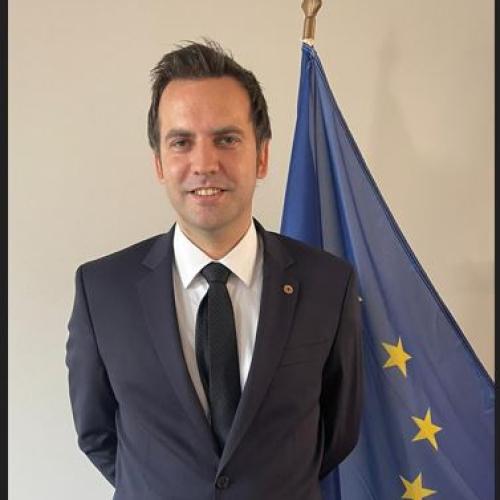
Behind the publication of every EU strategy sits a group of people who have worked tirelessly on the drafting and coordination.  Maarten Vergauwen was the lead for the Directorate-General for Civil Protection and Humanitarian Aid (DG ECHO). Here, he takes us behind the scenes, giving insight into how the strategy came together. 

How did you get involved in writing the PUS?  

The initial seeds were planted with the publication of the Niinistö Report in autumn last year.  It was a busy period – European elections had just taken place, and the new Commission was being formed. In the President of the European Commission’s mission letter to Commissioner-designate Hadja Lahbib: ‘the development and implementation of an EU Preparedness Union Strategy’ was flagged as a top priority.   

The strategy development became a trio drafting process between DG ECHO, the Commission’s Secretariat-General and the European External Action Service, which made things challenging, in addition to the coordination of over 25 other Commission services. The time pressure ultimately helped us stay goal-focused.  

The first part of the process is now finalised with the adoption of the strategy, but the journey is only just beginning.

What has it meant to you to be involved in such far-reaching and impactful work?   

It has been quite a journey! Content wise, it was a challenge to keep things on track. There was the continuous interaction between technical level work and political considerations that went up to the highest level of the President’s Cabinet, and the drafting team became the crossroads of this process. I think we managed quite well actually. Some humour and late-night pizza delivery dragged us through the most challenging moments of this process.  

That sounds like a lot of long meetings!  

I counted over 60 meetings with the drafting team – with one of 13 hours in a row as the champion (we left the Berlaymont after 1 a.m.!)   

The gap between the first drafts – which you think are great – and the end result is substantial, but in the end, the text is balanced and has all of the important elements covered.   

The vision is out now. Let’s implement it together.

Which element of the strategy was the most important to you personally?    

All chapters are important, but one of the emblematic actions is the one on population preparedness (and the 72 hours of self-sufficiency). The chapter on population preparedness as a whole gives a concrete opportunity to reach out to citizens and involve them more concretely in preparedness work.  

Another one is the chapter on our vital societal functions, which represents for me the soul of this strategy as it brings many key elements together. The first part of the process is now finalised with the adoption of the strategy, but the journey is only just beginning. First reactions – even from usually critical voices – have been very positive. There are of course questions and demands for clarification, but this is normal and also allows us to enter into dialogue.  

The vision is out now. Let’s implement it together. Good luck to us!