Turning AI innovation into disaster preparedness
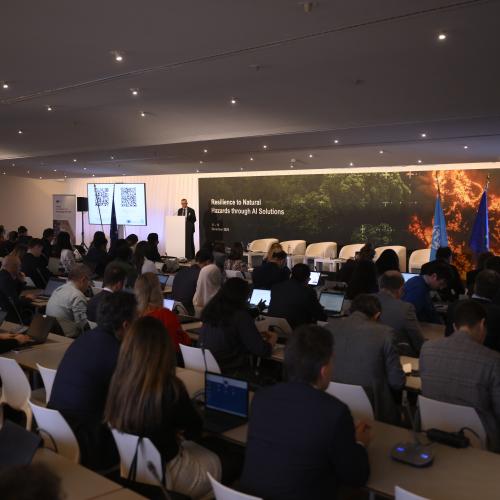
On 11 December, Day 1 of the Global Initiative on Resilience to Natural Hazards through AI Solutions took place in Brussels, with around 150 participants attending in person and 100 joining online.
On 11 December, Day 1 of the Global Initiative on Resilience to Natural Hazards through AI Solutions took place in Brussels, with around 150 participants attending in person and 100 joining online.

Organised by the International Telecommunication Union (ITU) and hosted by the European Commission’s Directorate-General for European Civil Protection and Humanitarian Aid Operations (DG ECHO), the workshop brought together civil protection authorities, EU institutions, UN agencies, researchers and private companies to discuss how artificial intelligence can support disaster preparedness and early warning systems.
EU civil protection stands at a pivotal moment; we have a real opportunity to take steps to integrate AI into our work.
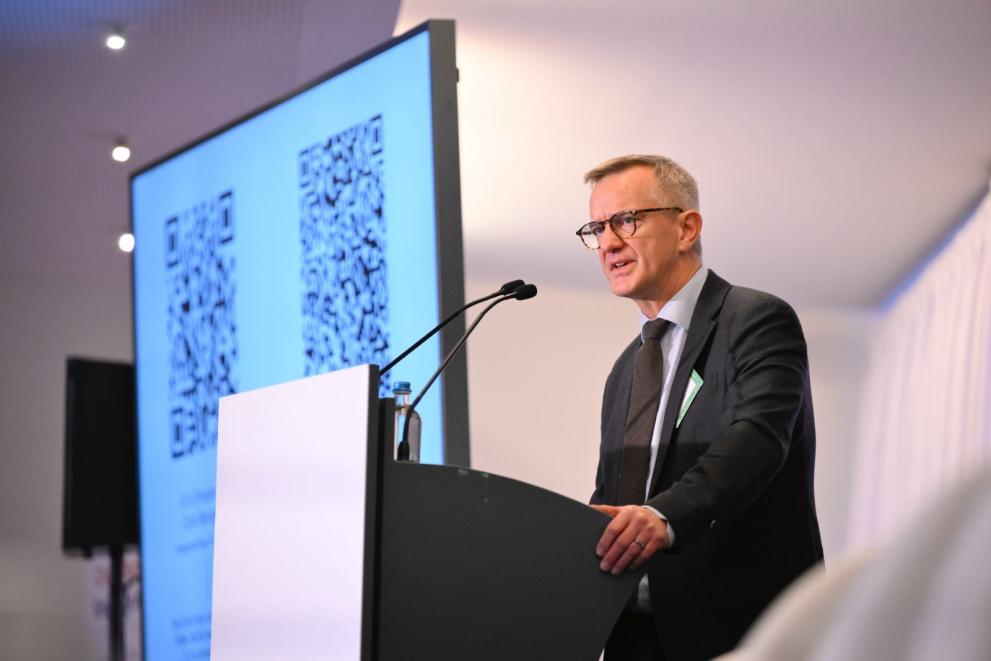
Opening the event, Hans Das, Deputy Director-General of DG ECHO, spoke about the growing pressure on disaster risk management systems caused by climate change, geopolitical uncertainty and reduced resources. He explained that emergency managers are often required to make critical decisions with incomplete and fast-changing information, and that AI can help process this information more effectively when used responsibly.
The discussion then widened to a global perspective. Doreen Bogdan-Martin, ITU Secretary-General, described how AI and digital technologies can help people receive warnings earlier and act more safely as hazards become more frequent and severe.
Celeste Saulo, Secretary-General of the World Meteorological Organization (WMO), reminded participants that early warning systems depend on much more than technology alone. She also stressed the importance of ensuring that early warning systems reach everyone, including communities in remote or low-income areas, where data gaps and connectivity challenges remain significant.
Early warning is not just about a forecast. It is about institutions, communication and community trust working together.
Reflecting on the work of the Global Initiative, Monique Kuglitsch, chair of Global initiative, spoke about the progress made over the past five years and the challenges that remain. She stressed that AI systems involve many choices and trade-offs, and that shared standards are essential to ensure AI solutions are trustworthy and useful in practice.
Standards, trust and operational reality
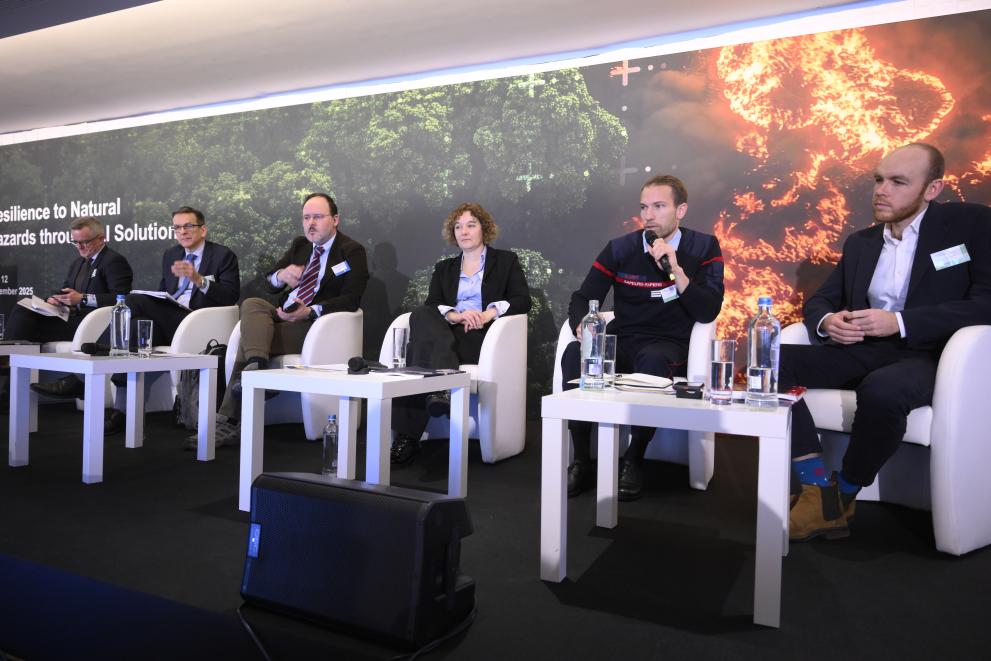
A high-level panel with experts from DG for Communications Networks, Content and Technology (DG CNECT), European Centre for Medium-Range Weather Forecasts (ECMWF), Ecole nationale supérieure des officiers de sapeurs-pompiers (ENSOSP), WMO and OroraTech continued the discussion, focusing on where AI can make the biggest difference. Early warning systems, real-time situational awareness and predicting hazards such as floods and wildfires were seen as key areas. At the same time, speakers agreed that better data, long-term investment and stronger skills among practitioners are needed to turn innovation into everyday practice. Participants also noted the risk of bias and inequality when AI systems rely on incomplete or uneven data, underlining the need for inclusive approaches.
From the European Commission, Director for Enabling and Emerging Technologies Kilian Gross (DG CNECT) presented the EU’s approach to AI, combining clear rules through the AI Act with strong investment in innovation. He presented Destination Earth as a concrete example of how different Commission services are working together to use AI and digital twins to simulate extreme weather and climate impacts at both global and local level.
This was followed by Head of Development at ECMWF, Tiago Quintino, who explained how AI-based weather forecasting and digital twins are already used in operations to give emergency services valuable extra time to prepare for extreme events.
Véronique Bouchet, Director for Science and Innovation at WMO explained that AI is already improving forecasting and hazard monitoring by making predictions faster and more affordable. At the same time, she stressed that AI must reinforce — not bypass — national meteorological and hydrological services, which remain the trusted and authoritative sources of forecasts and warnings.
From the operational side, Captain Quentin Brot (ENSOSP, France) stressed that AI should support professionals rather than replace them stating that AI is a tool, not a replacement for human judgement.
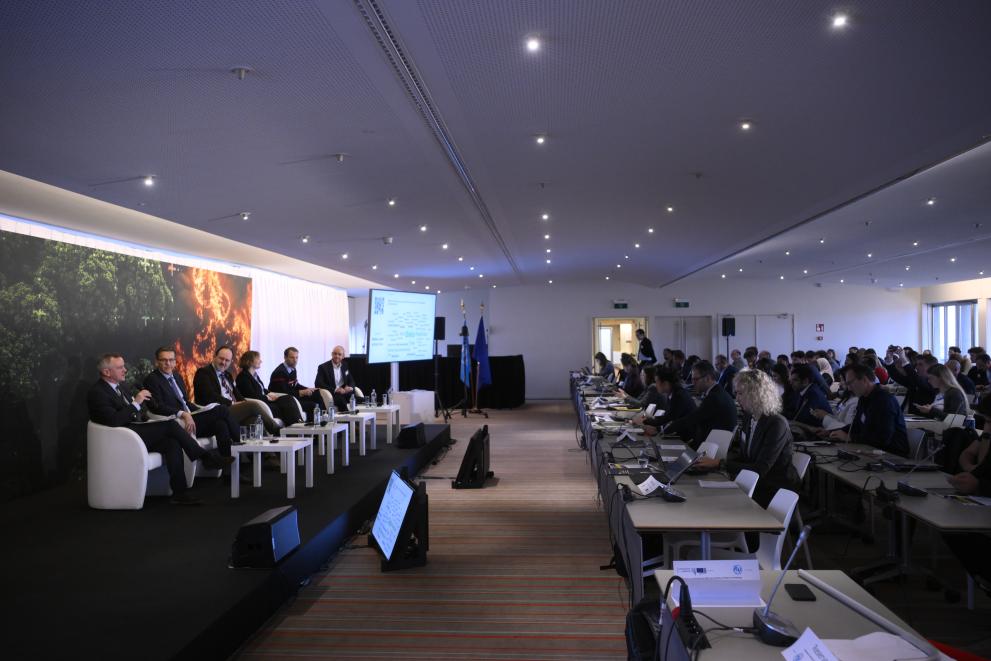
Offering a private sector perspective, Lukas Liesenhoff, Team Lead Data Science at OroraTech showed how new satellite systems and AI can improve wildfire detection, especially during periods when existing observation systems have gaps, illustrating how private capabilities can complement public monitoring systems.
Public–private collaboration was discussed as a key enabler for scaling AI in disaster risk management. Speakers discussed how public authorities remain responsible for warnings and decisions, while private companies can complement public systems with new data sources, technologies and faster innovation. Effective collaboration depends on clear roles, data sharing, interoperability and trust, so that private solutions can be integrated into public operational workflows.
From discussion to practice
In the afternoon, the focus moved from discussion to practice. Participants took part in hands-on activities designed to make AI more concrete. A session on the AI pipeline guided participants through the main steps of building an AI system, from defining a problem and preparing data to deploying a tool in real conditions. Additional exercises helped participants understand how AI classifies satellite images to identify hazards and assess their severity. A LEGO® serious play building exercise helped illustrate how all parts of an AI system need to work together and why coordination between different actors is essential.
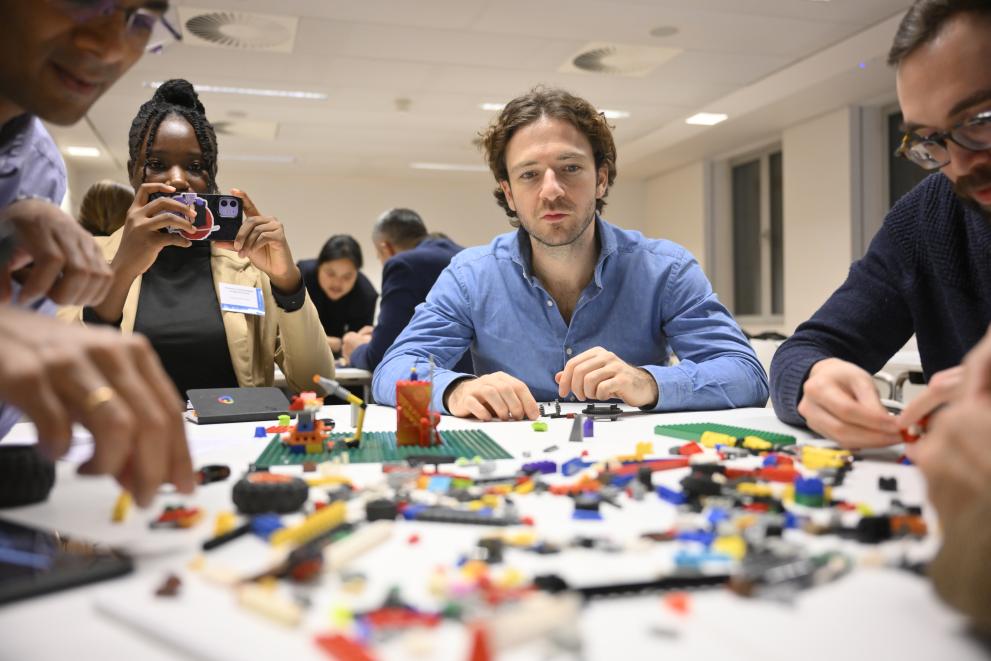
Without end-user adoption, even the best AI remains a prototype.
The day closed with a reminder from Soichiro Yasukawa (UNESCO) that innovation only has an impact when it reaches real operations.
Throughout the event, participants were able to take part in a range of hands-on innovative demonstrations on AI-related projects, such as from the Heinz Nixdorf Institut, which is using AI to enable responders to visually experience (through VR headsets) the predicted impact of flood and wildfire when a disaster first happens. The modular firefighting robot, Colossus, from Shark Robotics was also showcased during the day. This robot, which responded to the Notre Dame fire in 2019, was developed in collaboration with the Paris Fire Brigade (BSPP) to respond to fires in extreme environments already operational in 25 countries worldwide.
Day 1 set a clear tone for the rest of the event: AI offers strong opportunities for disaster preparedness, but its success depends on trust, skills, standards and close cooperation between researchers, developers and those who will use these tools in the field.
Two key documents were launched during the event:
|
The Knowledge Network editorial team is here to share the news and stories of the Knowledge Network community. We'd love to hear your news, events and personal stories about your life in civil protection and disaster risk management. If you've got a story to share, please contact us.