You are about to be redirected to EU Login, our authentication service.
The UCPKN platform offers different kinds of information views based on the identification of the user, and its associated roles. If it is the first time you are logging in to the platform, your profile will be validated at the end of the process, and you will receive a label and/or associated roles on the platform based on the information provided by you.
If you are a civil protection expert active in the context of the Union Civil Protection Mechanism operations (e.g., training, exercises, deployments), make sure you are using the same email address you used for training/deployment registration for a proper creation of your profile.
UNESCO's Soichiro Yasukawa on AI for Inclusive Disaster Risk Reduction
Published on
Soichiro Yasukawa is Chief Disaster Risk Reduction (DRR) at UNESCO, where he is responsible for developing and coordinating strategies to reduce disaster risks across UNESCO’s fields of competence. Using a multi-hazard, multi-disciplinary and participatory approach, UNESCO engages diverse stakeholders to ensure DRR strategies are inclusive, evidence-based, and context-specific.
By Knowledge Network – Staff member
From your perspective, what is the most urgent priority today to strengthen global preparedness for natural hazards?
I think one of the main challenges in disaster risk reduction is the gap between science, policy, and implementation. We have a lot of scientific knowledge and technical solutions that allow us to understand hazards and propose engineering or preventative measures. However, these solutions often do not translate effectively into policies or programmes.
To make science truly useful in saving lives, we need a clear chain that connects scientific understanding, policy development, and practical implementation. This requires engagement not only from governments but also from individuals and the private sector, so that everyone understands the science and can act accordingly.
Capacity-building is central to UNESCO’s mission. Where do you see the greatest capacity gaps when it comes to using AI for disaster preparedness?
There are gaps on both the user side and among technical experts. Many AI tools exist for disaster risk reduction, but practitioners often do not know which tools are most appropriate, or find them too expensive or complex.
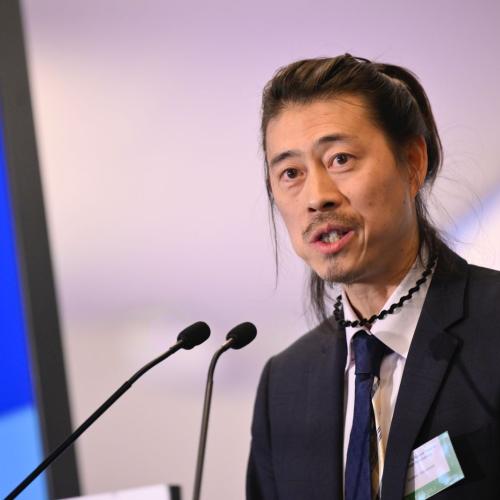
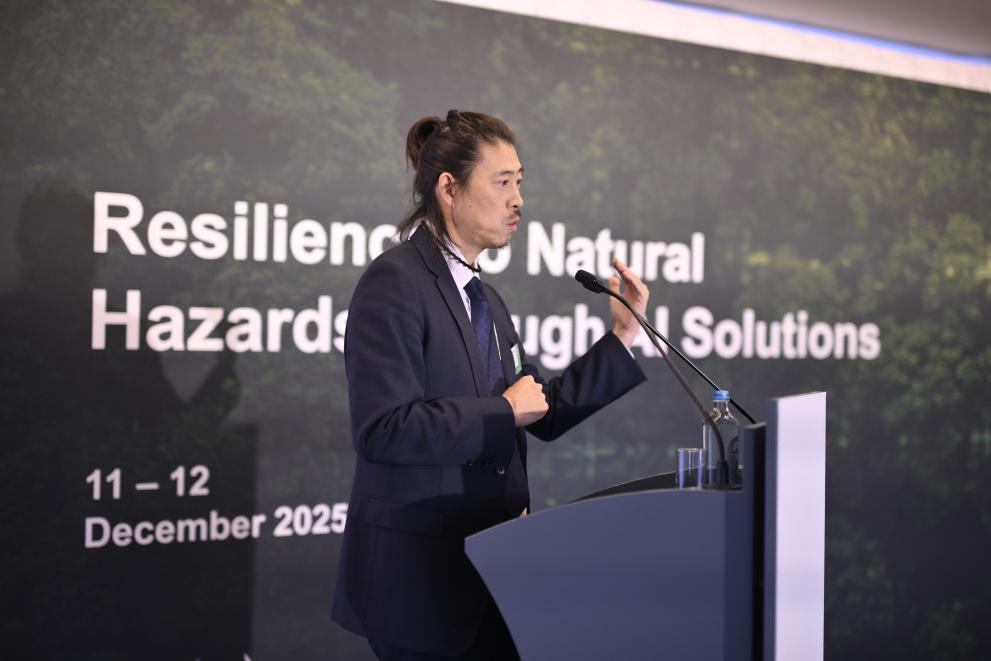
Soichiro Yasukawa, Chief Disaster Risk Reduction at UNESCO.
At the same time, data scientists or engineers who are not specialised in Disaster Risk Reduction may not know how to apply AI effectively in this field. To address this, UNESCO showcases practical use cases so that both practitioners and AI developers can learn how to apply these technologies for DRR or climate change.
In this regard, UNESCO is developing the Innovation Hub, which will bring together practitioners and service providers. Universities and private companies will be able to upload their solutions, while public authorities will be able to search for tools by hazard type, response phase, country, cost, and more. The Hub will eventually contain thousands of solutions, including AI-based tools as well as traditional engineering solutions, enabling authorities to efficiently match available solutions to local needs.
Which project or initiative examples, particularly from UNESCO programmes, show the most promising use of AI for disaster risk reduction?
One example is an AI chatbot developed for first responders in Japan. It integrates satellite data to identify hotspots for rescue operations and provides real-time information to responders. It also answers questions from the public, such as where to evacuate, which shelters are available, whether pets are accepted, which fuel stations are open, or where to seek financial support after a disaster. This system, already operational in Japan, is now being tested in Kenya, Rwanda, South Sudan, Tanzania, and Uganda through the STEDPEA project.
Another example is the Digital Twin project, which creates virtual models of infrastructure to monitor structural integrity over time, such as buildings at risk from aging, earthquakes, or floods. These tools allow authorities to simulate hazards and make informed decisions. However, digital twins can be highly energy-intensive and may not always be practical for all regions.
Looking ahead, where do you see the main added value of AI for Disaster Risk Reduction over the next five years?
AI can save significant resources by automating data collection, cleaning, and analysis, which previously required intensive human effort. It can generate new solutions and insights, particularly for regions that lack traditional infrastructure. AI enables countries to move beyond conventional development pathways and adopt innovative approaches for Disaster Risk Reduction.
While challenges remain, particularly for vulnerable populations, AI has the potential to complement human decision-making and enhance resilience globally. However, AI does not remove human ethical responsibility: it can optimise processes but may generalise in ways that overlook marginalised communities. Therefore, it is essential to design AI systems that are inclusive, people-centred, context-specific, and guided by ethical considerations to ensure no communities are left behind.
2 Likes
About the author
The Knowledge Network – Staff member
The Knowledge Network editorial team is here to share the news and stories of the Knowledge Network community. We'd love to hear your news, events and personal stories about your life in civil protection and disaster risk management. If you've got a story to share, please contact us.