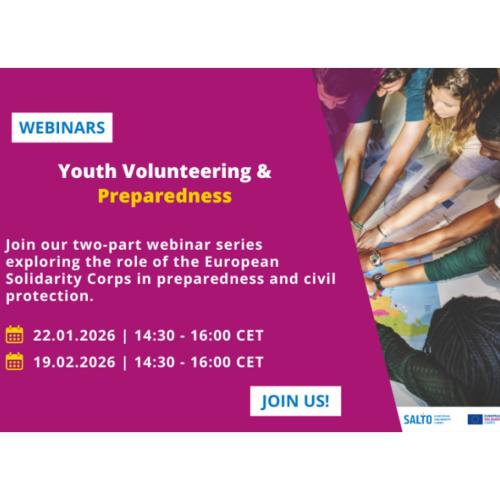
Youth Volunteering & Preparedness: what we learned - and what’s next
A recent webinar explored how youth volunteering can turn preparedness from policy into action, sharing key insights, with next session coming soon.
A recent webinar explored how youth volunteering can turn preparedness from policy into action, sharing key insights, with next session coming soon.
A recent webinar “Youth Volunteering & Preparedness - Building Bridges between the European Solidarity Corps and Civil Protection” jointly organised by the SALTO European Solidarity Corps Resource Centre, the Directorate-General for Education, Youth, Sport and Culture (DG EAC), and the Directorate-General for European Civil Protection and Humanitarian Aid Operations (DG ECHO) explored how preparedness and resilience are becoming central priorities for Europe, and how youth volunteering plays a vital role in turning these priorities into action.
Over recent years, climate extremes, health emergencies, cyber threats, and geopolitical tensions have become increasingly evident. These crises often overlap, interact with one another, and go beyond national borders. Within this broader context, speakers agreed on a key message: preparedness is a shared societal responsibility.
Presenting policy and programme perspectives, representatives from DG ECHO and DG EAC highlighted that the EU Preparedness Union Strategy, adopted in 2025, promotes a whole-hazard, whole-of-government, and whole-of-society approach, recognising that governments alone cannot manage today’s complex risks. Youth programmes, particularly the European Solidarity Corps (ESC), are identified as key instruments for building a culture of preparedness. Through Action 30 of the strategy, preparedness is now a formal priority within EU youth funding, encouraging projects that go beyond general resilience and focus on concrete actions taken before events occur.
Importantly, preparedness in the context of youth volunteering is not about turning young people into emergency responders, but about equipping them with skills, confidence, critical thinking, and civic engagement so they can strengthen their communities.
Three projects, funded by the European Solidarity Corps and DG ECHO, showcased how preparedness is already being implemented on the ground.
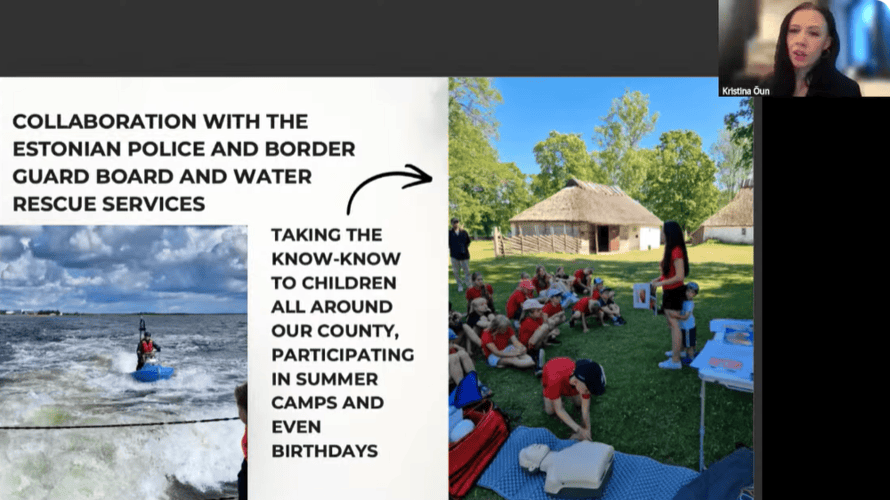
Kristina Õun, from the Estonia Red Cross Saaremaa branch, presented the youth-led “First Aid and Preparedness Training” project on remote islands with long emergency response times. The project demonstrated how early first aid education, realistic simulations, and face-to-face engagement with young people can save lives, address mental health challenges, provide information on correct behaviours, and build confidence.
The work highlighted that community resilience starts locally and that preparedness must begin well before emergencies occur.
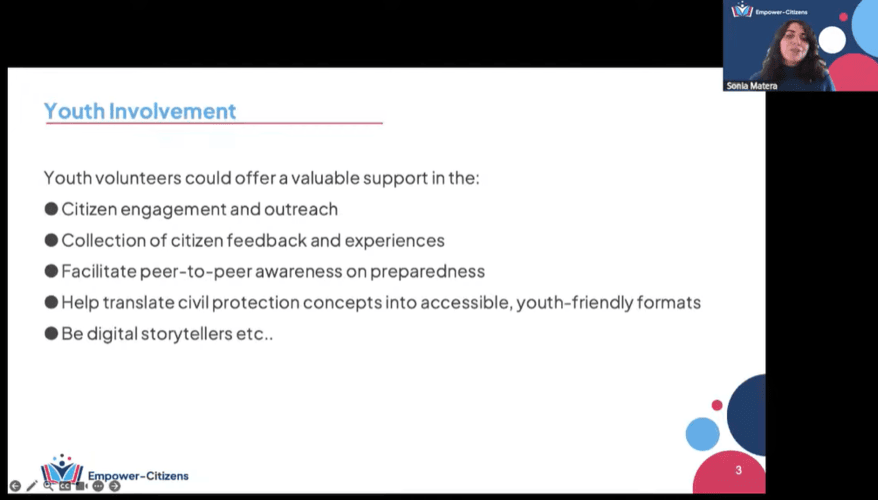
The Empower-Citizens project, funded by DG ECHO under the Knowledge for Action in Prevention & Preparedness (KAPP) call, focused on systematically involving citizens in disaster preparedness planning, with testing phases in Italy and Norway. The project coordinator, Sonia Matera from Deep Blue, explained that the project collects feedback from people who experienced real disasters or participated in simulations and integrates this knowledge into updated civil protection plans. Youth could also potentially be involved in these activities, as key bridges between institutions and communities, capable of translating technical language into accessible formats and strengthening trust through participation.
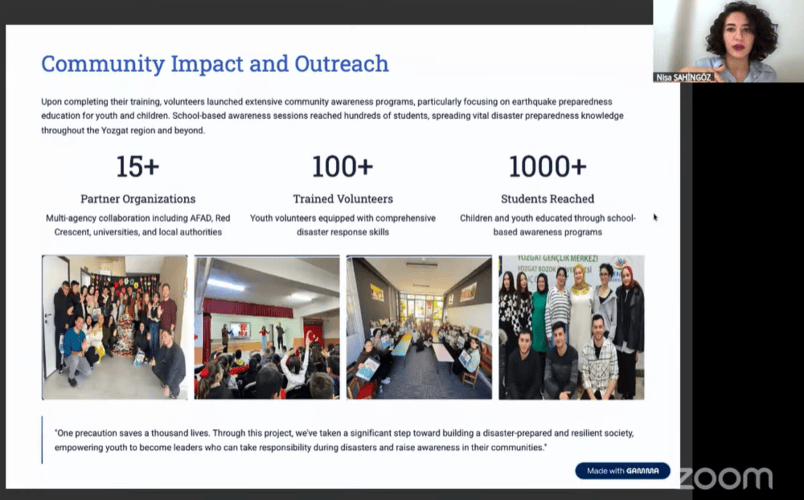
From Türkiye, Nisa Şahingöz presented the project “One Precaution Saves a Thousand Lives”, implemented by Sorgun Gençlik Derneği (SORGED), which responded to the devastating 2023 earthquakes. Young volunteers received hands-on training in disaster preparedness, prevention, teamwork, and emergency response, later disseminating this knowledge in schools and local communities.
The project showed that experiential learning, simulations, and prevention-focused education empower young people to become active contributors to community safety.
A recurring theme throughout the webinar was “trust”: speakers stressed that early warnings and preparedness measures only work if communities trust institutions. Rebuilding trust requires honesty, transparency, listening to citizens’ experiences, and highlighting not only losses but also avoided losses, the lives saved, and harm prevented through preparedness.
Youth organisations were seen as crucial actors in this process, helping communicate clearly, counter misinformation, engage peers, and foster solidarity across generations.
The webinar concluded by emphasising the cross-sectoral potential of collaboration between youth organisations, civil protection authorities, and policymakers.
If you missed the live session or want to watch it again, the webinar recording is available on the SALTO European Solidarity Corps YouTube channel.
“Great webinar. A lot of information to receive process and digest. Thank you :)”
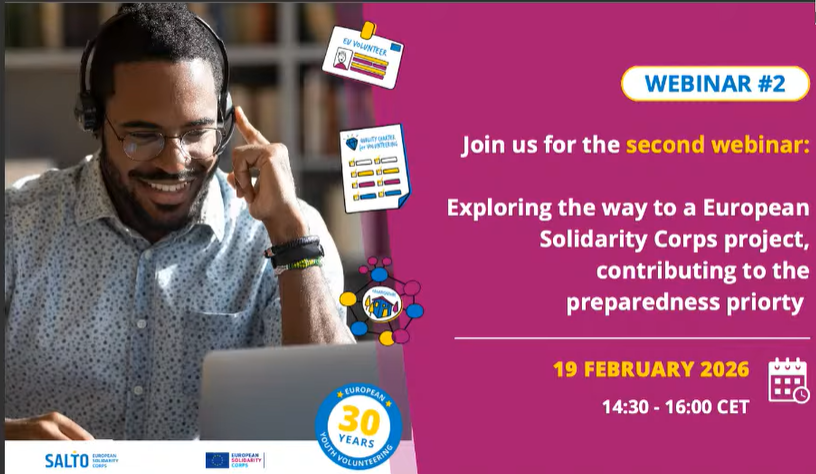
The webinar was the first session of a series of two: after this first focus on the ‘why’ and ‘what’ of preparedness, a second webinar will explore the ‘how’: practical pathways for organisations to engage with the European Solidarity Corps and develop preparedness-focused projects. This second webinar will take place on 19 February (from 14.30 to 16.00) and will clarify in the detail technical and procedural requirements to access funding under the European Solidarity Corps, including the Quality Label requirements, application and implementation steps for Volunteering Teams in High Priority Areas, Individual and Local Volunteering - helping organisations to turn preparedness and resilience into meaningful action with youth, for the whole society. Register by 17 February.
The overall message is clear: investing in young people today is a long-term investment; preparedness, solidarity, and youth volunteering reinforce each other.
Thematic series