EU Science for Preparedness conference
A brief overview of key insights from the EU Science for Preparedness Conference, focusing on how science and innovation can improve Europe’s crisis preparedness.

A brief overview of key insights from the EU Science for Preparedness Conference, focusing on how science and innovation can improve Europe’s crisis preparedness.

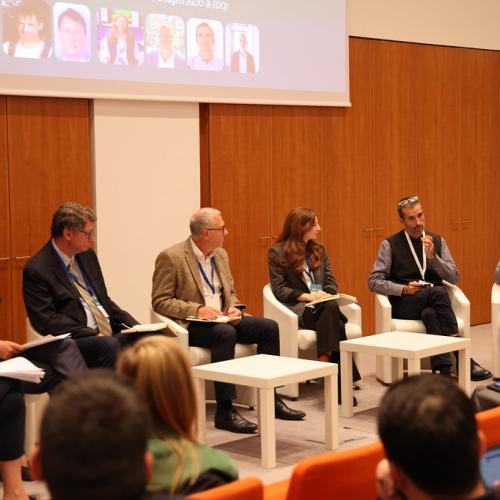
From 4 to 6 November, experts from the scientific, policy, and crisis response communities gathered in Turin, Italy, for the EU Science for Preparedness Conference, organised by the Disaster Risk Management Knowledge Centre and JRC’s Copernicus Emergency Management Service. Over three days, participants exchanged knowledge, discussed challenges, tested innovative tools and explored ways to strengthen anticipation and preparedness for future crises. Here’s a look at some of the highlights from day 1 and 2.
The first day focused on high-level perspectives on improving preparedness. Anna Samsel (DG ECHO) highlighted the importance of strengthening the analytical capacities of the European Response Coordination Centre (ERCC), ensuring that the right information reaches the right people at the right time. She presented the Global Situation System as the foundation for the European Crisis Dashboard, which provides a shared operational picture. The newly established Crisis Coordination Hub was introduced as a pivotal tool for channelling information to those able to respond, effectively bridging strategic and operational levels.
Dominique Orsini (DG DEFIS) underlined that external crises increasingly shape internal resilience, as global shock increasingly cross boundaries. He therefore called for a flexible “playbook” approach to preparedness, prioritising contextual understanding and adaptive planning rather than static lists of risks. Orsini also advocated for the development of a common language of preparedness to bridge conceptual divides between the civil protection, security, and scientific communities.
The Preparedness Union Strategy (PUS) came to the fore as a guiding framework for increasingly complex crises and the corresponding disaster response. Based on three pillars, the PUS is about developing comprehensive risk assessments, defining vital societal functions that must be protected, and fostering civil–military cooperation.
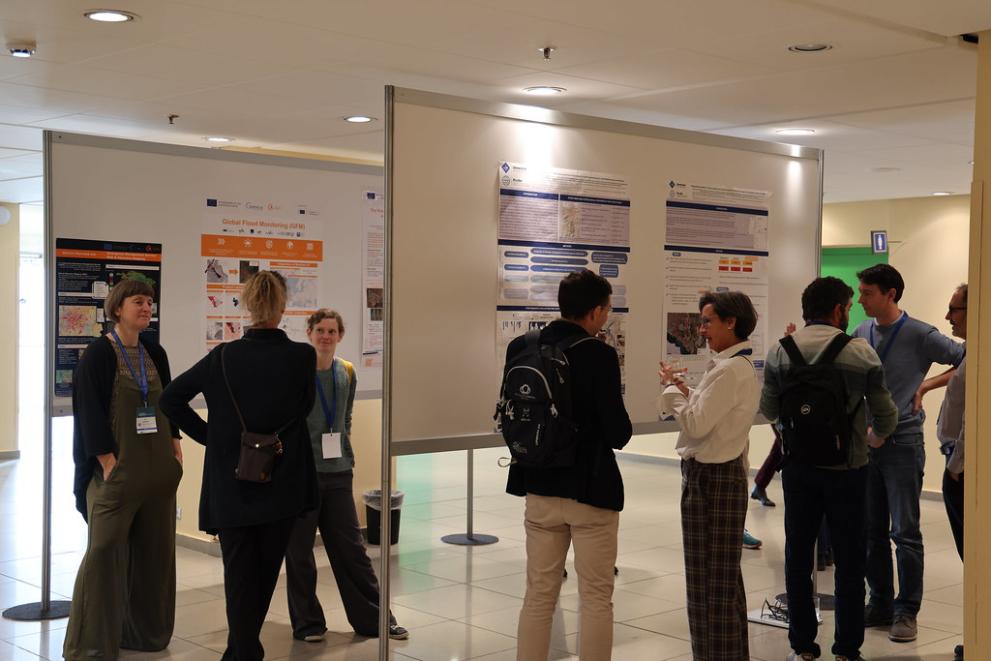
The World Meteorological Organization (WMO) presented the Early Warnings for All Initiative and upcoming research on AI applications for risk forecasting. While public warnings remain a sovereign function of states, it was emphasised that private actors such as social media companies, telecom providers, and the tourism sector can play an important supporting role in data sharing, communication, and combating misinformation. The presentation showed the importance of international collaboration in collecting and analysing primary data to strengthen both European and global early-warning systems.
Silvia Torresan (MYRIAD-EU) concluded the day by emphasising the need for a systems-thinking approach that integrates artificial intelligence with qualitative methods and knowledge co-production to address complex multi-hazard risks. The MYRIAD-EUpilots adopt context-specific multi-hazard assessments rather than one-size-fits-all models. Torresan argued that risk storylines remain vital for capturing cascading and interconnected impacts, and highlighted the importance of embedding justice and social cohesion considerations within risk models.
Practical applications of research and technology were the focus of the second day. Sessions highlighted the importance of user engagement, iterative learning, and capacity building to ensure innovation leads to actionable solutions. AI for risk management was discussed extensively, with emphasis on explainability, transparency, ethics, and human-centred design. Participants stressed the need for collaboration between social scientists and technical experts to develop inclusive and accountable AI systems.
Effective innovation was also linked to user uptake and supportive open-data policy frameworks, enabling multi-level engagement from the EU to local authorities. A “train-the-trainer” approach, combined with continuous feedback loops, was highlighted as key to building capacity and ensuring real-time operational readiness in the face of unpredictable crises.
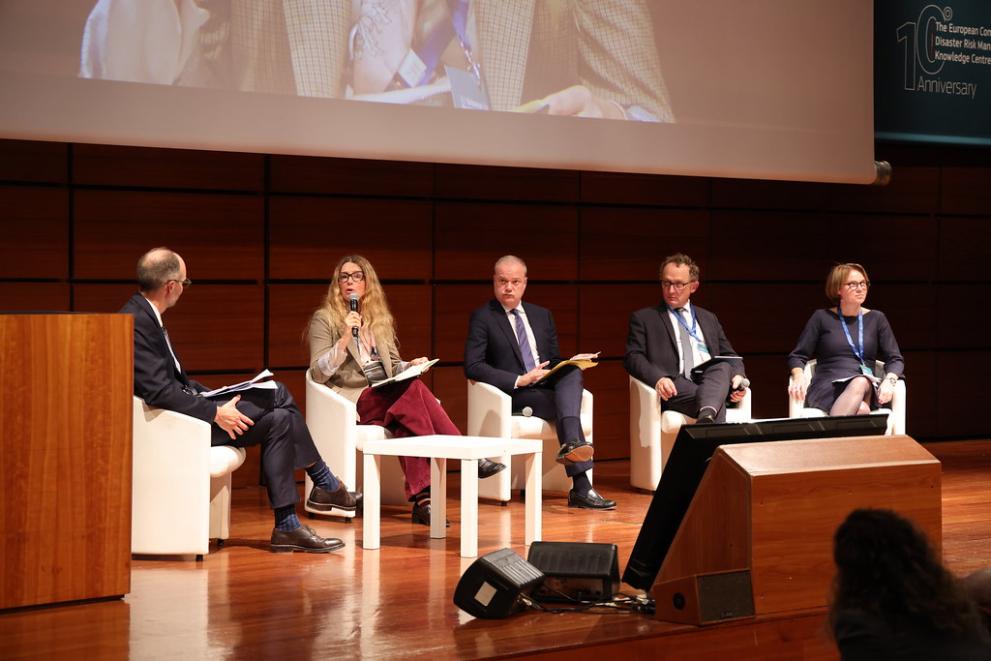
In his closing remarks, Tom De Groeve (DG JRC) noted that the conference successfully fostered dialogue across disciplines and institutions. The Preparedness Union Strategy emerged as a shared vision for an all-hazards, all-society, and all-government approach. Investments in capacity building, sustainable infrastructure, and early-warning systems remain critical, while new tools such as digital twins, the Crisis Coordination Hub, and AI-based “what-if machines” are opening new frontiers in European crisis management.
The event concluded with a call to sustain the science–policy dialogue, building towards a more science-informed Preparedness Union and setting the stage for the next Civil Protection Forum.
The Knowledge Network editorial team is here to share the news and stories of the Knowledge Network community. We'd love to hear your news, events and personal stories about your life in civil protection and disaster risk management. If you've got a story to share, please contact us.

Sectors
Thematic series