UCP Knowledge NetworkApplied knowledge for action
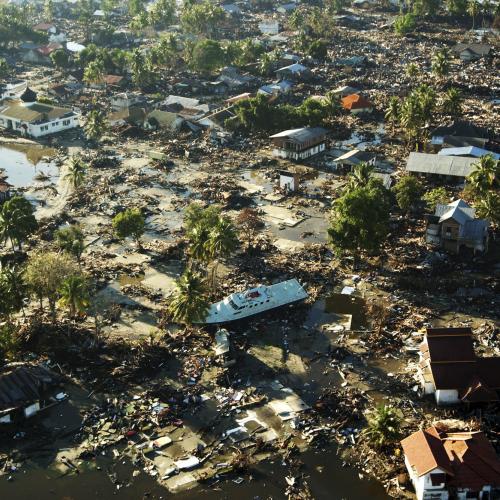
Many communities remained cut off for weeks as roads and bridges were blocked by debris, destroyed or severely damaged.

Environment and Climate Action (LIFE)

The LIFE programme aims to facilitate the shift towards a sustainable, circular, energy-efficient, renewable energy-based, climate-neutral and resilient economy; to protect, restore and improve the quality of the environment, including the air, water and soil; to halt and reverse biodiversity loss; and to tackle the degradation of ecosystems.

What does it finance?

The LIFE program contributes to disaster prevention and preparedness by addressing key environmental risks and promoting resilience through its sub-programmes on climate change mitigation, adaptation, and circular economy and quality of life. 

The climate change mitigation and adaptationopens in new tab sub-programme is notably aligned with preparedness and disaster risk management, especially in consideration of the recent Preparedness Union Strategyopens in new tab. It may finance for example, projects that aid cities and regions in adapting to climate change, bolster the resilience of infrastructure, and provide adaptation solutions for farmers, forest managers, and other land stakeholders.  

The ‘circular economy and quality of lifeopens in new tab’ sub-programme enhances natural disaster prevention and restoration by advancing risk assessment and monitoring technologies, implementing sustainable management practices, and fostering collaborative governance to strengthen resilience and adaptive capacities in vulnerable areas. 

The LIFE program focuses its support on the definition and application of innovative technologies and approaches tailored to disaster risk prevention, monitoring and management by: 

  1. Strengthening Adaptive Capacities: LIFE helps communities and organisations build their capacity to adapt to risks like floods, forest fires, landslides, and other natural disasters. It encourages the development of local adaptation plans and enhances governance structures to better manage these risks. 

  2. Implementing Early Warning Systems: The program emphasises the importance of early warning systems to mitigate risks before they escalate. By fostering improved coordination among civil protection agencies and other stakeholders, it ensures quicker and more effective responses to disasters. 

  3. Restoring Ecosystems: By focusing on ecosystem conservation and restoration, LIFE reduces risks associated with the degradation of natural habitats. Restoring floodplains, forests, and coastal areas helps improve biodiversity and resilience against natural disasters. 

  4. Promoting Sustainable Practices: The program supports the use of adaptive technologies to strengthen infrastructure and industries against extreme weather events. 

What kind of funding does it provide?

The LIFE programme provides grants, with a usual co-financing rate of 65% of the eligible costs. 

Which authorities are responsible for this instrument?

The LIFE programme is under the responsibility of the Directorate General for Environment, Climate Action and Energy (DG CLIMA, European Commission). The management of grants is delegated to the European Climate, Infrastructure and Environment Executive Agency (CINEA). National Contact Points follow the implementation of the programme in each Member State.   

Which countries are eligible?

EU Member States and third countries associated to the LIFE Programme (Iceland, Ukraine, Moldova, North Macedonia and Montenegro). 

Who is this call for?

Public or private legal entities registered in the EU or in an overseas country or territory linked to it, in third countries associated to the LIFE programme and legal entities created under Union law and international organisation are eligible to submit a proposal under the LIFE Programme. Individual citizens are not eligible to apply. 

Legal entities established in a third country which is not associated to the LIFE Programme may exceptionally be eligible to participate where this is necessary for the achievement of the objectives of a given action to ensure the effectiveness of interventions carried out in the Union. 

How to apply and other relevant information

For information on how to apply, please check the call specific page:  

Programme website: LIFE - European Commission

LIFE Programme 2025 Calls: New priorities in Preparedness and DRM | UCP Knowledge Network 

Project example

Examples of LIFE-funded projects with disaster risk management relevance include the LIFE FLOPRESopens in new tab project. This project, funded with €3.2 million over three years, is enhancing flood prevention in vulnerable riverside communities in Poland’s Małopolska and Slovakia’s Prešov regions. By installing over 270 smart sensors that integrate Internet of Things (IoT) technology with meteorological forecasting and hydrological modelling, the project provides real-time flood warnings and improves prediction and prevention.