3IDRM Futures Literacy Lab in Berlin: new perspectives on inclusive disaster risk management
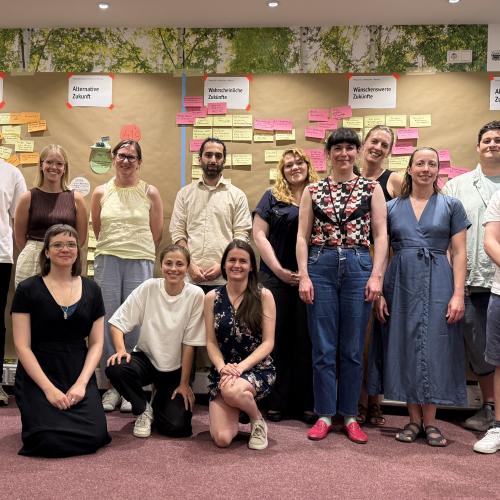
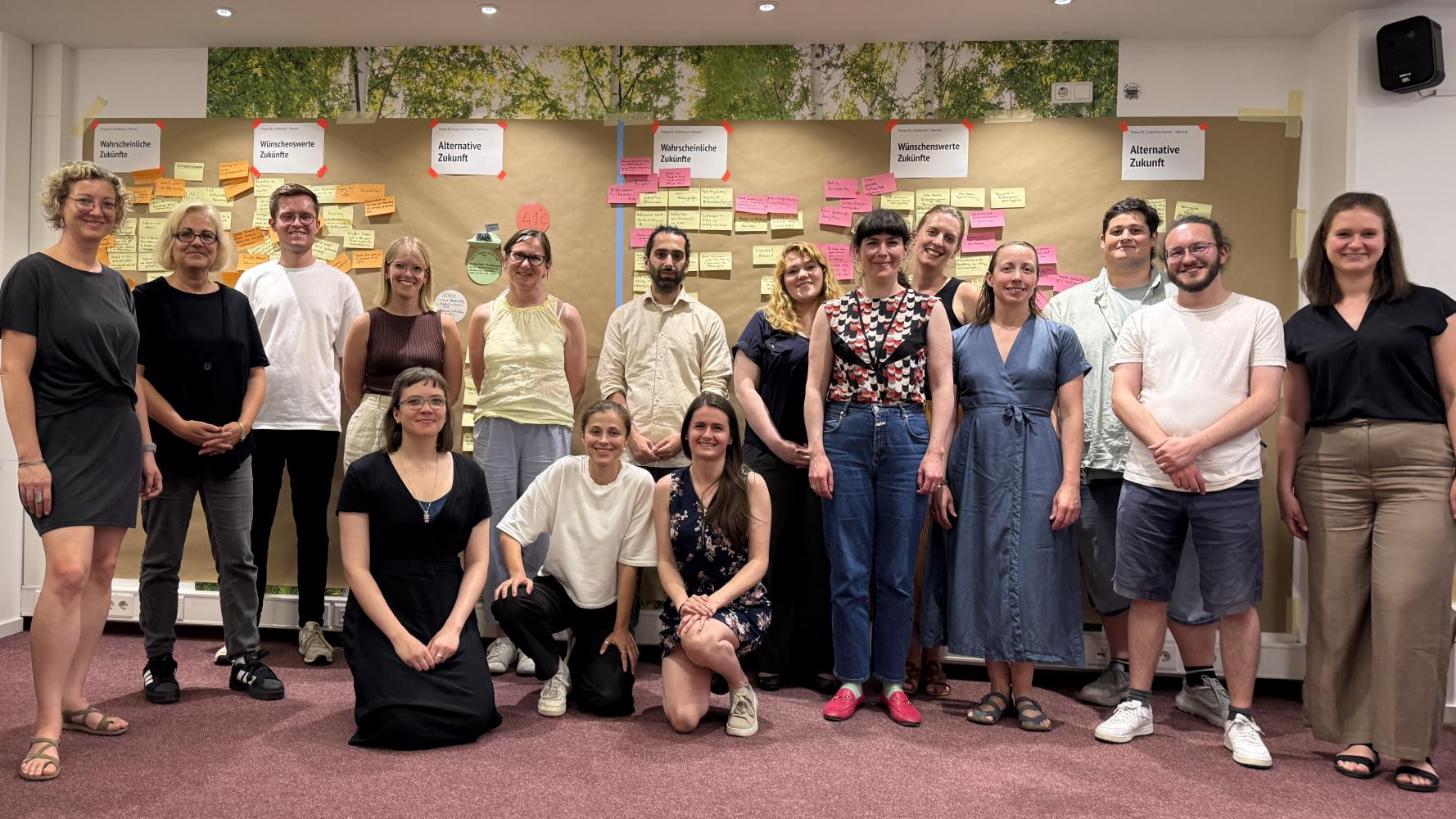
On 24 June 2026, the Futures Literacy Lab “Wie leben wir inklusives Katastrophenrisikomanagement im Jahr 2045?” (“How will we practise inclusive disaster risk management in 2045?”) took place in Berlin. It was hosted by the Federal Office of Civil Protection and Disaster Assistance (BBK) and the National Focal Point for the Sendai Framework (NKS) as part of the project “Innovative, Integrated and Inclusive Disaster Risk Management in Germany (3IDRM)”, co-funded by the European Union. The workshop concept and facilitation were provided by the design and innovation consultancy ma ma Interactive System Design.
The lab formed part of the 3IDRM work package “Knowledge for Innovative Disaster Risk Management” and arose from a survey on interests and needs in innovative disaster risk management within the National Platform for Resilience in autumn 2025. Its central question was how inclusion, accessibility and participation can be built into disaster risk management from the outset, and which decisions taken today can make such futures possible.
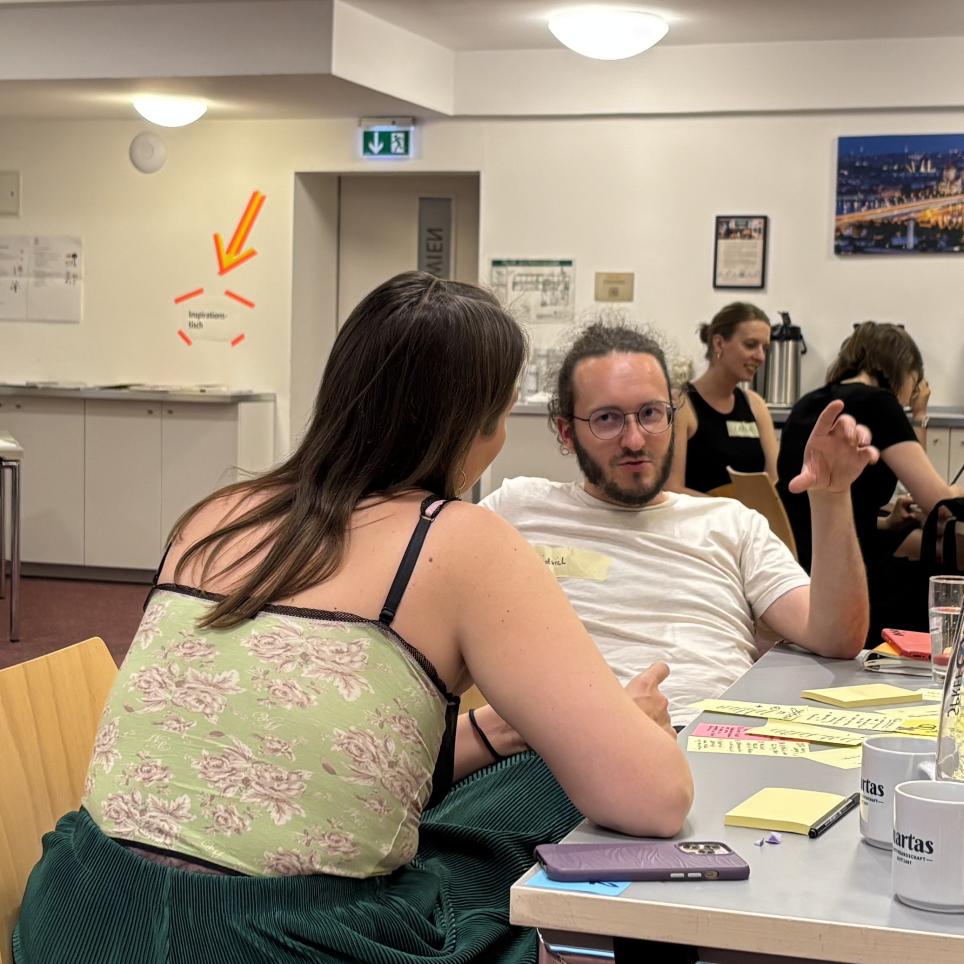
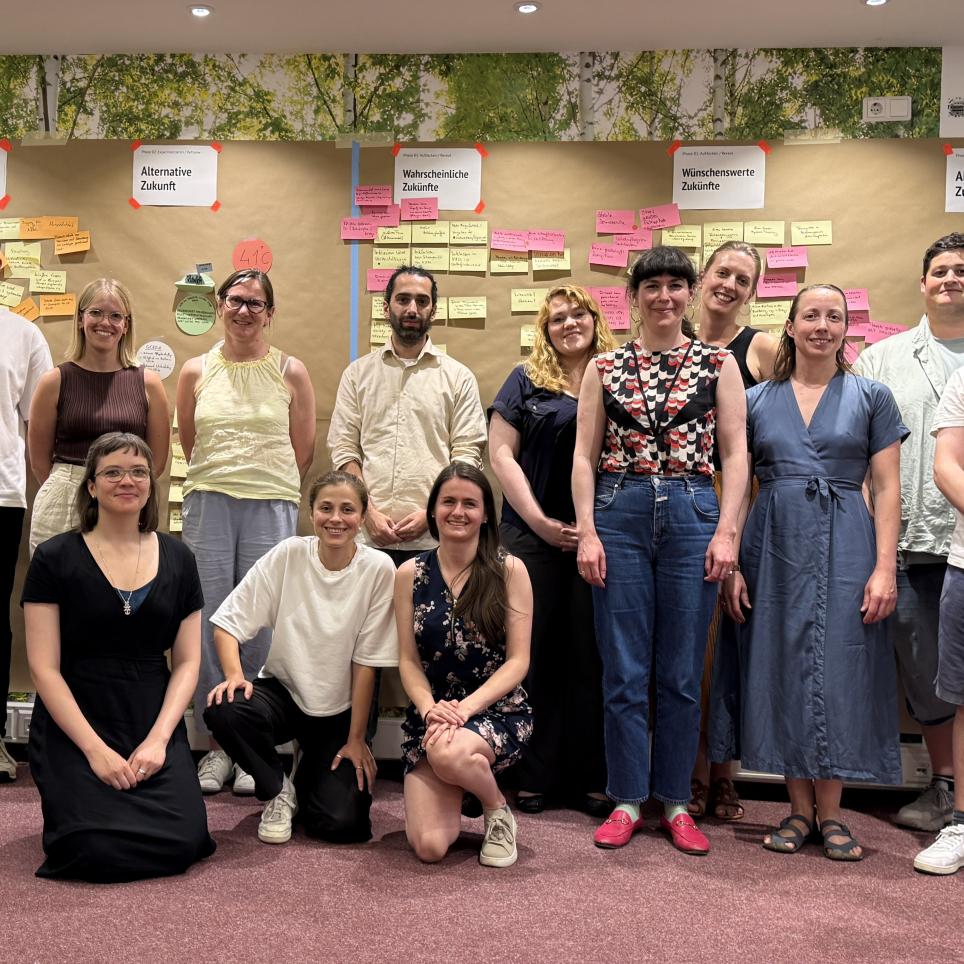
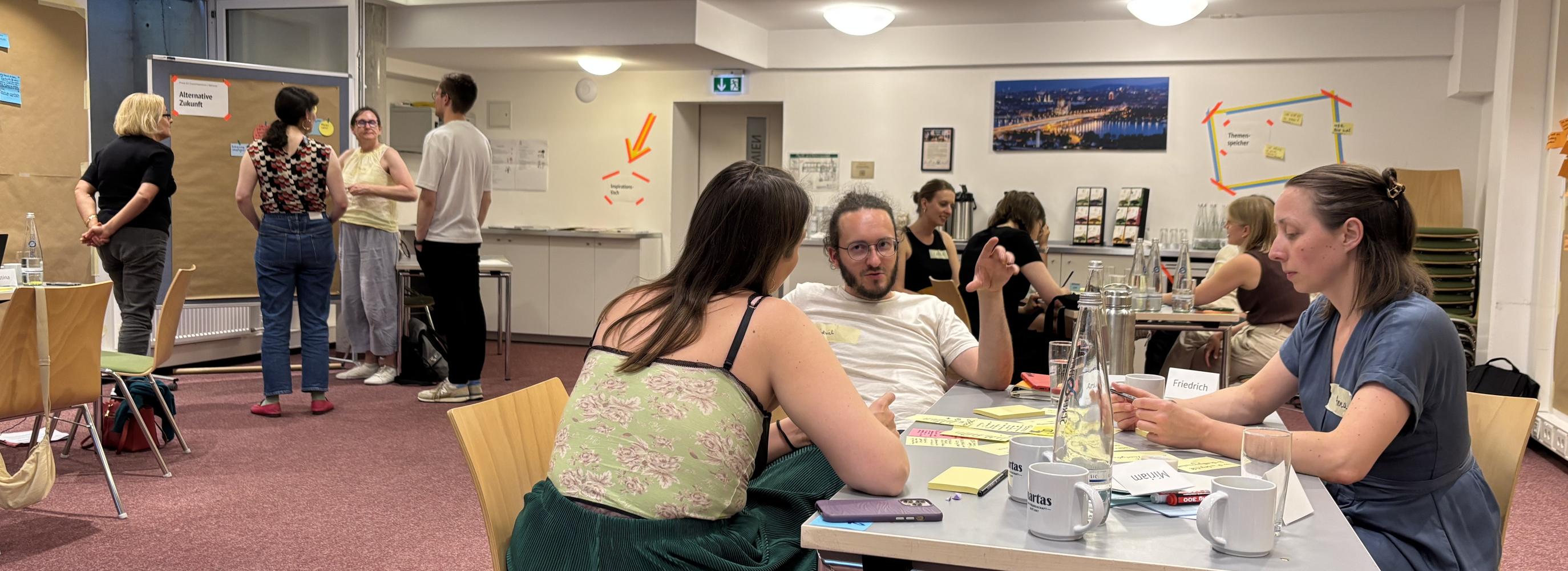
Participants came mainly from the National Platform for Resilience and represented civil society, academia, government, the business sector and education. Their diverse experiences turned the lab into a space for exchange, networking and collaboration.
Methodological approach and format of the Futures Literacy Lab
A Futures Literacy Lab is a facilitated workshop format in which participants explore a range of images of the future, surface their assumptions about the future and jointly develop new narratives about it. It is rooted in Futures Literacy, an approach advanced internationally in particular by UNESCO: the capability to actively draw on multiple futures in order to see the present differently and expand the scope for action.
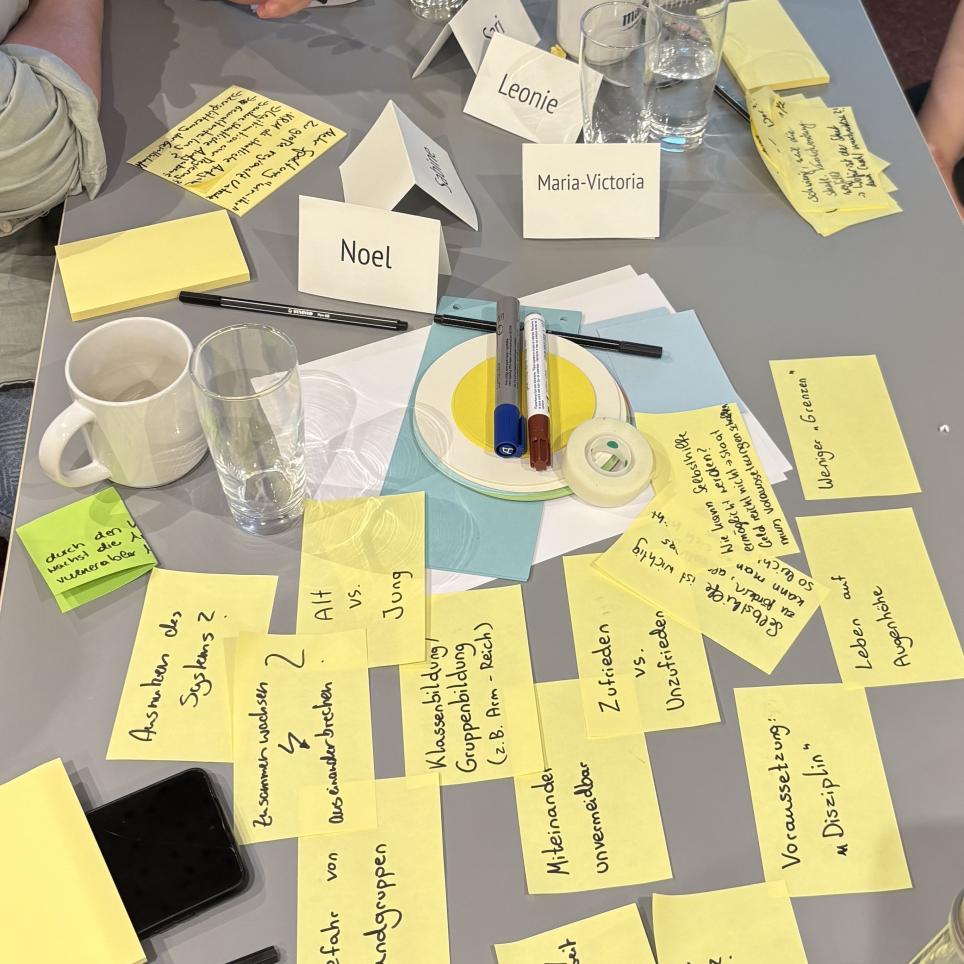
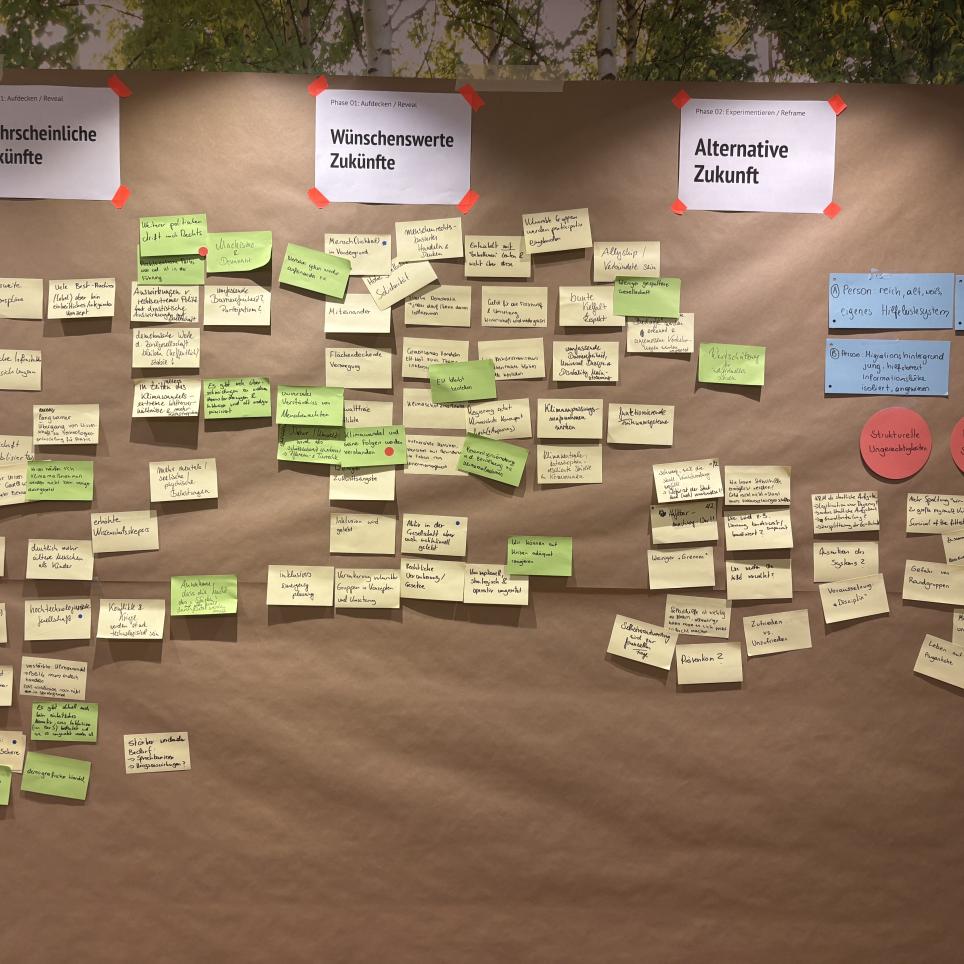
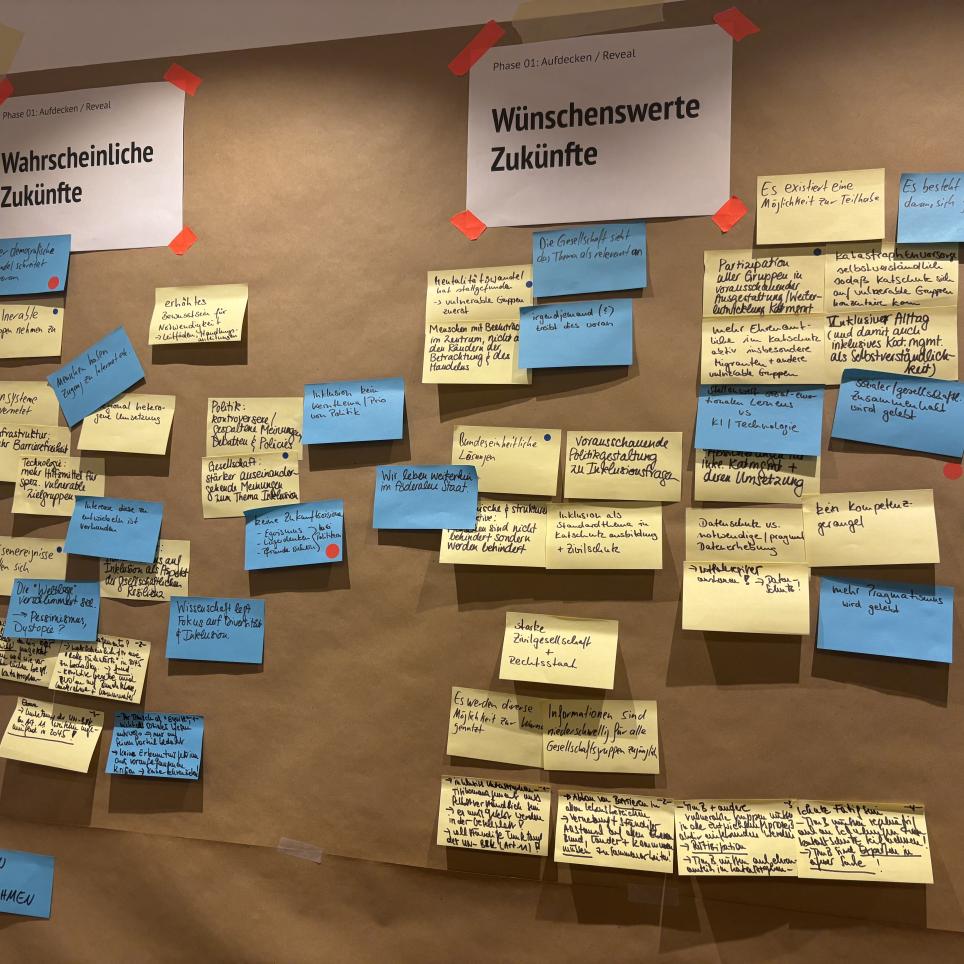
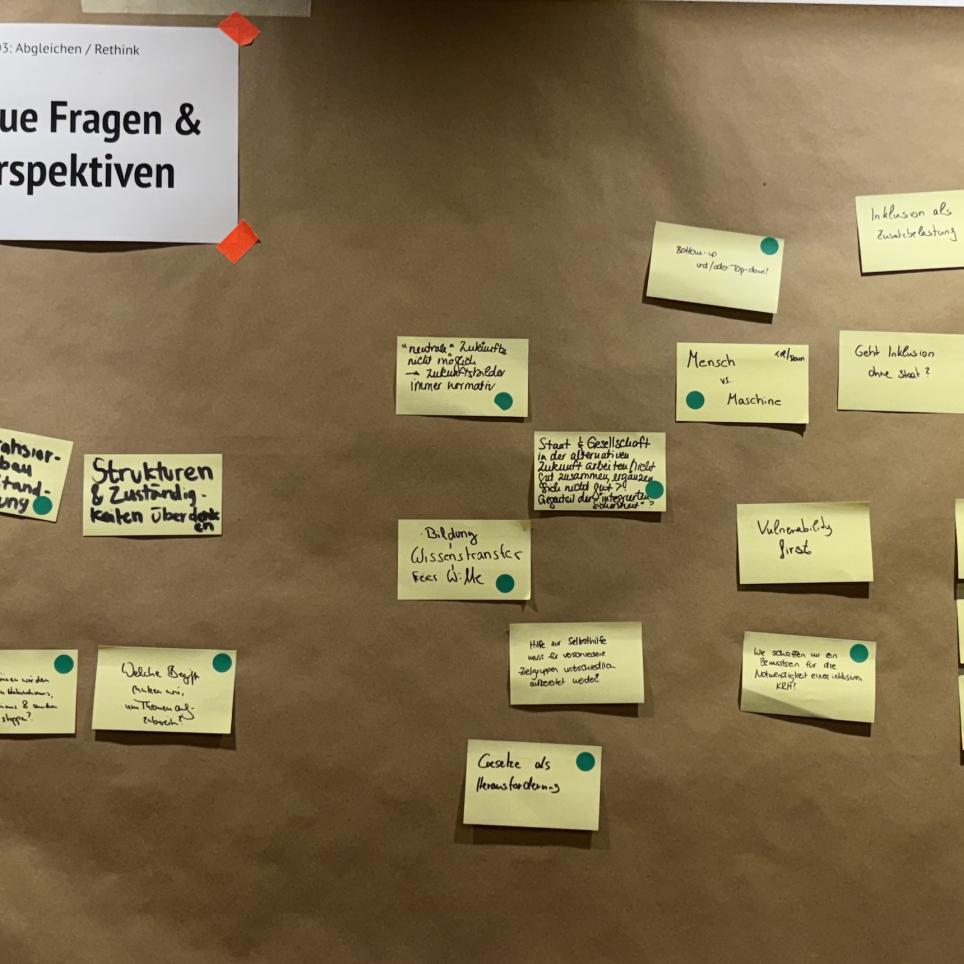
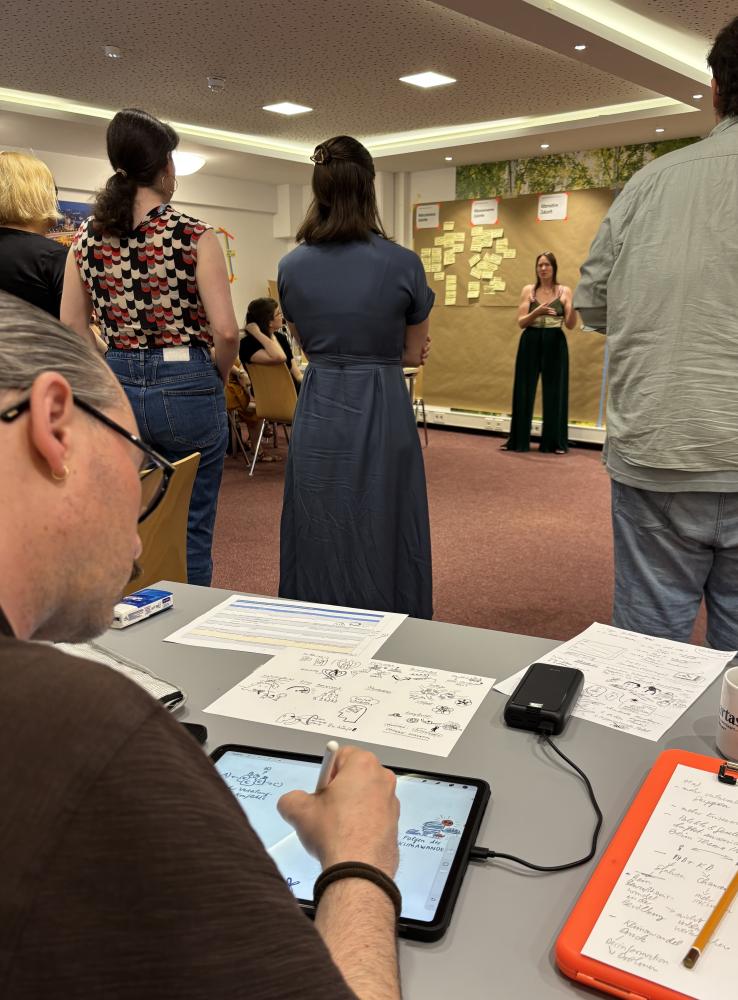
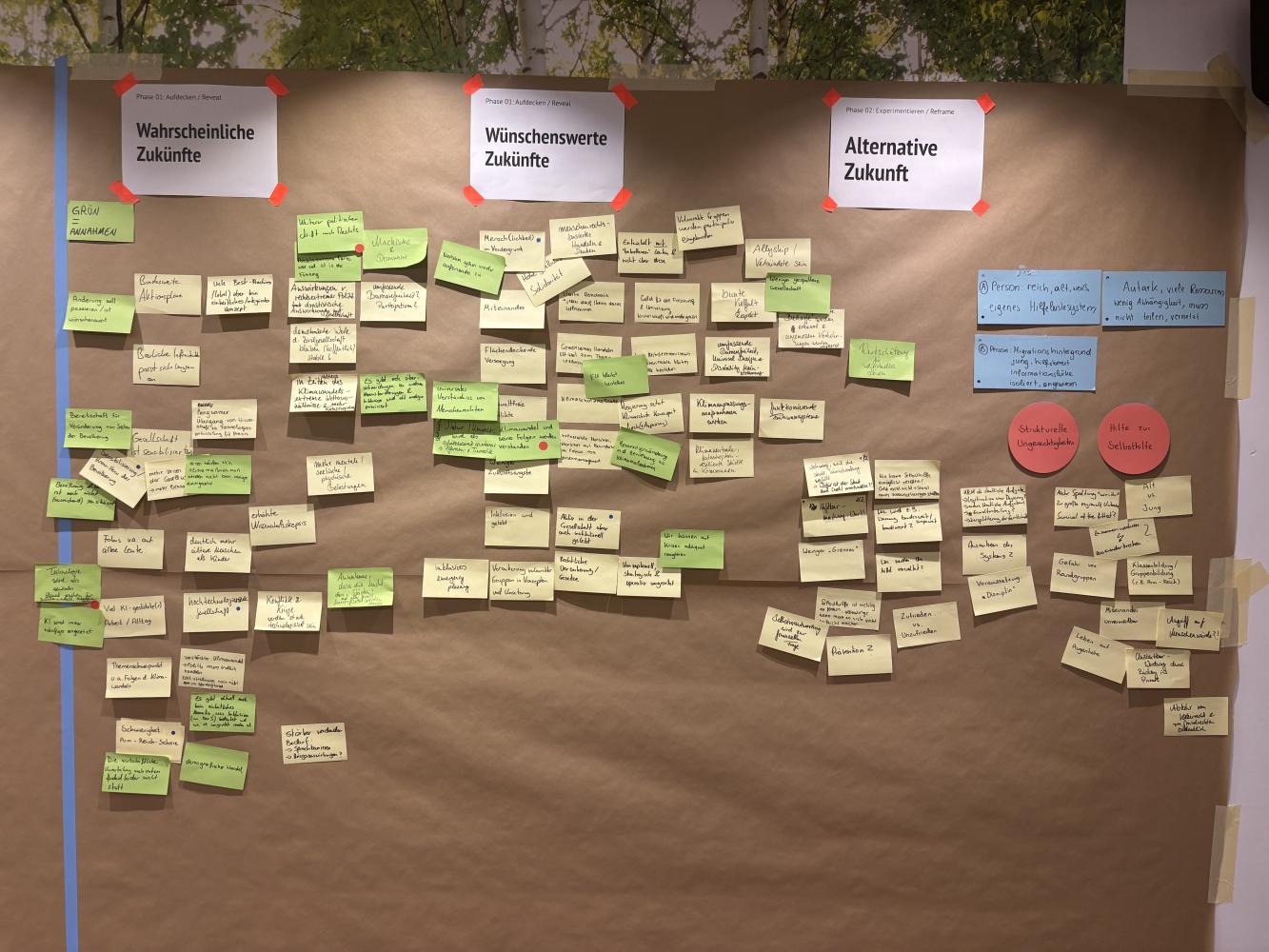
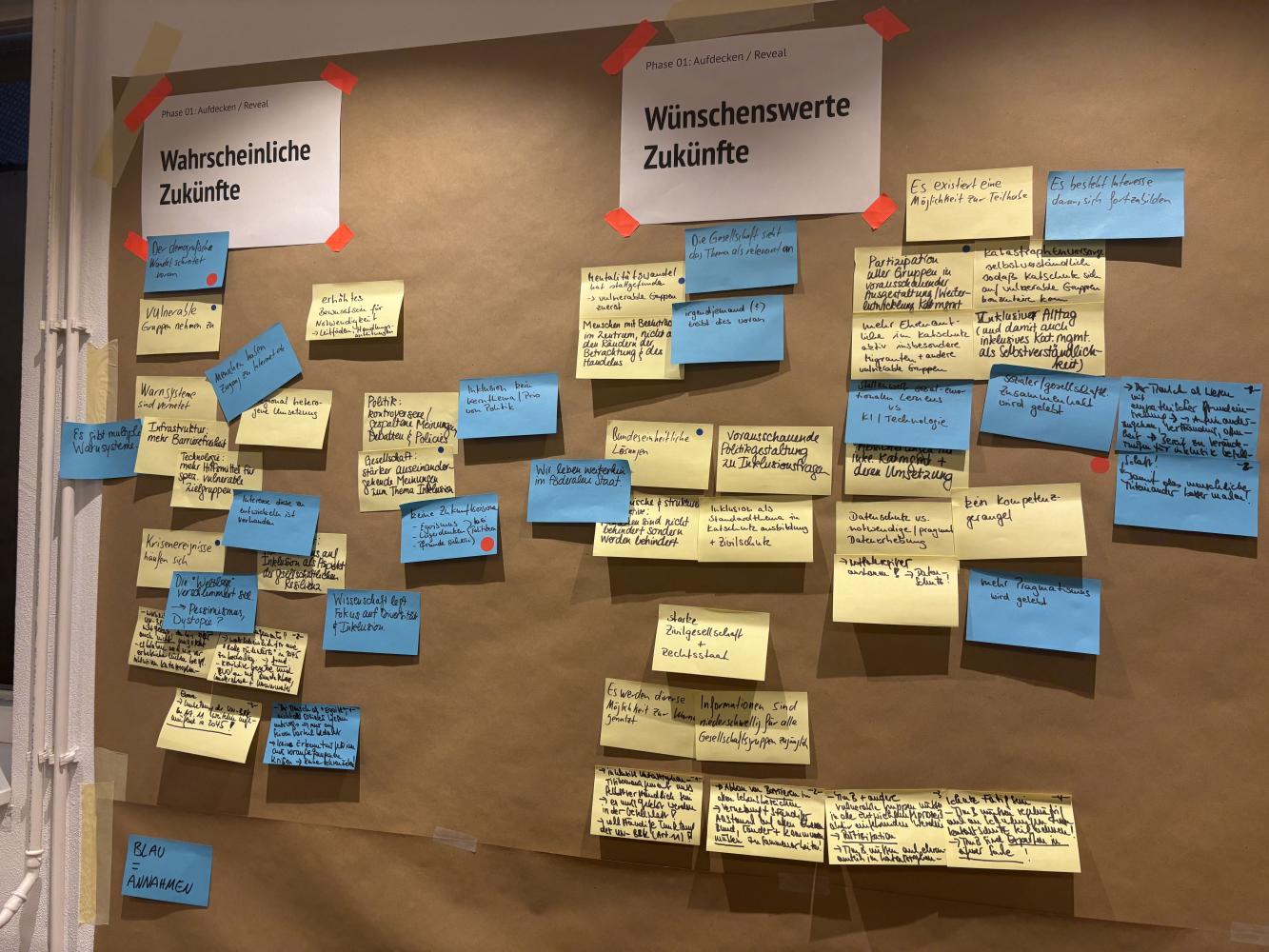
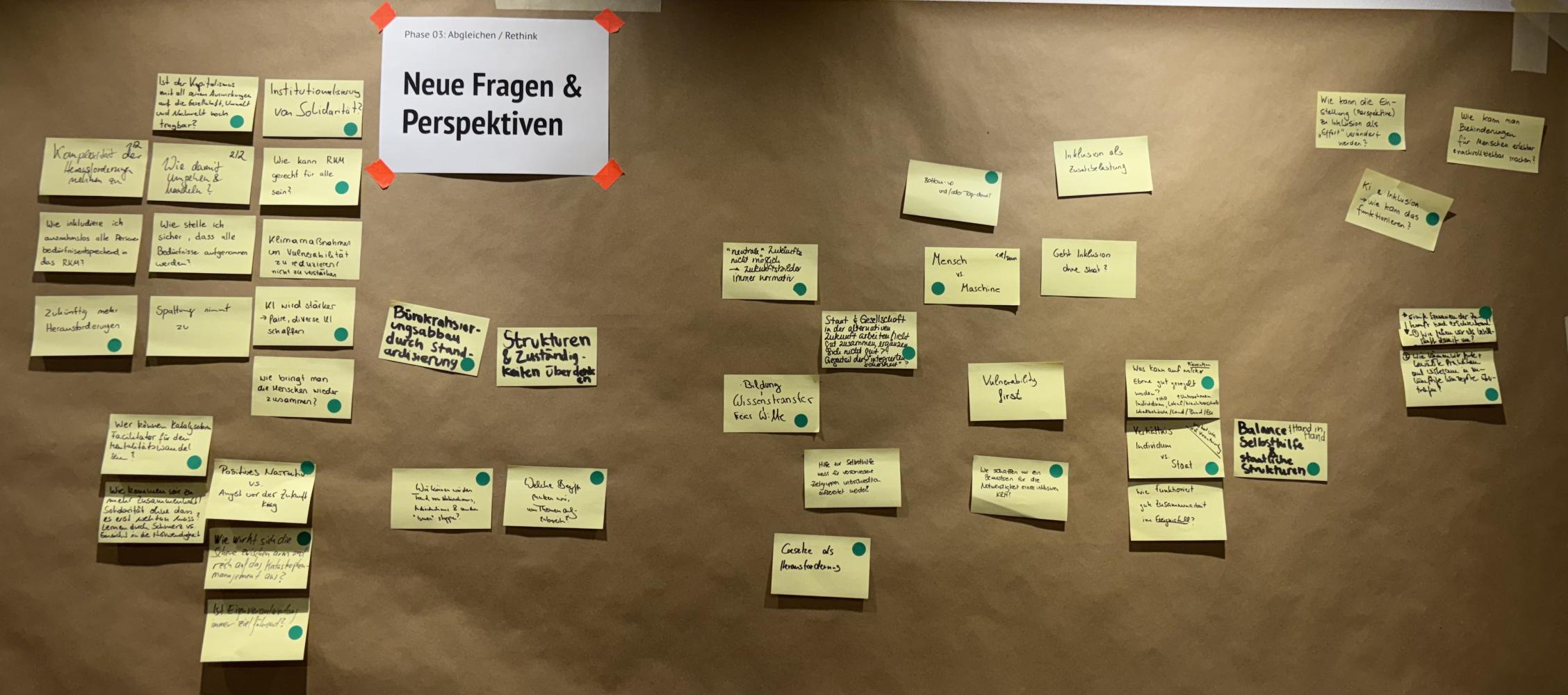
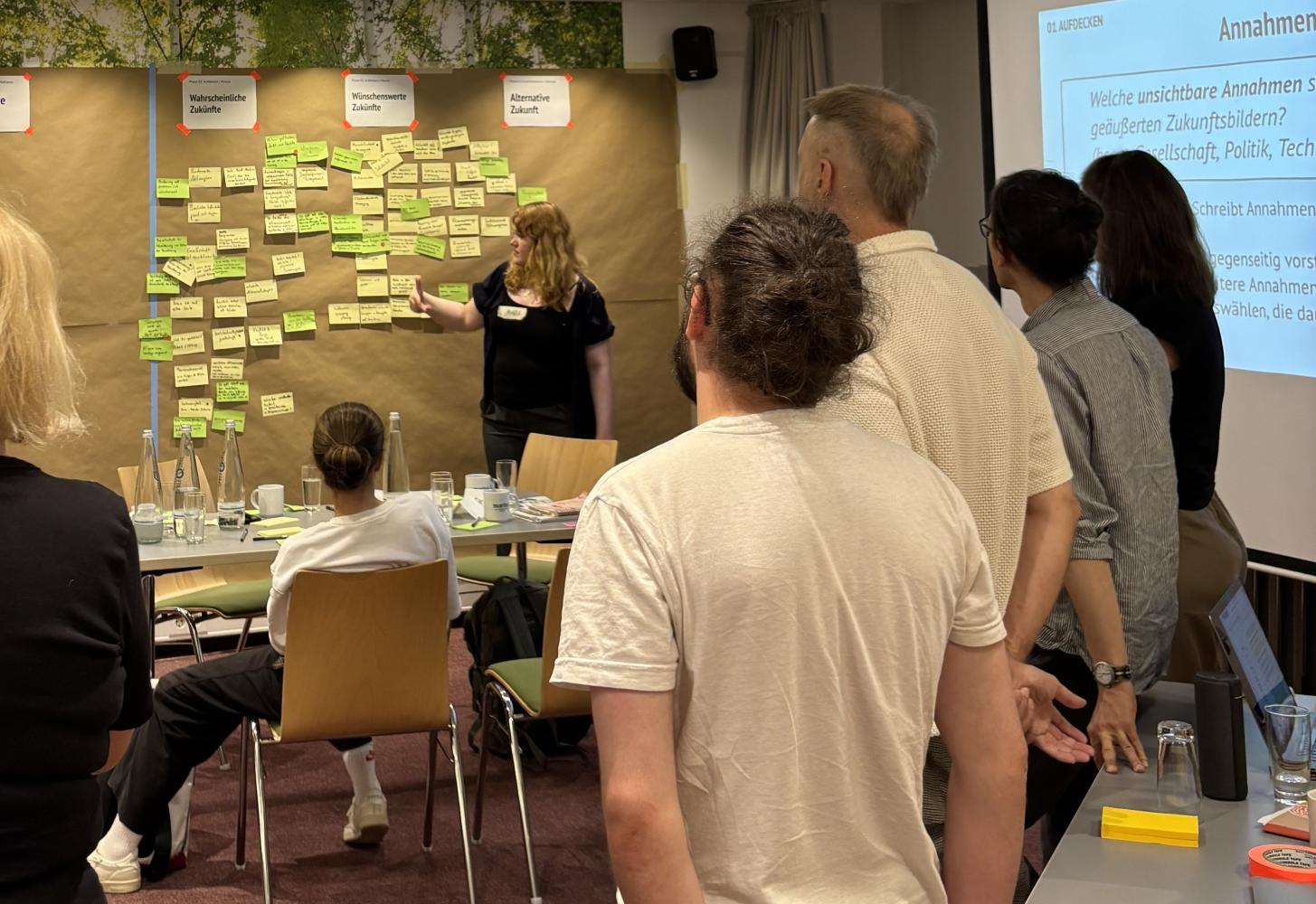
Working with sticky notes, pens and whiteboards, participants explored probable, desirable and alternative futures in small groups and in plenary. The aim was not prediction, but making visible the potentials, tensions and contradictions that emerge when diversity and complexity are treated as a resource.
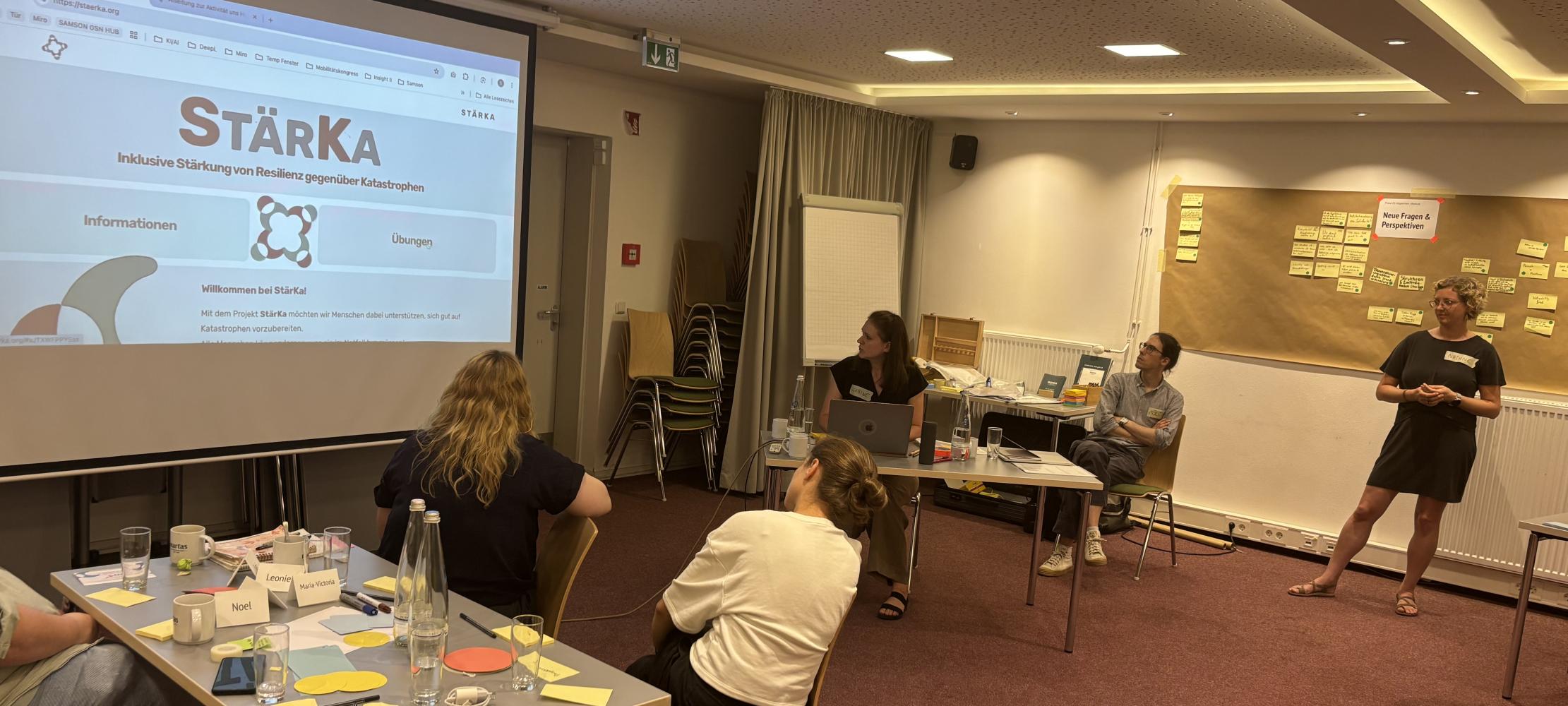
A complementary practical input came from the Austrian project „StärKa“, which focuses on inclusive crisis preparedness, presenting good practices in inclusive disaster risk management, co-creation, plain language and empowering options for action for persons with disabilities.
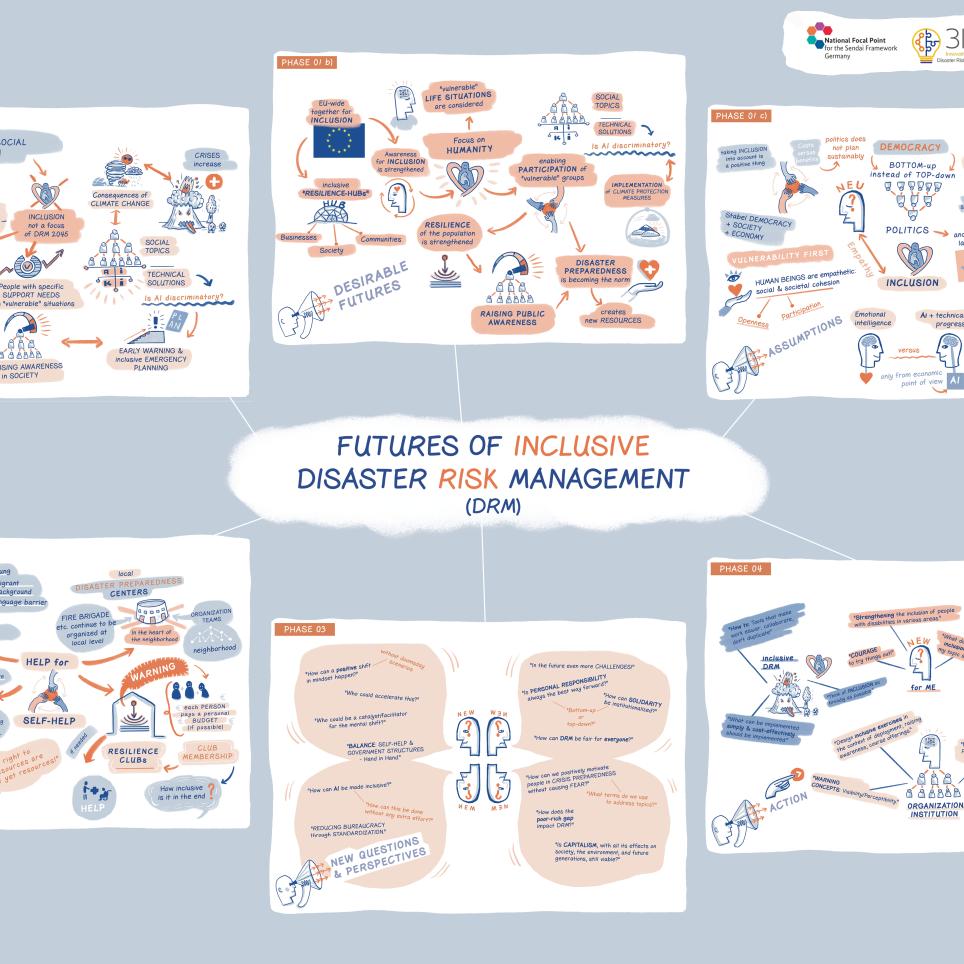
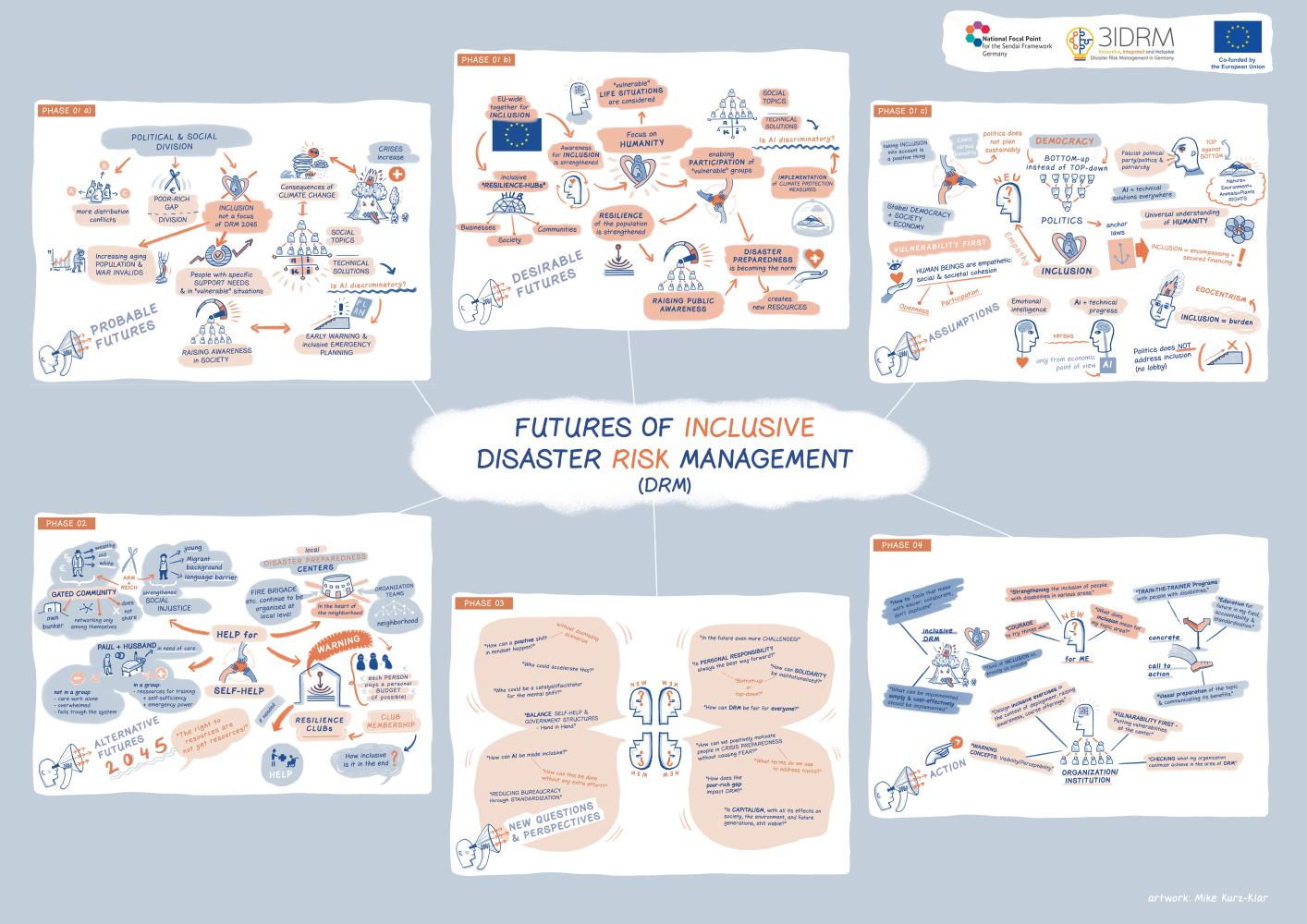
Another distinctive element of the workshop was the graphic recording by Mike Kurz-Klar. As a form of reflection, the drawings made discussions visible, invited discussion and collective expansion, and helped to capture the results.
Recurring themes, tensions and new perspectives
- Inclusion as a fundamental democratic principle
- “Vulnerability first” and genuine co-creation
- A fair architecture of responsibility and resources
- Solidarity and cohesion in the polycrisis
- Common-good-oriented technology, AI and data practice
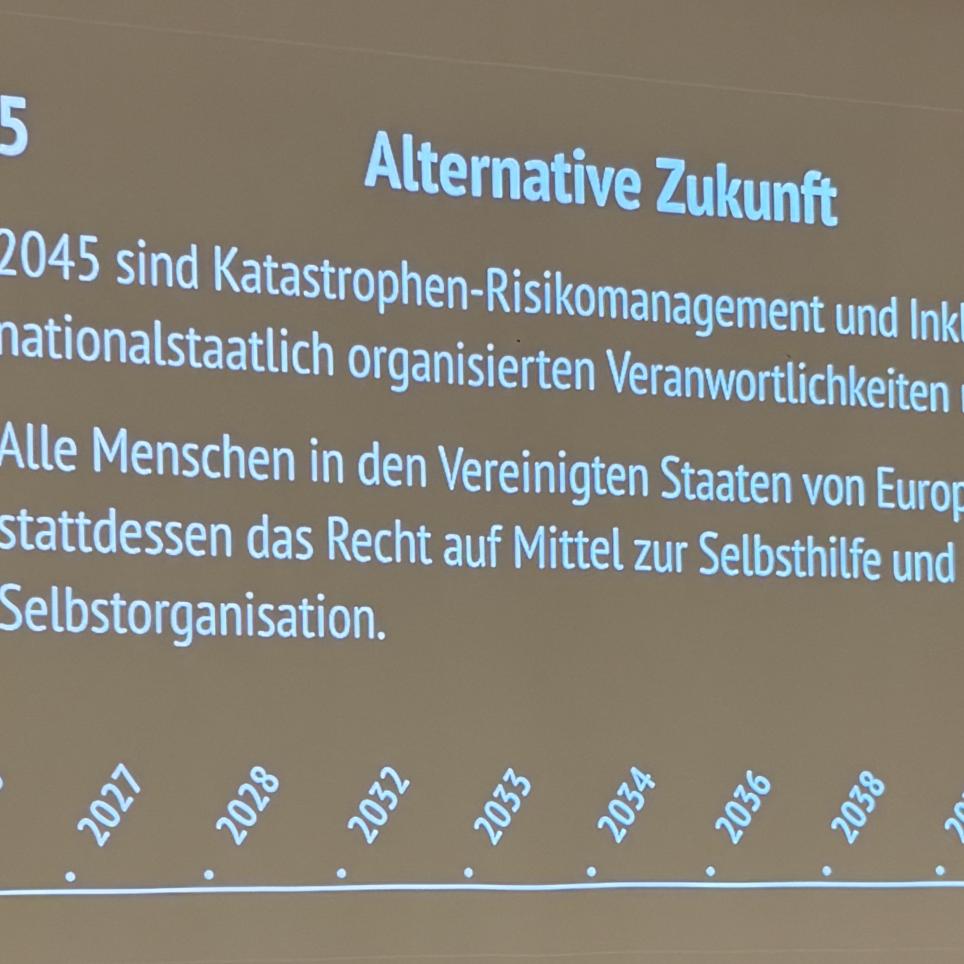
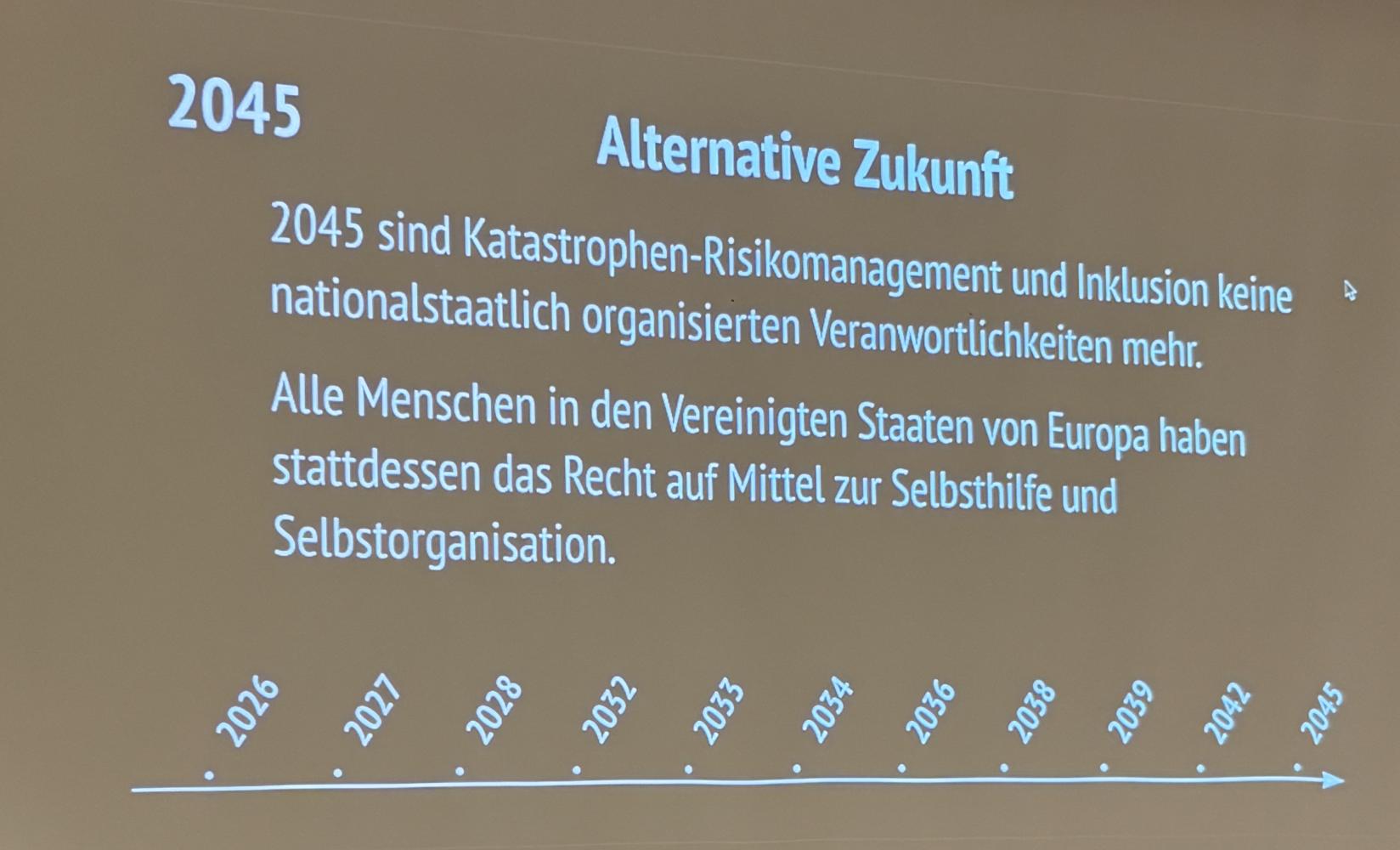
A key focus was the engagement with a deliberately radical alternative future, introduced as a way of unsettling familiar patterns of thought: by 2045, disaster risk management and inclusion are no longer organized along national lines; instead, every person has a right to the resources for self-help and self-organization. This gave rise to ideas such as resilience clubs, local hubs or civil protection centers for neighborhood assistance, warning, distribution of goods, training and preparedness. At the same time, it became clear that support for self-help is not automatically inclusive. Who receives resources? Who is able to apply for, understand and use them? Who falls through the cracks of the system? And what are the state’s protective obligations?
Questions for action and methodological impact
Rather than offering ready-made solutions, the lab opened up questions for action: How can affected groups be reliably involved in planning, research and preparedness? How can accessibility and accessible communication be considered from the very beginning? How can the means for self-help be distributed fairly? And how can technology enable participation without creating new forms of exclusion?
The Futures Literacy Lab made innovation in disaster risk management tangible in practice by creating a shift in perspective, opening up questions of participation and providing a space for reflection. The perspectives that emerged offer starting points for further discussion. Many participants also expressed a wish to continue exploring Futures Literacy and to bring the approach into their own organizations.
This Futures Literacy Lab was co-funded by the European Union. Responsibility for its content lies solely with ma ma Interactive System Design and the participants of the Futures Literacy Lab; the content does not necessarily reflect the views of the EU.