

The FIREPRIME Project (European Programme for Wildfire-Prepared Communities) concluded on January 31, 2026, after two years of collaborative work to generate tools and resources that facilitate the creation of safer communities in the face of wildfires and improve safety while supporting the work of civil protection services during emergencies. Co-funded by the European Union under the UCPM 2023 KAPP call, the project has produced a range of resources aimed at improving household fire safety, promoting community engagement and education, and strengthening resilient infrastructure, among which the FIREPRIME app stands out.
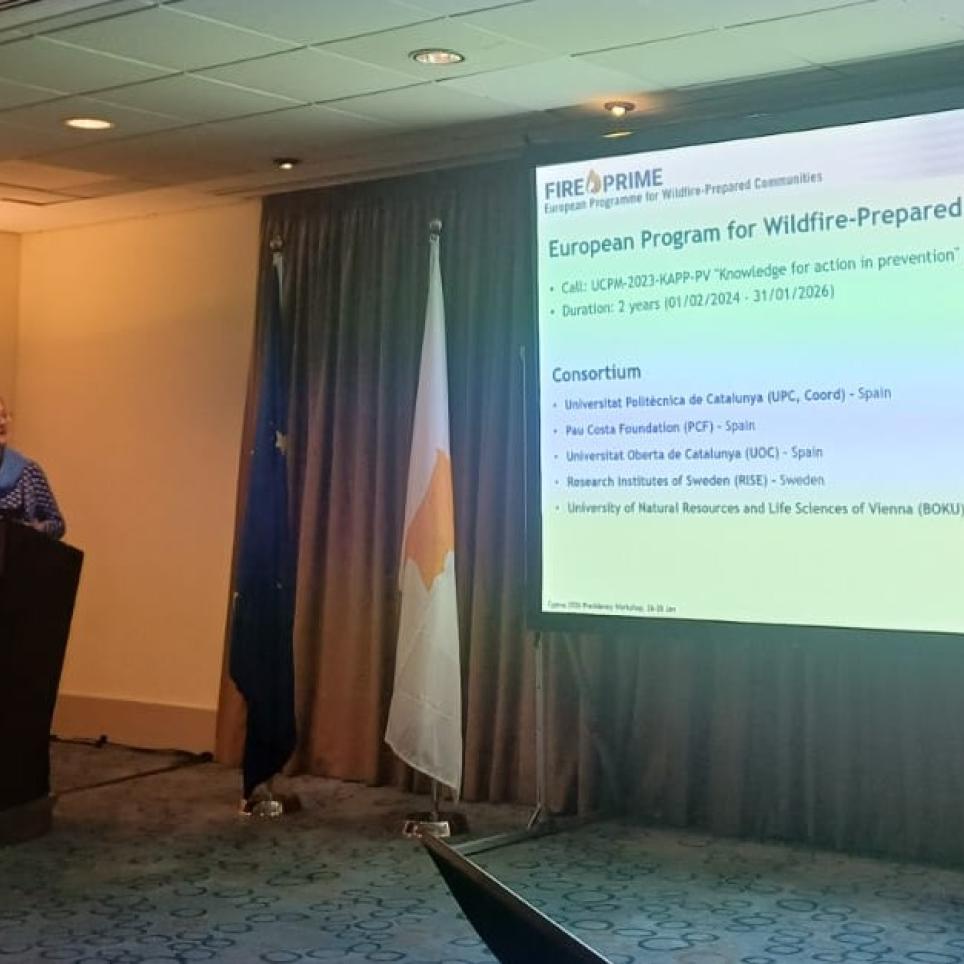
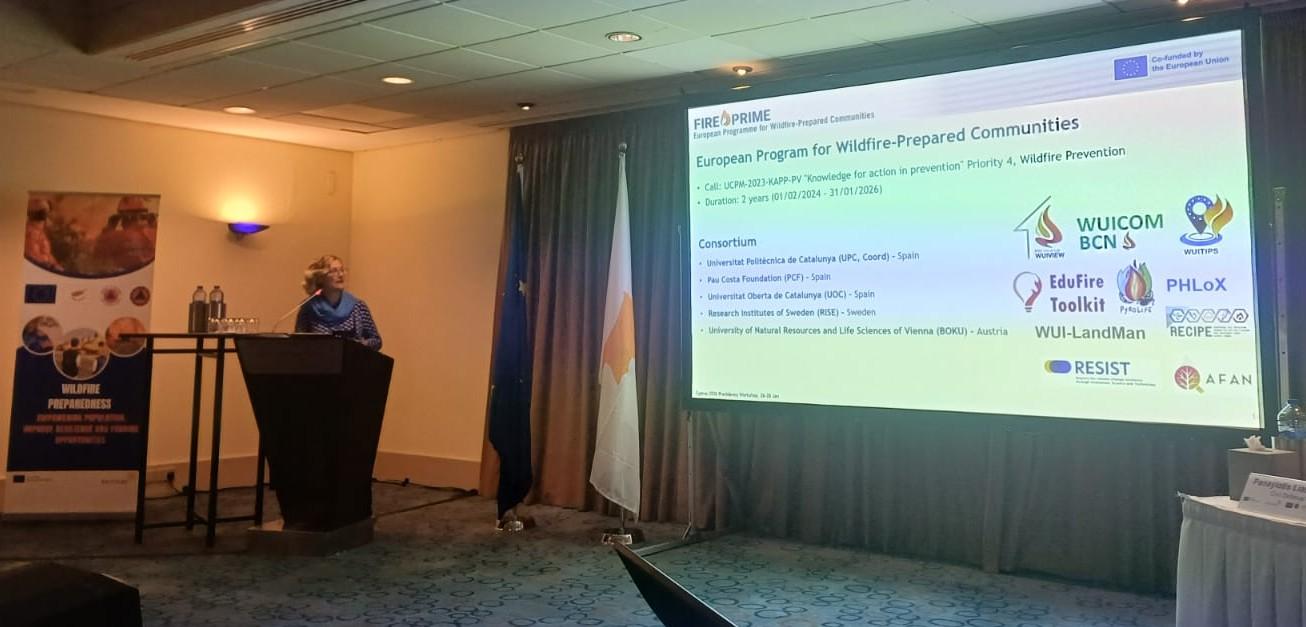
The public presentation of the app took place within the framework of the workshop “Wildfire Preparedness: Empowering Communities, Strengthening Response, and Enhancing Funding Opportunities”, attended by more than 100 civil protection representatives from European Union countries. The workshop (Cyprus, January 27–28, 2026), organised under the Cypriot Presidency of the European Union, focused on empowering citizens and communities and improving coordinated action during wildfire emergencies. Elsa Pastor, coordinator of FIREPRIME and researcher at CERTEC-UPC, presented the project and the FIREPRIME app in the session on prevention, preparedness, and self-reliance.
The FIREPRIME app offers residents of wildland–urban interface areas an intuitive and rigorous tool to understand risk and assess the vulnerability of their homes to wildfires, enabling them to make informed decisions to improve household safety. This free app, available in English, Spanish, Catalan, German, and Swedish, and already accessible on Google Play and the App Store, has been developed by the GESSI research group at UPC, incorporating a risk analysis algorithm designed by CERTEC-UPC, BOKU (Austria), and RISE (Sweden). All these institutions, together with the UOC and the Pau Costa Foundation, are members of the FIREPRIME project.
The app combines two key types of information. On the one hand, it determines the wildfire hazard of the area where the home is located, using data from the European Copernicus programme. On the other hand, it provides a calculation of the home’s vulnerability, based on information provided by users about the structural and environmental factors of the dwelling.
“The FIREPRIME app has a clear European dimension, as it has been designed to consider the diversity of construction practices across different countries, as well as differences in the magnitude of wildfire hazard. This makes it possible to adapt risk assessments and recommendations to different contexts and housing typologies across Europe,” says Elsa Pastor, coordinator of the FIREPRIME project and researcher at the Polytechnic University of Catalonia (UPC).
The factors assessed include structural elements such as roof type, façade cladding, porches or balconies, drainage systems, ventilation systems, and window and frame materials, which influence the likelihood of fire penetrating the interior of the home. Environmental factors are also analysed, such as nearby vegetation, fencing type, the presence of non-vegetative fuels, or terrain characteristics, which determine whether fire can reach the house.
Based on this analysis, the app provides an estimate of wildfire risk and offers recommendations to reduce vulnerability, both through structural improvements and changes to the surrounding environment. In addition, it allows users to update the assessment once these measures have been implemented and immediately see how the level of risk decreases.
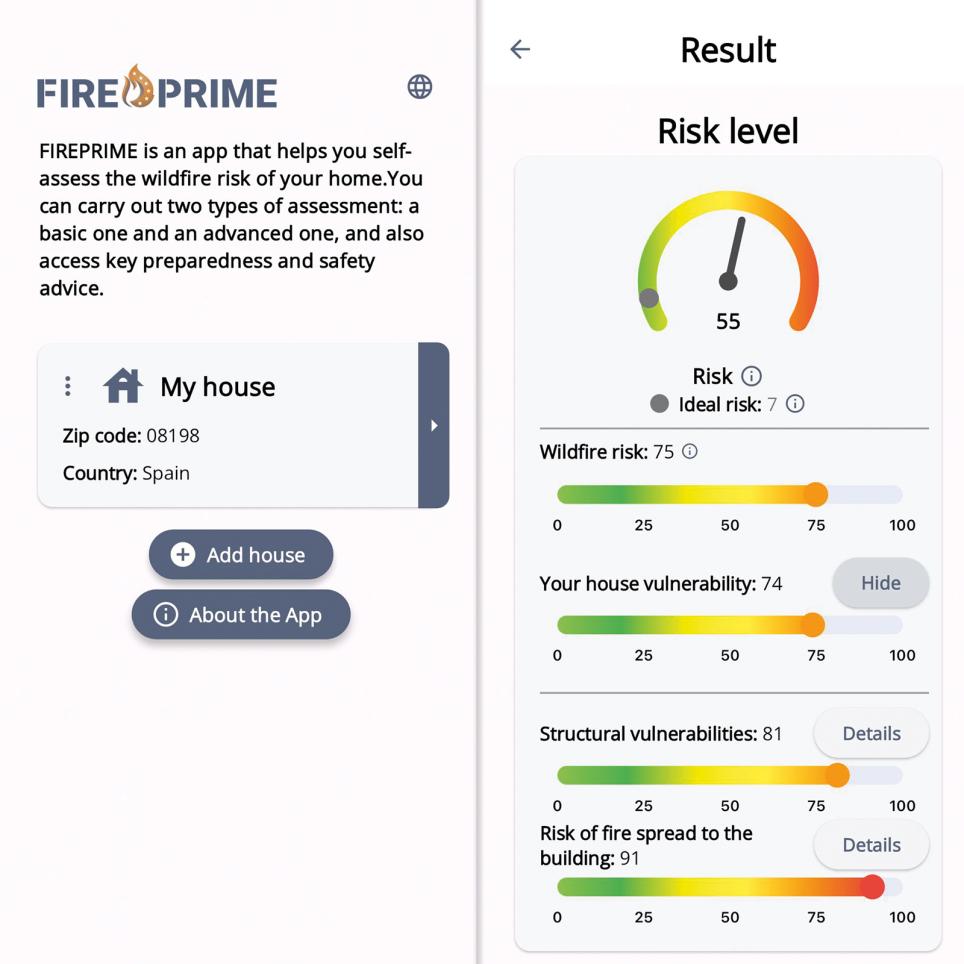
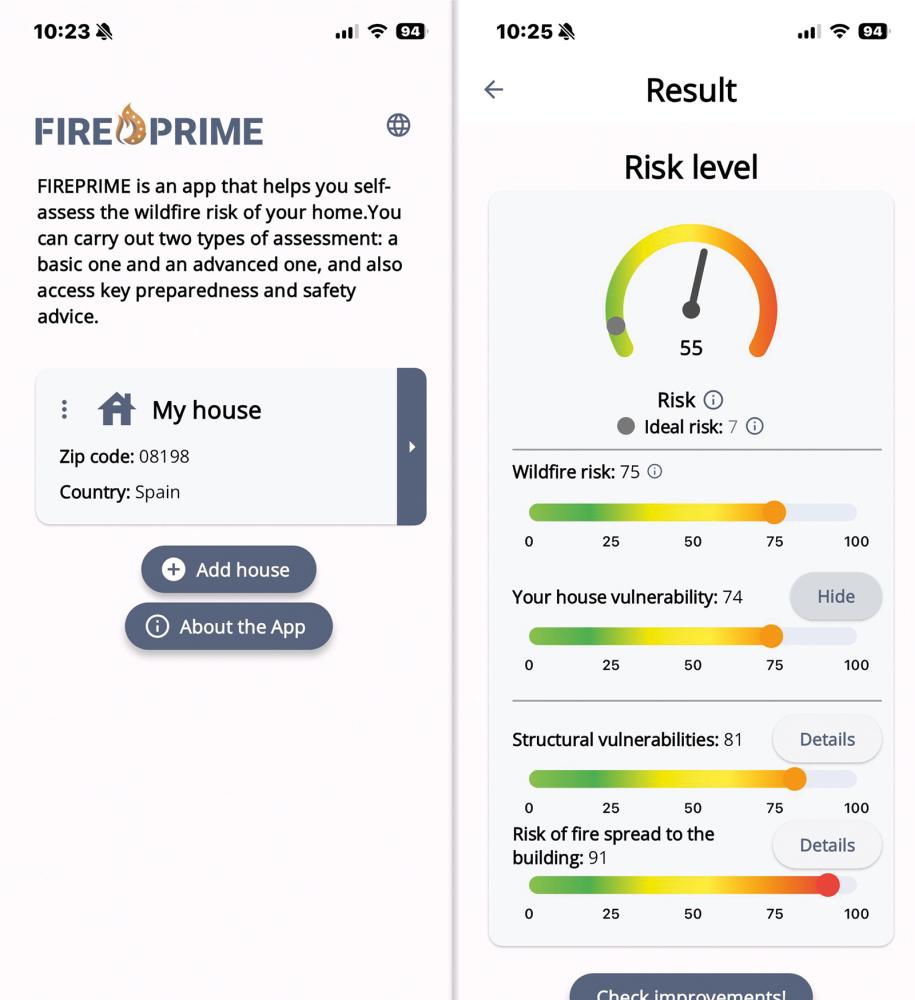
Users can choose between two analysis modes: a basic assessment consisting of 10 yes/no questions that provide a quick risk diagnosis, and an advanced assessment with 23 multiple-choice questions that delve deeper into construction and environmental aspects, as well as the management of nearby vegetative and non-vegetative fuels. In addition, the app provides access to official self-protection recommendations in the event of a wildfire, presented clearly and supported by infographics.
Testing of the application involved professionals from emergency services—firefighters, civil protection personnel, rural agents, and wildfire defence volunteers—as well as residents of wildland–urban interface communities in the FIREPRIME project’s pilot regions: Collserola (Barcelona), the Austrian Tyrol, and Gothenburg (Sweden). In this regard, the conceptualisation of the app has been informed by a prior analysis of risk perception and the diversity of capacities and vulnerabilities of these communities, making it possible to create an app tailored to their real needs.