You are about to be redirected to EU Login, our authentication service.
The UCPKN platform offers different kinds of information views based on the identification of the user, and its associated roles. If it is the first time you are logging in to the platform, your profile will be validated at the end of the process, and you will receive a label and/or associated roles on the platform based on the information provided by you.
If you are a civil protection expert active in the context of the Union Civil Protection Mechanism operations (e.g., training, exercises, deployments), make sure you are using the same email address you used for training/deployment registration for a proper creation of your profile.
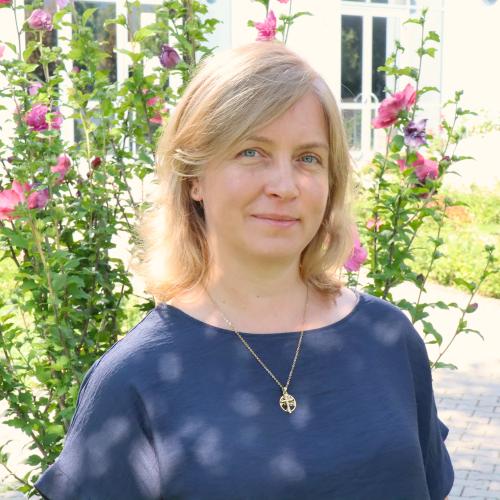
The Department for Emergency Situations (DSU) of the Romanian Ministry of Internal Affairs is a consortium partner in the UCPM Deployable Training Programme. We talked to Andreea NITU, specialist officer at the Civil Protection Training Coordination Unit and National Training Coordinator, about the Romanian perspective on civil protection and Romania’s contribution to our training programme.
What are Romania’s main priorities in civil protection and disaster relief in the 2020ies?
Romania’s priority is to build resilience and prepare for crises before they occur, not merely respond to them. Given its exposure to earthquakes, floods, droughts, wildfires and growing climate-related risks, Romania is strengthening preparedness, response and recovery capacities through a proactive, multi-hazard and whole-of-society approach.
In line with our National Strategy for Disaster Risk Reduction 2023-2035 and the Strategy for Strengthening and Enhancing the Role of the Department for Emergency Situations within the National Emergency Management System 2024-2030, Romania focuses on professional training, realistic exercises, continuous system testing and international cooperation.
What are the main benefits of Romania’s participation in the European Union Civil Protection Mechanism?
For us, the UCPM means European solidarity in action. When an emergency exceeds national capacities, rapid access to European assistance can be decisive. The UCPM also strengthens Romanian capacities through training, exercises, expert exchanges and best‑practice sharing, improving both professional competence and interoperability with other European teams. Interoperability must be built and tested before a crisis, not improvised during one.
But Romania is not only a beneficiary but also an active contributor: it regularly deploys specialised modules to assist other countries, reinforcing European solidarity while gaining operational experience and credibility as a reliable partner.
What motivated DSU to become a consortium partner in the UCPM Deployable Training Programme?
Joining the Training Programme was a natural next step in Romania’s long‑standing engagement in European civil‑protection training and preparedness. When the German THW invited DSU into the new consortium, Romania was already contributing to the EU Training Programme through various courses.
Our experience in organising and implementing MODEX, together with extensive participation in UCPM training, showed the value of continued collaboration. Romania entered the consortium to share practical experience, support high‑quality training and help ensure that European experts can work together effectively.
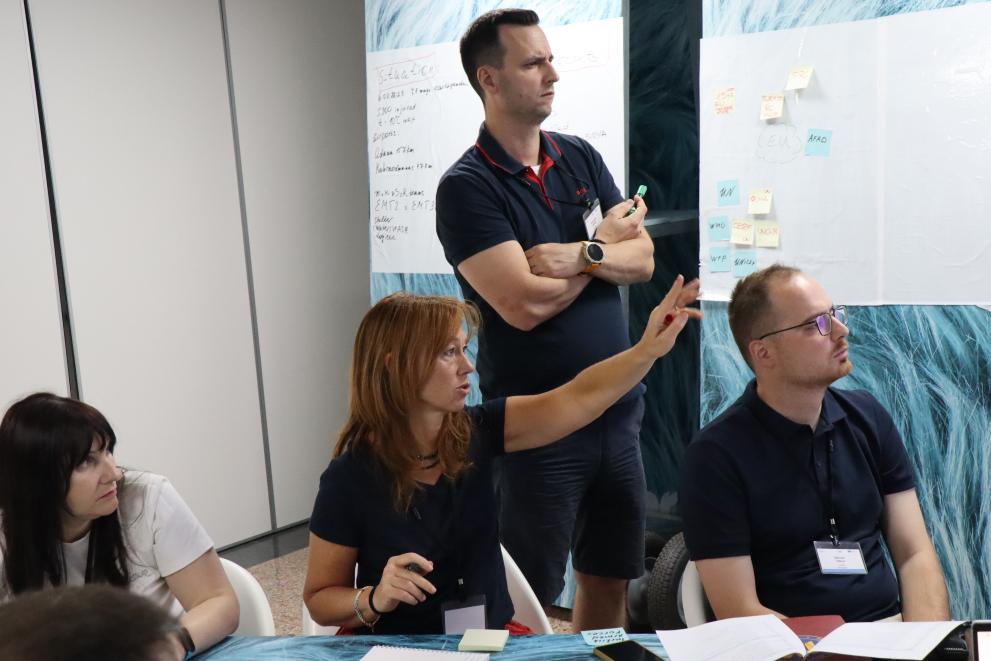
Teamwork means plenty of discussions: Participants of the UMI course in Bucharest in July 2026 talking it through.
How are Romanian experts selected and prepared for international civil-protection deployments?
International deployments require more than technical skills: responders must decide under pressure, adapt quickly and function in multinational teams. Romania therefore emphasises both professional development and operational readiness. Experts undergo a structured selection process assessing qualifications, operational experience, technical expertise, language skills and ability to work in multicultural environments.
Candidates typically come from General Inspectorate for Emergency Situations, the General Inspectorate of Aviation, emergency medical services and other components of the National Integrated Emergency System. Their preparation combines national trainings with continuous participation in UCPM activities, aiming not only to prepare individuals for deployment but to ensure they can immediately integrate into international operational structures.
What makes training for a deployable international team different from training for domestic emergency response missions?
Training for international deployment differs significantly from domestic response training. Domestic work relies on national procedures, legislation, established command structures and familiar environments; international missions require operating in unfamiliar cultural, linguistic, political and administrative contexts.
Deployable teams therefore receive additional preparation in multinational coordination, intercultural communication, humanitarian principles, security, logistics, self‑sufficiency and cooperation with international organisations and local authorities, including in resource‑constrained settings. They must understand not only their own function but how it fits into a larger international response architecture: technical competence gets teams to the field; interoperability makes them effective once there.
What disaster relief mission experiences from Romania could be scaled EU-wide?
One of Romania’s key strengths is its integrated emergency‑management system, which coordinates civil protection, fire services, EMTs, aviation, police and other responders. This approach has been tested across diverse emergencies and is especially valuable when rapid coordination, resource mobilisation and decision‑making are critical.
Romania’s substantial expertise in deploying multidisciplinary teams and operating effectively in resource‑constrained environments offers lessons for other member states. Through expert exchanges, Romania shares practices on integrated national systems, operational coordination in integrated dispatch centres and specialised training.
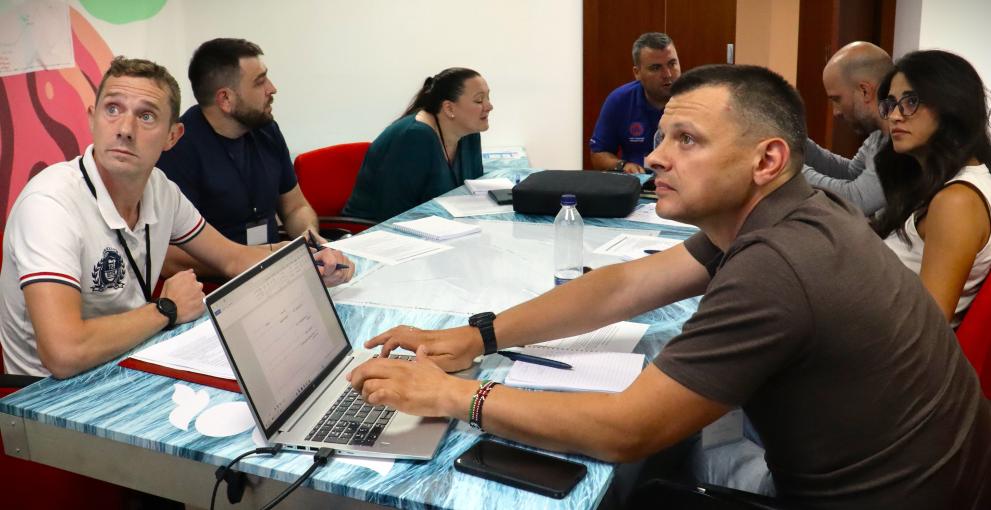
Intense UCPM training vibes in Bucharest: Participants of the UMI course in July 2026.
Looking ahead, how do you see Romania's role expanding in UCPM training and deployments?
Romania aims not only to participate more in the UCPM but to contribute more strategically to its future development. Its capabilities and location in Eastern Europe enable significant contributions to regional and international preparedness, coordination and response. In addition, Romania has the potential to become a regional hub for knowledge sharing and capacity building, supporting both national and international teams through joint exercises and cross-border cooperation.
Romania has strongly advocated for the development of tools and capabilities available to the UCPM. It was a key proponent of rescEU and became the first European country to establish a European medical stockpile reserve during the COVID‑19 pandemic. Now, we advocate to reassess rescEU with a focus on long‑term solutions, including renewed consideration of regional rescEU hubs as part of a more strategic, sustainable approach to European preparedness.
Romania continues to expand its contributions to the European Civil Protection Pool. In addition to certified capacities such as High‑Capacity Pumping, Ground Forest Firefighting using Vehicles, Emergency Medical Teams, or CBRN response teams, Romania is finalising the certification of new medical and other response capacities. Our objective is clear: Romania should remain not only a country that can rely on European solidarity when needed, but one that Europe can rely on when a crisis occurs.
Interested in the UCPM Deployable Training Programme Newsletter? Let us know info@tvc-academy.eu