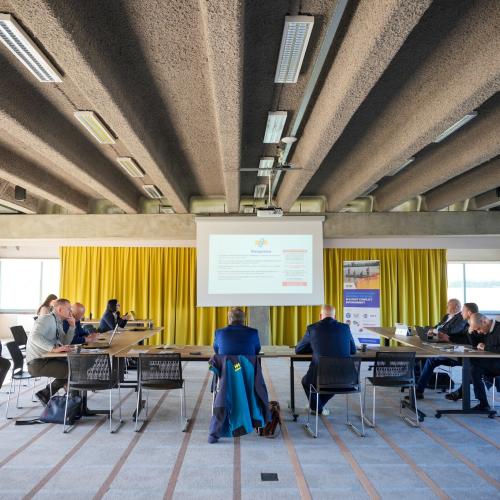
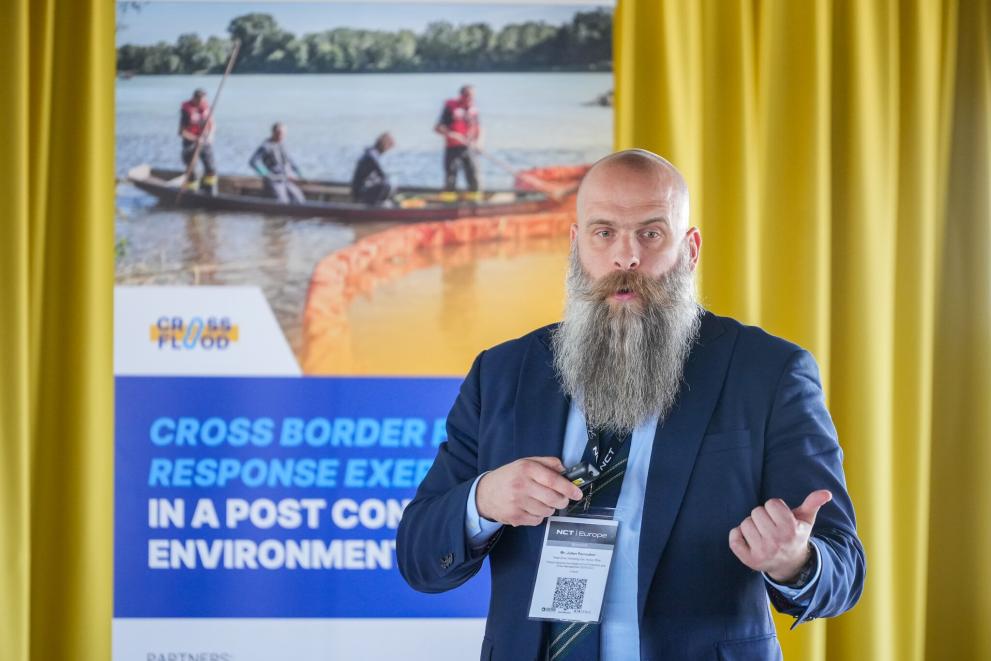
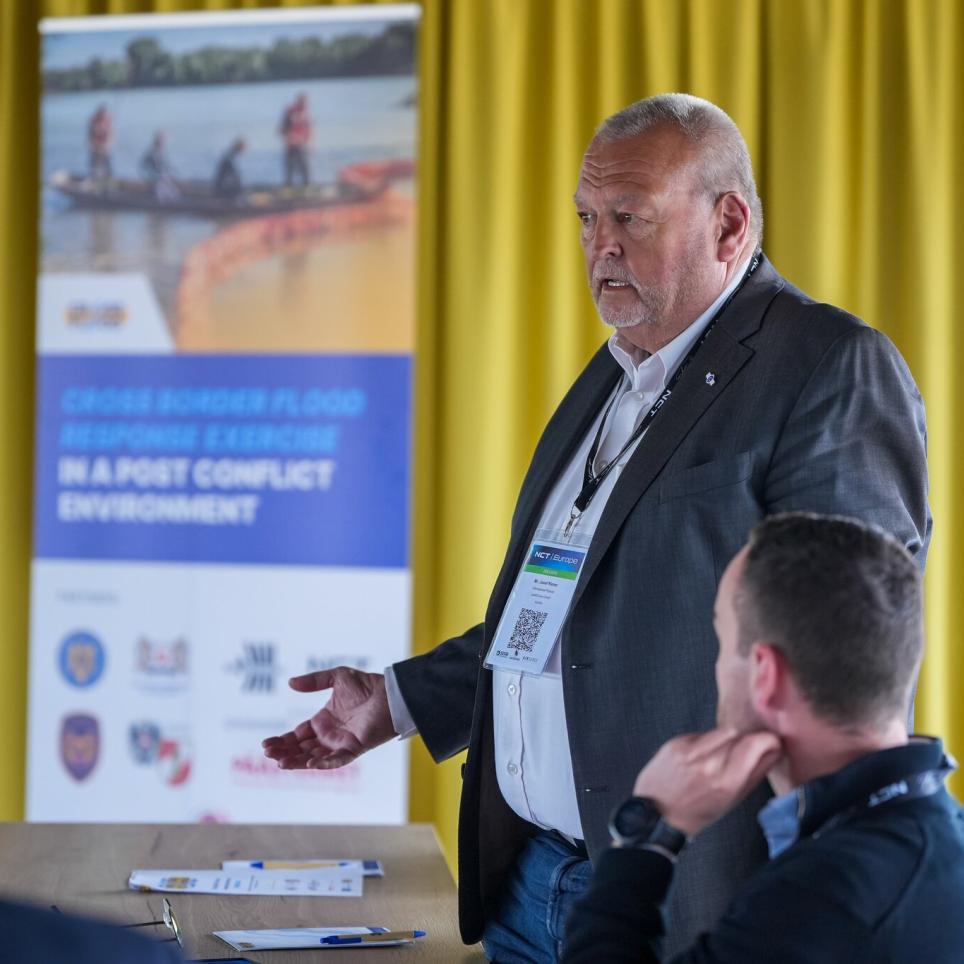
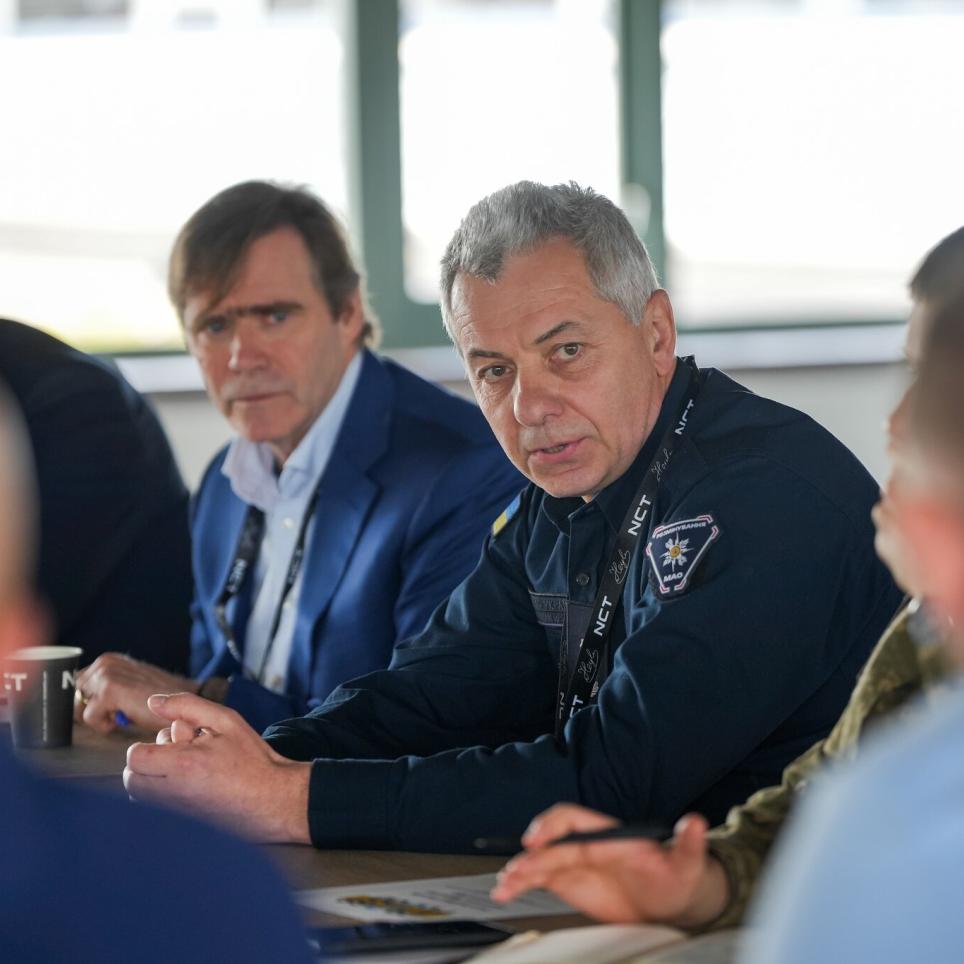
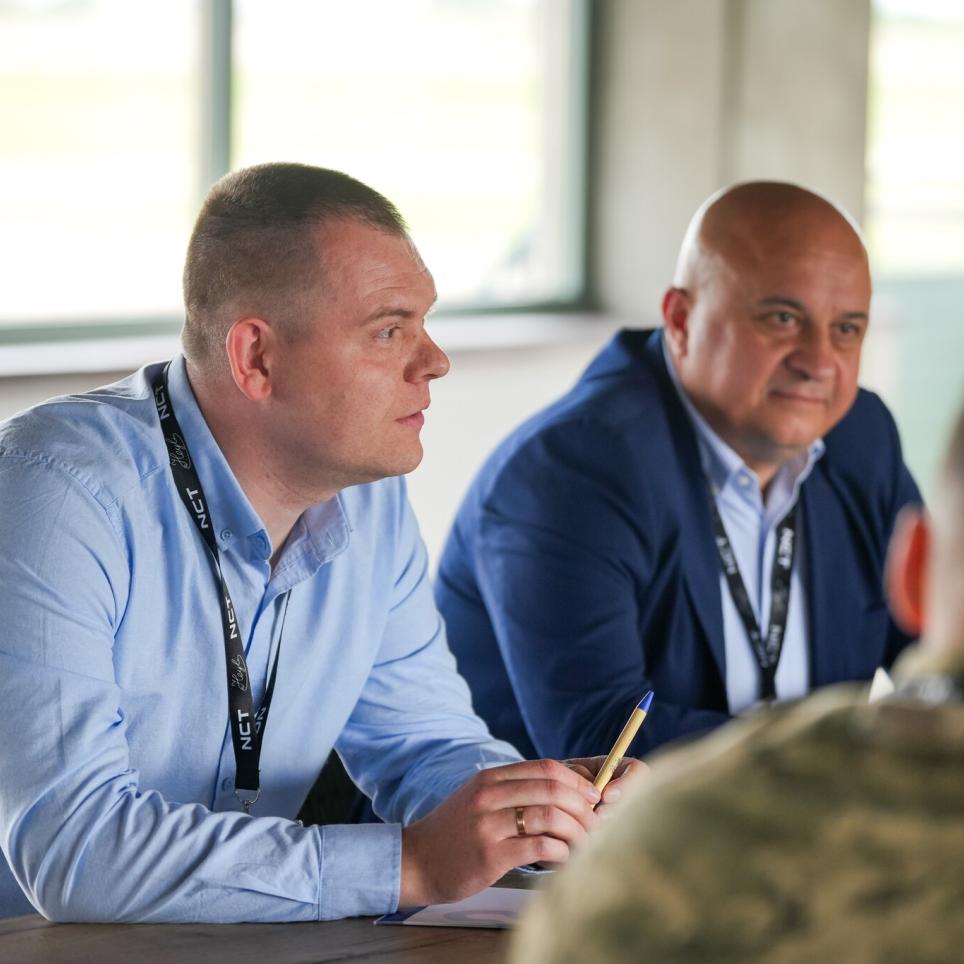
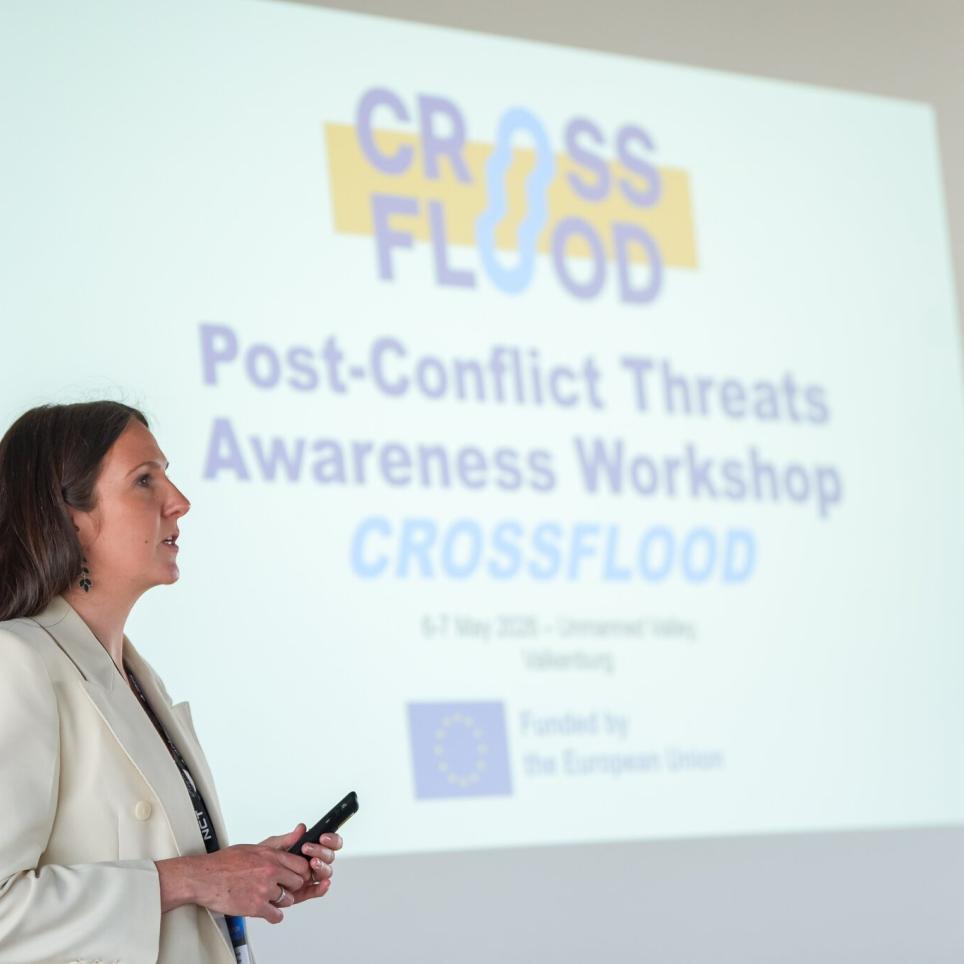
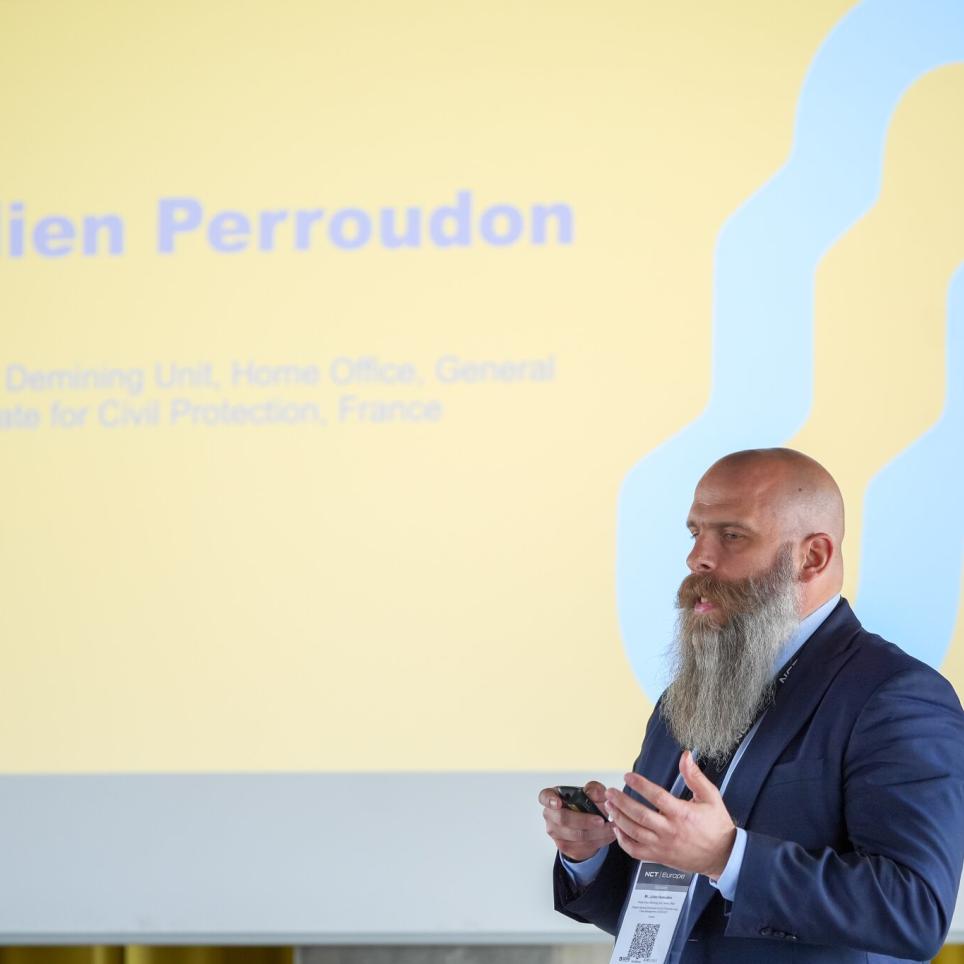
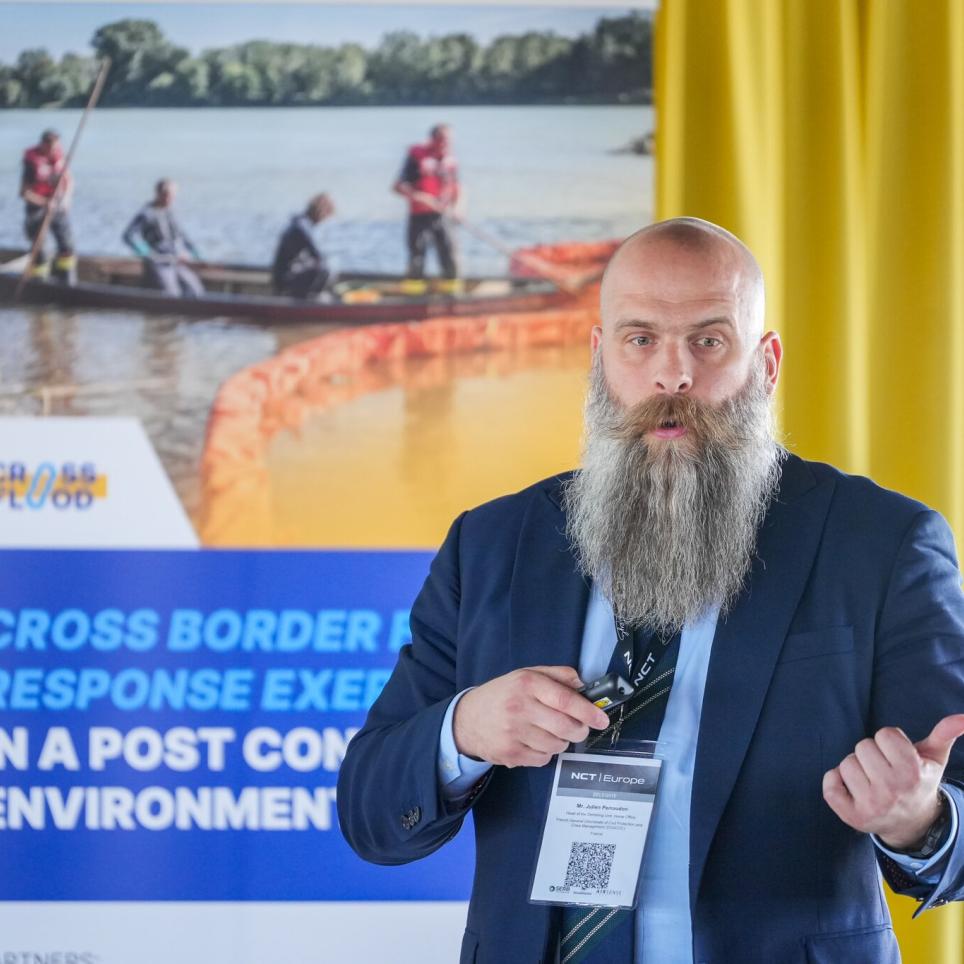
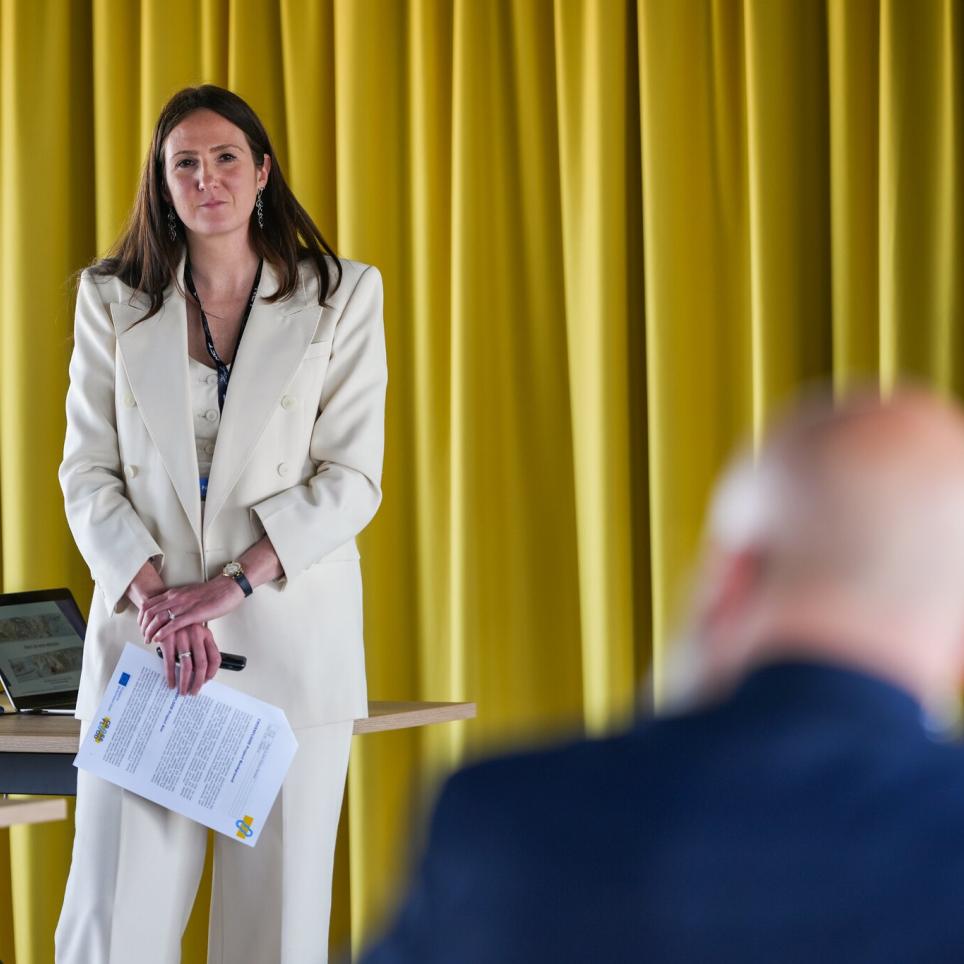
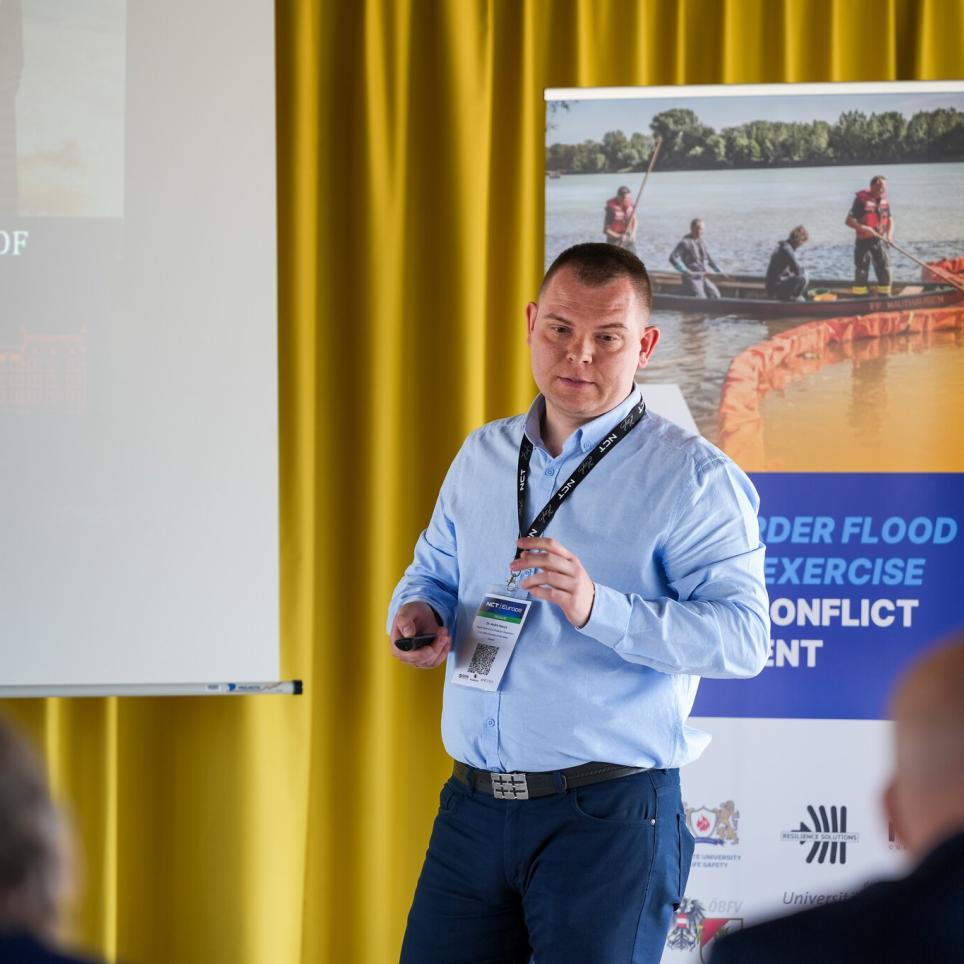
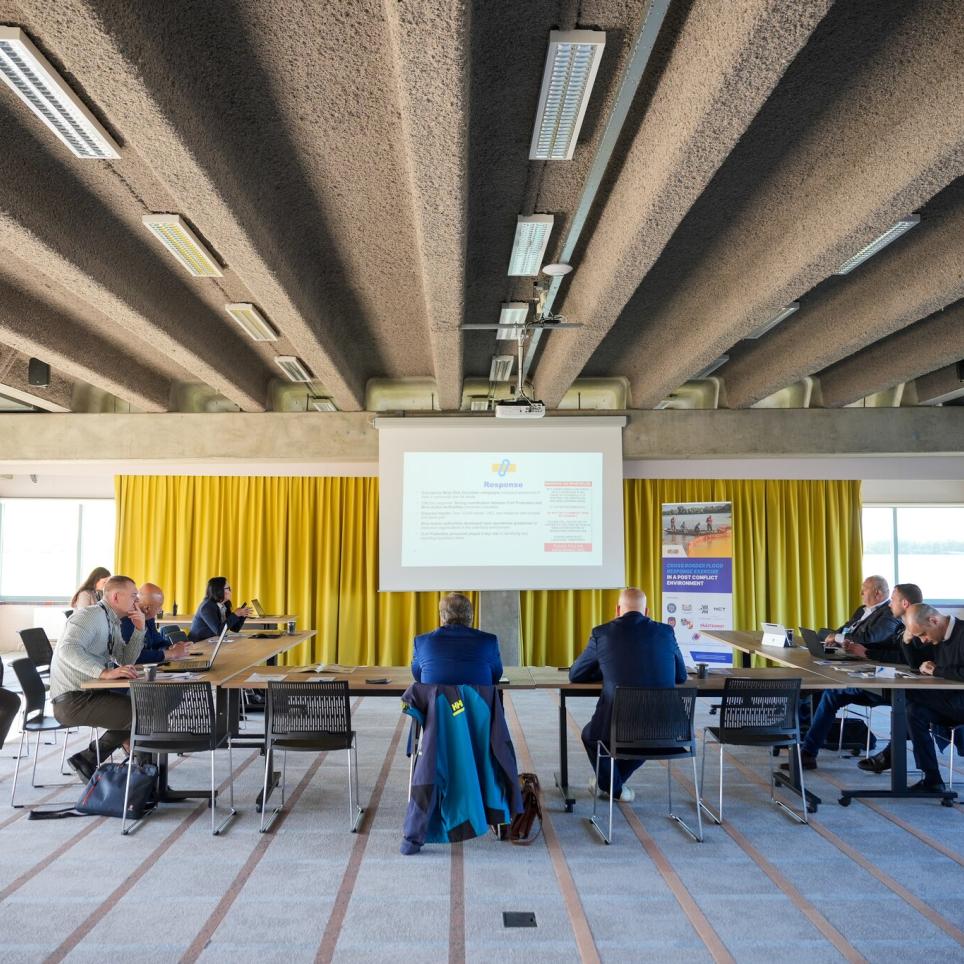
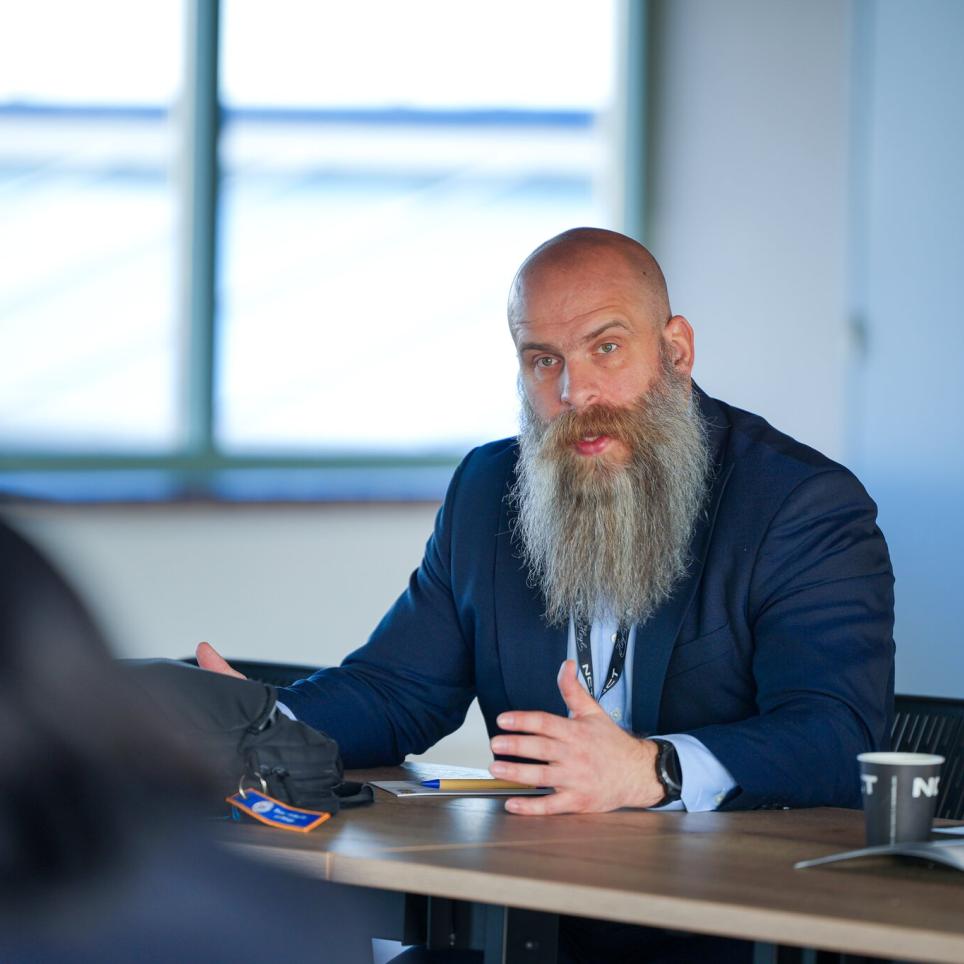
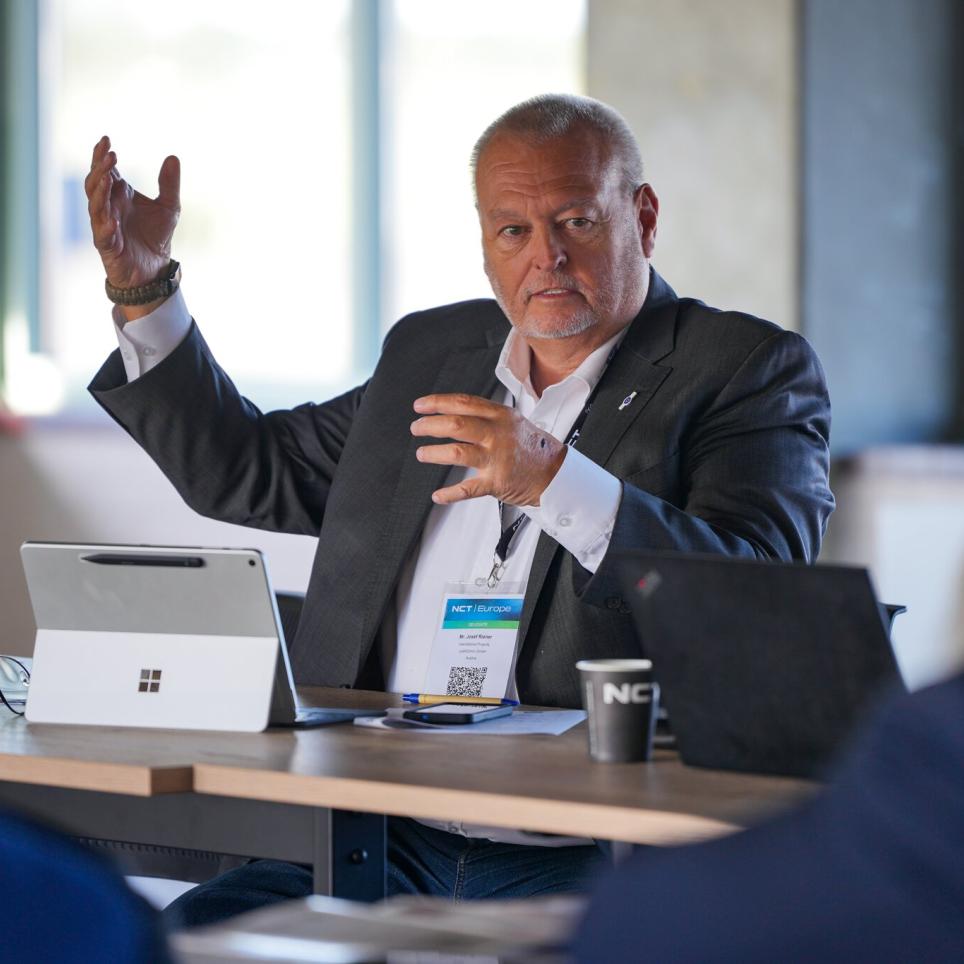
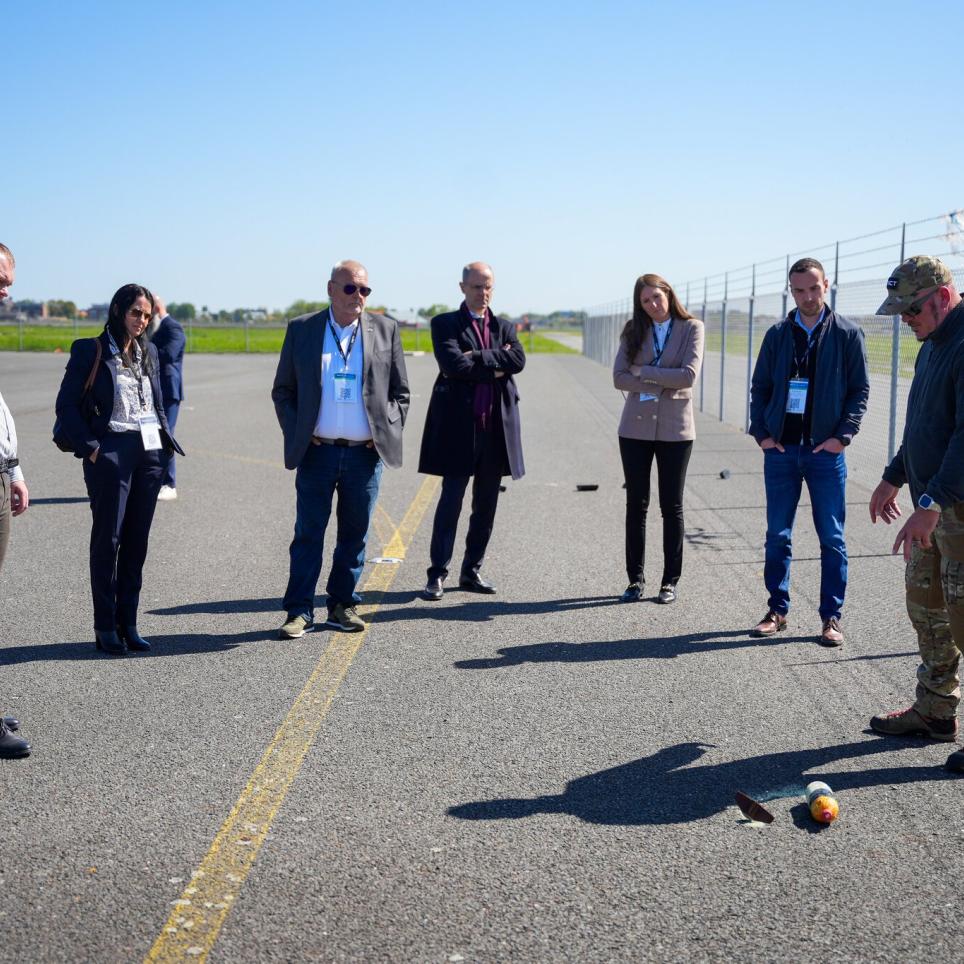
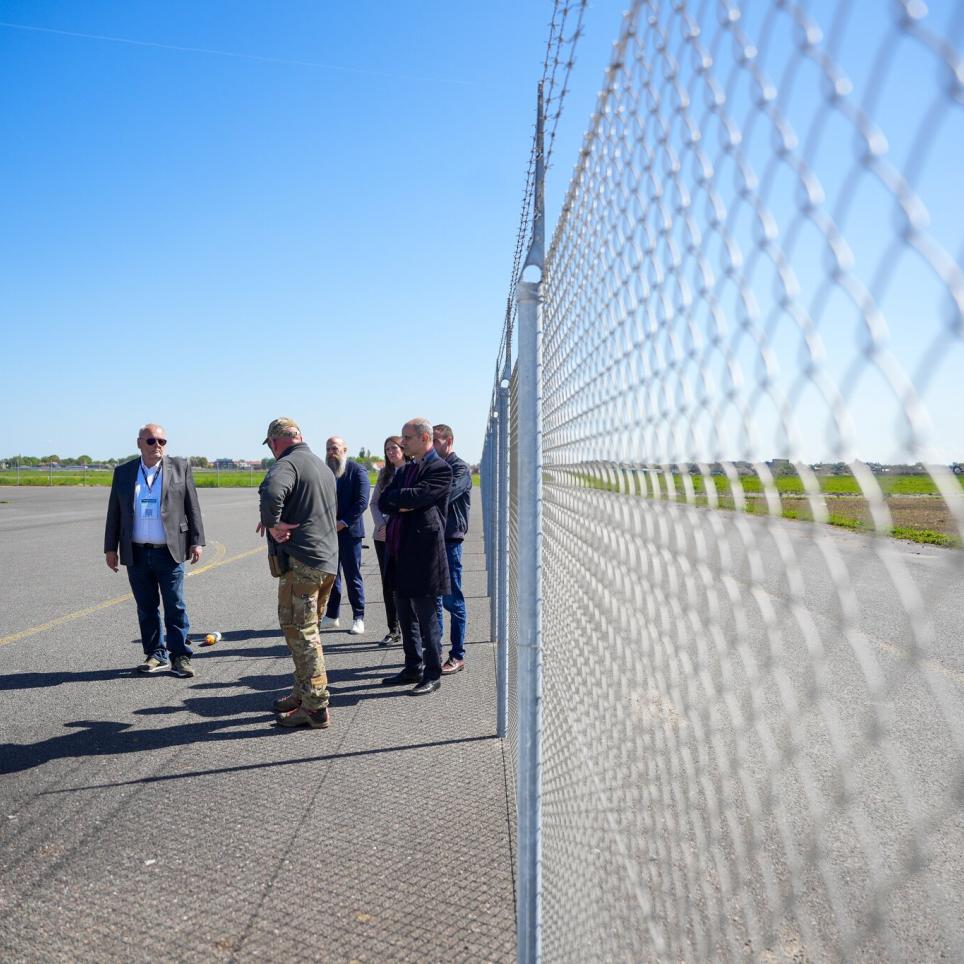
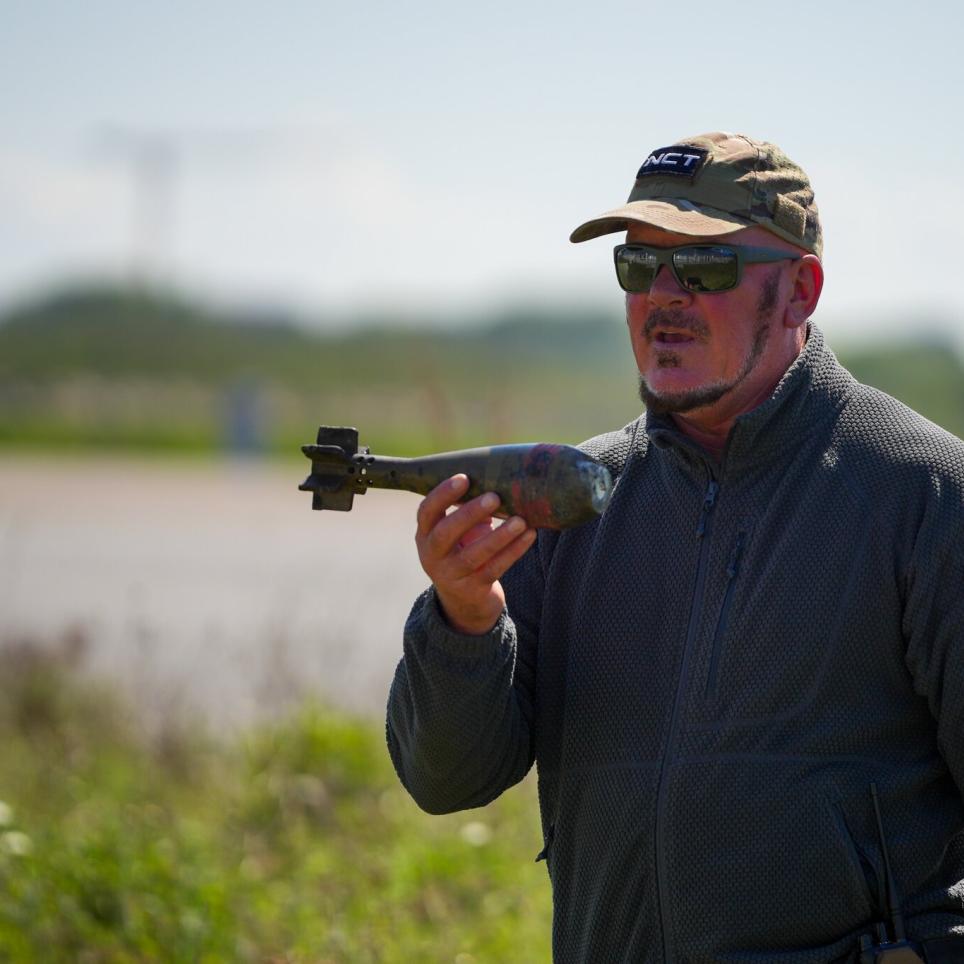
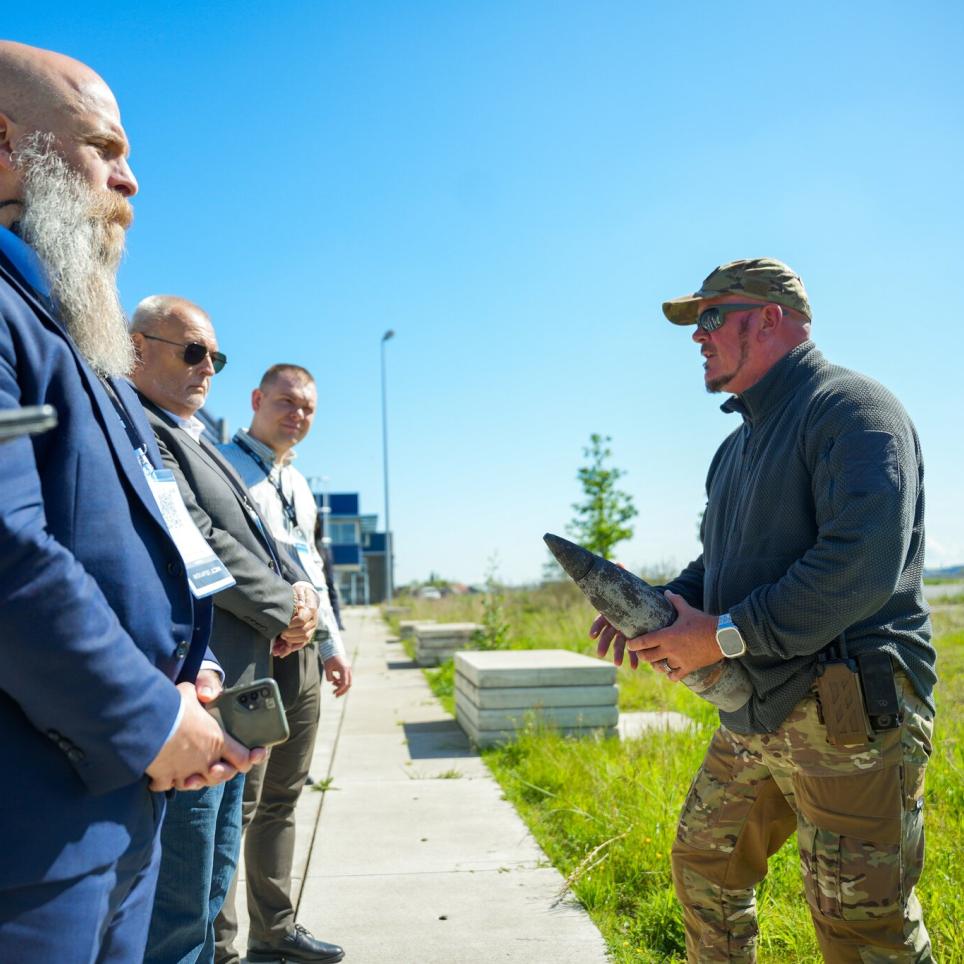
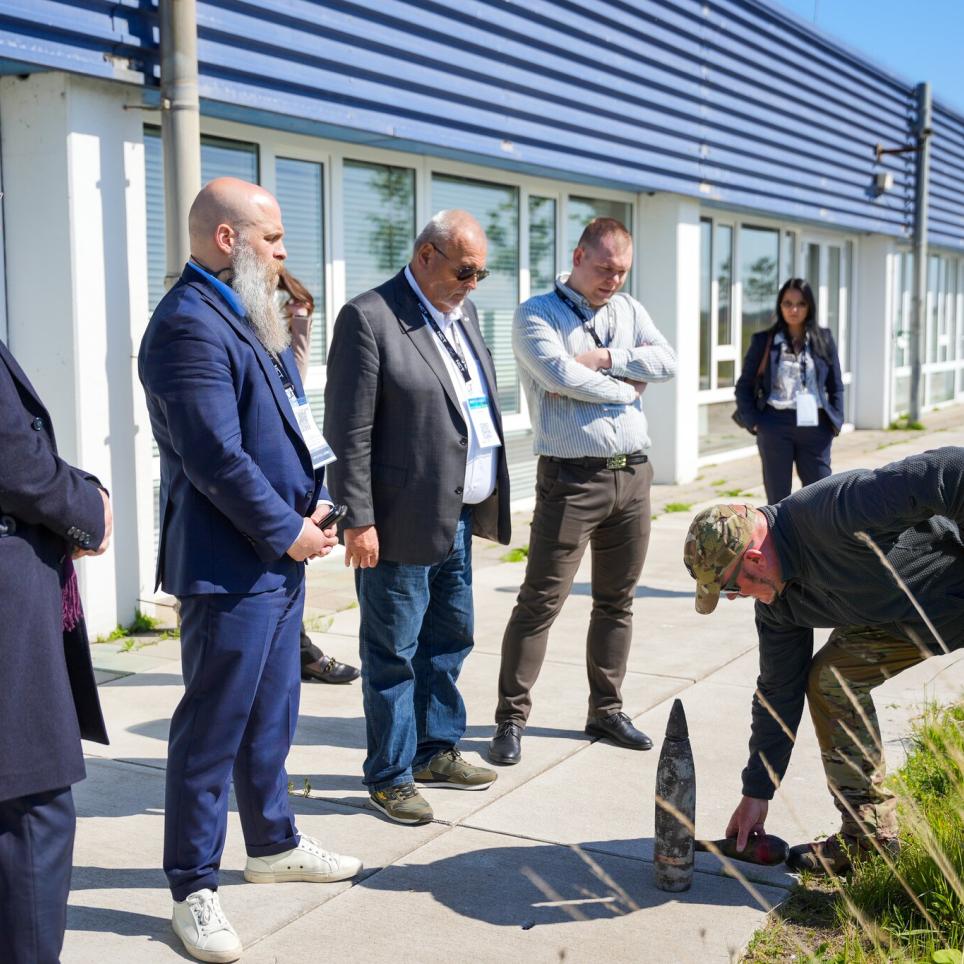
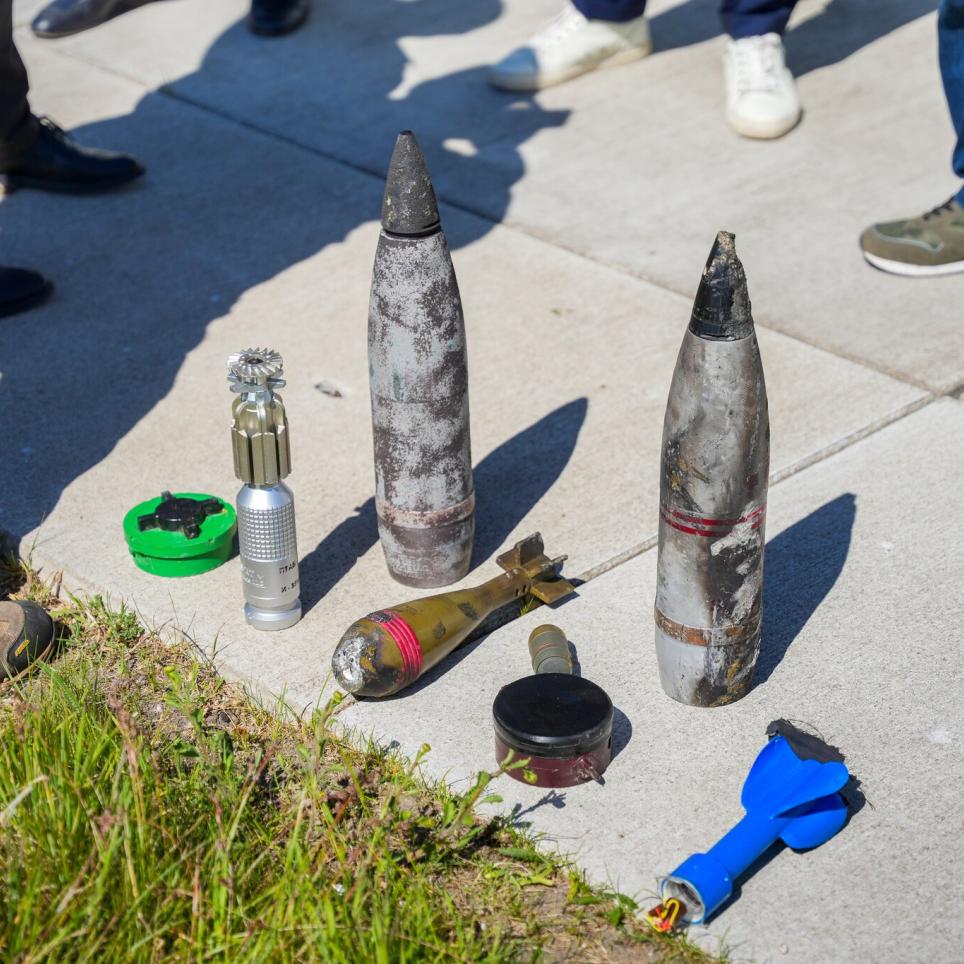
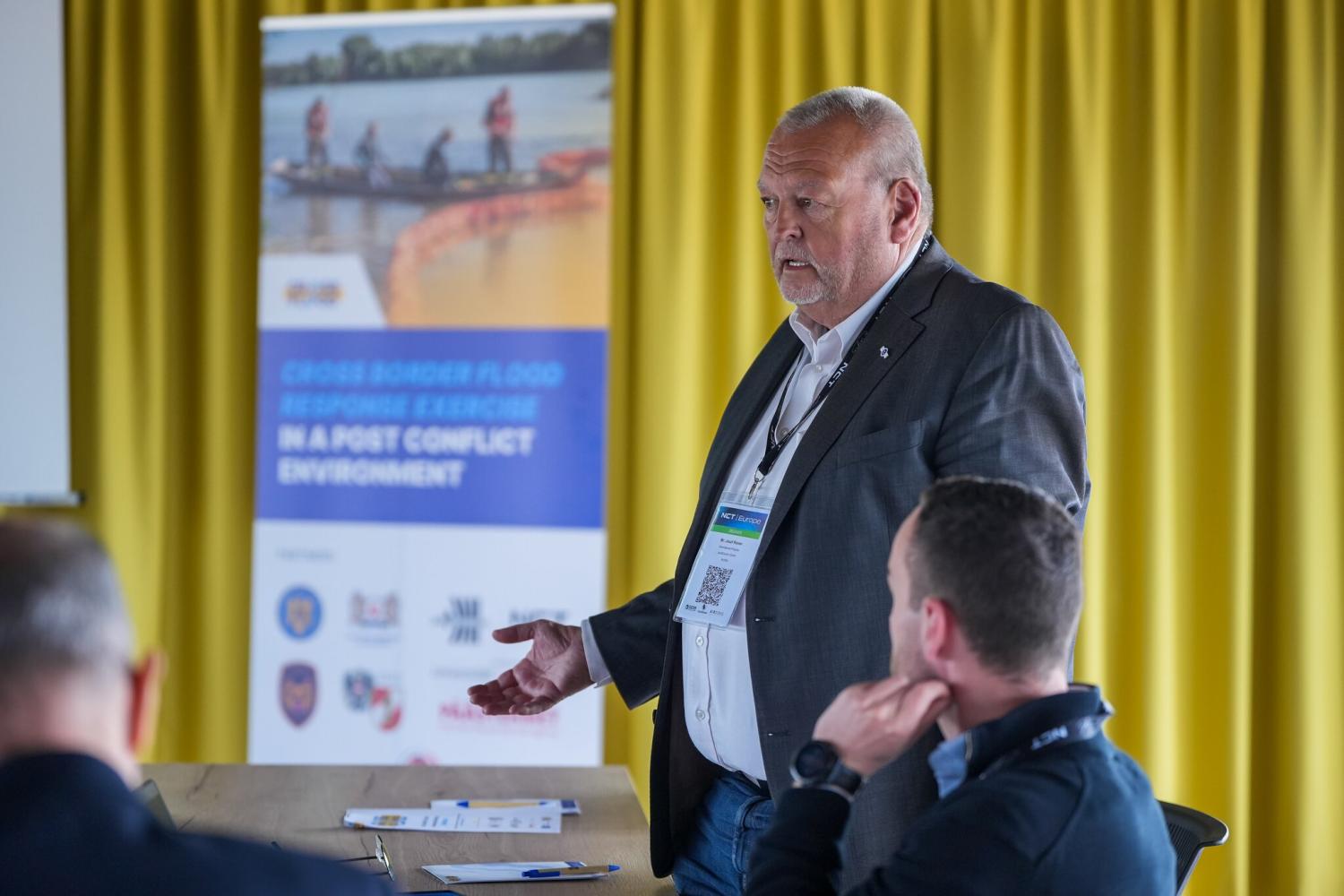
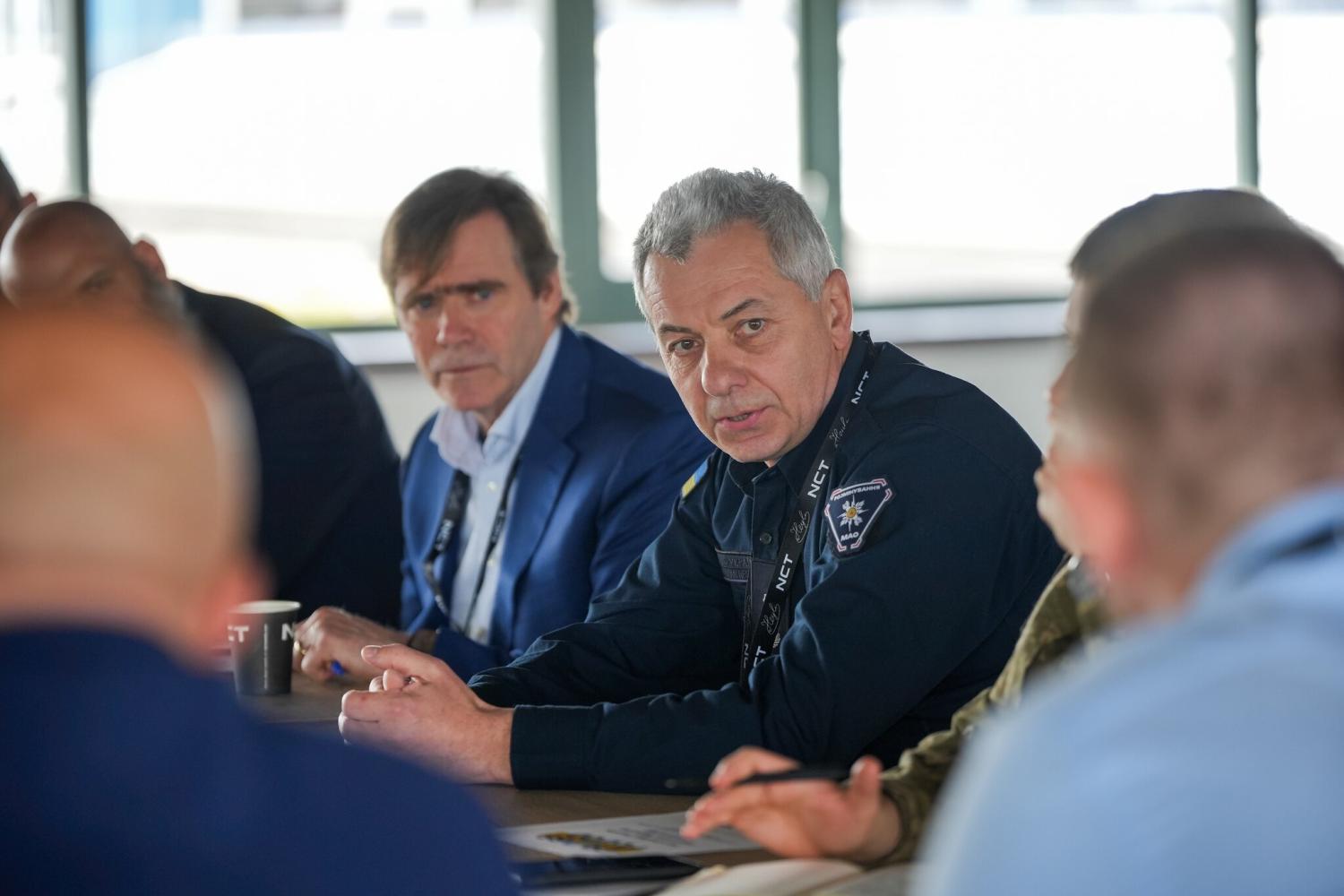
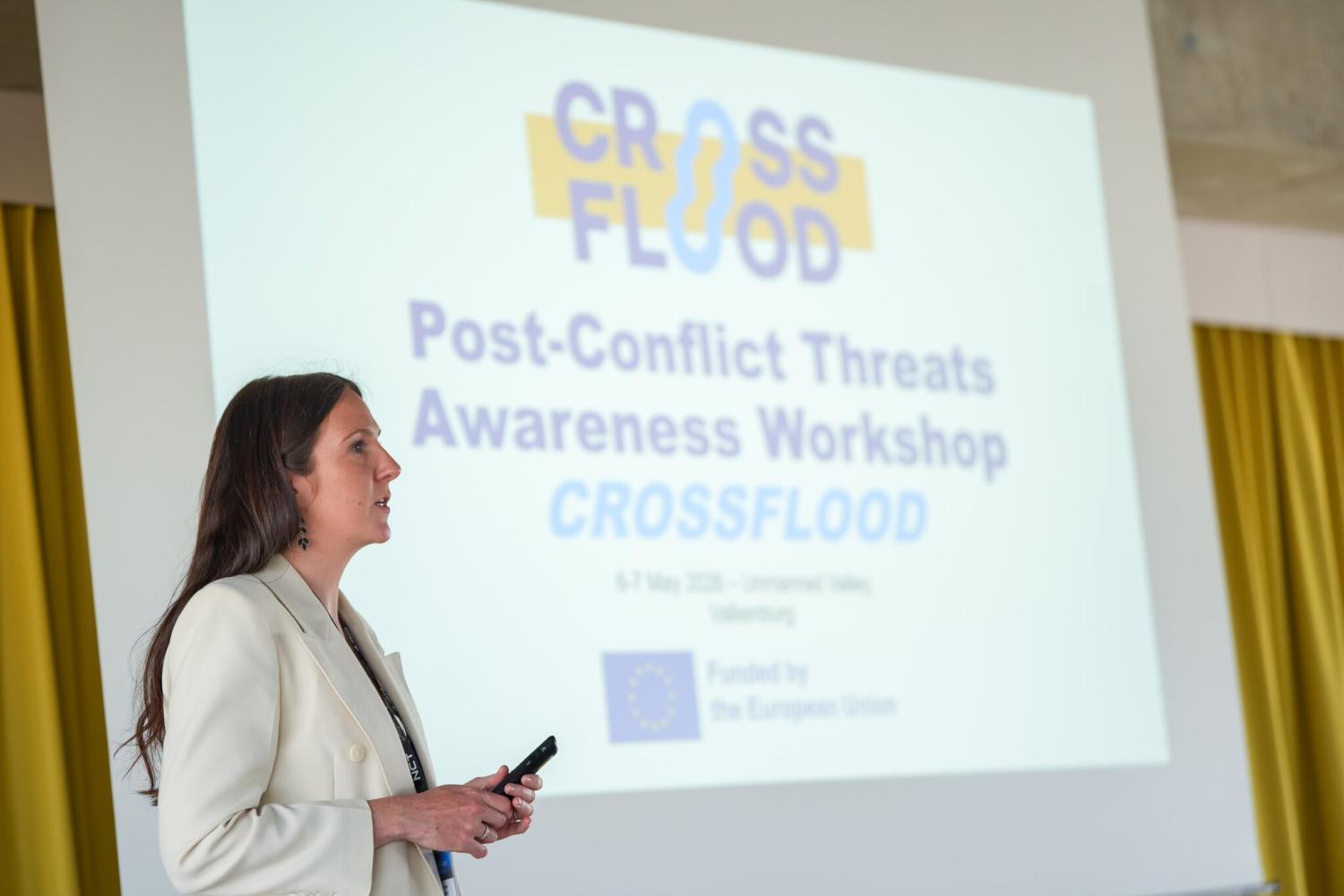
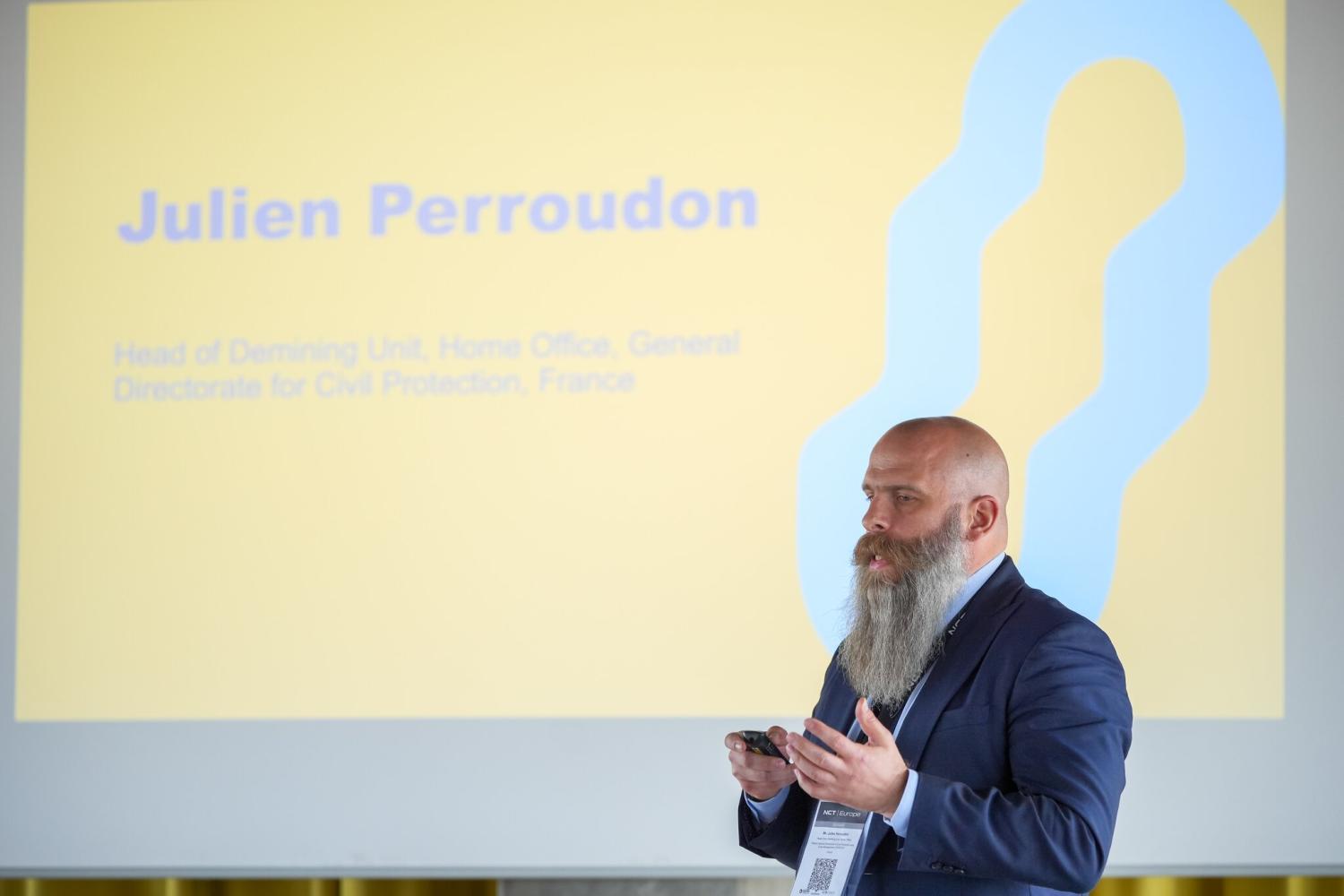
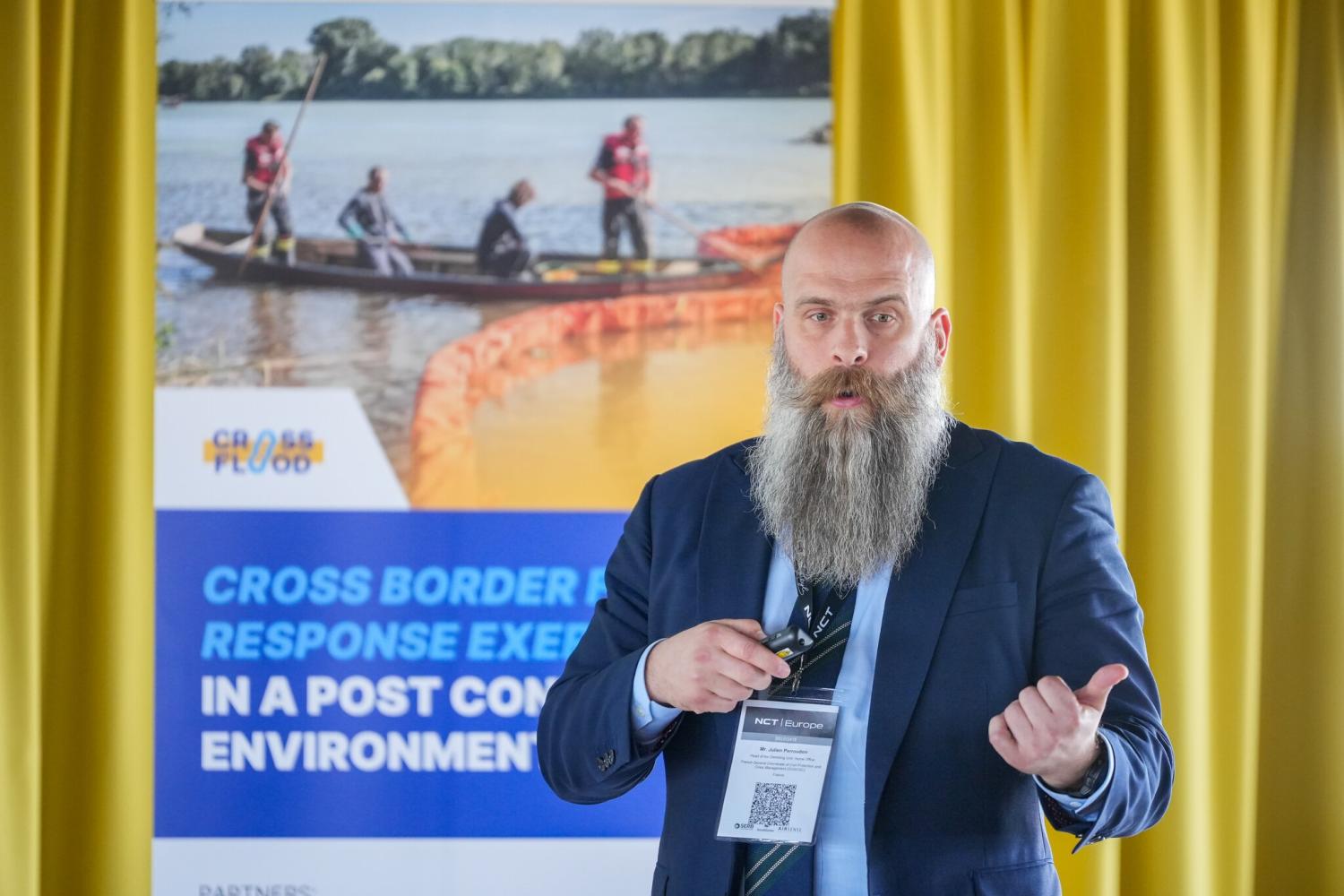
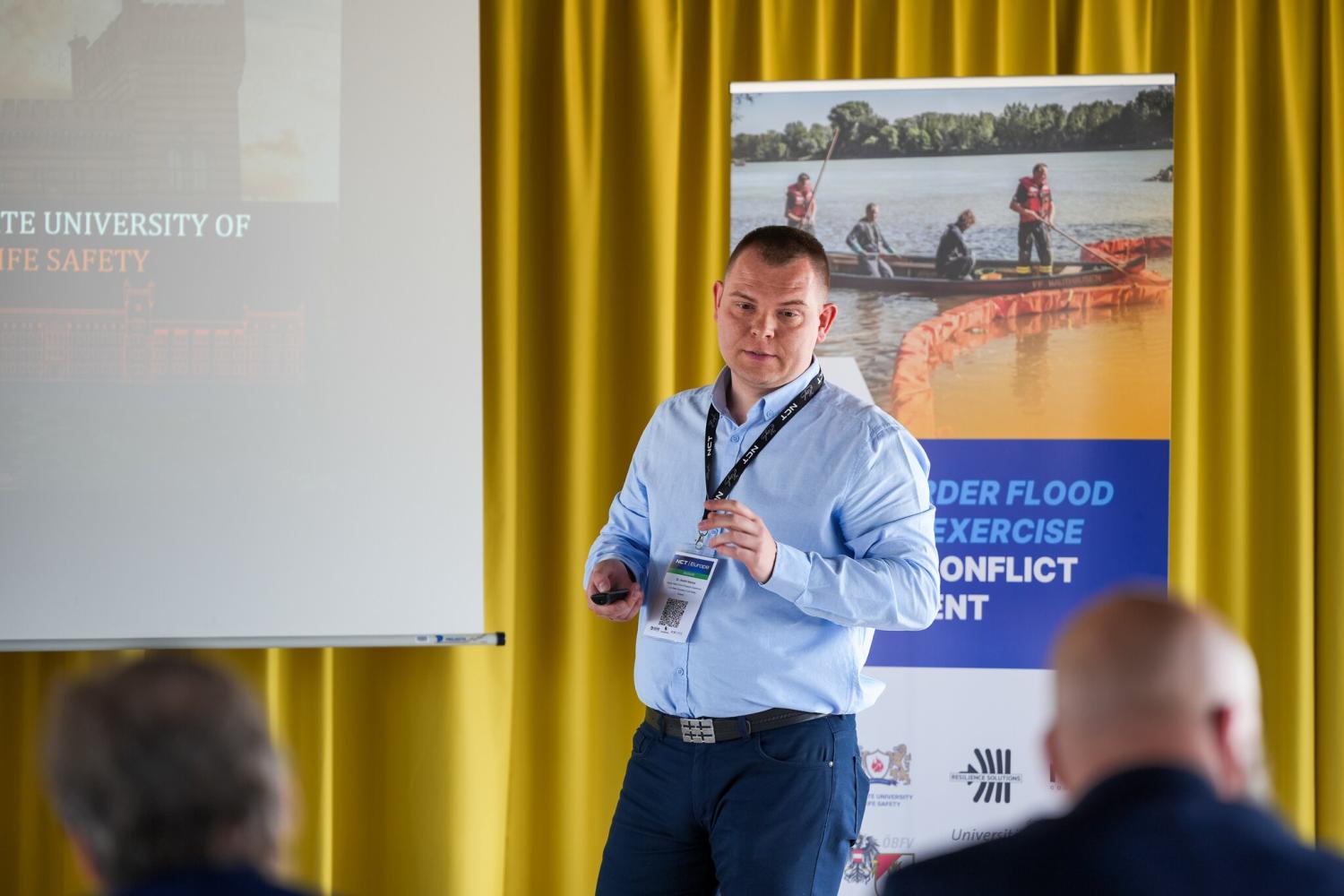
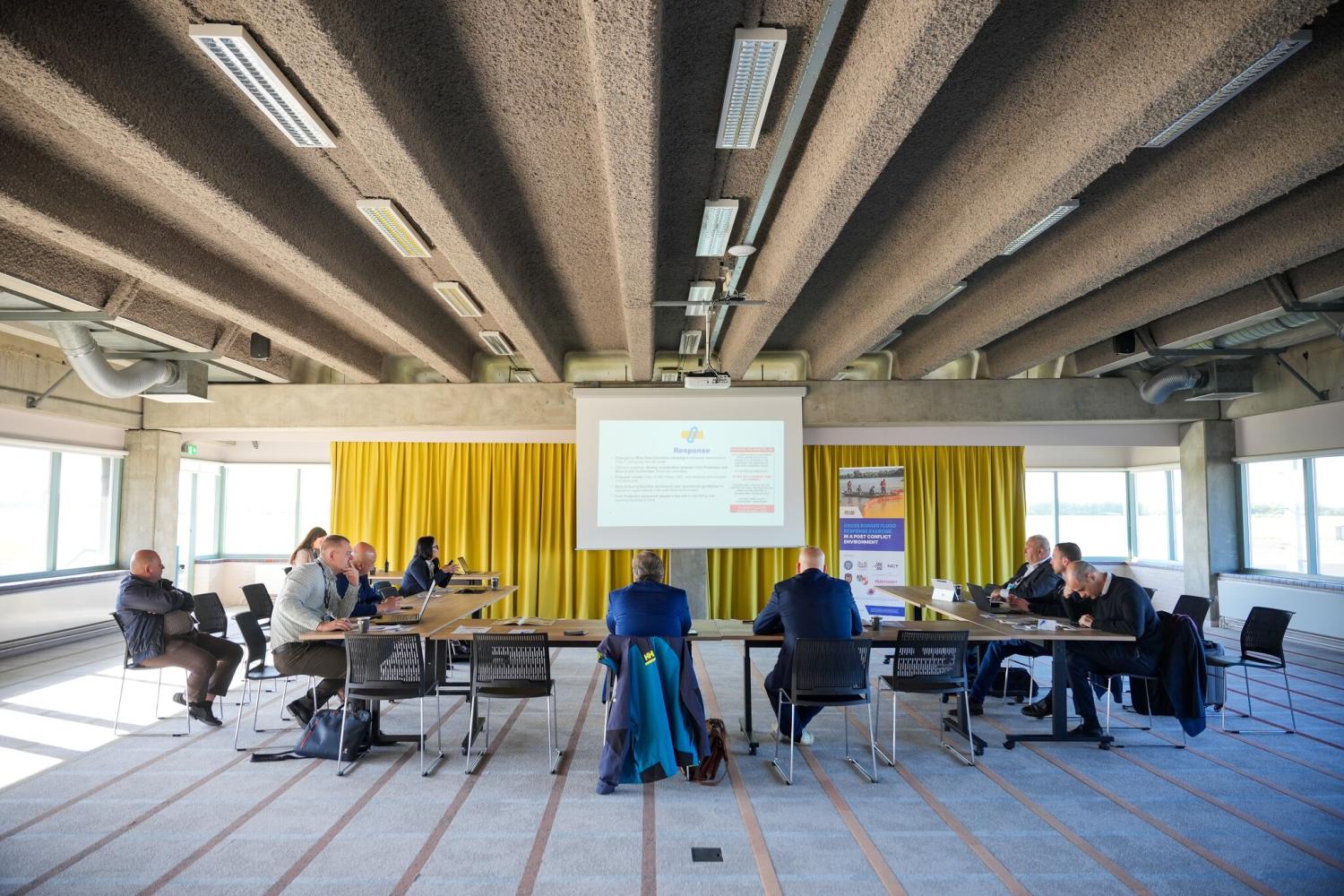
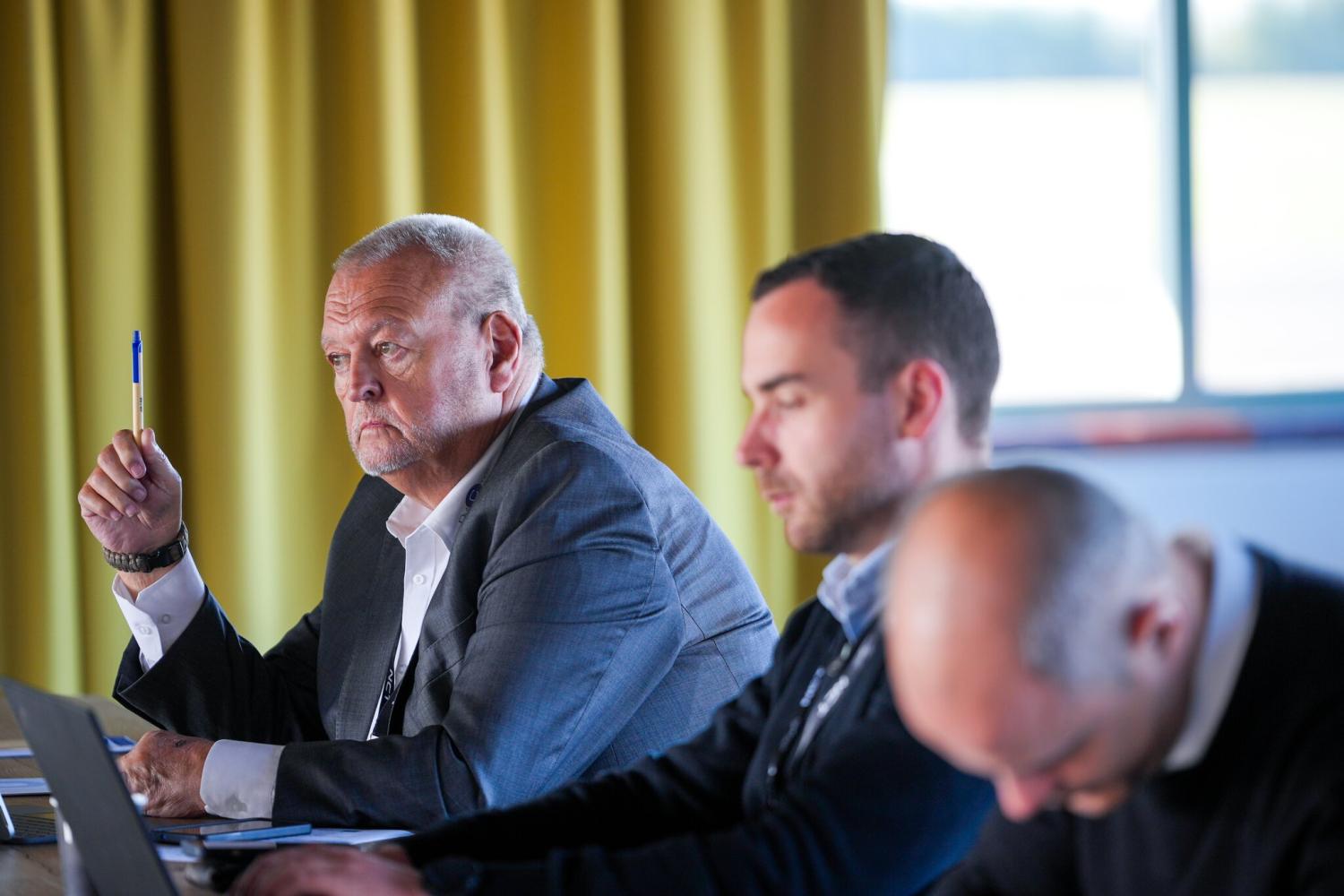
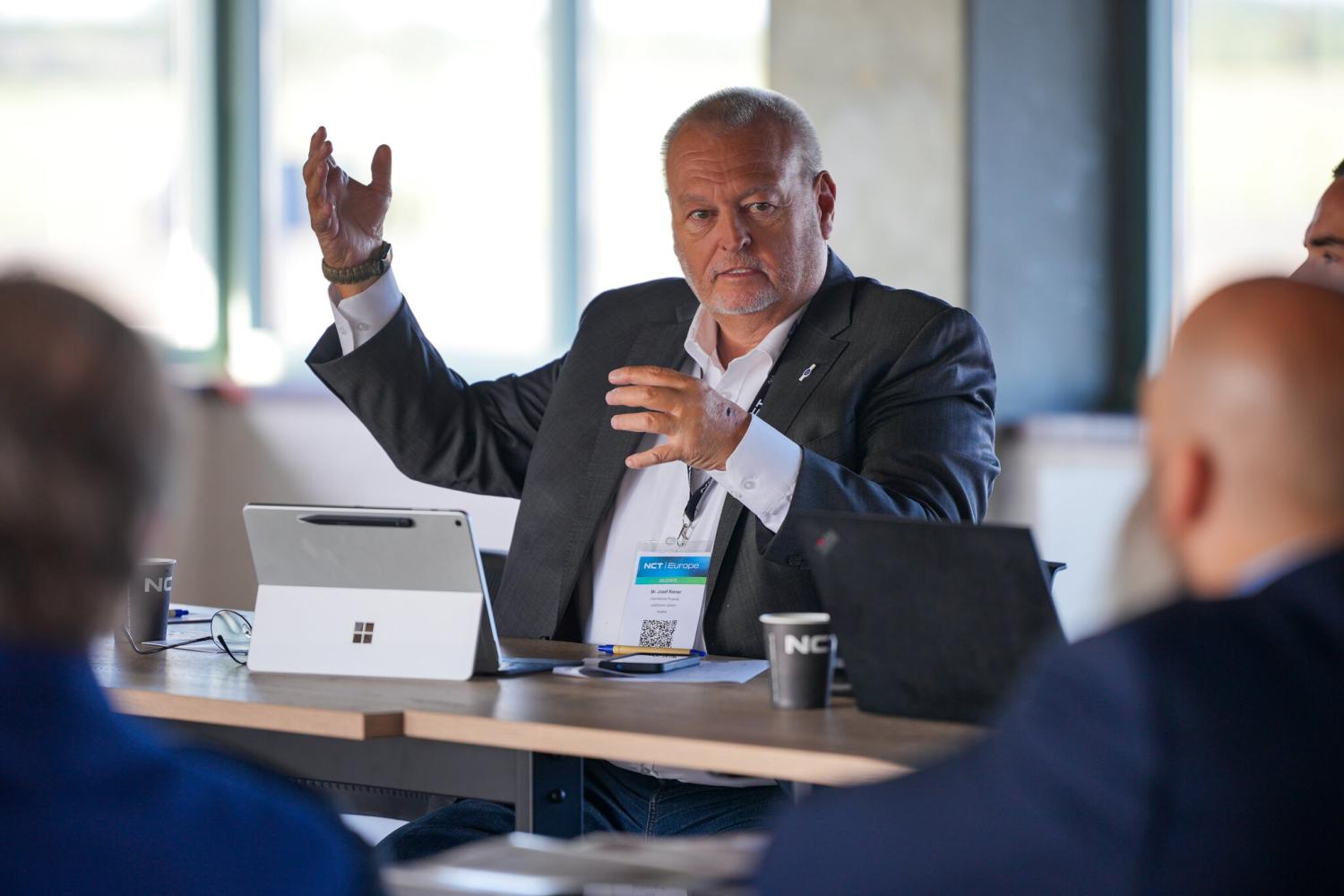
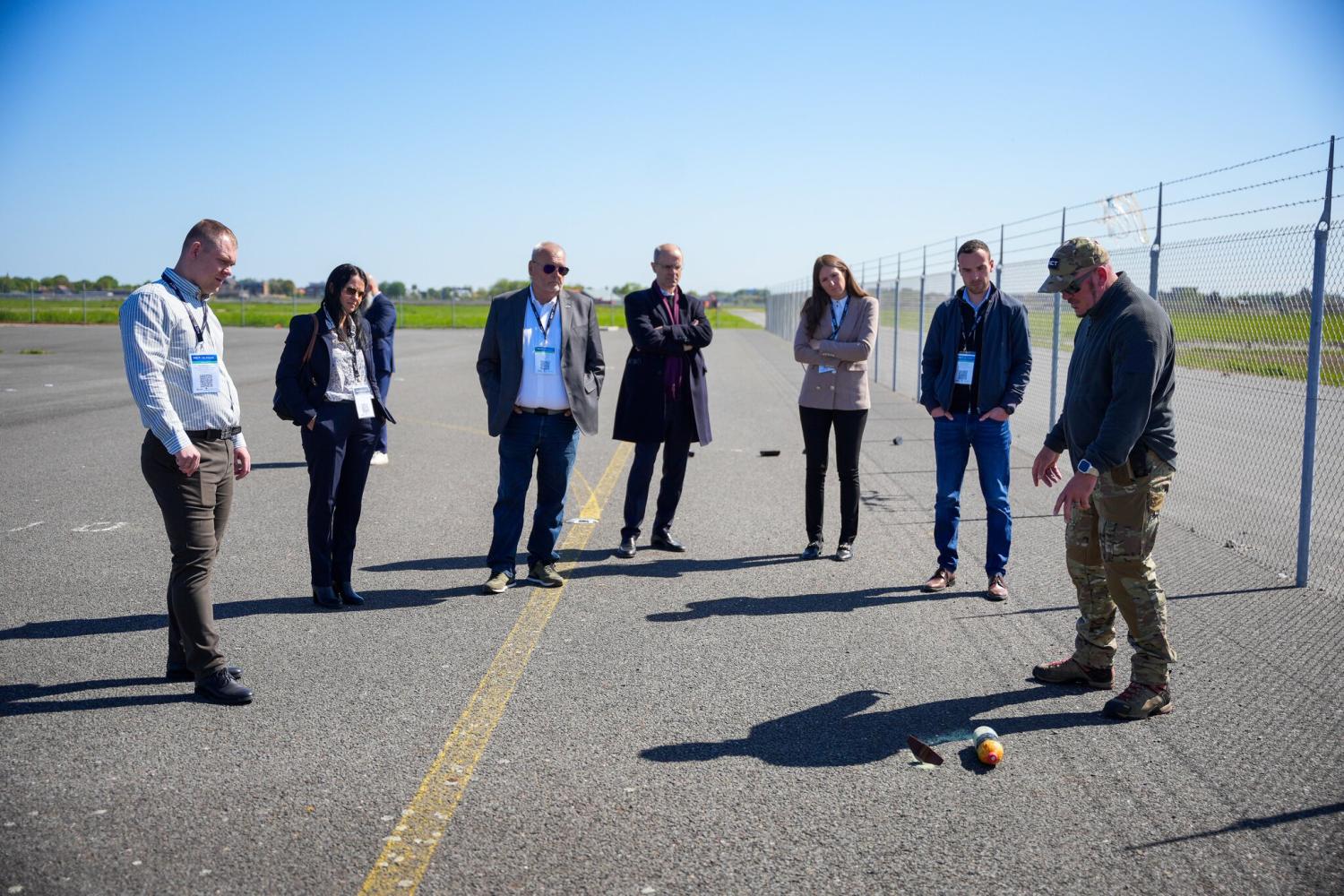
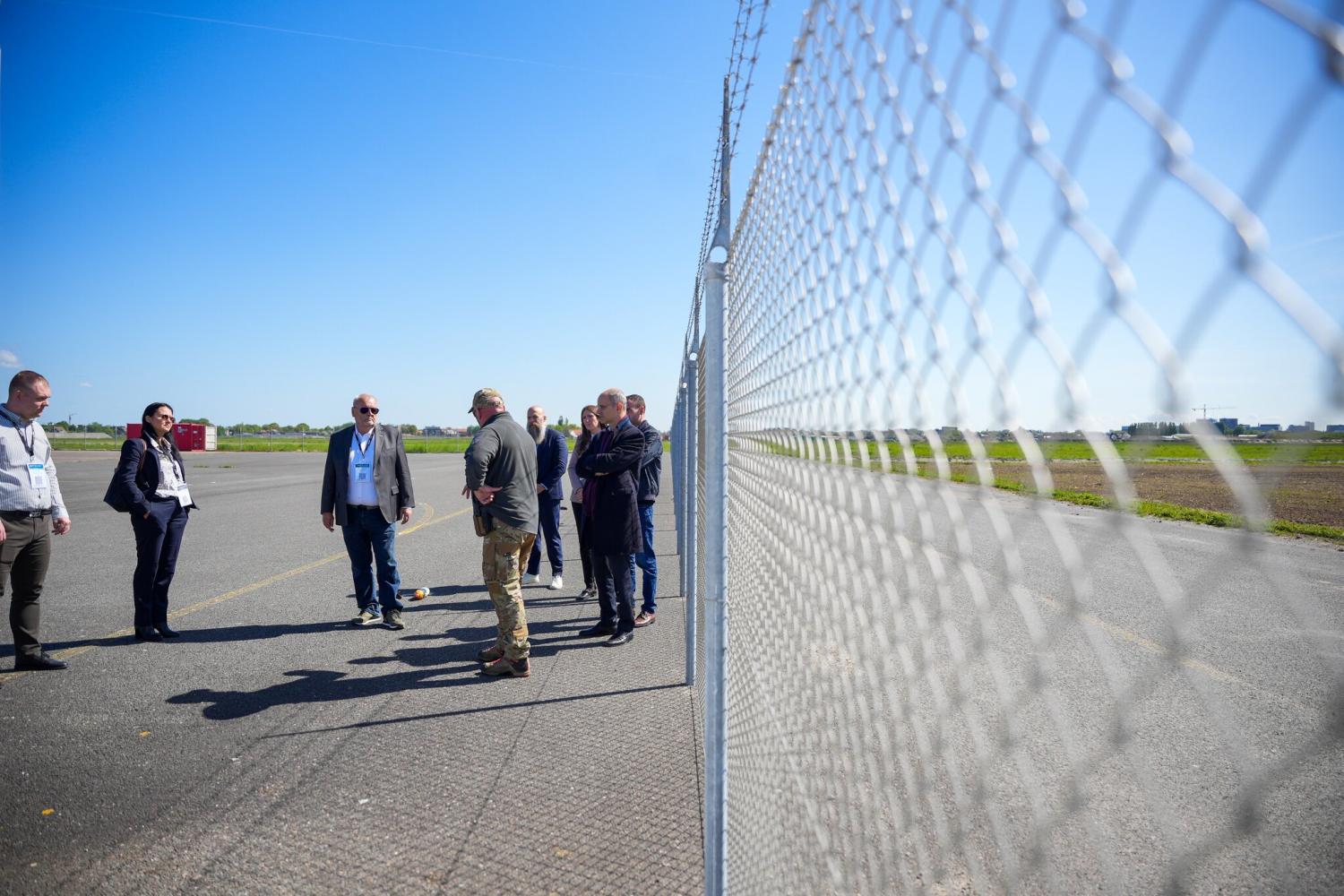
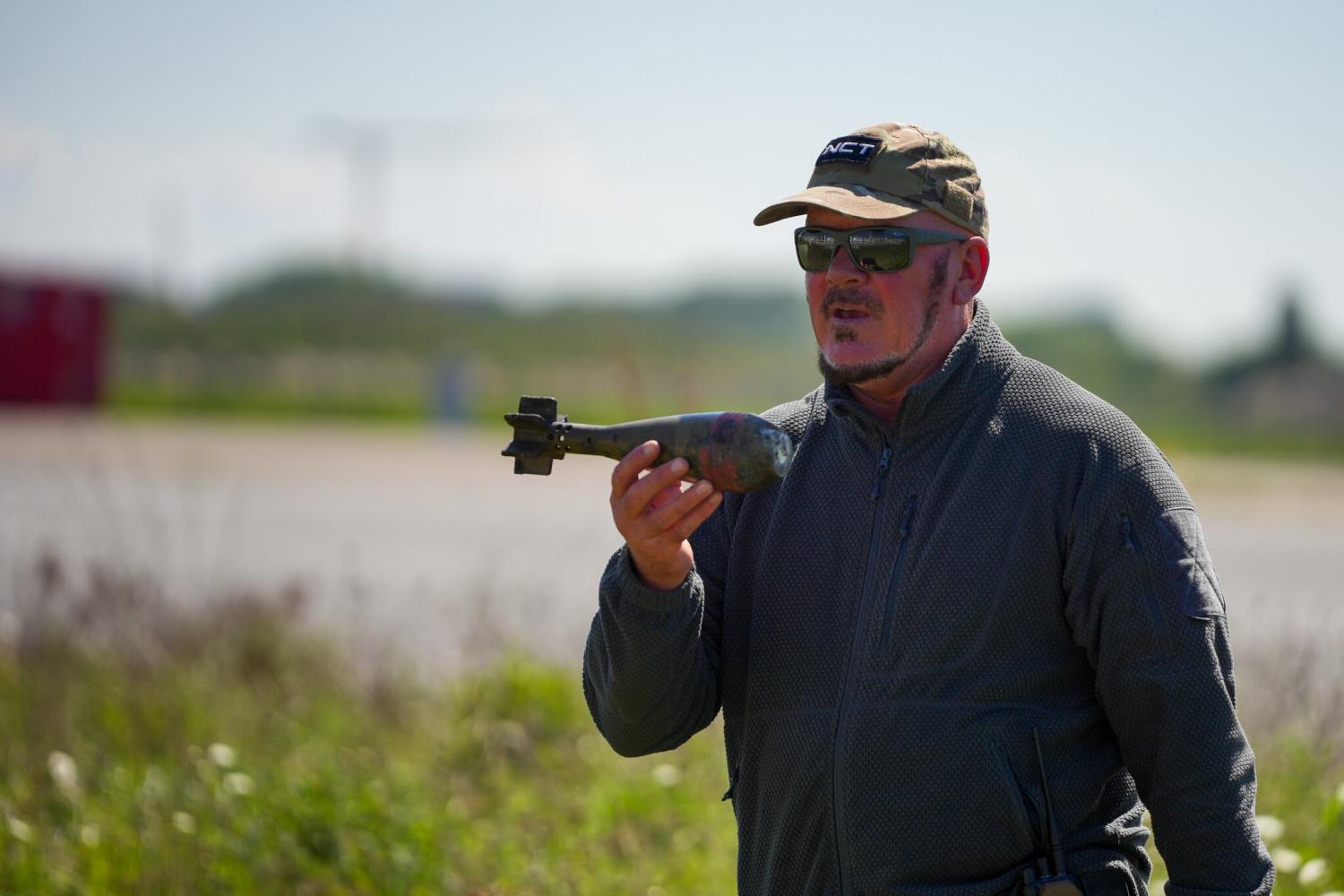
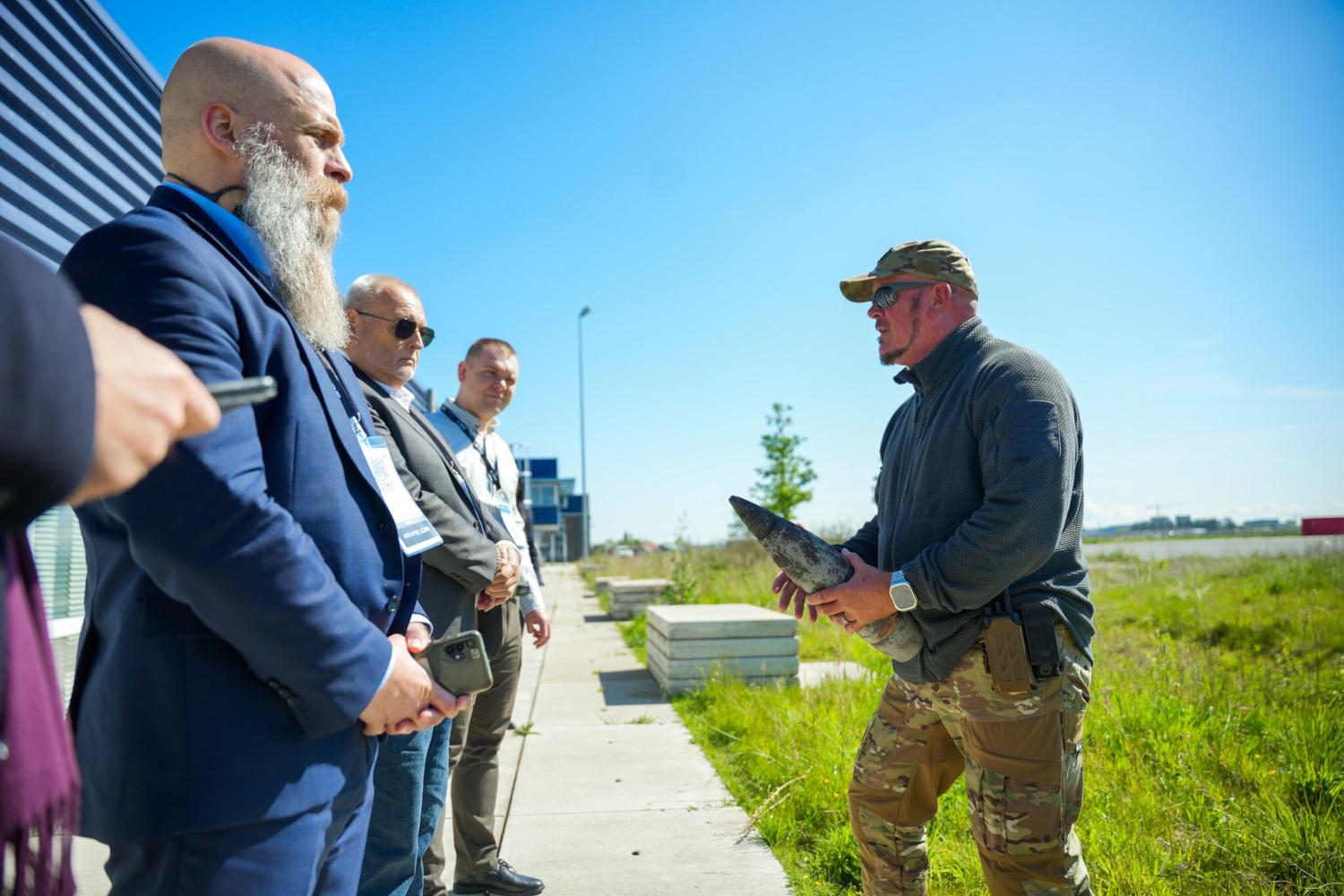
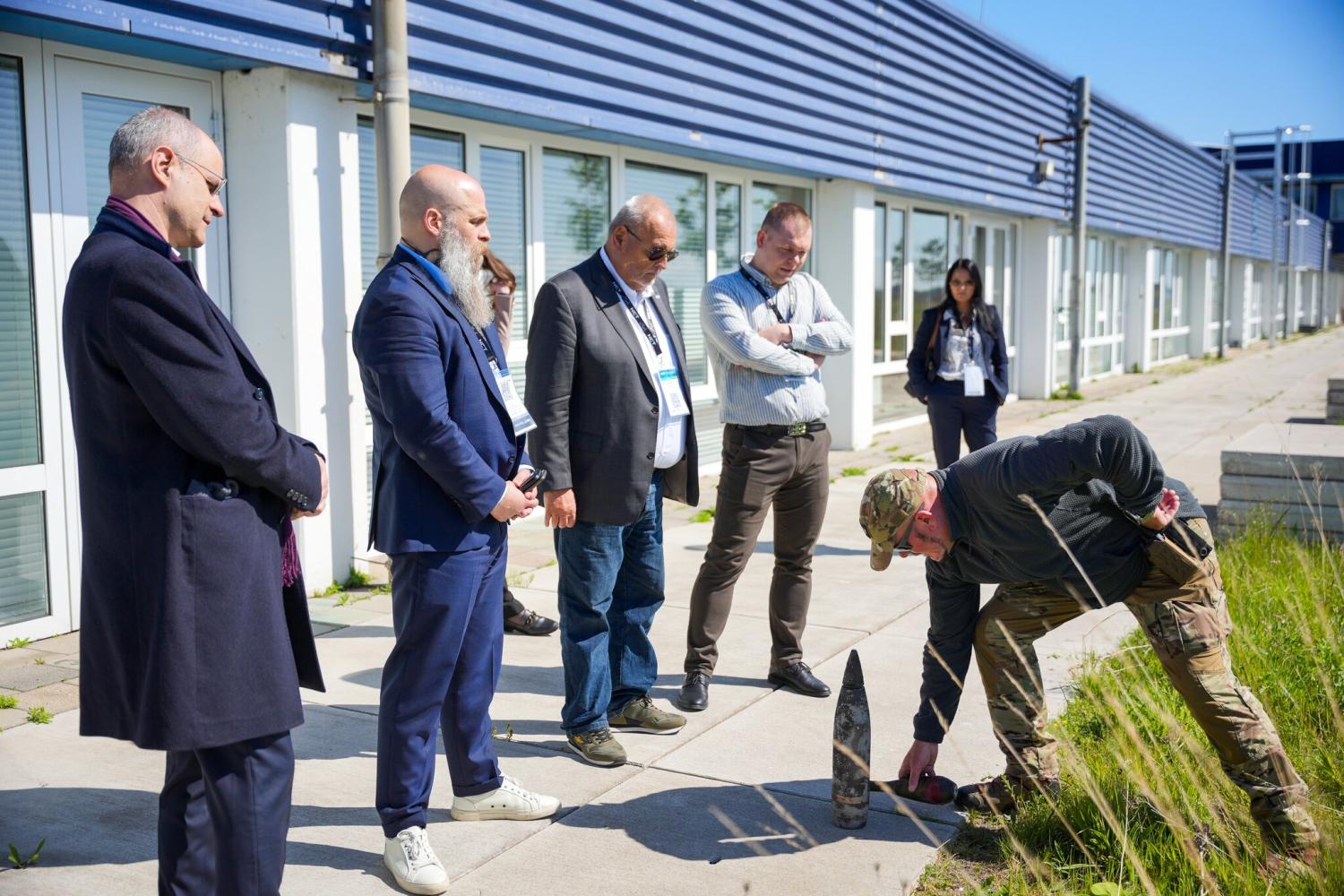
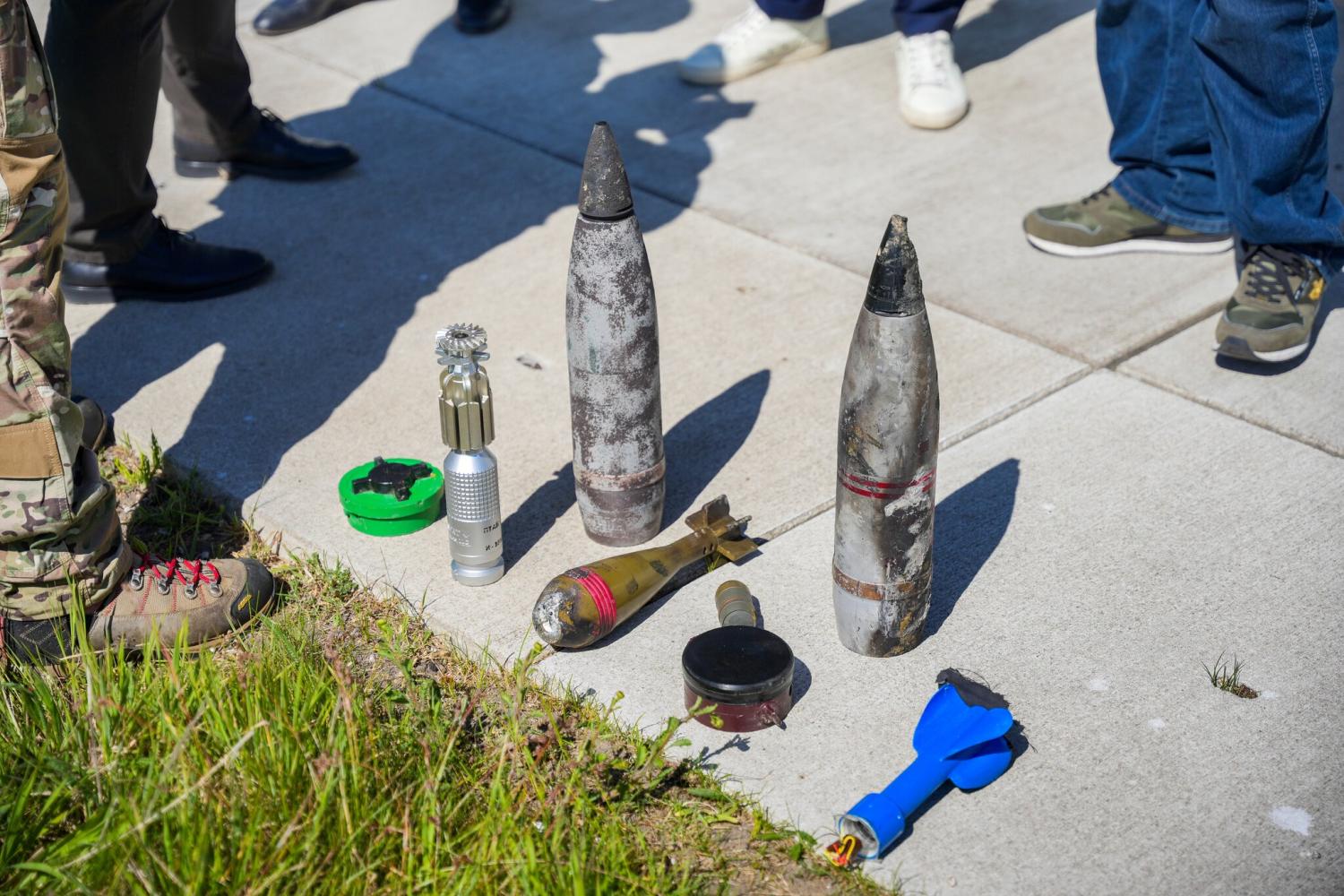
Participants had the opportunity to exchange experiences from previous missions and discuss key challenges of dealing with CBRN hazards and unexploded ordnance (UXOs). During the first workshop day the CROSSFLOOD Consortium had the pleasure of welcoming representatives from two consortium members, namely Julien Perroudon, Head of Demining Unit, Home Office, General Directorate for Civil Protection, France and Andrii Havrys, Deputy Head of the Department of Civil Protection, Lviv State University of Life Safety, Ukraine.
Julien Perroudon presented France’s long-standing experience in explosive ordnance disposal (EOD) and chemical ammunition management. He highlighted France’s extensive mine clearance operations since World War II, including the disposal of millions of mines and shells, and explained the role of the French Chemical Cargo Coordination Centre in safely managing toxic munitions.
Andrii Havrys focused on the realities of CBRN and EOD operations during the war in Ukraine. His presentation described the dangers faced by emergency responders, including missile attacks, chemical hazards, unexploded ordnance, and widespread landmine contamination affecting nearly 30% of Ukraine’s territory. He also emphasized the importance of training, coordination, and modern response systems.
Together, the presentations underlined the importance of international cooperation, preparedness, and specialized expertise in addressing post-conflict threats and protecting civilian populations.