Strengthening European preparedness: inside the CROSSFLOOD TTX
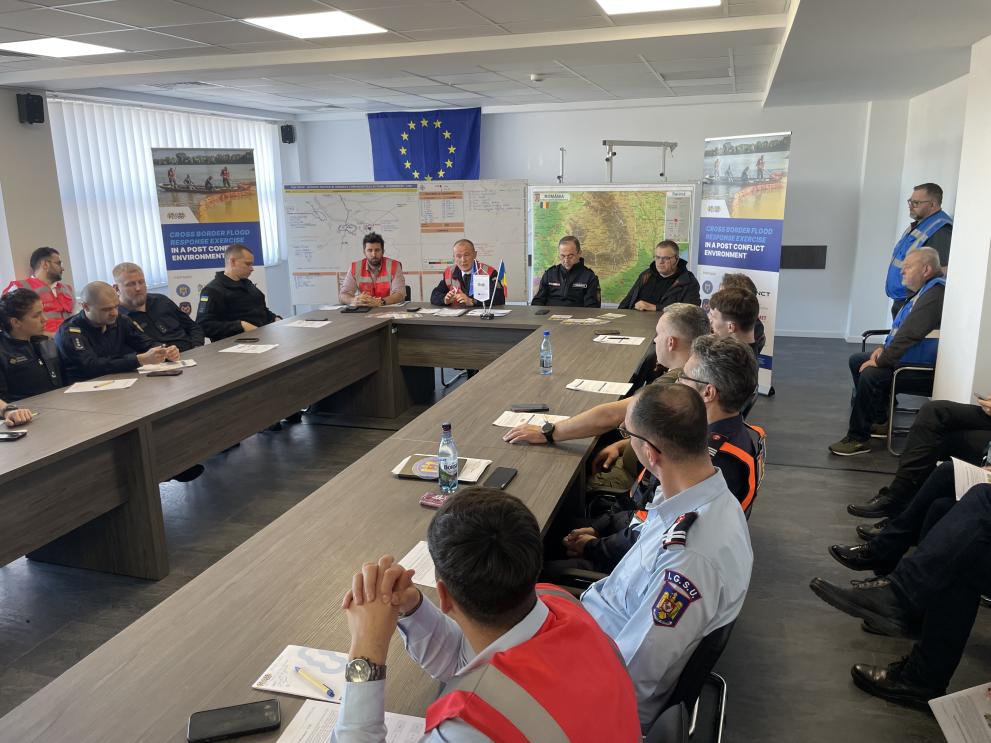
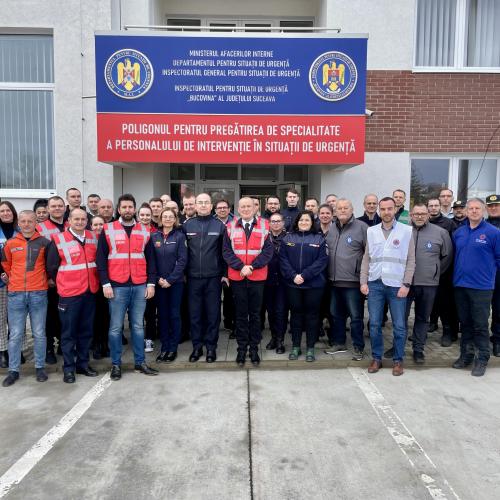
In an era marked by increasingly complex and cross-border disasters, preparedness and coordination have become essential pillars of effective emergency response. This was clearly demonstrated during the recent CROSSFLOOD Tabletop Exercise (TTX), held in Siret, where over 50 participants from across Europe gathered for two days of intensive training and collaboration.
The exercise brought together experts and authorities from Austria, the Baltic States, the Czech Republic, France, Romania, and Ukraine. Their shared objective was to simulate the activation of the Union Civil Protection Mechanism (UCPM) in response to catastrophic flooding affecting both Romania and Ukraine. By working through this scenario, participants were able to test procedures, coordination mechanisms, and decision-making processes in a realistic, high-pressure environment.
From the outset, the exercise presented a demanding and multifaceted scenario. Participants were tasked not only with managing large-scale flood response operations, but also with addressing additional hazards such as unexploded ordnance (UXO) contamination and chemical, biological, radiological, and nuclear (CBRN) risks. These overlapping threats required continuous information sharing, inter-agency coordination, and rapid strategic thinking.

Virtual reality to address realistic scenarios
One of the most notable features of the exercise was the integration of immersive virtual reality technology. Through advanced simulations, participants conducted site assessments in a dynamic and highly realistic environment. This innovative approach enabled teams to better visualize operational challenges, refine their situational awareness, and test coordination procedures in real time.
As the exercise progressed, scenarios intensified, requiring participants to adapt quickly to evolving conditions. The deployment of international teams, coordination between national and European structures, and alignment across agencies highlighted both the complexity and the importance of collaborative crisis management.

European solidarity in action
Beyond the technical and procedural aspects, the exercise underscored a broader achievement: the strengthening of partnerships across borders. Participants developed clearer communication channels, built trust among teams, and reinforced a shared understanding of how to act collectively in times of crisis.
The CROSSFLOOD TTX ultimately served as a powerful reminder that effective disaster response begins long before an emergency occurs. By investing in joint training and preparedness, European countries are better equipped to respond swiftly and cohesively when disasters strike.
As the exercise concluded, it marked not only the successful completion of a demanding simulation, but also another meaningful step forward in enhancing European cooperation and resilience.
A big thank to all the participants who made this TTX a great success on behalf of the entire project consortium:
Bundeswehr University Munich, Direction générale de la Sécurité civile et de la gestion des crises, Departamentul pentru Situații de Urgență, Päästeamet | Estonian Rescue Services Agency, Balt Flood Combat, Resilience Solutions, Lviv State University of Life Safety, Ministry of the Interior of the Czech Republic, NCT Consultants, publiComm , Oö. Landes-Feuerwehrverband