You are about to be redirected to EU Login, our authentication service.
The UCPKN platform offers different kinds of information views based on the identification of the user, and its associated roles. If it is the first time you are logging in to the platform, your profile will be validated at the end of the process, and you will receive a label and/or associated roles on the platform based on the information provided by you.
If you are a civil protection expert active in the context of the Union Civil Protection Mechanism operations (e.g., training, exercises, deployments), make sure you are using the same email address you used for training/deployment registration for a proper creation of your profile.
“Cultural heritage is increasingly being weaponised — which makes its protection more urgent than ever.” As Katariina Leinonen from the European External Action Service (EEAS) noted at the opening of the event, the protection of cultural heritage is no longer a peripheral concern at international level.
It is also becoming a strategic issue, linked to diplomacy, security and recovery. “Cultural heritage protection is not only about preservation; it is a tool for diplomacy and peacebuilding” she added
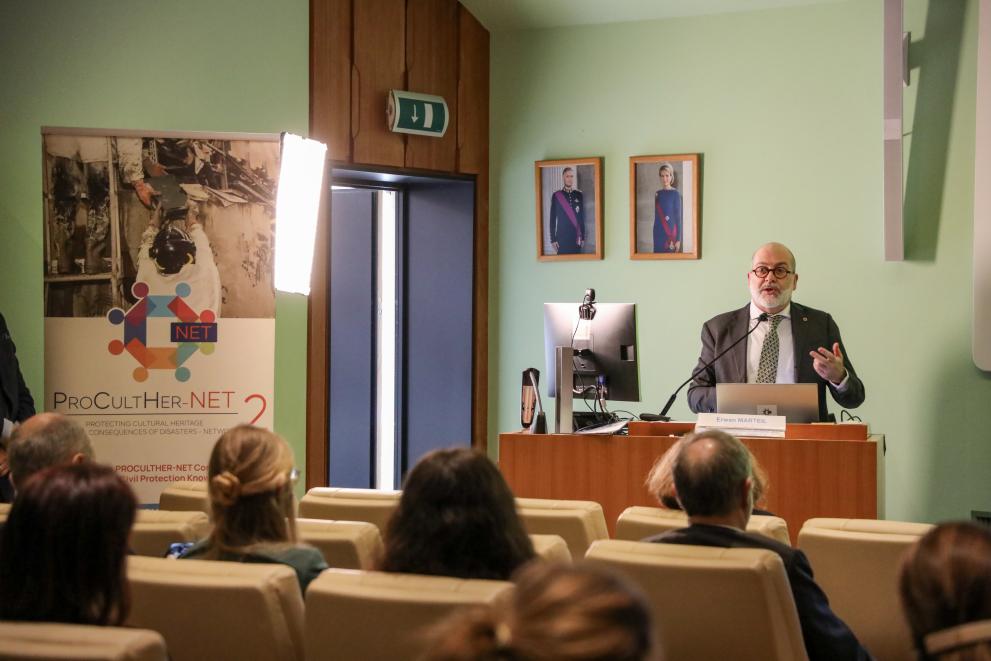
From an operational perspective, Erwan Marteil from the Directorate-General for European Civil Protection and Humanitarian Aid Operations (ECHO) emphasised the need to integrate cultural heritage across the full disaster risk management cycle, from prevention and preparedness to response and recovery. It requires bringing together communities that must work closely together: civil protection operators and cultural heritage specialists.
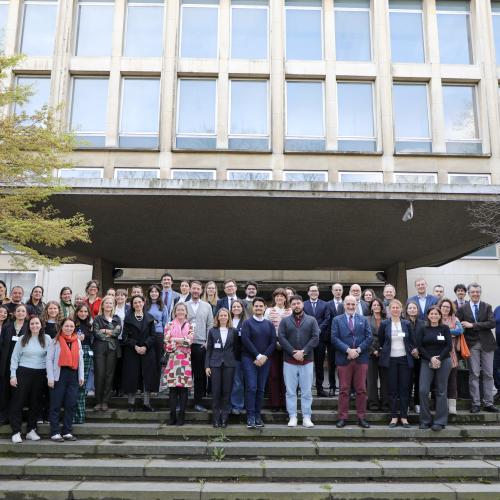
These reflections framed the meeting held on 25 March, hosted by KIK-IRPA, the Royal Institute for Cultural Heritage of Belgium.
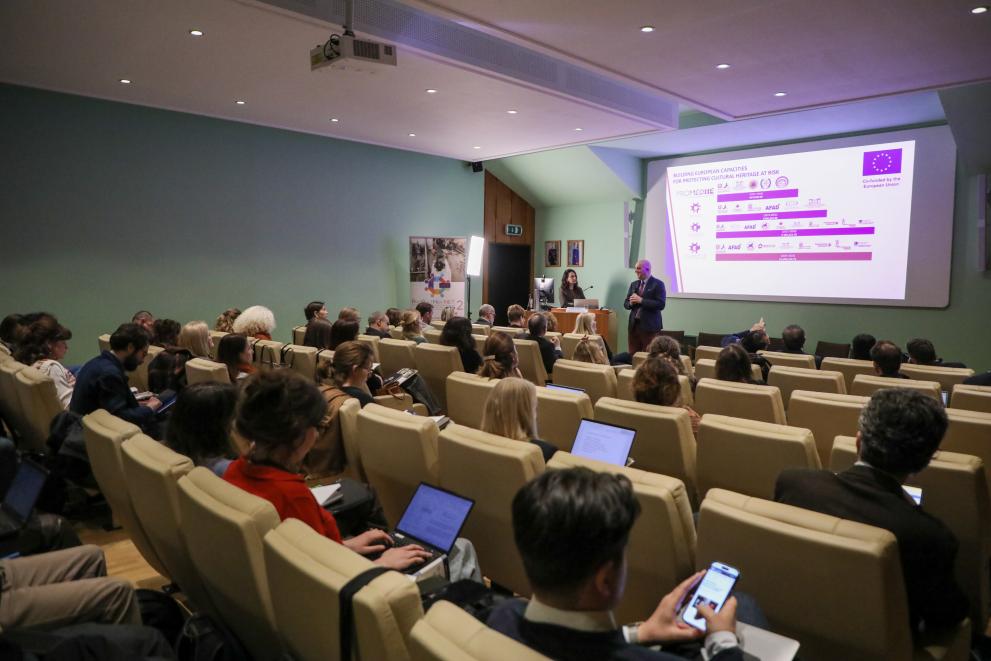
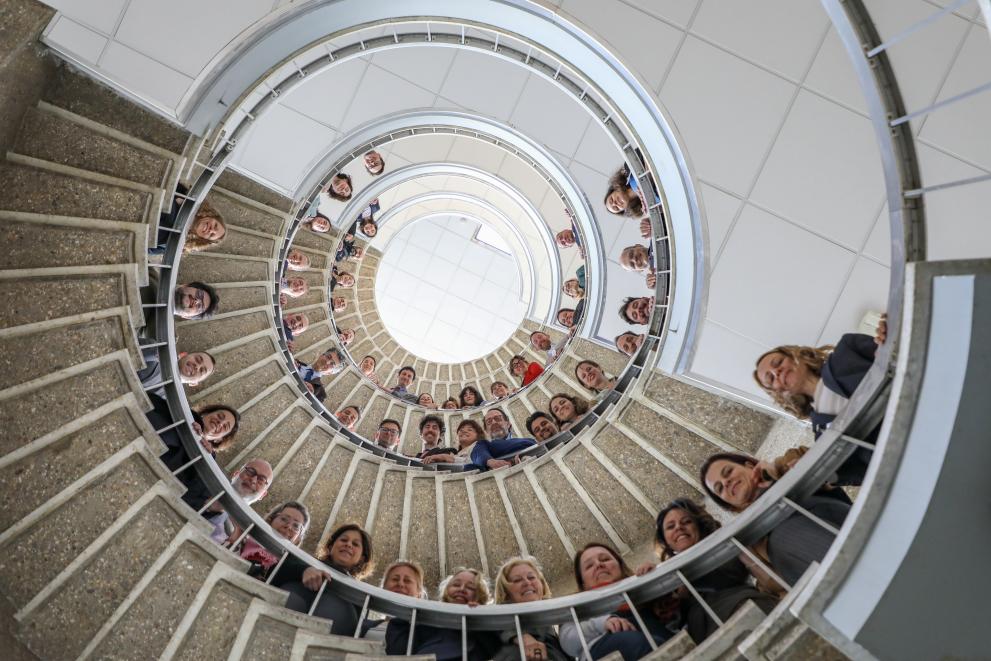
The event brought together experts from the PROCULTHER-NET2 consortium, representatives of EU institutions, national civil protection authorities, cultural heritage specialists from Union Civil Protection Mechanism (UCPM) participating states, and international organisations including UNESCO and UNDRR.
Marking the conclusion of two years of collaboration and building on nearly a decade of successive projects funded by DG ECHO, the conference provided a platform to present the project’s main achievements, share lessons learned, and explore future directions for strengthening the integration of cultural heritage protection within the Mechanism.
Cultural heritage protection is a risk reduction measure and a sound investment.
Paola Albrito, United Nations Office for Disaster Risk Reduction (UNDRR)
From frameworks to operations
Across sessions, a clear shift emerged: cultural heritage protection is moving from concept to practice. Countries such as Italy showed well-established systems, where heritage is integrated into civil protection through coordination, training and large-scale exercises such as the EU MODEX in Venice. With a large pool of trained experts and tested methods, cultural heritage is now part of preparedness and response structures.
France also reflected this progress. As Romain Kimmel from the French Directorate-General for Civil Protection and Crisis Management explained, PROCULTHER has strengthened cooperation between civil protection and cultural institutions—and supported the integration of cultural heritage into national emergency frameworks.
Other countries highlighted different approaches. In Croatia, local initiatives helped build cooperation through small-scale exercises, even without formal frameworks. Romania showed a learning-by-doing approach, developing its capacity through training, exercises and real case studies.
At EU level, cultural heritage is also becoming more integrated into the Union Civil Protection Mechanism, including through dedicated tools and modules. Last year, cultural heritage protection teams were included as part of the European Civil Protection Pool and member states are working to certify and register the first one soon for actual deployments to emergencies.
Cultural heritage is not only something to protect; it is also a resource for resilience.
Ludovico Folin Calabi (UNESCO)
Facing complex and evolving risks
Speakers highlighted that risks to cultural heritage are increasing and becoming more interconnected. Climate change, disasters and conflict often overlap, creating more complex situations.
This was evident in the 2024 floods in Valencia, which affected 78 municipalities and damaged thousands of cultural assets, beyond the severe human toll. The response showed that while preparedness is important, large-scale events require flexible and practical solutions, as well as long-term recovery planning.
National examples also reflected this trend. In Italy, planning for volcanic risks shows how heritage protection can be integrated into specific risk scenarios. In Poland, new frameworks include cultural heritage in broader preparedness efforts for complex situations.
Building capacity: training, tools and people
A strong focus of the conference was on capacity building.
Other projects such as 3D-4CH are advancing the digitalisation of cultural heritage, supporting both preservation and emergency response through 3D data and improved data systems. However, gaps remain, particularly in areas such as data management, AI and long-term storage.
The ICCROM READY project, funded by Creative Europe, focuses on training cultural heritage “first aiders” through practical, field-based approaches. These programmes emphasise hands-on learning, community involvement and cooperation across sectors.
At the academic level, initiatives such as the new pan-European master’s programme (EUMA) aim to institutionalise knowledge and ensure long-term capacity across civil protection and disaster risk management, including dedicated modules on cultural heritage.

A growing, cross-sector agenda
Throughout the discussions, one message was clear: cultural heritage protection is not a niche. It requires cooperation across multiple sectors, including civil protection, culture, security and climate, as well as increasing involvement from the private and technology sectors. Communities also play an important role, as cultural heritage is closely linked to identity and resilience.
The conference also introduced PROCULTHER-4ALL, the forthcoming initiative running from April 2026 to March 2028 and co-funded by the UCPM to cement the results’ sustainability. Building on the results of PROCULTHER-NET2, it will support the implementation of the EU Preparedness Union Strategy by providing practical tools and approaches to strengthen preparedness, while promoting inclusive and resilient social participation.
The discussions highlighted a broader shift. Cultural heritage is increasingly recognised as part of resilience systems.
From digital tools and training programmes to operational modules and policy frameworks, the field is evolving rapidly. At the same time, significant challenges remain including coordination, data gaps, funding and the need to scale solutions across different contexts.
What is clear is that cultural heritage protection is becoming an important part of how communities prepare for and respond to crises, supporting both recovery and long-term resilience.