You are about to be redirected to EU Login, our authentication service.
The UCPKN platform offers different kinds of information views based on the identification of the user, and its associated roles. If it is the first time you are logging in to the platform, your profile will be validated at the end of the process, and you will receive a label and/or associated roles on the platform based on the information provided by you.
If you are a civil protection expert active in the context of the Union Civil Protection Mechanism operations (e.g., training, exercises, deployments), make sure you are using the same email address you used for training/deployment registration for a proper creation of your profile.
Firefighting is not only a profession, but a sense of purpose and belonging
By Knowledge Network – Staff memberPublished on
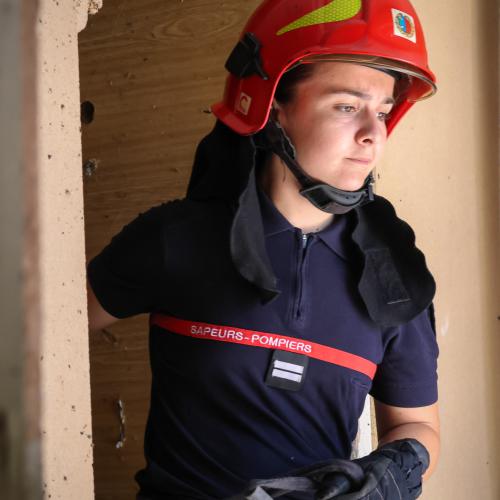
Lilyswann Derrien is a professional firefighter and lieutenant with the Gironde Fire and Rescue Service
in southwest France, where she heads a fire and rescue station near Bordeaux. She is involved in training and civil protection projects, including international exchanges across Europe. Lilyswann spoke to us about her recent experience of tackling the wildfires in Gironde this summer.
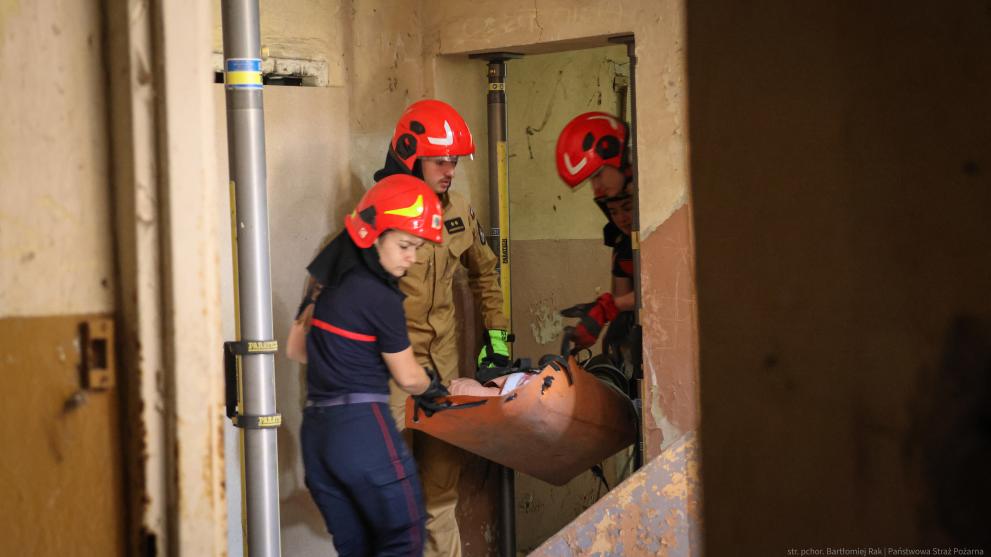
You took part in the UCPM Exchange of Young Firefighters in Warsaw. What did you take away, and are you still in contact with the other participants?
The exchange in Warsaw was a very enriching experience. I discovered how differently civil protection is organised from one country to another, but also how much we actually have in common.
We all face similar challenges: climate-related risks, large-scale emergencies, the need to train our teams and, above all, the responsibility of protecting people. What I particularly remember is the human connection. We were young firefighters from different countries, with different backgrounds and languages, but we quickly became a real group. We are still in contact, and it felt like becoming part of a wider European civil protection community – one of the most valuable things I took away from Warsaw.
You took part in the exchange shortly before the wildfires in Bordeaux, Gironde, intensified. How did the exchange and the connections you made there help you work with international colleagues during the response?
The exchange gave me a different perspective on large-scale emergencies. Being confronted with a major wildfire reminded me that emergencies do not stop at borders. The technical challenges can differ by country, but the fundamentals are the same: communication, coordination, adaptability and trust between people.
The international experience also made me more aware of the importance of sharing information and learning from each other. No organisation can deal with everything alone. Cooperation becomes essential. Knowing that I had met people elsewhere in Europe who understood what we were experiencing created a real senseof connection and a reminder that firefighters are part of a much bigger community.
Firefighters are extremely committed and want to keep going, but they are still human, and fatigue and emotion accumulate.
Lilyswann Derrien
The wildfires near Bordeaux were described as unprecedented in scale since 1949. What did that experience teach you about the challenges firefighters face during prolonged, large-scale emergencies, operationally and personally?
One of the main things I learnt is that a major incident is not just about the first few hours. When an emergency lasts for days or weeks, the challenge becomes maintaining the same level of commitment, concentration and energy over time.
Operationally, everything becomes more complex: resources have to be managed, teams relieved, and decisions adapted to a fast-changing situation. There is also a human dimension that is less visible. Firefighters are extremely committed and want to keep going, but they are still human, and fatigue and emotion accumulate.
One of the biggest lessons is that taking care of the people responding is part of the operational mission, not separate from it.
We need to create an environment where talking about emotions or fatigue is not seen as a weakness but part of the culture of emergency services.
Lilyswann Derien
Prolonged emergencies can have a strong mental and emotional impact on responders. How did you experience this over the summer, and what support do teams need before, during and after a major response?
One of the difficulties for firefighters is that we are used to helping others, trained to stay focused and operational even in difficult situations. However, after prolonged, intense events, responders can also be affected. Sometimes it is not immediately visible, and people may not necessarily talk about it. We need to create an environment where talking about emotions or fatigue is not seen as a weakness but part of the culture of emergency services.
Support can take different forms: trusted colleagues to talk to, professional psychological support when needed, proper rest and recovery, and simply making time to check in with each other.
The most important thing is to remember that behind the uniform, there is a person – and taking care of that person also means protecting the firefighter and the team in the long term.
What needs to be done to attract more young people to firefighting, professionally and voluntarily, and what would you say to someone considering joining?
I think we need to make firefighting more visible and accessible to young people. It’s not only about responding to emergencies. It’s also about teamwork, solidarity and being useful to others. Professional and volunteer firefighters have different commitments but share the same values.
I think it’s important to create opportunities for young people to discover this world before making a commitment. Meeting firefighters or visiting a fire station can make a much stronger impression than seeing it from the outside, for example.
My advice to a young person considering joining: don’t be afraid to try. You will learn how to deal with emergencies, but you will also learn a lot about yourself and others. It’s demanding, but it can be an incredibly rewarding experience.
That’s what we need to pass on to the next generation: firefighting is not only a profession, but a sense of purpose and belonging.