UCP Knowledge NetworkApplied knowledge for action
heatwaves

Heatwaves are the new normal: how EU early warning can boost preparedness

By Knowledge Network – Staff memberPublished on

The summer of 2026 broke one record after another. It was the warmest summer for western Europe, and August 2026 was the warmest month ever recorded globally. The summer was also marked by a succession of heatwaves that were exceptionally early (starting in May), persistent and intense, with many countries in western and central Europe experiencing temperatures above 40 °C for several days.  
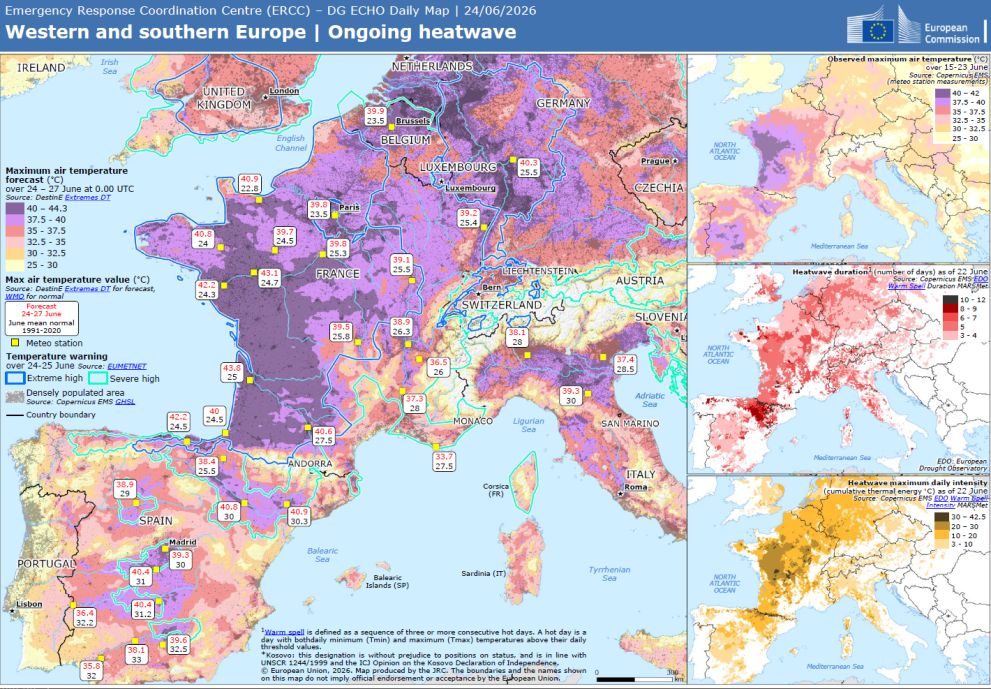
Behind these records are millions of people whose lives have been affected, directly and indirectly. Heatwaves have contributed to excess deaths across Europe. They have also affected agriculture, critical infrastructure and ecosystems, including rivers. They have worsened drought, increased wildfire risk and disrupted health, energy and transport systems across Europe. Emergency services have been under unprecedented pressure.  

To better prepare for, monitor and forecast heatwaves, the EU has developed indicators and innovative approaches under the Copernicus programme. These measure and monitor the duration and intensity of heatwaves across Europe and globally, and forecast them up to four days in advance. They can also predict the likelihood of heatwaves up to three months ahead. High-resolution products using AI and Copernicus satellite missions to monitor heatwaves over urban areas are also under development. All these indicators and data are free and publicly available through the European and Global Drought Observatories (EDO and GDO) of the Copernicus Emergency Management Service. In the future, information on heatwave risks and potential impacts will also be provided.     

In her State of the Union address on 16 September, President von der Leyen made clear that extreme heat represents a threat for the future of Europe and announced a European Heatwave Plan. The plan could address issues such as better early-warning systems, heat-related health preparedness, urban adaptation and cooling, and support for the most vulnerable. This is highly relevant for preparedness. Anticipating heat risk, enhancing cross-sectoral coordination and planning, reaching people before impacts escalate, and ensuring that services and communities are ready to act are at the heart of preparedness.