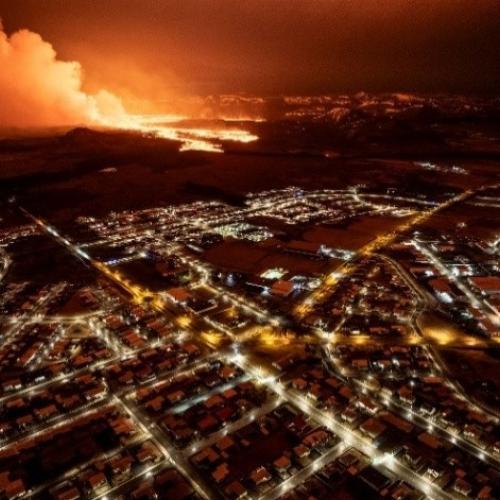
Informing resilient recovery in Grindavík in Iceland
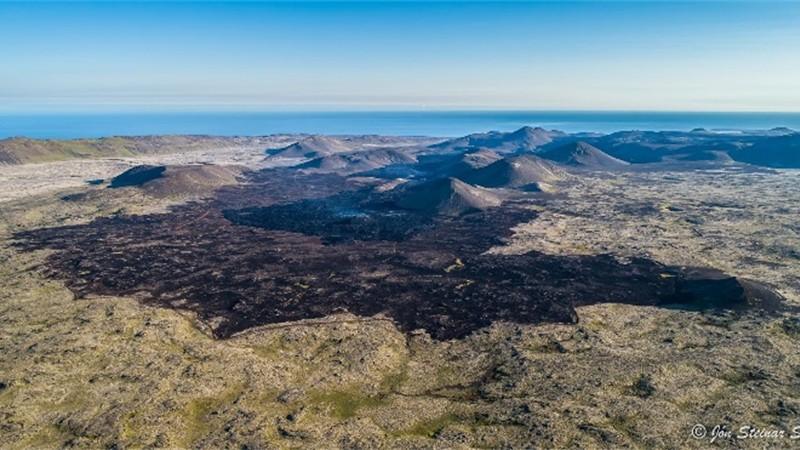
Since 2021, renewed activity across two interacting volcanic systems in the Reykjanes Peninsula has resulted in repeated fissure eruptions, tectonic deformation, and persistent seismicity.
Since 2021, renewed activity across two interacting volcanic systems in the Reykjanes Peninsula has resulted in repeated fissure eruptions, tectonic deformation, and persistent seismicity.
Impacts include direct damage to housing and infrastructure as well as disruption of services and economic loss. The residents of Grindavík have had to evacuate repeatedly between 2023 and 2025, leading to community stress, temporary outmigration, and business disruption. Critical assets in or near Grindavík—such as the Svartsengi Power Plant’s geothermal/pipe and power line infrastructure and the Blue Lagoon tourism hub—are susceptible to volcanic and earthquake impacts. The area more broadly has experienced disruptions to road accessibility and telecommunications.
Ongoing risk and uncertainty linked to volcanic and seismic activity place Grindavík in a unique situation as it pursues recovery. Its location within a distributed volcanic system exposes it to interacting hazards—including fissure eruptions, ground deformation, faulting, gas exposure, seismicity, and weather-dependent impacts—and its recovery must take these active hazards into account.
To support recovery planning in Grindavík, technical assistance was provided through the Technical Assistance Financing Facility for Disaster Prevention and Preparedness (TAFF) to inform decision-makers and stakeholders in Iceland and to share examples and knowledge with stakeholders beyond Iceland.
A key output of the assistance provided was an advisory report which analyses current risk information, identifies key challenges, and makes recommendations for resilient recovery planning in Grindavík. This work was led by a team of experts from the World Bank Group and the Global Facility for Disaster Reduction and Recovery, who drew on desk research, analysis of international experience (with some 30 cases reviewed), and in-country and online consultations with stakeholders, including representatives of central government agencies, local authorities, civil society, and the private sector. A key country counterpart was the Grindavík Executive Committee, which was formed to support the recovery of the community and to support the municipality in carrying out necessary works related to recovery.
The collaboration with the World Bank Group, through TAFF, has been excellent and very informative to the work of the Grindavík Executive Committee; informing consultations with different stakeholders, and recommendations put forward by the Committee. These are now under consideration of the Government and the Town Council as part of overall effort to support safe and resilient recovery efforts in Grindavík.
The advisory report makes seven key recommendations, organised across four key areas: policy and governance; safety and preparedness; people and social infrastructure; and critical Infrastructure and economy. Among these, a central recommendationis that a resilient recovery framework is essential to enable authorities and other stakeholders to recover in a manner that is risk-informed, gradual, and inclusive and that contributes to public safety, trust, and social cohesion. Such a framework can help guide risk-informed actions by public institutions and the private sector, including utilities, businesses, households, tourists, and workers. Given the prevailing uncertainty, a risk‑informed and phased approach, linked to evolving risk information and aligned with international experience of prolonged volcanic crises is recommendedThe advisory report also provides short and medium-term policy priorities. Beyond presenting several international examples, the assistance also showed application of participatory approaches to articulate acceptable levels of risk and to show how data and statistical analysis can inform policymaking.
| The Technical Assistance Financing Facility for Disaster Prevention and Preparedness (TAFF) is a partnership between the European Commission through its Directorate-General for Civil Protection and Humanitarian Aid Operations (DG ECHO), the World Bank, and the Global Facility for Disaster Reduction and Recovery (GFDRR). All reports produced under TAFF is available here. |
Contact: Elif Ayhan, Lead Disaster Risk Management Specialist, and Zuzana Stanton-Geddes, Senior Disaster Risk Management Specialist, the World Bank Group.