UCP Knowledge NetworkApplied knowledge for action
APOPO dogs

From minefields to earthquakes: APOPO trains rats and dogs to detect danger

By Knowledge Network – Staff memberPublished on

APOPO, a Belgian-registered non-governmental organisation, trains animals to find what people cannot easily reach. Its RescueRATs are being prepared to locate survivors under rubble after earthquakes, and its Technical Survey Dogs and Mine Detection Dogs already help clear land contaminated by explosives, including in Ukraine.
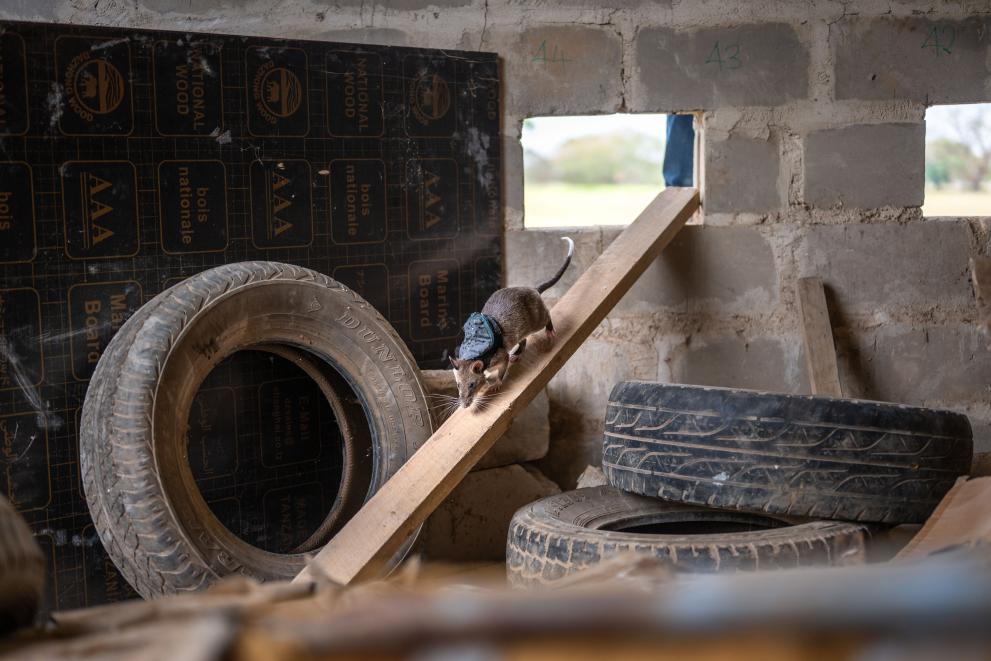
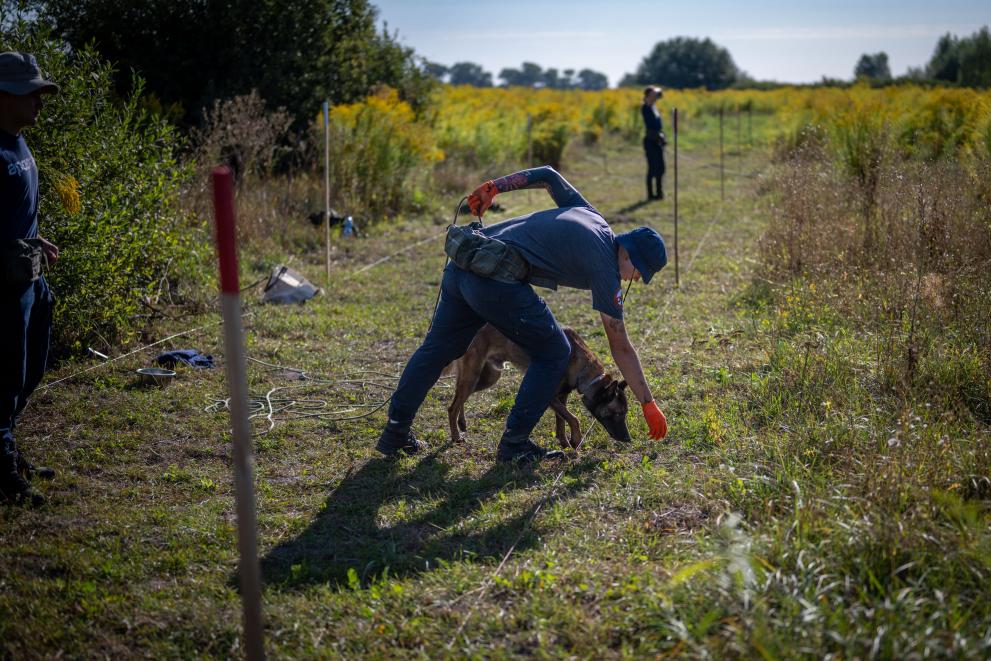
In the early 2000s, APOPO began training African giant pouched rats to detect landmines. It later expanded into tuberculosis screening. That expertise now underpins two separate disaster-response programmes: RescueRATs, which are being trained to locate people trapped under rubble, and Technical Survey Dogs (TSD) and Mine Detection Dogs (MDD), which support the survey and clearance of land contaminated by explosive ordnance.   

RescueRATs began with pilot studies testing whether rats could locate human targets rather than landmines. The results led GEA Arama Kurtarma, a Turkish search-and-rescue organisation, to approach APOPO about developing the concept for earthquake response.

The potential advantage of RescueRATs is their ability to access and search confined spaces within collapsed structures that may be inaccessible or difficult for human rescuers, search dogs or larger equipment to reach.

The rats, trained in increasingly realistic debris environments, now carry technology-enabled backpacks fitted with cameras and two-way communication. The programme has two complementary capabilities. In search mode, a rat navigates debris independently and performs a trained indication by activating a switch on its vest when it detects a person, which transmits a signal to the team at the basepoint. 

Innovation and unconventional solutions can strengthen preparedness by opening new avenues for addressing complex problems and expanding the range of capabilities available to responders before a disaster occurs.

That experimental spirit is central to how APOPO frames the project. ‘Innovation and unconventional solutions can strengthen preparedness by opening new avenues for addressing complex problems and expanding the range of capabilities available to responders before a disaster occurs’, APOPO says. ‘RescueRATs is an example of this approach. It explores how unconventional heroes – rats – can use their innate abilities to provide a new means of complementing existing search-and-rescue techniques.’   

APOPO’s work with detection dogs – known as HeroDOGs in its public fundraising – builds on that same expertise. Operationally, the organisation trains two types of dogs for distinct roles: TSDs, which investigate suspected hazardous areas to determine where contamination is actually present – searching large areas and vegetation with GPS tracking so clearance resources are concentrated only where genuinely needed – and MDDs, which then carry out the more systematic clearance search. APOPO trains Belgian Malinois for 12 months before deployment, with ongoing testing and accreditation to national mine action standards. ‘Safety is central to the methodology’, APOPO says. To date, no APOPO dog has been injured or killed by a landmine during operations.  

One of the main lessons from Ukraine is that dogs are most effective when they are properly integrated with the wider land-release system rather than viewed as a stand-alone solution.

Ukraine is one of several active deployments. APOPO also runs dog operations in Cambodia and Azerbaijan, and has previously worked in Senegal, South Sudan and Türkiye. Since its first operational dogs in 2018, the programme has searched 36.1 million square metres globally and located 1 371 explosive items, and now has the largest MDD and TSD capacity in the mine action sector, with more than 130 operational dogs and a further 39 currently in training. APOPO is assessing expansion into other mine-affected countries, including potential future work in Laos and Syria, drawing on methodologies already tested in Cambodia and Ukraine.  

Across both programmes, the logic is the same: trained animals extending what human teams can reach, see and assess, not replacing them. The goal, as APOPO puts it, is to integrate these detection systems wherever they can make response and clearance faster, safer and more cost-efficient.