UCP Knowledge NetworkApplied knowledge for action
report euridyce

Preparing Europe’s youngest learners for an uncertain world

By Knowledge Network – Staff memberPublished on

How can schools help children navigate a world shaped by climate risks, cyber threats, pandemics and geopolitical instability

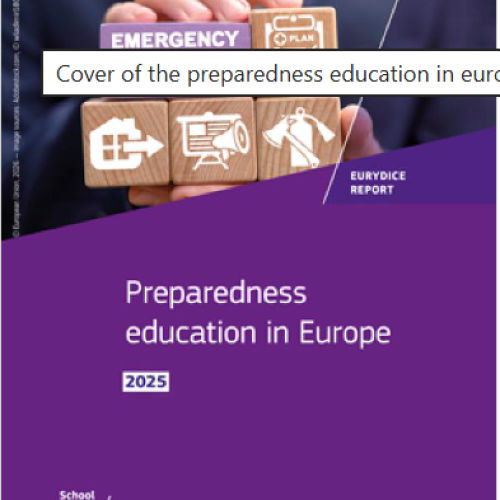
A new report from Eurydice explores how preparedness education is being embedded in early childhood and primary education across Europe during the 2025/2026 school year. It examines how education systems support children in developing essential skills – from recognising risks to cooperating effectively in emergency situations.

What the report shows:

  • Preparedness becomes more structured over time. Around half of European education systems reference preparedness in early childhood curricula, rising to nearly three-quarters at primary level. Even where it is not formally included, authorities often provide guidance and tools to schools.
  • A progression in learning. In early childhood education, the focus is on recognising danger, understanding simple safety rules and practising protective behaviours through everyday routines and play. At primary level, this foundation develops into more practical and action-oriented skills, enabling children to understand why rules matter and how to respond more independently.  
  • Life protection skills are central. Most countries prioritise helping children identify different types of risks, practise protective behaviours and build resilience in unpredictable situations.
  • Teacher preparation varies. Only a limited number of systems explicitly require preparedness in initial teacher education. Where included, training generally covers national safety frameworks and practical emergency response.
  • Growing policy momentum. An increasing number of countries integrate preparedness education into national resilience plans and align with EU frameworks. Around half plan to further strengthen preparedness through whole-school approaches.

The report is closely linked to the broader EU policy agenda. In March 2025, the President of the European Commission, Ursula von der Leyen, underlined that strengthening crisis and security preparedness is a shared European responsibility. This commitment was reinforced by the launch of the EU Preparedness Union Strategy, which highlights education as a key lever for building population preparedness, in line with the Union of Skills.

The full report, Preparedness Education in Europe – 2025, is available here.