Since early 2023, the Commission has allocated over EUR 108 million to a consortium comprising Belgium, France, Germany, Italy, Luxembourg, Portugal, Romania, and Türkiye. This significant investment is intended to make the rescEU EMT operational by 2026.
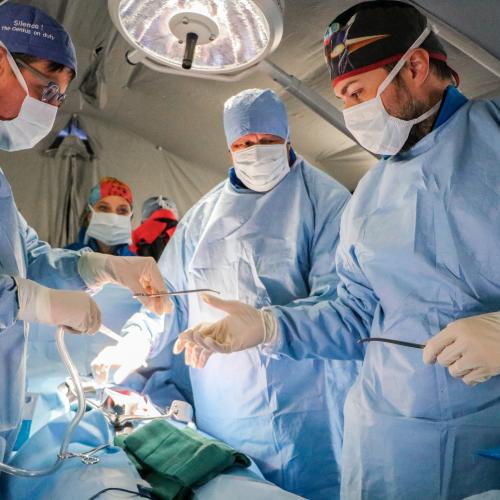
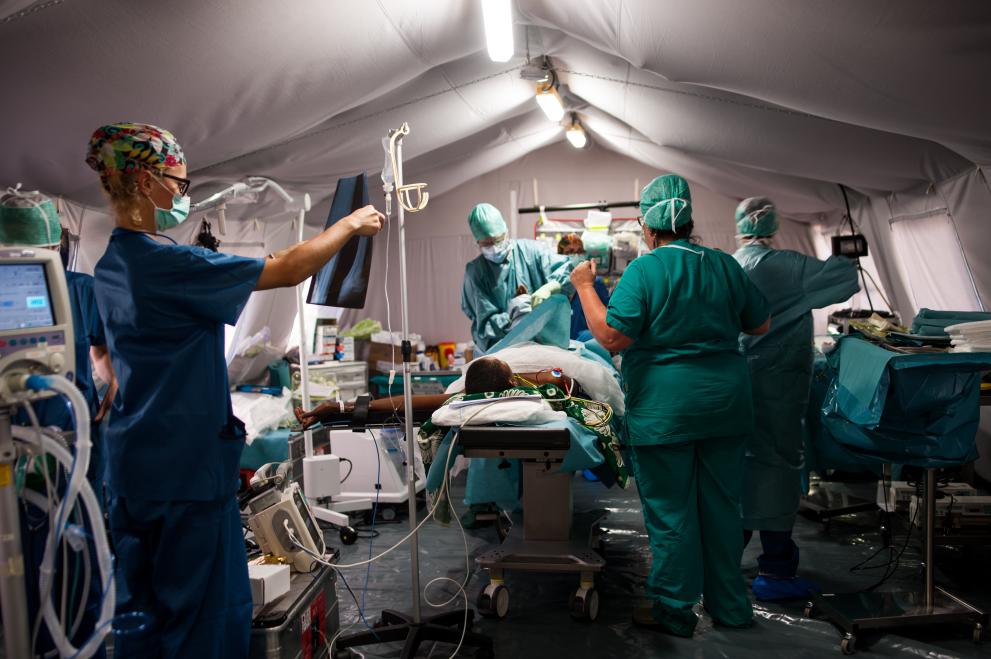
The project represents a pivotal step in disaster preparedness. It focuses on creating a highly specialised and modular field hospital that can be deployed quickly and efficiently in response to various emergencies, either independently or in support of existing healthcare systems.
This EMT is the first pan-European initiative of its kind and the world's largest EMT structure currently under construction. At full capacity, it will be able to cover nearly 7 000 square metres, accommodate over 180 hospital beds, operate 7 surgical theatres, and include over 350 medical staff, supported by many non-medical staff.
Challenges and progress
The development of the rescEU EMT is a complex task involving coordination among various actors, including the implementing partners, led by the consortium leader (Johanniter-Unfall-Hilfe e.V., Germany), the rescEU medical team, the relevant European Commission services and the World Health Organization (WHO). One of the main challenges is ensuring efficiency and coherence among the different modules (EMT and SCTs) to achieve optimal coordination during both the preparedness and response phases.
To address these challenges, the project emphasises the joint procurement of necessary resources, establishment of common Standard Operating Procedures (SOPs), and creation of common training plans while also ensuring alignment with existing initiatives under the UCPM.
Looking ahead: Are we ready?
Since the project’s inception in 2021, progress has been steady, with numerous online meetings, in-person workshops, and a kick-off meeting taking place. Mentors from the WHO collaborate closely with project teams to guide them through the classification process, ensuring that the rescEU EMT meets international standards.
In the coming months, the consortium will begin procuring equipment and finalising the SOPs. Training and classification processes will continue until 2025, with the aim of having the rescEU EMT ready for deployment soon after in 2026,
Authors: Matteo Nocci, Geneviève Lizin, Joanna Drogowska, Francesco Pontiroli Gobbi