Sweden: Review of the state of the art of national disaster loss databases
Workshop: Towards a Comprehensive Data System in Sweden
Workshop: Towards a Comprehensive Data System in Sweden
Sweden is currently strengthening its approach to disaster risk management, emphasising resilience, preparedness, and cross-sectoral coordination. In this context, there is a growing recognition of the need for a more coherent and comprehensive disaster risk data system to support informed decision-making and effective prevention efforts. Against this backdrop, a workshop was organised to share insights, findings, and recommendations.
Under the Technical Assistance Financing Facility for Disaster Prevention and Preparedness (TAFF), a partnership between the World Bank/GFDRR and the European Commission’s DG ECHO, technical assistance is provided to the Swedish Civil Defence and Resilience Agency (MCF) to advance the development of a coherent, comprehensive, and operational disaster data system that strengthens Sweden’s preparedness and prevention capacities.
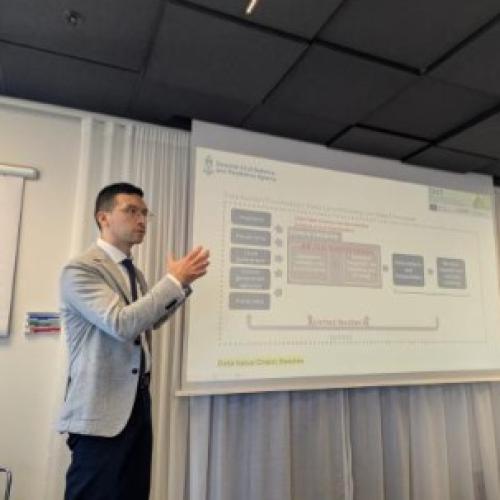
Organised with the MCF, the workshop brought together key stakeholders involved in the comprehensive risk and resilience data system in Sweden, including representatives of MCF; relevant Swedish government agencies (Lantmäteriet, the Swedish Geological Institute [SGI], Statistics Sweden, the Swedish Hydrological and Meteorological Institute [SMHI]); academia/research institutions (Uppsala University and Karlstad University); other stakeholders involved in disaster data collection, management, or use (Trafikanalys, Insurance Sweden, and the Länsförsäkringar); and representatives of the World Bank/GFDRR.
The World Bank representatives presented the findings from the International Good Practice Review, highlighting key success factors such as a clearly defined purpose, strong institutional coordination, sustainable financing, and interoperable technical systems. Discussions raised important considerations regarding the scope and complexity of such systems, with participants noting that broader, multi-purpose systems are more challenging to implement and manage. Questions also focused on data integration, accessibility, and timeliness, including the role of alternative data sources such as social media and the limitations posed by restricted or privatised datasets.

Based on the international review, the World Bank representatives presented the emerging findings from a diagnostic of the Swedish context. The participants were then asked to (1) discuss the current situation in Sweden in regard to disaster risk data and their role within this system, and (2) to identify their role in the potential future disaster risk data system. Some of the key messages are:
· The purpose of the system should be the primary driver of its design, scope, and functionality. Participants emphasised the need to start with clear use cases and avoid overly broad ambitions that could increase complexity and reduce usability.
· Some of the key challenges identified include fragmented and inconsistently described datasets, limited data accessibility, and the absence of harmonised methodologies. The importance of involving a wider range of stakeholders and ensuring that the system is user-friendly and accessible to non-experts was also underlined.
· Disaster databases are most effective when designed as strategic systems for clearly defined use cases whether to support to short-term operational needs, or to inform longer-term planning, policy, and investment priorities. Participants therefore emphasised that Sweden’s disaster data system should be developed incrementally, starting with a narrow scope that uses existing capacities and institutional structures rather than creating wide-ranging parallel systems that attempt to serve many purposes at once. Over time a narrow system can be adjusted and expanded gradually as needs evolve.
· In terms of priorities, participants agreed on the importance of prioritising core decision-making needs. As a start, participants suggested focusing initially on historical and post-event data to support risk analysis, trend identification, and planning. The need for comparable, nationwide data and a broader risk scope beyond weather-related hazards was also highlighted.
· There was general agreement on assigning a central coordination role to MCF, while maintaining decentralised data management. Establishing a clear mandate, improving coordination, and ensuring sustainable financing were identified as key enablers. Overall, participants stressed the importance of building on existing systems and aligning the database with practical decision-making needs and reporting requirements, including those at the EU level.
Sectors
Thematic series
Related to