UCP Knowledge NetworkApplied knowledge for action
MC Assist

Teaching first responders to listen without words

By Knowledge Network – Staff memberPublished on

In 2017, firefighters at the Calvados fire and rescue service kept running into the same problem: how to communicate with a deaf or hard-of-hearing person during an intervention, when there was no common language available and no training or tool to help.
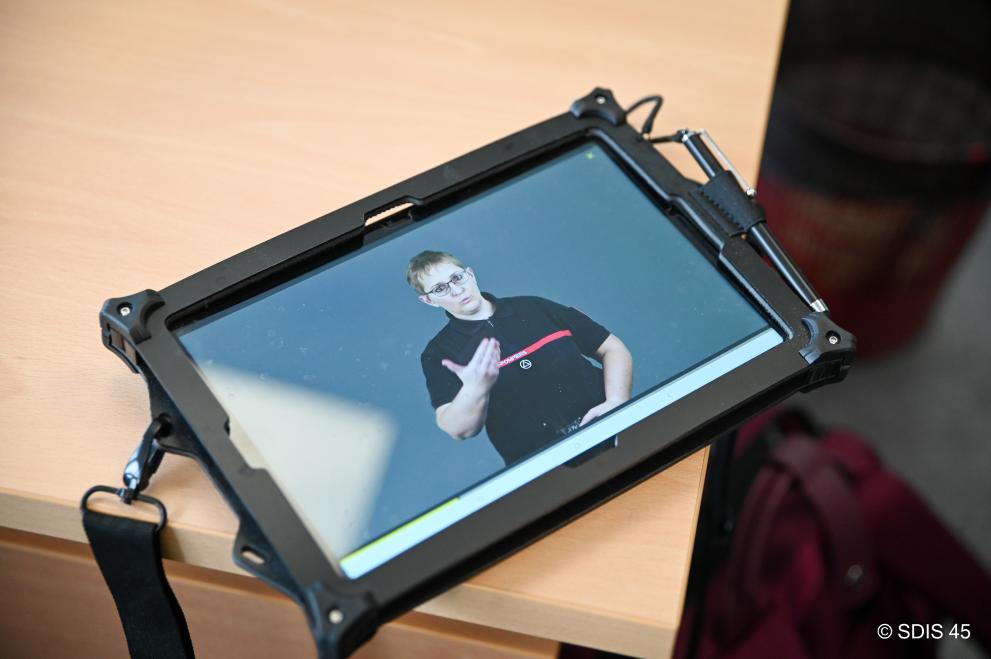
 MC-ASSIST was built to close that gap, developed with firefighters, French Sign Language (LSF) experts, speech and language therapists, and representatives of the deaf community. 

‘Most of the time, rescuers struggle to communicate with deaf or hard-of-hearing people’, says Mathias Legrix of France's Directorate-General for Civil Protection and Crisis Management  (DGSCGC). Writing things down seems like an obvious fix, but an estimated 50 % to 70 % of deaf or hard-of-hearing people in France – around 7 million altogether – do not read written French well. 

None of the tools were built in isolation. ‘We worked and are still working with the deaf and hard-of-hearing community, as well as with association representatives’, Legrix says. ‘That's the key to its success.’ 

It's precisely because communication is impossible that no requests are made.

That sentence gets at something Legrix sees as the real barrier. Deaf people rarely call emergency services at all – instead, he says, they tend to organise informally among themselves, aware that responders will not be able to communicate with them once they arrive. Emergency services, in turn, often read that silence as a lack of demand. ‘This logic needs to be reversed’, he says. 

According to French authorities, the pilot phase involved 19 rescue services and six approved civil protection associations, with the approach also tested during the Paris 2024 Olympic and Paralympic Games. Nearly 8 000 responders were introduced to supporting deaf and hard-of-hearing people, and 1 384 tablets were deployed across interventions, rescue posts and demonstrations. Since the nationwide roll-out began in early 2026, seven départements have joined the programme, with around 20 % of emergency services now taking part, according to Legrix, and the number is growing. 

Legrix believes the model travels. He met deaf European citizens this summer at the Festival Clin d'Œil, an international sign language arts festival. These people, he says, face ‘the same issues in their respective countries’. 

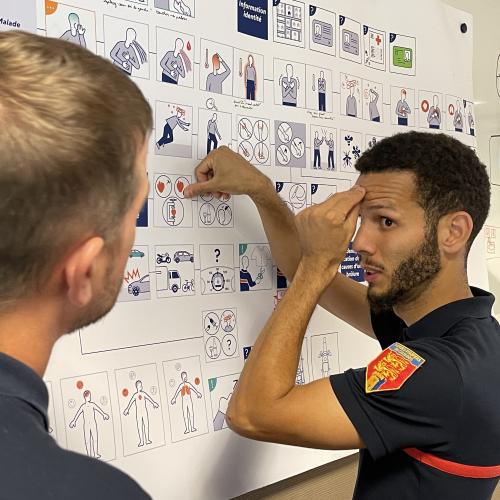
MC-ASSIST is more than just an app. It's a tool to learn how to communicate with deaf people, how to avoid counterproductive mistakes, and how to master 20 key signs to successfully handle the first few minutes of the mission. Then, you can use the app to go further

1 Like