
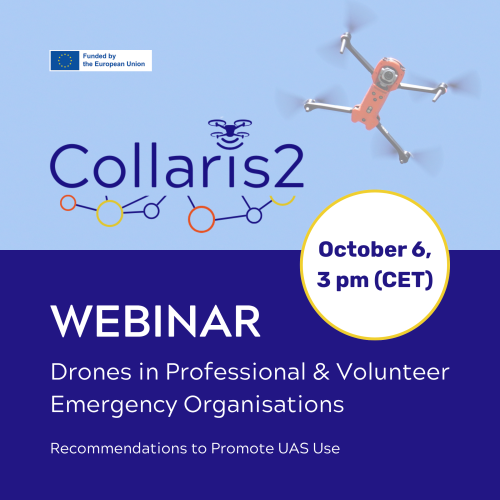
The COLLARIS Network has conducted another drone-related webinar – this time presenting the findings of a study conducted within the project by Jasmina Schmidt (DCNA). The study explored how professional full-time, part-time, and volunteer crisis and disaster management organizations make decisions about drone deployment, what organizational factors enable or hinder implementation, and how resources shape operational routines.
The main result of the study was that a drone does not become an operational asset simply by being purchased. Only through clear activation procedures, trained and available personnel, command capability, regular training, and integration into existing operational procedures does it become a reliable tool. What matters is:
- Who decides whether to deploy the drone?
- When is the drone team activated?
- Are sufficiently trained personnel available?
- Can the drone reach the scene quickly and be integrated into existing operational procedures?

About COLLARIS2
The EU-funded project COLLARIS2 is the successor to COLLARIS (COLLaborative network on unmanned AeRIal Systems) and focuses on the use of UAS (e.g., drones) in the field of civil protection and disaster management. Building upon the results of the COLLARIS Network, this project aims to continue, expand and further develop the already established international network of crisis management and civil protection practitioners, research institutions and public administration. The members of the network collect and transfer knowledge, exchange experiences, skills, good practices and information on operational procedures for the optimal use of drones in crisis management and rescue missions.