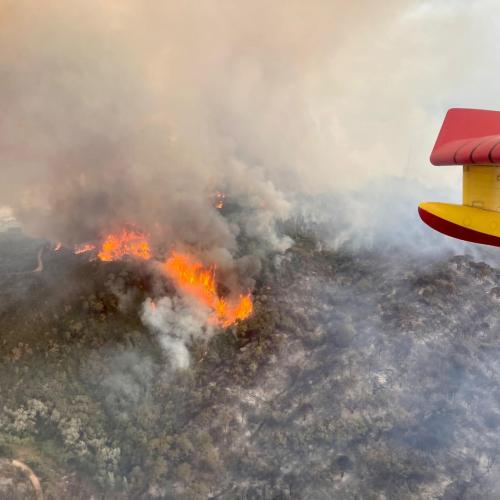
Catastrophic wildfires have been frequent in the EU and neighbouring countries, and 2023 was no exception, as highlighted in the new Joint Research Centre report Forest fires in Europe, Middle East and North Africa 2023.
In 2023, the Europe, Middle East and Africa (EMEA) region experienced wildfires that were extremely difficult to control using traditional firefighting methods. This included the largest single wildfire recorded in the EU since 2000, which occurred near the city of Alexandroupolis in the Greek region of Eastern Macedonia and Thrace.
Fatalities and property damage also made 2023 a critical year with at least 41 deaths reported due to wildfires. These fires affected over 500 000 hectares of natural land – roughly half the size of the island of Cyprus.
Climate change is making wildfires more severe
The wildfires affecting Europe in recent years clearly demonstrate the effects of climate change on wildfire patterns. Rising temperatures and water cycle changes are increasing the size of fire-prone areas and making individual fires more intense.
The fire season is now extending beyond the traditional summer period, and fires are occurring in areas that were previously unaffected. This increase in wildfire frequency, intensity, and duration presents new challenges for firefighting services across Europe and beyond. Aerial firefighting has become more challenging, and ground operations are increasingly difficult or, in some cases, impossible.
The 2024 wildfire season was less severe in the EU until September
Until mid-September, the total area burned by wildfires in the EU remained below the 20-year average. This was largely due to intermittent rainfall across much of the EU during spring and summer.
However, in September, multiple wildfires broke out simultaneously in Portugal, pushing the total wildfire damage in 2024 above the EU average for past decades. Nonetheless, after 3 consecutive years of devastating fires, the 2024 season can still be considered less severe overall.
The European Commission and EU Member States have been strengthening their prevention, preparedness and firefighting capabilities. These efforts have likely contributed to limiting wildfire damage across the EU in 2024.
Addressing the root cause of wildfire
To minimise wildfires in Europe and globally, reducing the number of ignitions and carefully managing landscapes in vulnerable regions is crucial.
Education and awareness-raising campaigns are essential in tackling wildfires, as approximately 96 % of wildfires in the EU are caused by human activity.
As the climate crisis worsens and 2024 surpasses 1.5 ºC of warming it is crucial for populations worldwide to prepare for more frequent, intense wildfires.