
By Knowledge Network – Staff member
What role do media play before and during crises?
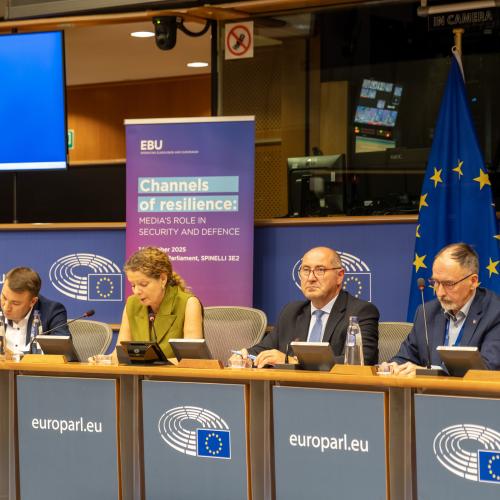
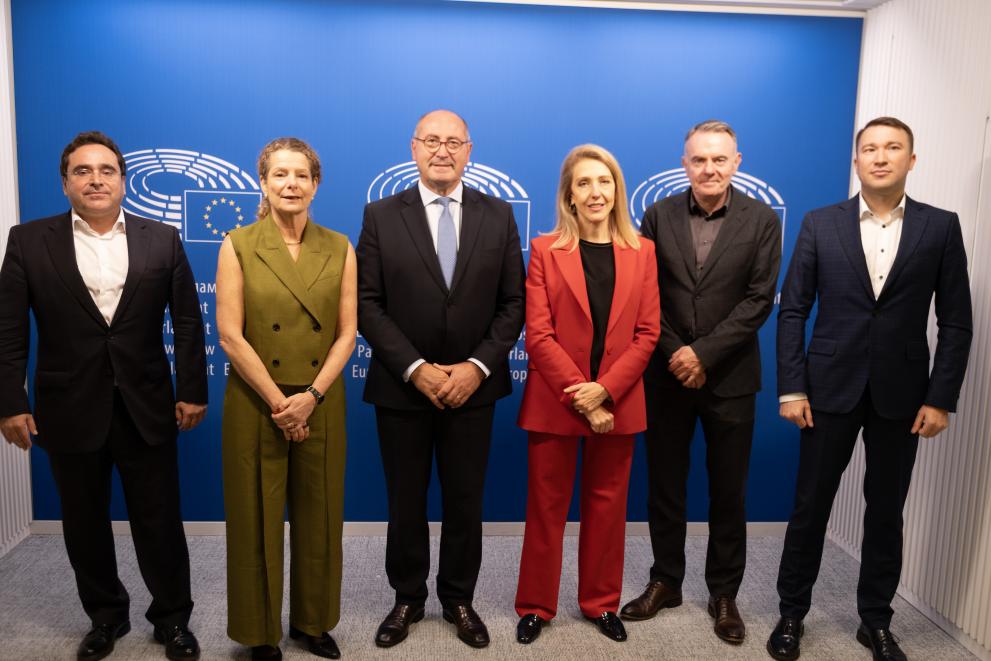
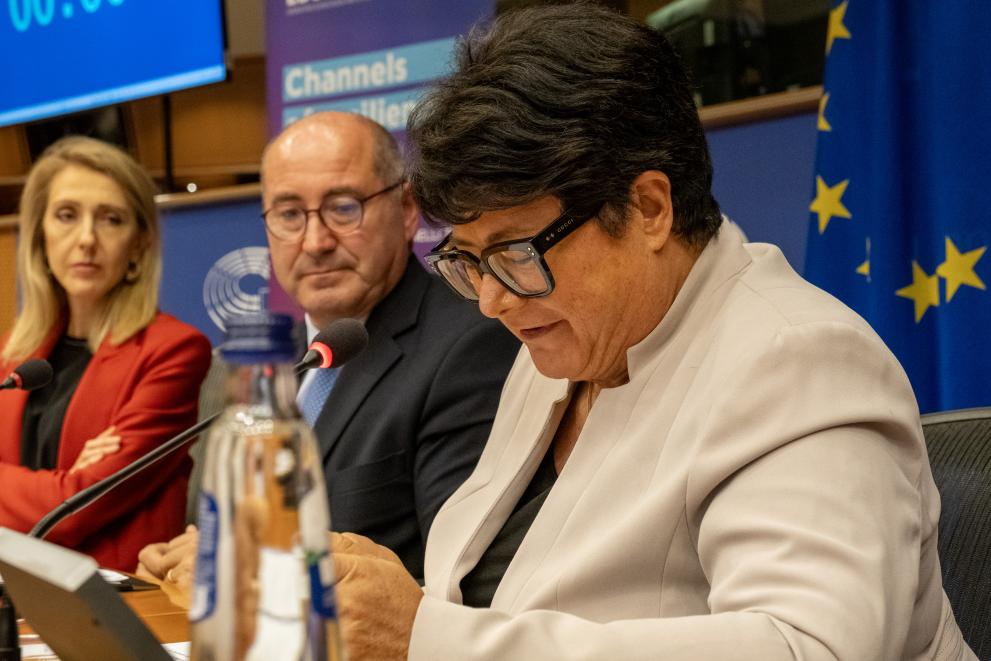
On 14 October 2025, the European Broadcasting Union (EBU), together with the European Parliament’s Intergroup on Resilience, Disaster Management and Civil Protection, hosted a public event in Brussels on the role of media in security and defence. Discussions reflected core principles of the EU Preparedness Union Strategy (PUS) on population preparedness, particularly public awareness, risk communication, and trusted information during crises. This article highlights the interventions most relevant to the Civil Protection community.
MEP Hélder Sousa Silva (EPP/PT), who has a technical background in civil protection in Portugal, opened the event by saying:
“What people need most when disaster strikes, after immediate safety, is information. Public service media are Europe’s silent infrastructure of resilience.”
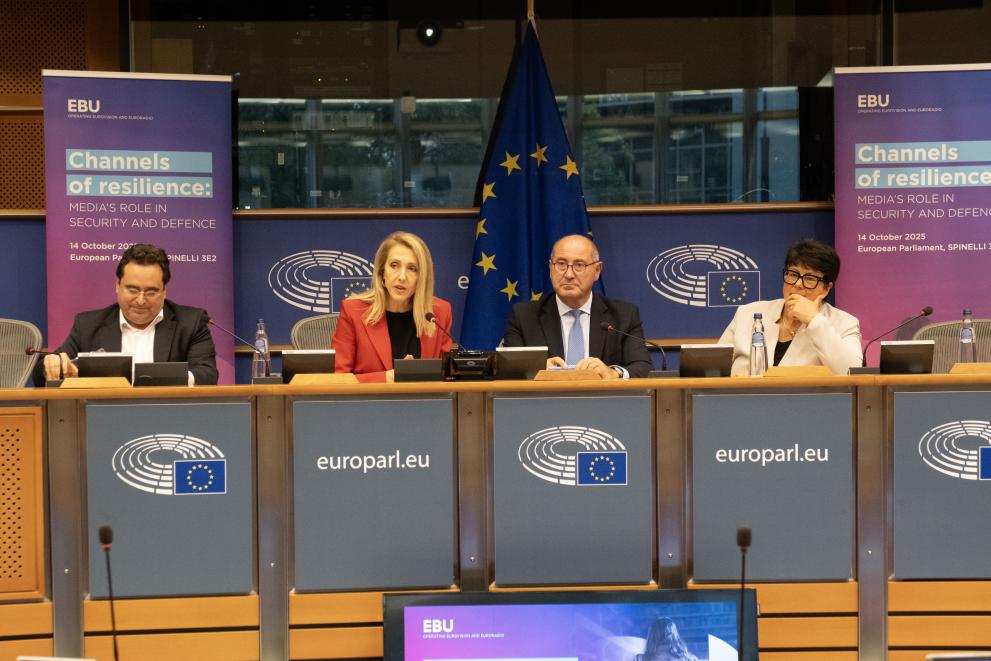
In her keynote on Public Service Media and Civil Preparedness, Cilla Benkö, EBU Vice President and Director-General of Swedish Radio, underlined radio’s crucial role as a lifeline before and during disasters. While digital networks are powerful, she warned, they are also highly vulnerable: easy to track, disrupt, or disable. “Radio is ready when everything else fails,” she said, underscoring its role as critical infrastructure in times of emergency, a view shared by Sibyle Veil, CEO of Radio France: “This is not nostalgia, but risk management.”
Benkö furthermore urged greater investment in public risk awareness: “Everyone should know their local emergency frequency and have access to a working analogue radio, especially in their cars” she said.
"Radio is ready when everything else fails"
Similarly, Javier Sánchez, Director of Audiovisual Policy and Public Service at RTVE (Spain) reflected on the recent wide-scale blackouts in Portugal and Spain. Many citizens, he said, searched for receivers and batteries to stay connected. The crisis introduced younger generations in Portugal and Spain for the first time to analogue radio, demonstrating its continued relevance and an ongoing need for public awareness.
These insights on risk awareness and resilient channels of crisis communication echo the objectives of the EU Preparedness Union Strategy. The Strategy calls for stronger population preparedness, including greater public awareness of risks and threats, and the ability for households to remain self-sufficient for at least 72 hours during emergencies. By urging citizens to know their local emergency frequency and keep an analogue radio at hand, the speakers showed that resilience begins long before disasters strike. A brief review of Member State practices indicates that many have already incorporated these guidelines, identifying a battery-powered radio as a key component of household emergency kits.
Raising awareness and countering misinformation
Building public awareness is crucial, but equally important is ensuring access to reliable information during emergencies. Sibyle Veil, CEO of Radio France, emphasised that in floods, blackouts, or other disasters, people instinctively turn to trusted radio broadcasters. As rumours spread faster than facts, journalists must “verify before they amplify”, she said.
Through the EBU Academy, journalists across Europe receive training in crisis communication, learning how to report responsibly during emergencies and work effectively with first responders and public authorities. This strengthens preparedness not only among citizens, but also among those who inform them.
| Upcoming EBU Academy training courses on security and preparedness |
| Working in Natural Disasters in Europe |
| HEST: Hostile Environment Safety Training |
| For the Record: Covering War and Conflict |
| Network and Learn for Security Officers - Preparing for Crisis |
Last updated: 17 November 2025
MEP Pekka Toveri, a former Major General of the Finnish army, explained that in Finland and Sweden, media are integrated into the national preparedness system, ensuring trusted communication in times of crisis. He described it as a model of resilience and cooperation Europe could learn from. “Democracy is our greatest strength. We can stop tanks, but not fake news, that is why free and trusted media are essential”, he said.
"Building trust before a crisis is vital to ensure that life-saving information is believed and acted upon when it matters most."
Echoing these concerns, on 12 November the European Commission presented the European Democracy Shield alongside the EU Strategy for Civil Society. The package outlines concrete measures to empower, protect and promote resilient democracies across the EU. Central to this plan are explicit safeguards for free and independent media, recognising them as a cornerstone of democratic security and stability, as well as initiatives to foster media and digital literacy for all ages.
Toveri also emphasised the importance of media education and literacy as key tools to strengthen democratic resilience. Building trust before a crisis, he noted, is vital to ensure that life-saving information is believed and acted upon when it matters most, an aspect similarly reflected in the Preparedness Union Strategy’s guidance on countering misinformation and addressing the needs of vulnerable groups.
Strong media for a more resilient Europe
The ‘Channels of Resilience’ event reaffirmed that Europe’s public service media are not just storytellers but operational partners in population preparedness and crisis management. Reliable communication, through analogue radio and trusted journalism, is essential before, during, and after emergencies. As Sabine Verheyen, First Vice-President of the European Parliament, concluded the event: “Resilience in crisis communication is about preparedness, credibility, and public trust.”
1 Like
About the author
The Knowledge Network – Staff member
The Knowledge Network editorial team is here to share the news and stories of the Knowledge Network community. We'd love to hear your news, events and personal stories about your life in civil protection and disaster risk management. If you've got a story to share, please contact us.
Thematic series