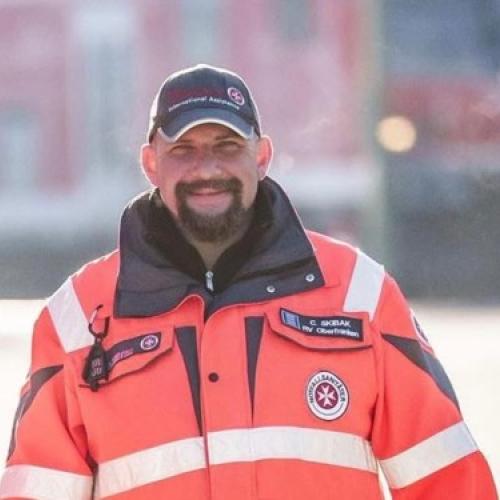
Christian Skibak: making MODEX more realistic through lifelike mannequins
Christian Skibak has an interesting role that you may not expect – he provides the medical mannequins which appear in MODEX for realistic training purposes.

Christian Skibak has an interesting role that you may not expect – he provides the medical mannequins which appear in MODEX for realistic training purposes.

Christian Skibak is a paramedic, former industrial firefighter and disaster preparedness professional. He is currently affiliated with Canadian Aviation Electronics (CAE), where he provides the patient simulators (or mannequins) or medical and disaster response training. Christian is also a member of a German Emergency Medical Team within the European Emergency Medical Teams initiative.
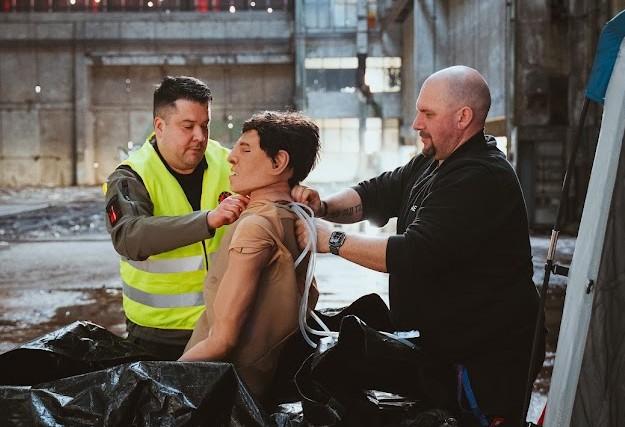
A patient lies strapped to a stretcher as doctors gather around him. His leg is severely injured, and his clothes are torn to reveal a large wound below the knee. The medical team has to act fast, while also remaining calm, careful, attentive, and highly focused. To save this life, they will need to amputate the leg.
‘The feelings are very intense’
Thankfully, what Christian is recounting is not a real emergency. It’s part of an EU MODEX large-scale field exercise designed to prepare responders for the worst moments they may face one day. And the patient on the stretcher isn’t real either: it’s a mannequin especially designed for such purposes.
Christian is in fact very much responsible for creating such a realistic scene for doctors to train on. In his first EU MODEX, a few years back, the set-up was a little less extravagant and much less convincing. ‘The patient came inside and there was only a letter on the chest’, he recounts. ‘This letter outlined a condition, and the doctor simply did [mechanical] steps to fix the problem’. There was no sense of urgency, and the trial wasn’t challenging enough. With his background in emergency response and current work with trauma simulators, Christian realised he could improve the whole experience. He had the means to push the limits of realism during the exercise further.
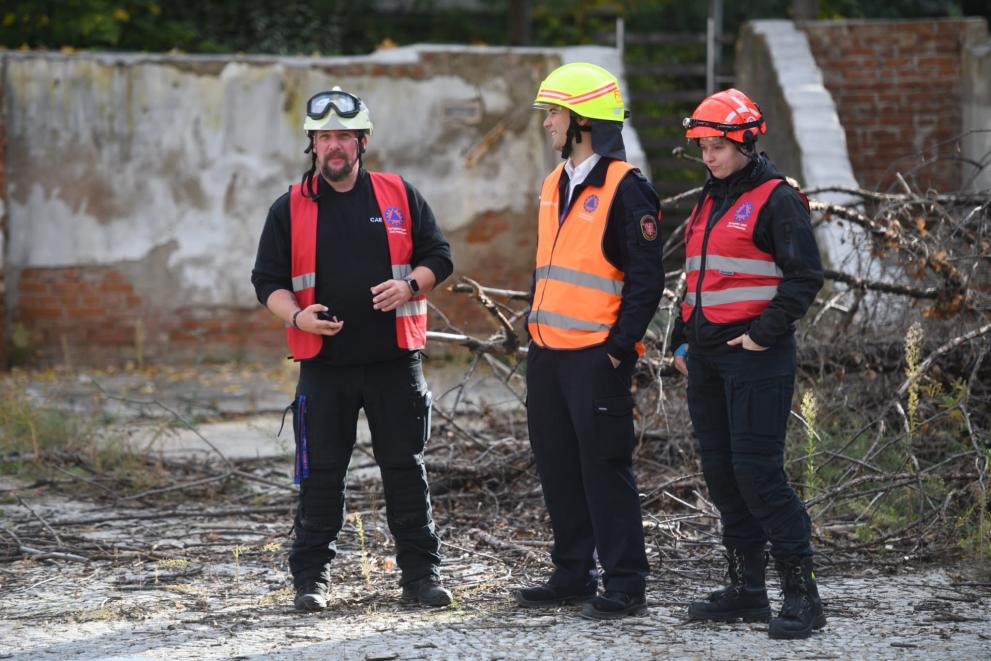
The most effective simulations, as he explains, are the ones in which things go terribly wrong. Using a mannequin which is a lot more lifelike, able to scream in agony, cry, and spurt blood which is warmed up and sprayed to smell like real blood, increases the intensity and therefore provides essential coping skills for emergency responders. When a team makes a critical mistake, the mannequin can also simulate death, and the scenario suddenly feels awfully real.
‘Sometimes, people are crying, really crying, because they are so inside of the scenario’, he says, and part of Christian’s job is to guide them through the process and calm them down. Still, he notes, it’s possible for participants to go ‘really deep into the stress’, experiencing the very real emotional weight of failing to save a life.
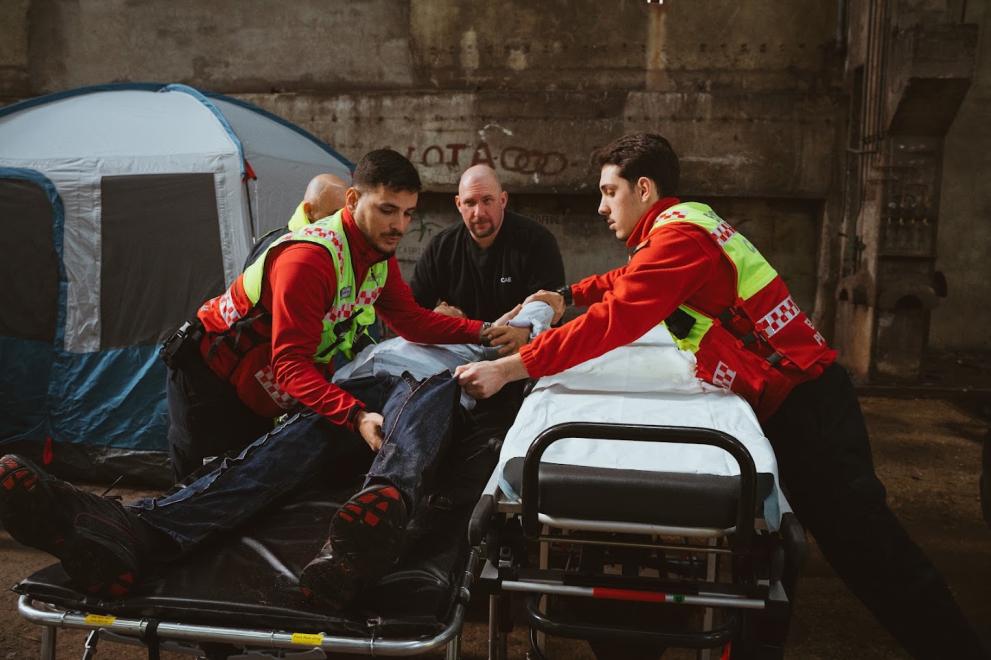
He speaks about these moments with the calmness that comes with experience, but what stands out most is Christian's warmth and approachability. Each time he mentions the people involved, his smile betrays how he truly feels about the exercises. Now in his fourth EU MODEX, Christian regards the emergency response teams less like trainees and more like a large family. Bound by their sense of duty and heroism, they share the goal of being ready to save lives when a real emergency strikes.
The Knowledge Network editorial team is here to share the news and stories of the Knowledge Network community. We'd love to hear your news, events and personal stories about your life in civil protection and disaster risk management. If you've got a story to share, please contact us.
Sectors
Thematic series