You are about to be redirected to EU Login, our authentication service.
The UCPKN platform offers different kinds of information views based on the identification of the user, and its associated roles. If it is the first time you are logging in to the platform, your profile will be validated at the end of the process, and you will receive a label and/or associated roles on the platform based on the information provided by you.
If you are a civil protection expert active in the context of the Union Civil Protection Mechanism operations (e.g., training, exercises, deployments), make sure you are using the same email address you used for training/deployment registration for a proper creation of your profile.
Disasters do not discriminate — but our responses to them can
Published on
In this interview marking International Women’s Day 2026, Adisa Bala, Director of Disaster Risk Reduction and Prevention in Albania, reflects on the importance of inclusive disaster risk governance, the role women can play in shaping more resilient societies, and why advancing rights, justice and action for women and girls is essential to effective disaster risk reduction.
By Knowledge Network – Staff member
For Adisa Bala, disaster risk management is not only about responding to crises — it is about building systems that reduce risk before disasters occur. With a background in governance, public finance and policy development, her work focuses on strengthening institutions, improving coordination and ensuring that disaster risk reduction becomes an integral part of public decision-making.
I consider myself lucky to have had the opportunity to develop my career in this field and bring new perspectives and leadership that contribute to strengthening resilience efforts.
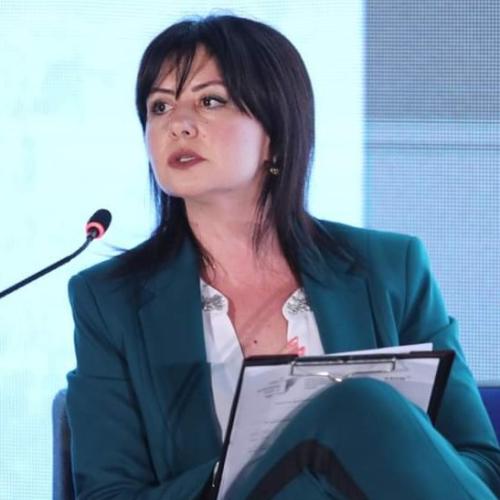
Adisa Bala - Director of Disaster Risk Reduction and Prevention in Albania
Can you share a bit about your background and what first inspired you to build your career in disaster risk management?
I hold a PhD in management, with an economic background, with a focused interest in disaster risk governance, gender-responsive budgeting, and the integration of climate issues in the management of public finances. Before joining the National Civil Protection Agency of Albania. I worked as a consultant and manager in various sectors of central and local government, sustainable development, and strategic planning. Over the past 17 years, I have dedicated my career to public administration — a field that gives me the sense that I am serving my country and contributing to meaningful change.
I am happy that my path crossed with DRM, at a time when this concept for Albania was still new and unexplored. What is interesting to note is that, among others, it was a field traditionally perceived as male-dominated, mostly linked to operational and terrain characteristics.
Women are not just “vulnerable groups” in disasters, they are also powerful agents in policy influence, community engagement and collaborative governance.
Adisa Bala - Director of Disaster Risk Reduction and Prevention in Albania
This year’s International Women’s Day theme is “Rights. Justice. Action. For ALL Women and Girls.” What does this theme mean to you in the context of disaster risk reduction?
Unfortunately, we still sometimes lack the effective implementation of laws, the recognition of rights beyond declarations, and the guarantee of safety unconditionally, regardless of the type of disaster.
Which issues within civil protection matter most to you personally, and how do you advance them through your role?
Disasters are not “natural”, but man made! This phrase struck me while preparing for the competition process for my current position. I realised that knowledge and awareness alone are not enough. You need a system. You need comprehensive efforts.
In recent years I have been leading processes of policy development and capacity building within the framework of strengthening Albania’s civil protection system. As Director of Disaster Risk Reduction and Prevention, I have been coordinating whole-of-government processes in disaster risk governance by prioritising local action and setting standards.
Inter-institutional accountability is the backbone of a civil protection system. Therefore, I am committed to inter-sectoral coordination, which works only when governance structures are clear, responsible and collaborative. It is crucial that policies are translated into operational action at the local level.
To achieve this, we are embedding risk assessment, planning and capacity building across disaster risk reduction policies.
Mentoring other women, inspiring them and challenging outdated culture of traditionally male dominated emergency space, are some of the many meaningful issues that guide me.
Adisa Bala - Director of Disaster Risk Reduction and Prevention in Albania
Do you see progress in advancing women’s representation and leadership within disaster risk management in Albania and the region?
To be realistic, we are missing indicators to measure real outcomes, but I fully admit that there has been visible progress. The National Strategy for Disaster Risk Reduction 2023–2030, the country’s first, has established gender equality objectives throughout its actions and integrates the needs of vulnerable groups including women and girls.
Albania is working intensively, along with international consultancy, to continue advocacy to increase women’s participation in local government, preparedness initiatives and technical DRM roles. I believe the region shares similar values, with growing support for women’s inclusion, although data and indicators remain limited.
What message would you share with young women who are considering a career in disaster risk reduction or civil protection but may hesitate to step into leadership roles?
Becoming visible representation, mentoring other women, inspiring them and challenging outdated culture of traditionally male dominated emergency space, are some of the many meaningful issues that guide me.
DRR is not just an emergency response, or a life threatening…it is a matter of empathy, of passion, of evolution, values that mostly characterise women.
Disaster management is a meaningful mission. The uncertainty it brings keeps you challenged yet motivated, that rewards and evolves you in many dimensions!
About the author
The Knowledge Network – Staff member
The Knowledge Network editorial team is here to share the news and stories of the Knowledge Network community. We'd love to hear your news, events and personal stories about your life in civil protection and disaster risk management. If you've got a story to share, please contact us.