As Silje Berger, project manager of IMAROS 2, explains:
“Reducing sulphur emissions is a major achievement, but it has also introduced new challenges in spill response.”
At the same time, ships are transporting increasing amounts of hazardous and noxious substances (HNS), chemicals that, in the event of an accident, can evaporate, dissolve, or form toxic gas clouds. These substances are complex, and their range of potential harmful impacts is wide.
Laura Cotte, project manager of MANIFESTS Genius, highlights the challenge:
“There are more than 2,000 different substances transported at sea, which makes it very difficult to predict their behaviour in case of an accident.”
IMAROS 2: When Oil Doesn’t Behave Like Oil
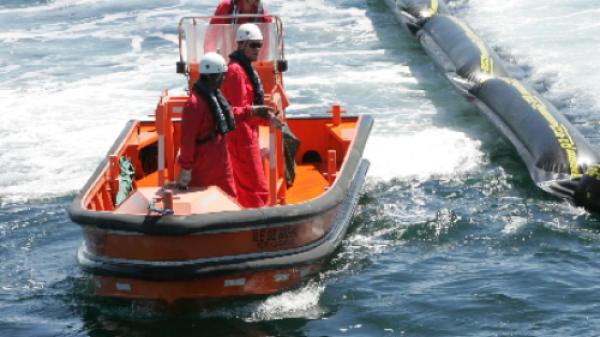
IMAROS 2 focused on a surprising problem: modern low-sulphur fuels do not always behave like traditional oil when spilled. The project brought together researchers and industry to better understand these fuels and improve response methods. The work included:
- Studying how the new fuels behave in water
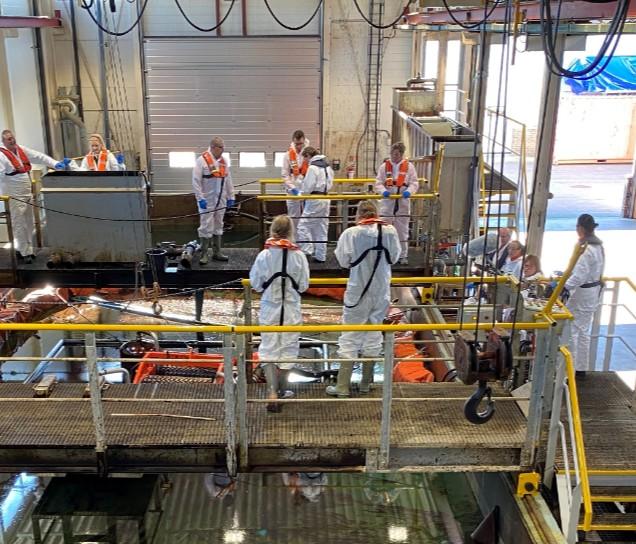
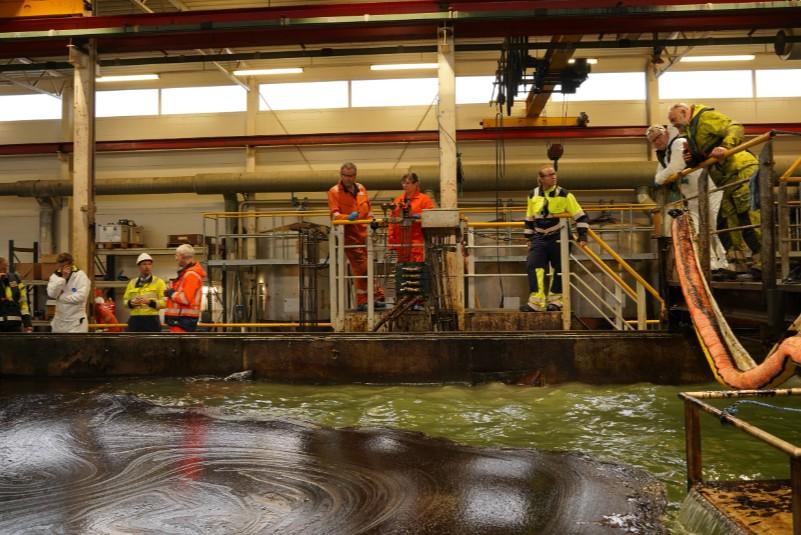
- Testing equipment used to recover oil spills
- Collaborating directly with manufacturers to improve response equipment
- Running experiments in different environments, from cold Nordic waters to warmer southern seas
One particularly effective approach was testing equipment, improving it, and then testing it again – an iterative cycle that led to clear progress.
The key finding was that some of these fuels can transition from liquid into a more solid, wax-like substance in the water. This makes them more difficult to collect during fuel oil spills and brought up new understanding on how to improve mechanical recovery systems and equipment.
Berger explains:
“It’s not just about viscosity anymore. The oil can become solid, and that requires a completely different approach.”
Environmental conditions, particularly temperature, play a major role. Colder waters make the problem more pronounced, but it can also occur in warmer regions depending on the fuel type.
Key outcomes of the project include:
- Improved understanding of how the marine fuel market has evolved following sulphur regulations
- New and upgraded recovery equipment close to real-world deployment
- Enhanced data on the characterization of low-sulphur fuel oils
- Updated response strategies and operational guidelines
- Adapted training programmes reflecting these new challenges
MANIFESTS Genius: Preparing for Chemical Spills
While IMAROS 2 focused on oil, MANIFESTS Genius addressed hazardous chemicals transported by sea. The project aimed to better understand how these substances behave and how to respond effectively. Activities included:
- Running controlled experiments to study how chemicals evaporate, dissolve, or spread
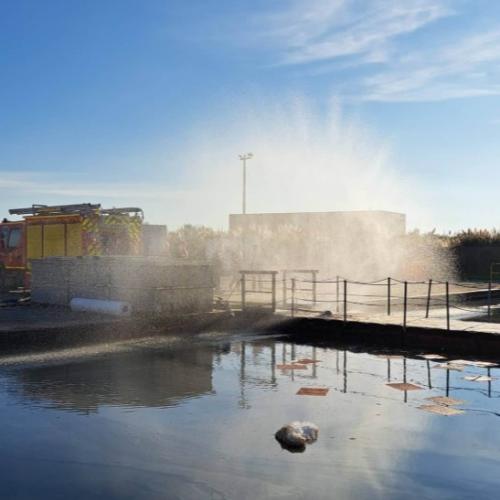
- Simulating real-life accident scenarios, such as coastal spills and underwater pipeline leaks
- Developing decision-support tools to help responders predict incident outcomes
- Organising international workshops to train experts in using these tools
Unlike oil, chemicals can behave in many ways. Some evaporate quickly and form dangerous gas clouds, while others dissolve or sink in water.
Cotte explains:
“The challenge with these substances is that each one behaves differently – you need experimental data and training to understand and anticipate the risks.”
The project resulted in a comprehensive package of practical tools:
- An updated HNS marine spill (HNS-MS) chemical database, covering more than 600 substances with over 100 parameters each
- The MARINER-MANIFESTS Knowledge Tool, an online repository of marine research and technical resources
- Guidance for deciding between sheltering and evacuation
- The MANIFESTS Exercise Package to strengthen training and preparedness
- Niovelius Serious Game to support crisis management training
- COPtool, ensuring common operation picture among stakeholders
- Modelling tools to forecast pollutant drift, as well as risk prediction of fire, explosion or gas dispersion
- Training materials describing the tools
A Shared Impact
Although the two projects focus on different types of pollution, they highlight a common lesson: solving one environmental problem can sometimes create new challenges.
As Berger puts it:
“When you change regulations in one area, it can lead to unexpected challenges elsewhere.”
As Cotte notes:
“Every new piece of data contributes to long-term improvements in response capabilities.”
MANIFESTS Genius brought together five partner organisations from Portugal, Spain, Belgium, and France. The project was coordinated by the Centre de Documentation, de Recherche et d’Expérimentation sur les Pollutions Accidentelles (CEDRE) in France.
IMAROS 2 involved seven partner organisations from France, Finland, Sweden, Belgium, Denmark, the Netherlands, and Malta. The coordinating organisation was Kystverket Vest in Norway.
* Copyright of the first profile photograph is owned by the project MANIFESTS Genius.