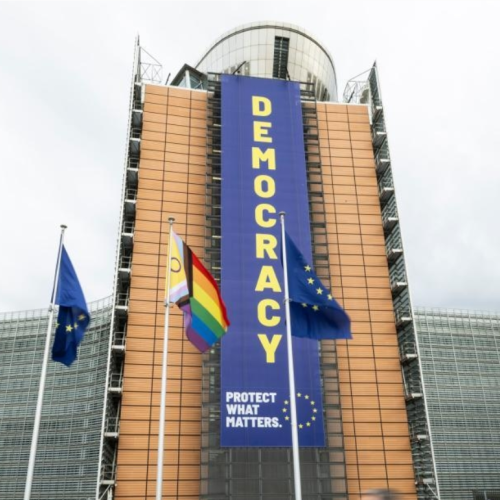
IDAHOBIT 2026: Addressing LGBTIQ+ specific protection needs in crises
Every year on 17 May, the world marks the International Day Against Homophobia, Transphobia and Biphobia (IDAHOBIT).
Every year on 17 May, the world marks the International Day Against Homophobia, Transphobia and Biphobia (IDAHOBIT).

The date commemorates the 1990 decision by the World Health Organization to remove homosexuality from its International Classification of Diseases and has since become a global moment to highlight ongoing discrimination and violence against LGBTIQ+ people.
In 2026, under the theme “At the heart of democracy”, the message is clear: equality is not only a value, but a condition for resilient and functioning societies.
But what happens to that principle in a crisis? When systems are under pressure, who is visible in response planning and who is not? On IDAHOBIT day, the Knowledge Network looks at what is being done to support LGBTIQ+ individuals in a crisis situation.
A global reality: vulnerability that remains largely invisible
Crises do not affect everyone in the same way. For LGBTIQ+ people, risks tend to compound rather than replace existing vulnerabilities. The UN Independent Expert on protection against violence and discrimination based on sexual orientation and gender identity points to patterns that repeat across contexts: exclusion from services, exposure to violence, and limited access to safe support.
Some of this is built into how response systems operate. Shelters organised along rigid gender lines. Registration processes that assume standard household structures. Informal support networks that do not always extend to those outside dominant norms. In certain contexts, simply identifying oneself can carry consequences.

Personal safety in shared shelters can be a particular concern for individuals perceived as not conforming to social or gender norms. Standard assistance models can create additional gaps when access to food distributions, sanitary items or shelter arrangements rests on narrow assumptions about households and family structures. Displacement also interrupts access to medication — hormone treatment, HIV-related care — in ways that create serious risks that standard emergency health protocols rarely anticipate.
The wider picture reflects this uneven reality. According to ILGA World — a global federation of organisations working on LGBTIQ+ rights — 64 UN Member States criminalise consensual same-sex relations, and at least 61 restrict freedom of expression related to sexual and gender diversity. These conditions shape what safety looks like long before a crisis begins.
Where this sits in the EU context
Within the European Union, equality and non-discrimination are not abstract commitments. They are embedded in the Treaties and the Charter of Fundamental Rights, and increasingly reflected in policy frameworks.
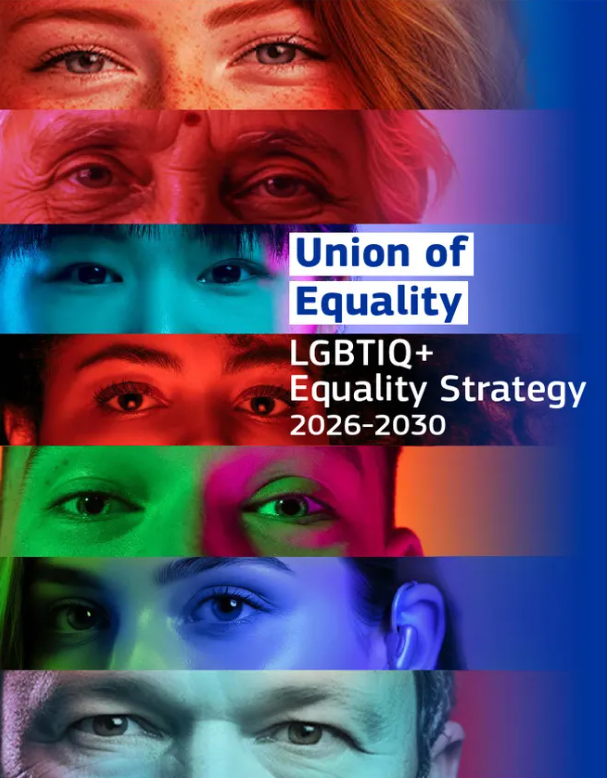
The EU LGBTIQ+ Equality Strategy 2026–2030 sets out an ambition to integrate equality across policy areas. It also draws a clearer line between discrimination and resilience: where trust is weak, systems struggle to function, including in emergencies.
Recent data from the European Union Agency for Fundamental Rights (FRA) gives a sense of scale. In 2023, 37% of LGBTIQ+ people in the EU reported experiencing discrimination in the past 12 months, while 55% reported hate-motivated harassment — up 18 percentage points since 2019. Discrimination rates reached 64% for trans women, 63% for trans men and 56% for intersex people. Among LGBTIQ+ asylum seekers and refugees — people already displaced, already seeking safety — that figure rose to 54%.
International guidance on protection, gender and inclusion in emergencies is increasingly recognising the need to account for diverse vulnerabilities in humanitarian response.
Civil protection: where inclusion starts to take shape
The Directorate-General for European Civil Protection and Humanitarian Aid Operations (DG ECHO) aims reflect a broader understanding of vulnerability, including sexual orientation and gender identity within its diversity considerations. EU funding programmes such as Citizens, Equality, Rights and Values programme (CERV) support civil society organisations working on equality and inclusion, creating some alignment between policy ambitions and what happens in practice. Local and national LGBTIQ+ civil society organisations also play a role that emergency systems have been slow to recognise: they know their communities, hold existing trust, and can reach people that standard actors cannot.
Inclusion in practice: early but limited examples
Explicit references to LGBTIQ+ inclusion in EU-funded civil protection projects are still rare. When they appear, they tend to be tied to specific crises rather than embedded in standard approaches.
DG ECHO-funded programmes implemented by UNFPA focus on gender-based violence, health and safe spaces. Public documentation rarely mentions sexual orientation or gender identity directly. In some cases, LGBTIQ+ individuals are included among groups receiving targeted assistance — rental support, essential items — and UNFPA has documented gaps in service access for LGBTIQ+ refugees. Progress, but largely implicit
Meanwhile, a DG ECHO-funded project implemented with partners including the Danish Refugee Council has created safe spaces for LGBTIQ+ individuals combining language courses, community activities and access to support in ways that respond to both practical and social needs.
Training offers another angle. The Diversity and Inclusion Manual for UCPM courses places sexual orientation within a broader understanding of diversity and treats inclusion as a professional standard for course delivery — neutral language, active facilitation, assessment of inclusive behaviour. Sean Moore, the manual's lead author, defines the terms clearly: “Diversity refers to the broad range of human differences, including sexual orientation. Inclusion means creating environments where every individual feels valued, respected, and able to contribute fully.”
These approaches matter. They shape how teams work together and how decisions are made in the field.
Where this leaves civil protection
Preparedness depends on anticipation. What is not clearly identified rarely gets planned for.
LGBTIQ+ communities can still sit at the edges of that process — acknowledged in principle, but not consistently reflected in how risks are assessed, how training is designed, or how operational guidance is written.
IDAHOBIT 2026 is a moment to think about what closing that gap would actually require: projects and frameworks that name LGBTIQ+ people as a group with specific, known needs in emergencies.
The Knowledge Network editorial team is here to share the news and stories of the Knowledge Network community. We'd love to hear your news, events and personal stories about your life in civil protection and disaster risk management. If you've got a story to share, please contact us.