LIFE Zero Energy Mod: Cutting energy use in mobile buildings
The energy efficiency of temporary shelters used in disaster zones and military bases could soon improve thanks to the work of one LIFE project.

The energy efficiency of temporary shelters used in disaster zones and military bases could soon improve thanks to the work of one LIFE project.

Easy to transport and quick to construct, modular buildings are commonly used for military bases, emergency shelters and research camps in remote locations. But without surrounding energy infrastructure in place, they often rely on polluting diesel generators for power. An innovative new type of modular building could soon change that, thanks to the work of a LIFE project.
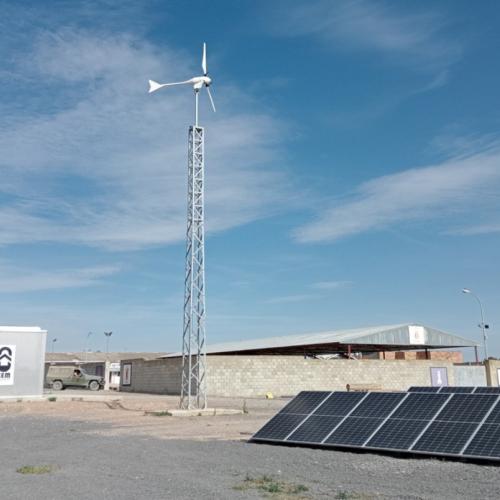
The LIFE Zero Energy Mod project has developed a modular habitat that can be assembled anywhere in the world without the need for fossil-fuel energy. The project uses an innovative ‘plug-and-play’ solution in which the modules are built to Passivhaus standards, making them highly energy efficient. The design cuts energy use by 85-90%.
The buildings also come with a smart energy unit that generates power from solar and wind, with batteries and hydrogen tanks to store energy for when needed. The structures offer a green alternative for Europe’s armed forces, which often needs to construct durable buildings at short notice in distant locations. This will support efforts by EU member states to reduce the carbon 'bootprint' of their militaries. The European Commission has provided close to €10 million over the past seven years to help the defence sector improve its energy sustainability.
Although the modules were initially tested for military use, they will also be useful for civilian purposes too. The modular habitats can provide emergency shelter for victims of disasters, give aid agencies buildings to work from and research camps for scientists in remote areas, according to the LIFE Zero Energy Mod team.
At present, the systems supplying energy to these facilities are usually fossil-fuel based, In previous studies, it has been estimated that any of the 20-foot containers installed at the Spanish base in Afghanistan, had an annual fuel consumption of 15 000 litres, 20% of which was used for lighting and 80% for heating and air conditioning.
The LIFE Zero Energy Mod approach provides comfortable and self-sufficient accommodation that can be quickly and easily deployed to camps around the world. The system has been undergoing testing in desert-like conditions at a military base in Zaragoza, Spain. It is also due to be put through its paces in one of the harshest environments on Earth — Antarctica — when it is installed at Spain’s Gabriel de Castilla research station on Deception Island in the South Shetland Islands.
The project, which ran for three years until May 2025, demonstrated that the shelters cut the amount of energy used by 96% compared with conventional modular buildings. They also avoided the release of 120 tonnes of CO2 per year, equivalent to removing 26 fossil-fuel powered cars from the road.
‘By demonstrating scalable, zero-energy modular infrastructure that replaces diesel generators with renewable generation and hydrogen storage, the Zero Energy Mod project enhances EU energy resilience and supports the transition away from imported fossil fuels in off-grid and remote contexts' says Casero Cabezón. ‘Building on this approach, the project delivers a replicable model for energy-autonomous, mobile buildings that can be deployed for defence, disaster-relief and humanitarian missions across Europe.’
The LIFE Zero Energy Mod project contributes to the European Green Deal and the EU’s Energy Performance of Buildings Directive.
The Knowledge Network editorial team is here to share the news and stories of the Knowledge Network community. We'd love to hear your news, events and personal stories about your life in civil protection and disaster risk management. If you've got a story to share, please contact us.
Sectors
Risk drivers