You are about to be redirected to EU Login, our authentication service.
The UCPKN platform offers different kinds of information views based on the identification of the user, and its associated roles. If it is the first time you are logging in to the platform, your profile will be validated at the end of the process, and you will receive a label and/or associated roles on the platform based on the information provided by you.
If you are a civil protection expert active in the context of the Union Civil Protection Mechanism operations (e.g., training, exercises, deployments), make sure you are using the same email address you used for training/deployment registration for a proper creation of your profile.
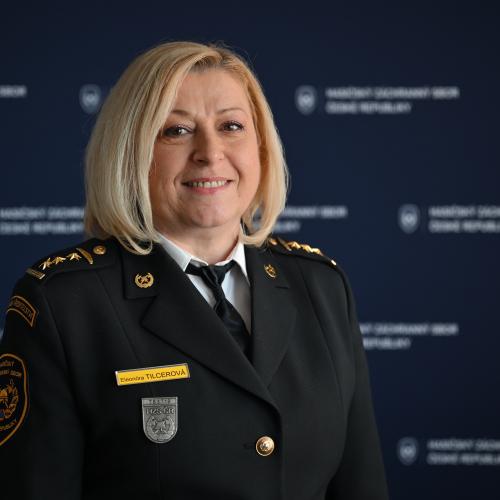
In this interview marking International Women’s Day 2026, Colonel Eleonora Tilcerová, Director of Population Preparedness at the Fire Rescue Service of the Czech Republic, reflects on her unexpected journey from teaching to civil protection and explains why educating children, communities and professionals remains one of the most effective ways to build resilient societies.
By Knowledge Network – Staff member
For Colonel Eleonora Tilcerová, civil protection begins long before an emergency occurs. With more than three decades of experience, she has dedicated much of her work to strengthening public awareness and education on safety and disaster preparedness.
It always makes me happy when someone uses the knowledge, they have gained to help themselves or someone around them, so I know that it also brings tangible results.
Colonel Eleonora Tilcerová- Director of Population Preparedness at the Fire Rescue Service of the Czech Republic
You have been working in the rescue corps and in the field of civil protection for many years, now as the head/director of the population preparedness department of the Fire Rescue Service of the Czech Republic. Can you tell us about your professional experience and career progression and what inspired you for the first time to take a career path in this field?
I have been working in this field for 30 years. For 21 of those years I have been with the Fire and Rescue Service, and for 19 years I have served as head of the preventive education department.
It was by chance that I entered this profession. As a graduate teacher, I began my career teaching young children at elementary school. After my maternity leave, I received an offer to leave education and join civil protection.
During my career I worked in many areas of civil protection, including public warning systems, sheltering and financial and property issues related to ensuring these activities.
In the end I returned to the topic closest to my heart — education.
Instead of working only with young pupils, I now work with many different groups, including the general public and crisis management professionals. I have stayed in this job ever since. It is fulfilling, interesting and diverse. It always makes me happy when someone uses the knowledge, they have gained to help themselves or someone around them, so I know that it also brings tangible results.
I believe that as a woman I am able to listen carefully and notice issues that might seem minor but can become important if ignored.
Colonel Eleonora Tilcerová- Director of Population Preparedness at the Fire Rescue Service of the Czech Republic
2. Fire and rescue services are traditionally the domain of men. Looking back at your career, how did your career path and approach to leadership influence your experience of what women would do?
I have never felt disrespected by men during my career. Only on a few occasions did I feel that I had to make a greater effort to convince others about my ideas. Over time I have developed significantly in my role as head of department. Working with people is the most demanding kind of work, but I enjoy it.
I believe that as a woman I am able to listen carefully and notice issues that might seem minor but can become important if ignored. Open communication is essential. Even a small problem can grow into a larger one if it is not addressed early.
My colleagues often say I take a “mother-like” approach to leadership. I try to guide my colleagues towards independence, responsibility and personal development. I have coached several colleagues who now hold leadership positions themselves, and I am very proud of them.
Today I know that without empathy and psychological understanding, I could not do this job well.
Danger does not discriminate — it does not distinguish between genders or ages.
Colonel Eleonora Tilcerová- Director of Population Preparedness at the Fire Rescue Service of the Czech Republic
3. This year’s theme for International Women’s Day is ‘Rights. Justice. Actions. For ALL women and girls.” What does this topic mean to you in the context of civil protection and population preparedness?
I like history, but I am grateful to live in the present and in Europe, where women have the same rights as men. When preparing the population for emergencies, we treat everyone equally. We teach people the same principles of prevention and how to deal with emergencies or crisis situations.
4. What would you say to young women considering a career in civil protection, firefighters or crisis management, but who may be reluctant to join?
I once wanted to be an actress… and now I am a firefighter. When I was young, I never imagined that I would work in civil protection and in the security field. Today I can say that this profession is interesting, diverse and meaningful, and it brings the satisfaction of seeing tangible results. It also offers opportunities for personal and professional development.
And it is certainly no longer a men-only profession. In fact, there are currently more women than men working in our department.
I would therefore like to encourage all women who are considering a career in civil protection, crisis management, or security in general to go for it. Don't hesitate and come join us.
I have been working for a long time to bring safety issues back into classrooms, and now, our efforts are beginning to yield the desired results.
Colonel Eleonora Tilcerová- Director of Population Preparedness at the Fire Rescue Service of the Czech Republic
5. For many years, you have worked on educating children and adults about disaster management. What are you most proud of in connection with this work in the Czech Republic?
One thing I am proud of is that the Fire and Rescue Service of the Czech Republic now has a structured preventive education system. When I joined the service, preventive education was everyone’s responsibility and yet no one’s responsibility. It was an unstructured activity with little coordination.
Together with my colleague, we have created a system of coordinators for preventive education at national and regional levels and preventive education groups. Today we plan and regularly evaluate all activities, including producing statistics.
Secondly, I consider the establishment of cooperation with ministries that also deal with individual safety to be a success, specifically with the Ministry of Transport on road safety issues, the Ministry of Health on first aid issues, the Ministry of Defence on national defence preparedness, and last but not least, the Ministry of Education, Youth, and Sports on the integration of individual safety into school curricula.
Finally — and this is especially close to my heart — we succeeded in bringing safety education back into classrooms.
Safety topics are now integrated into education at all levels, from kindergartens to secondary schools.
About the author
The Knowledge Network – Staff member
The Knowledge Network editorial team is here to share the news and stories of the Knowledge Network community. We'd love to hear your news, events and personal stories about your life in civil protection and disaster risk management. If you've got a story to share, please contact us.