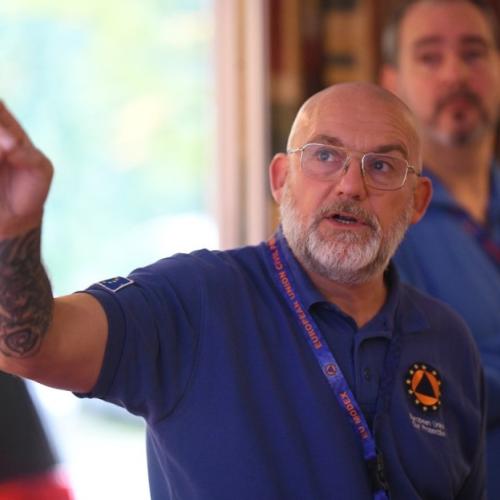
Steve Gadsdon: Designing high-pressure scenarios with creativity
Steve Gadsdon is responsible for designing complex exercises to better prepare rescue teams for a wide range of emergencies.
Steve Gadsdon is responsible for designing complex exercises to better prepare rescue teams for a wide range of emergencies.

Steve Gadsdon has over 30 years of operational and civil protection experience in the fields of firefighting, urban search and rescue, technical rescue, rope rescue and water rescue.
Until his retirement from the UK Fire and Rescue Service in 2024, Steve served in a range of operational, command and leadership roles. He has designed and delivered major national and international exercises, including EU MODEX Lot 3, where he serves as chief exercise controller.
Imagine being part of an emergency response team deployed to Venice, where a tsunami has caused extreme flooding, risking the lives of local inhabitants. To make things worse, cataclysmic weather conditions make access dangerous. Where would you begin to deal with a situation like this?
This is the kind of high-pressure imaginary scenario that Steve Gadsdon, one of the chief exercise controllers for EU MODEX, is responsible for designing. A retiree from the UK fire service, Steve has been involved with EU MODEX since 2017. Drawing on several years of experience, he and his fellow Chief Exercise Controller, MarKus Glanzer, are now responsible for designing complex exercises to better prepare rescue teams for a wide range of medical emergencies.
Steve says he and the team design these exercises much like a video game. ‘It’s an open world. You can go in any direction you want.’ In doing so, rescue teams may go down paths that no one would anticipate. And to make these as realistic as possible, inspiration is taken from real-life disasters.
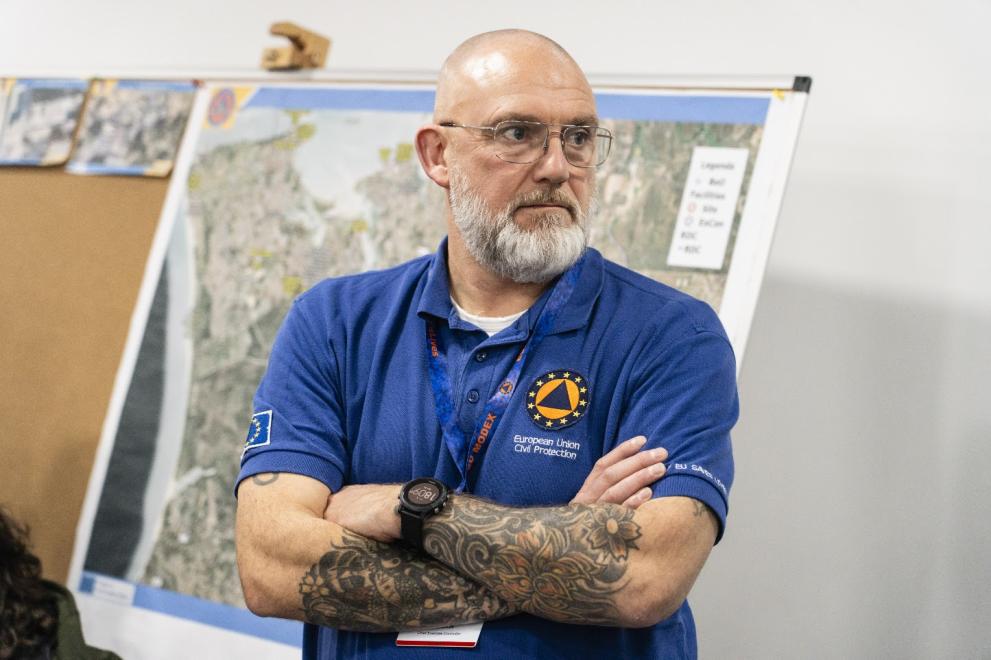
Before coming up with a scenario, Steve asks one simple question: what is this likely to turn into? More importantly, in how many ways could this go wrong?
The exercises train responders for situations that deviate from a standard plan and prepare them for events unfolding in unexpected ways. ‘It’s not going from A to B, even if that’s more convenient. That does them no justice, no favours whatsoever’, he explains. ‘We have to let them make mistakes and then see if they can drag those mistakes back by themselves, because that's the best learning opportunity.’
He adds that while technical skills can be taught, exercises must test real-world reactions because human emotions are involved. These exercise simulations are designed to enhance coordination, interoperability, cooperation and communication skills, such as liaising with local authorities and managing interactions with affected communities. ‘Maybe there's a bit of a civil disturbance outside your base of operations or people might try to cross the hazard line. We have people turning up with memorial flowers, trying to get into buildings where their loved ones were.’ Because reality is unpredictable and full of surprises, Steve injects such elements into the scenarios to keep things as realistic as possible. This practical role-playing is crucial; from the outset, participants ‘stop calling it an exercise and start calling it a mission’.
And while he and the team are tasked with creating demanding scenarios for others, these experiences have also reshaped him. Reflecting on lessons learnt, he explains that his background in the fire service required him to let go of a certain rigidity. The fire service relies on procedures that are carefully planned, strictly structured and linear, while EU MODEX exercises have taught him that flexibility as well as creativity are also essential to building truly effective scenarios. His repeated involvement with these exercises has also led him to become calmer and more confident, enabling him to focus on the ‘why’: giving the people the best he can.
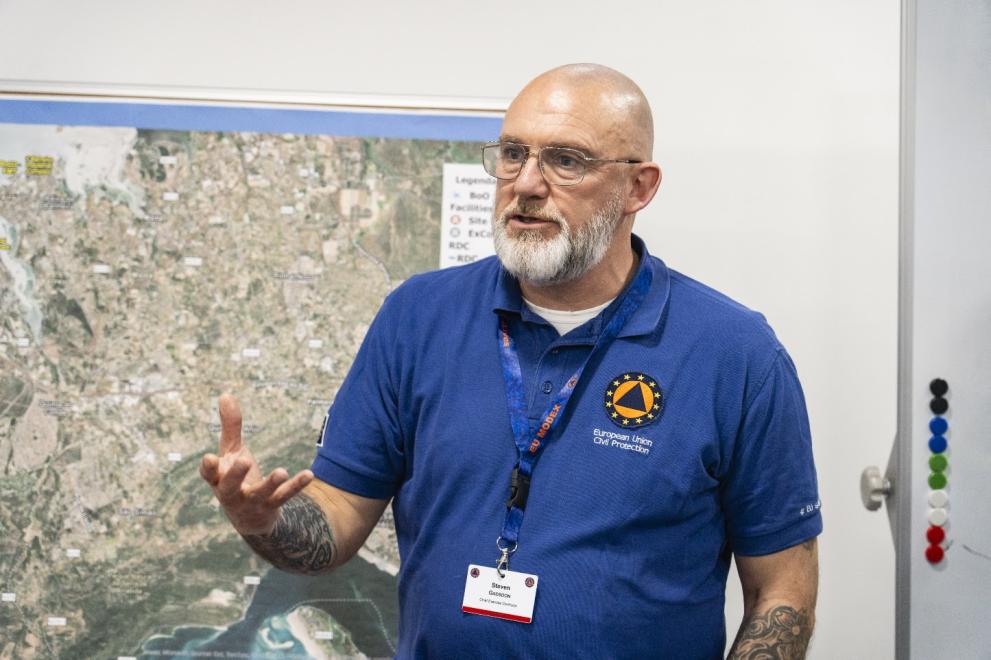
‘I've been there – I've done it myself’, he explains. ‘I've been on the rubble pile. I've been in the fires. I know what it's like. And they're the most important people, those that step into that, beyond that cordon. So, to me, nothing is more important and we should all be focused on that.’
As he speaks about these missions, his conviction is unmistakable. He sees the people who make up these teams as the vital connective tissue of emergency response work. Even when experiencing exhaustion or assessing mistakes or the intensity of the exercises, his perspective does not waver: ‘Emergency response work is all about the people. It’s the people who make it all worthwhile. These are some of the best colleagues and friends I have ever had.’
The Knowledge Network editorial team is here to share the news and stories of the Knowledge Network community. We'd love to hear your news, events and personal stories about your life in civil protection and disaster risk management. If you've got a story to share, please contact us.
Sectors
Thematic series