You are about to be redirected to EU Login, our authentication service.
The UCPKN platform offers different kinds of information views based on the identification of the user, and its associated roles. If it is the first time you are logging in to the platform, your profile will be validated at the end of the process, and you will receive a label and/or associated roles on the platform based on the information provided by you.
If you are a civil protection expert active in the context of the Union Civil Protection Mechanism operations (e.g., training, exercises, deployments), make sure you are using the same email address you used for training/deployment registration for a proper creation of your profile.
Turning Data into Decision: An interview with Celeste Saulo
Published on
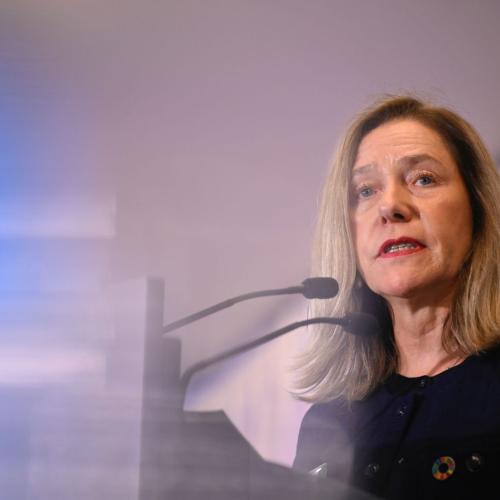
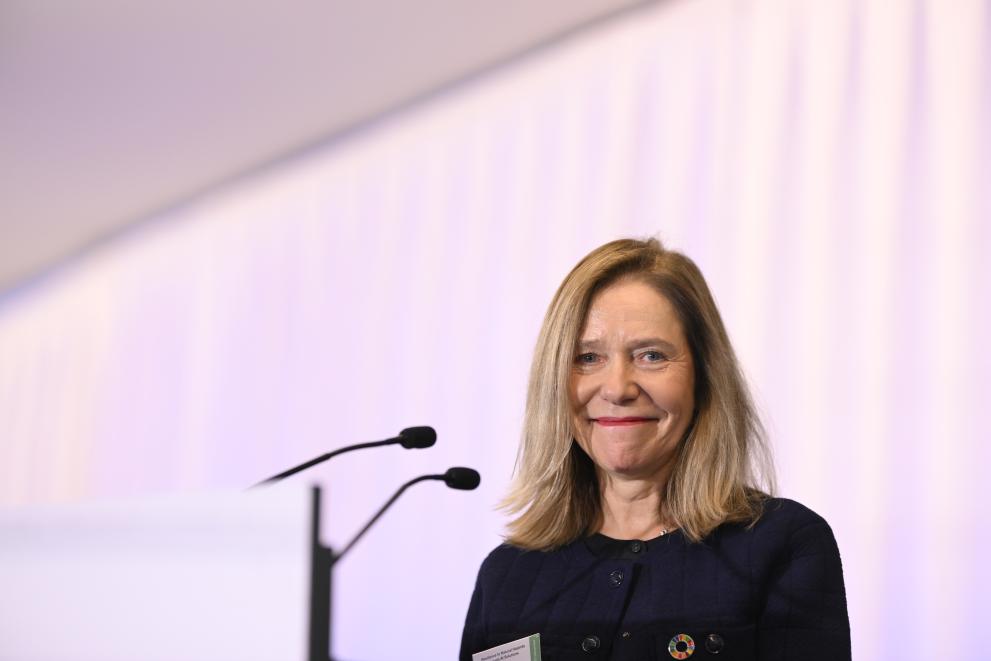
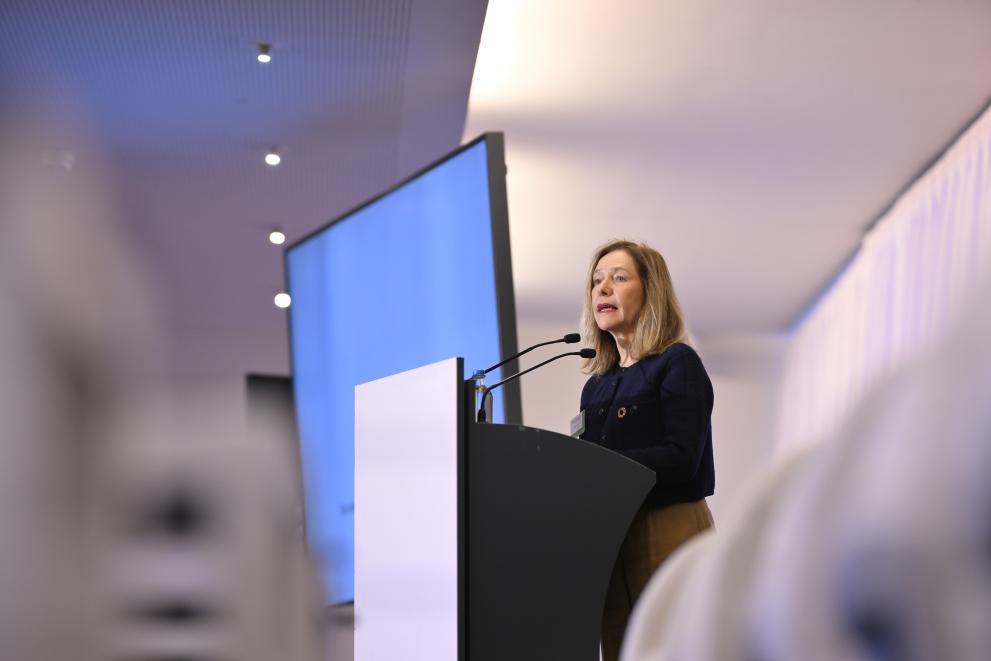
Celeste Saulo is an Argentine meteorologist and has served as Secretary-General of the World Meteorological Organization (WMO) since 2024. The WMO, a UN specialised agency, supports nations - particularly the most vulnerable - in building resilience to weather, climate, and water hazards. Prior to this, Professor Saulo was Director of Argentina’s National Meteorological Service (SMN).
By Knowledge Network – Staff member
At SMN she lead institutional reforms and strengthened science-based climate and weather services for disaster risk reduction. Saulo is also a Full Professor at the University of Buenos Aires and a research scientist at the National Council for Scientific and Technical Research, with extensive experience in climate variability, early warning systems, and science-policy interfaces.
How do you see the role of AI evolving in disaster preparedness, early warning systems, and climate risk management over the next decade?
These developments present both a tremendous opportunity and a significant responsibility. At the World Meteorological Organisation (WMO), our work spans the full value chain of atmospheric monitoring: observation, modelling, improving forecast quality, and disseminating information in ways that make it accessible and actionable. AI is already supporting us at every step of this process.
Firstly, in terms of observation, AI is extremely valuable for quality control, data management, and handling diverse data formats and sources.
Secondly, regarding detection, the focus is shifting from simply observing images to rapidly recognising patterns that may indicate severe or damaging events.
AI plays a crucial role in identifying signals that might not be immediately visible to the human eye. Whether through satellite imagery, radar, or other sensing technologies, AI helps detect the most hazardous weather and precipitation patterns.
Celeste Saulo, Secretary-General of the World Meteorological Organisation
This can be extended to incorporate vulnerability components. While WMO is not a vulnerability expert per se, combining information, such as prolonged rainfall with historical landslide data, allows AI to integrate situational awareness with past events, improving risk anticipation.AI also has a major impact on visualisation. We deal with enormous volumes of data, and AI helps transform this data into formats that are truly actionable for decision-makers.
Finally, beyond visualisation, there is the crucial step of translation. Experts and decision-makers need to understand what forecasts mean in practice, for example, how heavy rainfall might affect schools, businesses, or emergency management operations. AI can support this translation, turning meteorological information into actionable insights across sectors.
Which recent developments in AI for weather forecasting, early warning, or disaster management do you consider the most impactful or promising?
One particularly promising development is the ability to consolidate this complexity into manageable systems, such as the prototype AI solution known as Forecast in a Box. This approach combines multiple algorithms operating on cloud-based data and can be customised for specific regional or national contexts. This approach combines multiple algorithms operating on cloud-based data and can be customised for specific regional or national contexts.
From your perspective, what are the main pitfalls or limitations we should be aware of when applying AI to disaster risk reduction?
The primary challenge is data availability and reliability. AI systems are only as good as the data they are trained on, and in many of the most vulnerable regions, data remains incomplete or unreliable.
Celeste Saulo, Secretary-General of the World Meteorological Organisation
Apart from that, the global data networks are essential. For example, observational data collected in Nigeria feeds into ECMWF forecasting systems through WMO’s intermediary role. Preserving and strengthening this global network function is critical for the continued success of AI-enabled early warning systems.
In your view, what are the most urgent capacity-building needs for national meteorological and hydrological services, particularly in resource-constrained countries, when it comes to integrating AI for preparedness and early warning?
Co-production is absolutely central. Collaborative capacity-building allows for mutual learning, not only benefiting least developed countries, but also enriching institutions in more developed contexts through peer exchange.
This collaboration requires sustained financial support. When capacity-building is co-designed, it strengthens ownership, relevance, and long-term sustainability of AI applications.
What concrete next steps should follow from the outcomes of this workshop to ensure they translate into real progress for national services and communities on the ground?
Developing and sharing best-practice models is essential, as is raising awareness of the distinct yet complementary roles played by different institutions. Global alliances clearly demonstrate the value of collaboration, and strengthening these partnerships should be a priority.
Equally important is accelerating the deployment of comprehensive early warning systems, encompassing forecasting, communication, preparedness, early action, and risk understanding. With the growing frequency and intensity of extreme weather events, we are losing lives and livelihoods that could have been avoided. There is no time to lose.
About the author
The Knowledge Network – Staff member
The Knowledge Network editorial team is here to share the news and stories of the Knowledge Network community. We'd love to hear your news, events and personal stories about your life in civil protection and disaster risk management. If you've got a story to share, please contact us.