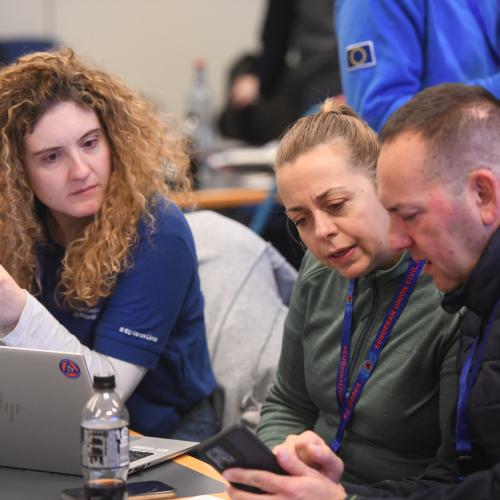
Valentina Angeli: going from scenarios to symptoms
Dr Valentina Angeli designs immersive patient cases and oversees the actors who carry out the role-playing phase of MODEX.

Dr Valentina Angeli designs immersive patient cases and oversees the actors who carry out the role-playing phase of MODEX.

Dr Valentina Angeli is a disaster and emergency specialist. She holds a European Master’s degree in Disaster Medicine from Università del Piemonte Orientale and is currently completing her residency in emergency medicine at the Università di Pavia. As part of CRIMEDIM, Valentina contributes to EU MODEX and DisasterTEAM projects by organising actors and coordinating role-play scenarios for each exercise.
Behind every disaster simulation staff is a team whose job is to ensure the exercise feels as authentic as possible.
For Valentina Angeli, a doctor who specialises in emergency and disaster medicine, this is a responsibility she undertakes in every EU MODEX exercise. Having joined EU MODEX in 2020, she has taken part in a total of ten exercises, contributing her expertise in clinical and patient simulation.
‘We are involved in the planning phase and, of course, in the playing phase of each exercise’, she explains. ‘We prepare the clinical cases scheduled for each disaster scenario.’
Whether it is an earthquake, a flood, a wildfire or another major emergency, Valentina and her colleagues develop the clinical backbone of the simulation. They design detailed patient cases that reflect the injuries, symptoms, and medical and psychological conditions responders would realistically encounter in such disasters, complete with lab tests and even X-rays. ‘What we look out for is clinical accuracy’, she clarifies. By creating these immersive environments, emergency teams can test their skills, decision-making and coordination under pressure.
Then comes the role-playing stage. To prepare for this, Valentina and her team brief the actors, guiding them on how to portray the symptoms, behaviours and reactions they would exhibit as real patients. During this briefing, they might show how pain presents itself, how certain injuries limit movement or how a patient might react emotionally.
The results can be strikingly realistic. ‘We once had a role-play that was so convincing that real police officers arrived on site to check whether everything was all right’, she recalls with a smile.
Valentina also emphasises that these are dynamic clinical cases. They evolve in real time, and if the patient receives the right treatment their condition may improve. If not, it can deteriorate, even to the point of death. This unpredictability is deliberate; it mirrors the pressure and responsibility emergency teams face in real crises. And what fascinates her most is how naturally everything unfolds once the planning phase is complete. Each exercise, in a way, takes on a life of its own.
Reflecting on what the exercises have taught her, Valentina says, ‘I come back from each exercise with many thoughts about how I can improve in the next exercises. But, of course, I think about which aspect I can use in case of a real deployment.’
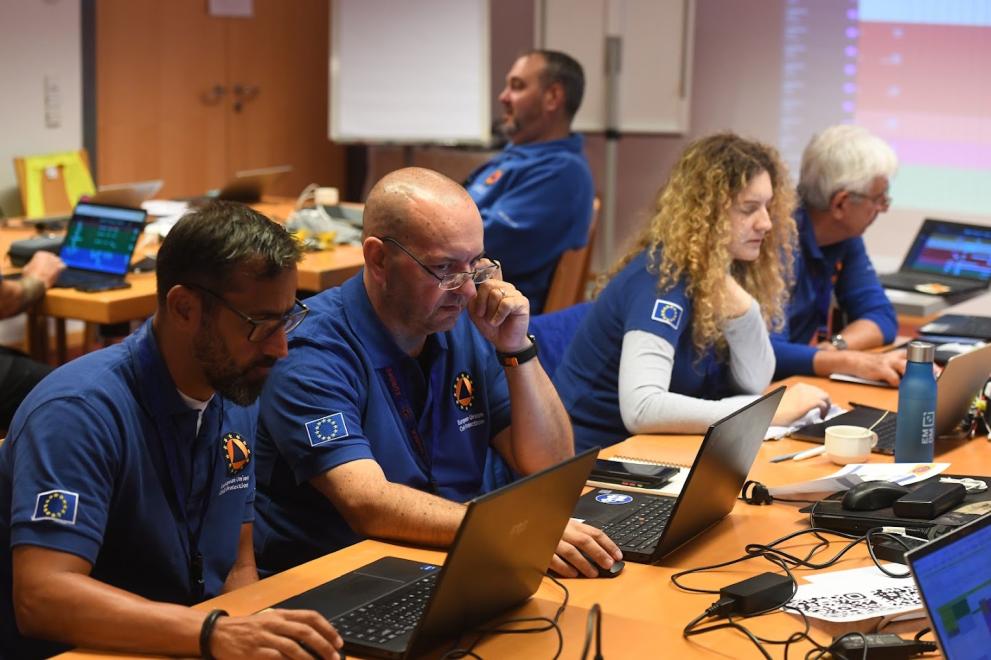
Each exercise also reminds her how much she values collaboration and learning from others. She says she enjoys working with people from different countries, backgrounds and roles, such as military personnel and firefighters.
The exercises have also helped her build a network that is both professional and personal: in real disasters, she may need to work with the same people, and, as she says, ‘It's easier to work with people that you have met before, of course, than to work in a stressful setting such as a real disaster with people that you have never met.’
The Knowledge Network editorial team is here to share the news and stories of the Knowledge Network community. We'd love to hear your news, events and personal stories about your life in civil protection and disaster risk management. If you've got a story to share, please contact us.
Thematic series