You are about to be redirected to EU Login, our authentication service.
The UCPKN platform offers different kinds of information views based on the identification of the user, and its associated roles. If it is the first time you are logging in to the platform, your profile will be validated at the end of the process, and you will receive a label and/or associated roles on the platform based on the information provided by you.
If you are a civil protection expert active in the context of the Union Civil Protection Mechanism operations (e.g., training, exercises, deployments), make sure you are using the same email address you used for training/deployment registration for a proper creation of your profile.
Women are not only part of the system — they are decision-makers.
Published on
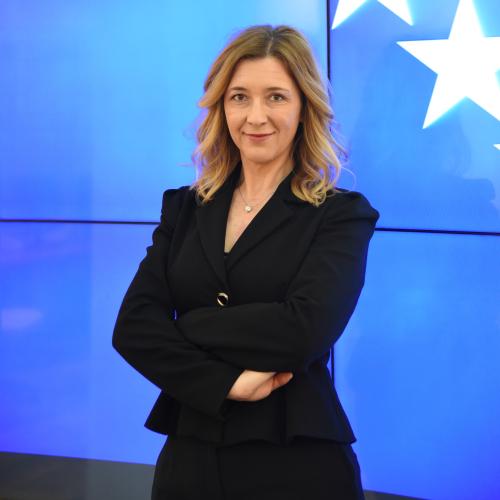
In this interview for International Women’s Day 2026, Mirnesa Softic, Head of the Operational Communication Centre of Bosnia & Herzegovina’s Ministry of Security, reflects on building credibility in a traditionally male-dominated environment, the importance of discipline and empathy in emergency management, and why inclusive and well-prepared institutions are essential for protecting communities.
By Knowledge Network – Staff member
For Mirnesa Softic, civil protection is a profession shaped by responsibility, precision and trust. With a background in engineering, she brings a structured and analytical approach to operational coordination, where decisions must often be made quickly and under pressure.
What motivated me was the opportunity to contribute to systems that people depend on when they are most vulnerable.
Mirnesa Softic- Head of the Operational Communication Centre of Bosnia and Herzegovina’s Ministry of Security
You are the Head of the Operational Communication Centre of Bosnia and Herzegovina in the Ministry of security. Can you tell us about your background and what motivated you to build a career in civil protection?
I did not begin my career in civil protection. I am an engineer by education, and that background shaped how I think and work. Engineering taught me structure, logic, and how to approach complex problems calmly. For a long time, I believed that would define my path.
At some point, I realised I wanted my work to carry more immediate responsibility. Civil protection offered exactly that. In Bosnia and Herzegovina, emergencies are not abstract. They require coordination, clarity, and steady decision-making at the same time.
What motivated me was the opportunity to contribute to systems that people depend on when they are most vulnerable. Over time, I understood that this profession is not about position. It is about accountability. You often work with incomplete information and under pressure, knowing that your decisions directly affect people’s safety. That awareness shapes you.
I quickly realised credibility would not be given. It had to be built.
Mirnesa Softic- Head of the Operational Communication Centre of Bosnia and Herzegovina’s Ministry of Security
As a woman who has worked in security and operational coordination, what challenges have you encountered and how have they shaped your leadership approach?
Working in a traditionally male-dominated environment was not simple, especially as a young professional. I quickly realised credibility would not be given. It had to be built. I built it through preparation, consistency, and results.
During the floods in 2014, we were operating under constant pressure. At one moment, I had to brief the President of Slovenia while still finalising an urgent operational task. A colleague came in and said, “Ten minutes.” I thought I had more time. That moment reflects the nature of this work. Operational urgency and high-level responsibility happen at the same time. You do not have the luxury of choosing between them. You manage both.
These experiences shaped my leadership approach. Discipline and preparation are essential, but so is empathy. During long emergency operations, when teams work without real rest, you realise that professionalism must always remain connected to humanity.
This year’s International Women’s Day theme is “Rights. Justice. Action. For ALL Women and Girls.” What does this mean to you in the context of civil protection?
In our field, rights mean equal access to protection and information during emergencies. Justice means equal opportunity to participate in decision-making, including in sectors that have traditionally been male-dominated. Action means ensuring that these principles are reflected in daily practice through training, competence, and real opportunities to lead. Women are not only part of the system as beneficiaries. They are professionals, coordinators, and decision-makers. Institutions function better when they reflect the society they serve.
Inclusion is not symbolic. It improves how systems function and strengthens public trust.
Mirnesa Softic- Head of the Operational Communication Centre of Bosnia and Herzegovina’s Ministry of Security
Which issues related to rights, equity, or inclusion in civil protection matter most to you?
Continuous learning is essential. Risks change. Technology evolves. Expectations increase. We cannot rely only on past experience. At the same time, knowledge must be shared. Institutions become stronger when experience is transferred and when younger professionals are supported. Inclusion is not symbolic. It improves how systems function and strengthens public trust.
What message would you like to share with young women and girls considering careers in civil protection, security, or public safety?
When you see that your effort helped a system function in a critical moment, you understand why it matters. If you feel that sense of responsibility, trust it. Follow it.
About the author
The Knowledge Network – Staff member
The Knowledge Network editorial team is here to share the news and stories of the Knowledge Network community. We'd love to hear your news, events and personal stories about your life in civil protection and disaster risk management. If you've got a story to share, please contact us.