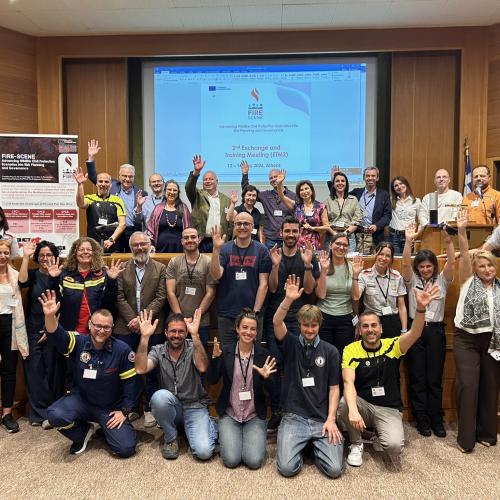
Public authorities, emergency services, land‑use and sectoral management, practitioners, experts, researchers and civil society gathered in Athens from 12–14 May for the 2nd Exchange and Training Meeting (2ETM) of the EU-funded FIRE-SCENE project, to share knowledge and strengthen wildfire risk management for Mediterranean contexts..
Hosted by the Aristotle University of Thessaloniki, the three-day meeting consisted of Indoor sessions combined with a field trip to Mati 2018 wildfire. It included presentations, peer exchange, workshops and roundtables around risk assessment and governance, emphasizing transferable practices for Extreme Wildfire Events.
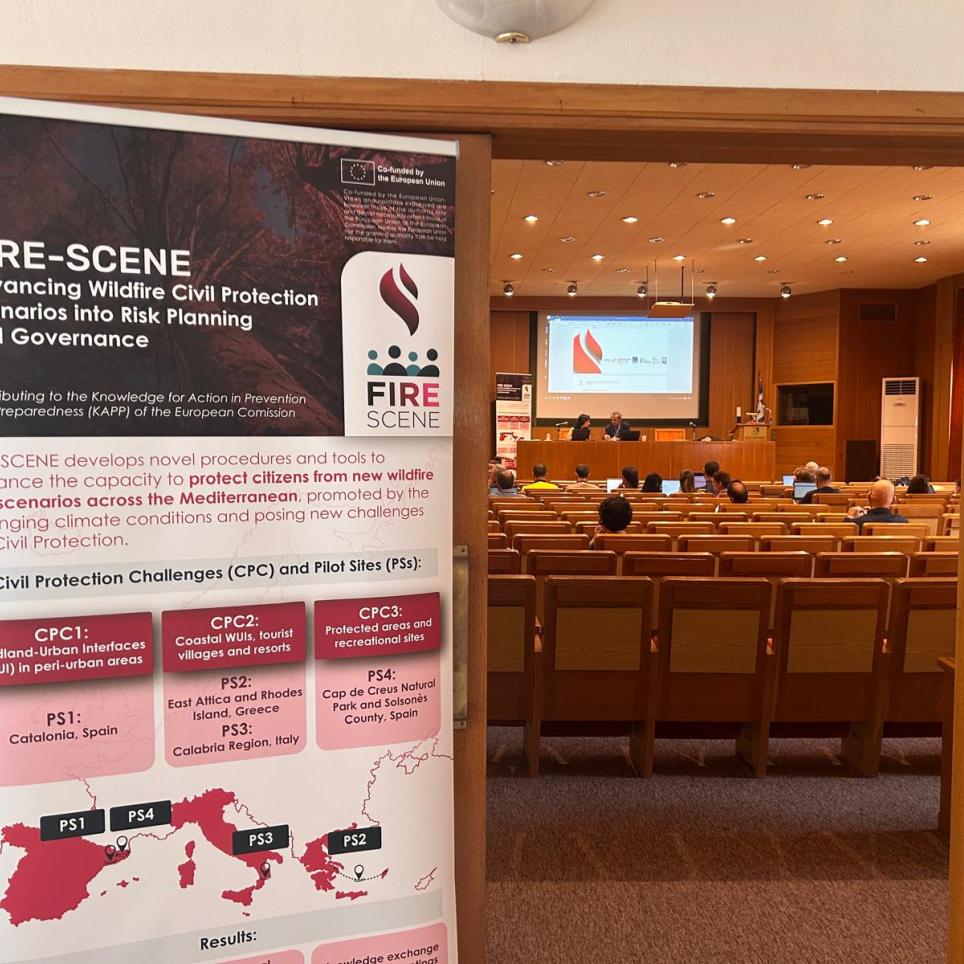
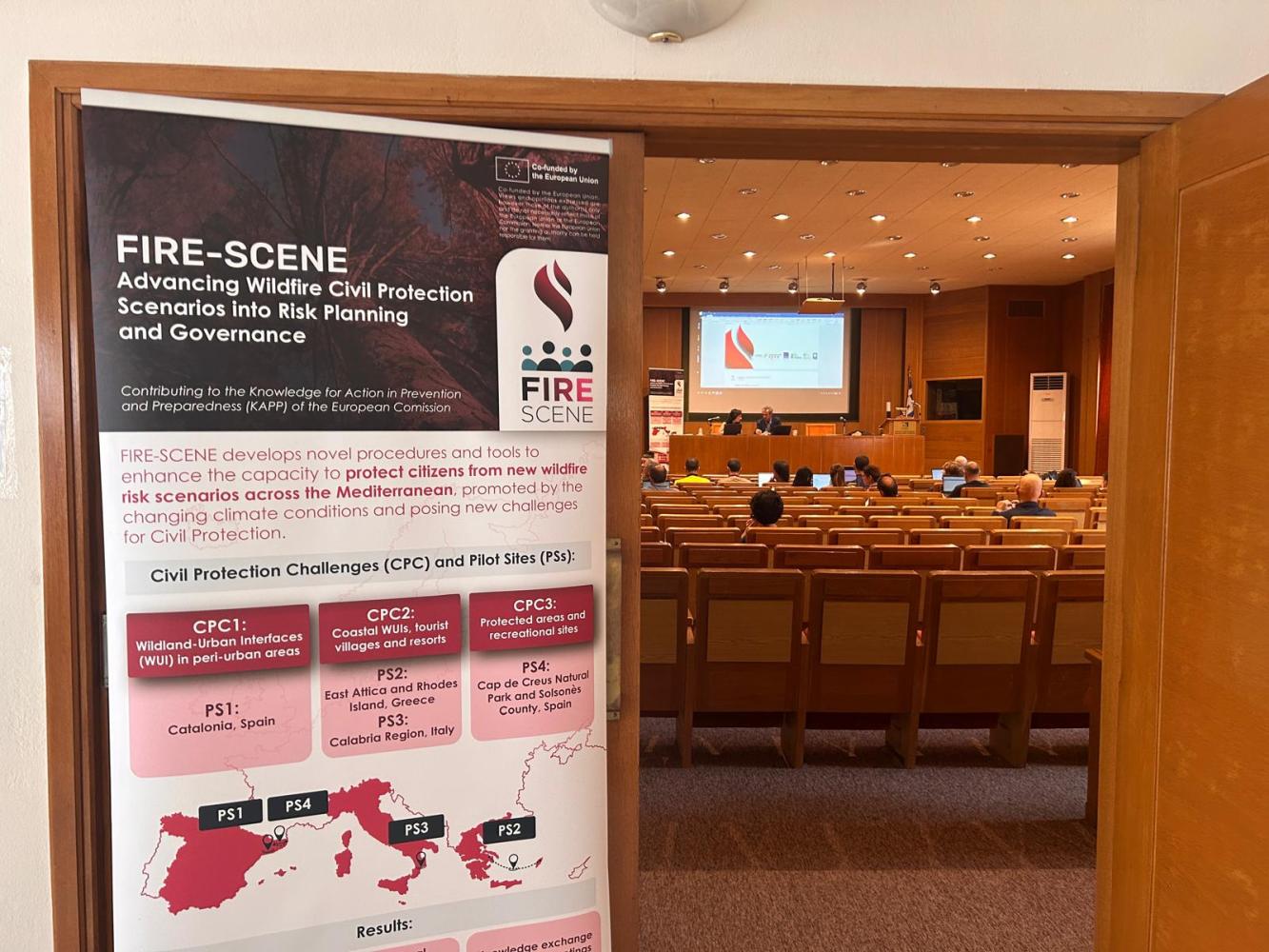
The 2ETM opened by emphasising the importance of cross-sectoral collaboration and international knowledge exchange to improve transferable wildfire prevention and management practices across Mediterranean regions. Speakers highlighted the key role of EU funding in supporting these efforts, while Greek national authorities presented over €145 million in investments for wildfire prevention, including fuel management, firebreaks, forest infrastructure and municipal support, alongside ongoing EU and national research initiatives to strengthen forest resilience and wildfire risk management.
The first session, entitled “Wildfire Peer Review Assessment Framework (WF-PRAF) Findings: Peer-Review Insights for Greece and Italy” identified significant progress in Greece and Italy towards integrated wildfire risk management while also revealing persistent gaps in prevention funding, interoperability and cross-border collaboration. Experts agreed that greater investment in prevention measures—including prescribed burning, landscape management and public awareness—is more effective than relying primarily on emergency response.
The second session was devoted to “Novel wildfire prevention and Civil Protection Challenges (CPC) in a growing risk context in the Mediterranean.” Representatives from the four FIRE-SCENE pilot areas presented practical solutions for different wildfire scenarios. These included self-protection mapping for peri-urban communities in Catalonia, wildfire risk classification tools for East Attica and Rhodes, tactical planning for tourist destinations in Calabria, and governance approaches for protected natural areas in Spain. The projects demonstrated how digital technologies, GIS mapping, artificial intelligence and stakeholder participation can improve preparedness and decision-making.
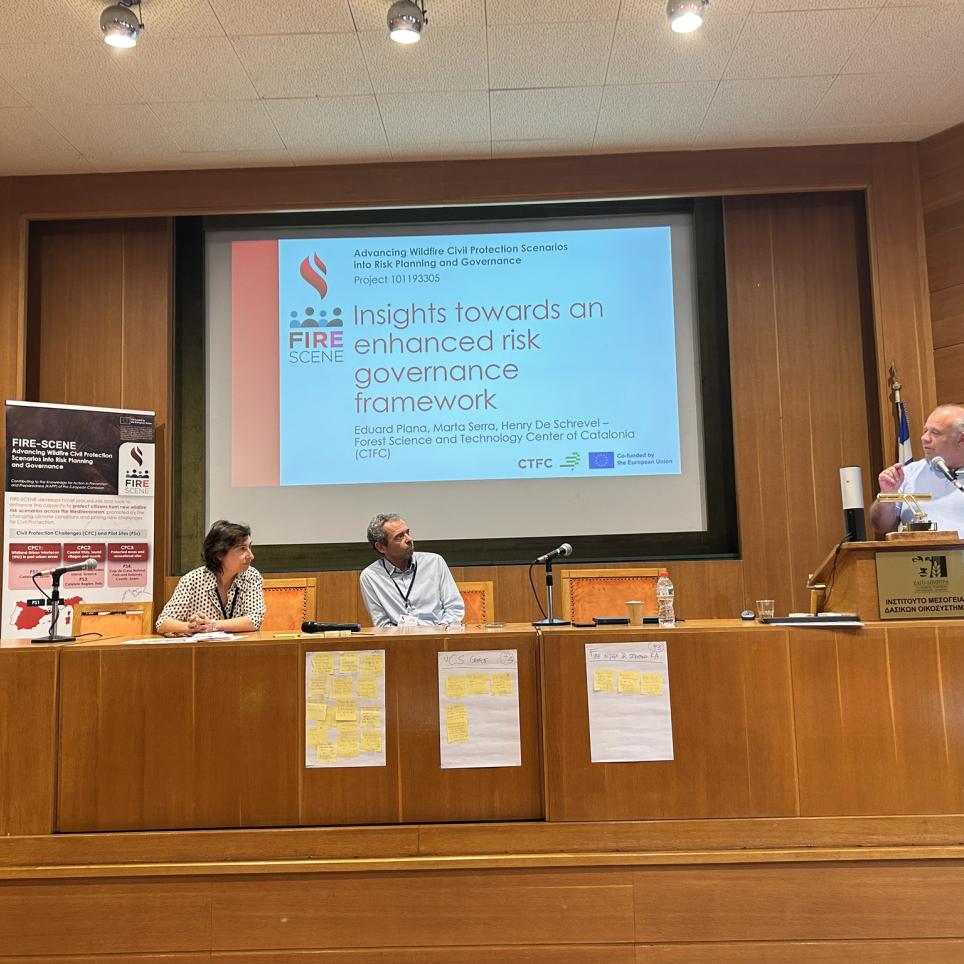
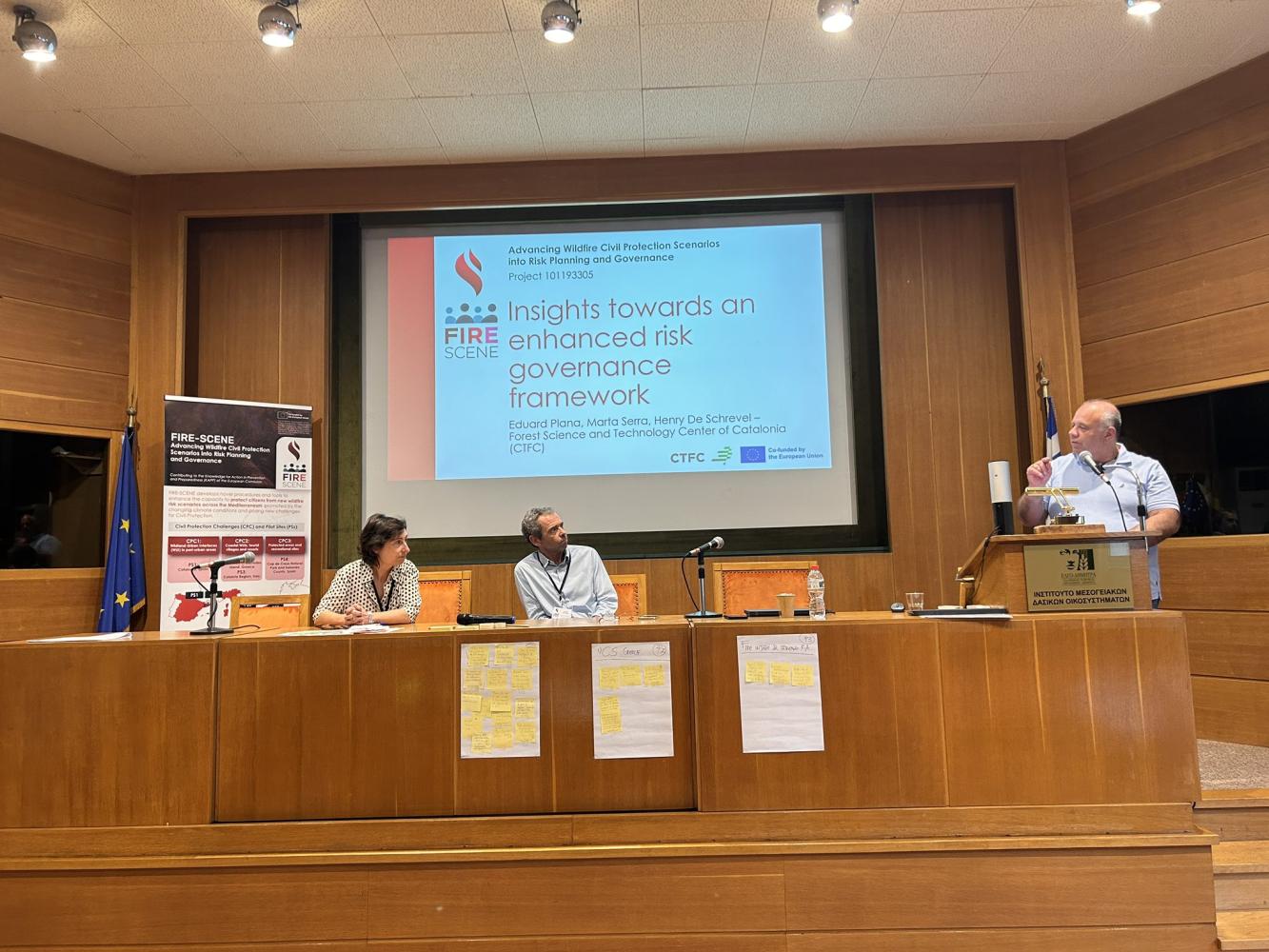
The third session was on “Practice Exchange: Lessons learnt from WFRM in East Attica, Rhodes, Catalonia & Italy” which included expert roundtables. Across all regions, several common recommendations were pointed out. For instance: Effective wildfire risk management depends on the integration of prevention, preparedness, and response, combining investments in fuel management and infrastructure with public awareness, training, and operational readiness; strong multi-level and multi-actor coordination and enhancing public risk communication through multilingual, multi-channel approaches are critical; bridging the gap between science and operations by strengthening real-time analytical capacities and ensuring that information reaches decision-makers is a priority; and, the involvement of the tourism sector and the structured integration of trained community volunteers are key to expanding capacity and improving resilience within civil protection systems.
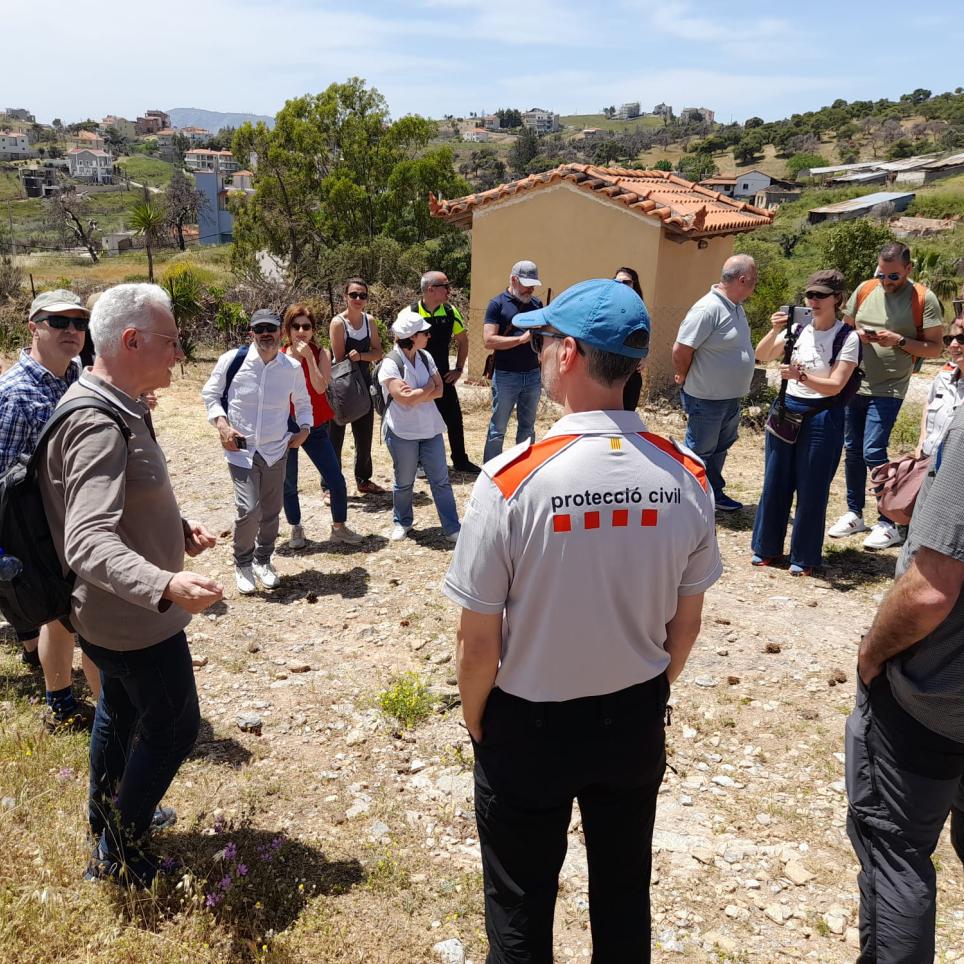
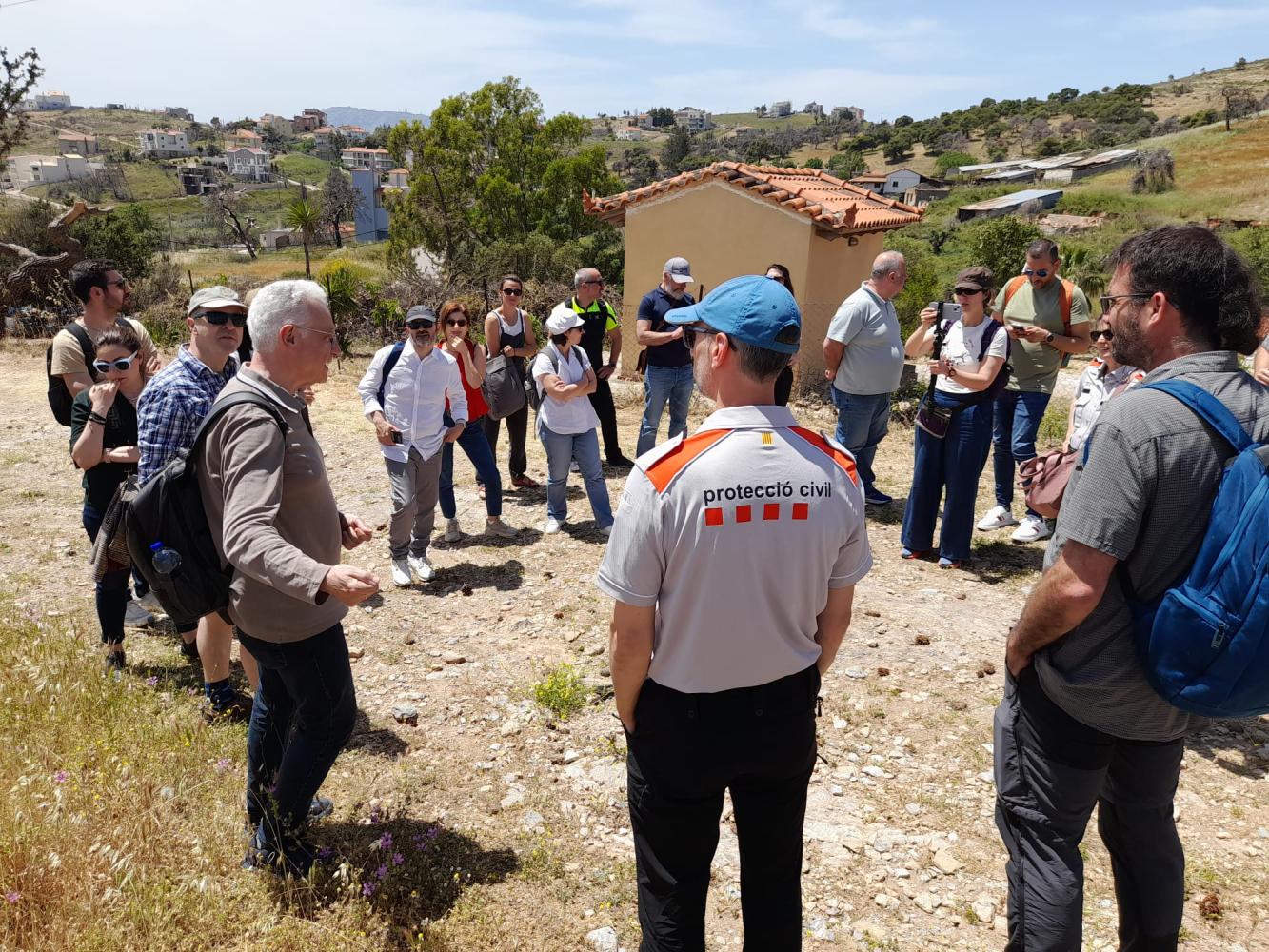
A field visit to the areas affected by the devastating 2018 Mati wildfire provided participants with firsthand insight into the consequences of inadequate evacuation planning, fragmented coordination and poor land-use planning. The visit reinforced the importance of realistic evacuation strategies, integrated monitoring systems and stronger cooperation between local authorities and emergency services.
The meeting concluded with a strong consensus that Europe's growing wildfire threat requires coordinated action across all levels of governance. Participants emphasised that resilient wildfire management depends on coherent policies, stakeholder participation, improved data sharing and the adoption of transferable best practices across the continent.