2. Conference agenda
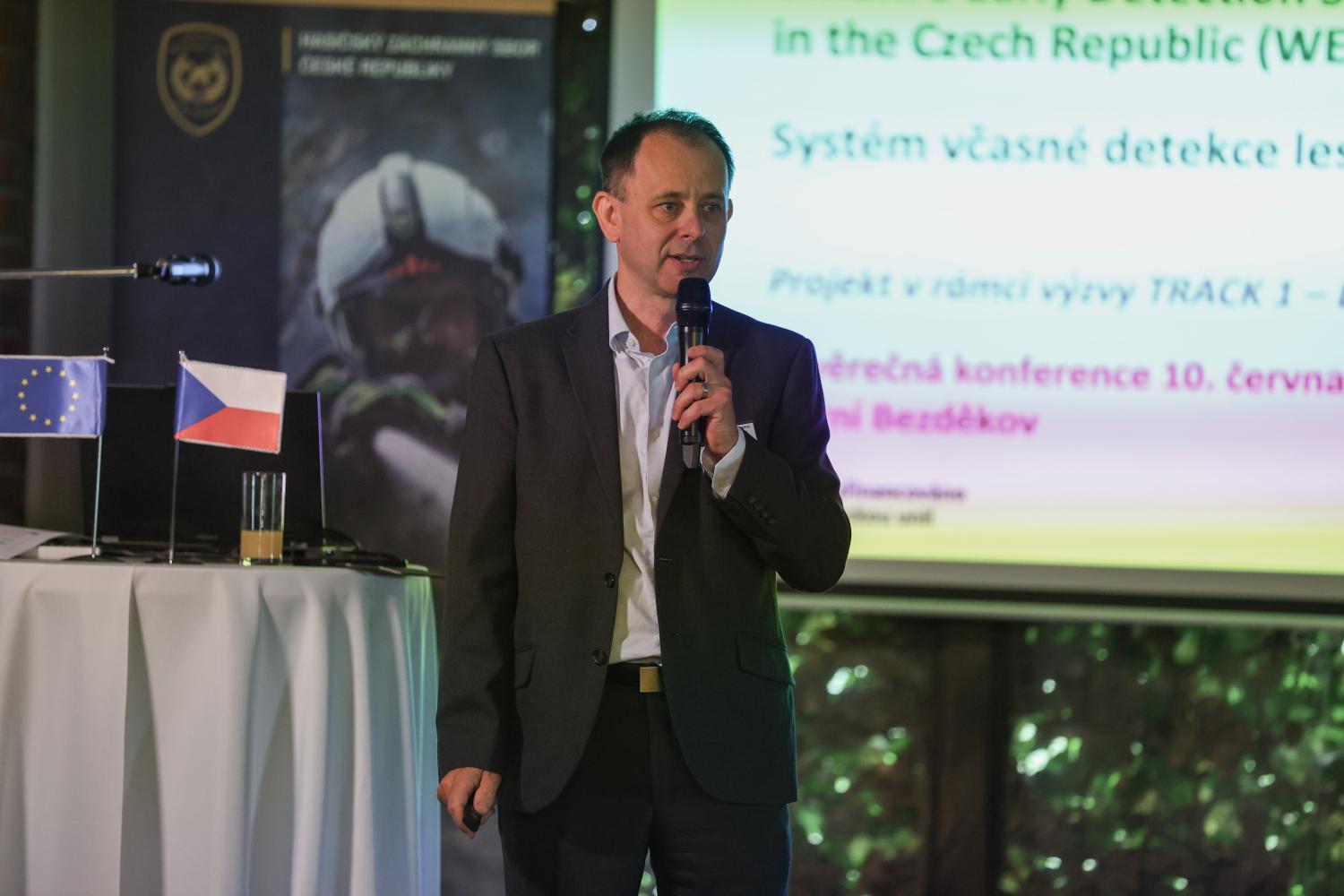
The program was divided into three sessions, one of which was devoted to international experiences. The presentations by international speakers were interpreted from English into Czech. The conference was opened by Major General Petr Ošlejšek, Ph.D., Deputy Director General of the Fire and Rescue Service of the Czech Republic at the Ministry of the Interior, who highlighted the purpose and importance of such meetings, which also greatly contribute to inter-ministerial discussions on the institutional and legislative framework for the early detection system for forest fires in the Czech Republic. He also expressed his hope that the tradition of these meetings among this community of interest would continue even after the conclusion of the WEDS project and that such gatherings would take place with the same participants in the coming years. In the first session that followed, the opening presentation focused on statistical data regarding wildfires and the current status and trends of forest fire risk in the Czech Republic. The project’s technical manager, Col. Roman Francl, then followed with a summary of the WEDS project, its individual phases, and key milestones, and presented the project’s results to the audience. This was followed by two presentations from the academic community. First, a representative from VŠB – Technical University of Ostrava, Faculty of Safety Engineering, presented a methodology for evaluating early-warning systems for forest fires, and then Ing. Roman Berčák, Ph.D., from the Czech University of Life Sciences, Faculty of Forestry and Wood Sciences, presented the current status and trends of forest fire risk in the Czech Republic, as well as an action plan for implementing early-warning systems for forest fires under Czech conditions. At the conclusion of this session, there was an illustrative video presentation of the Czech Fire and Rescue Service’s mobile system for detecting forest fires, presented by WEDS project team member MgA. Jiří Studnička, DiS.
After a group photo (see Fig. 1) and a lunch break, Lindon Pronto from the U.S. took over as moderator for the second session. He began by presenting a general overview of the significance and operation of forest fire detection systems abroad, and then introduced additional international presentations. Representatives from Croatia presented OroraTech applications for forest fire detection and monitoring using practical examples and experiences from Croatia, Slovakia, and the Czech Republic. Representatives from Poland and Slovakia also shared their experiences with the operation of forest fire detection systems.
The third session of the conference, on the other hand, focused on Czech experiences with early forest fire detection systems. In addition to a historical test of a camera system in the Ústí nad Labem Region from 2008, current experiences with forest fire detection in the
Šumava National Park and the Bohemian Switzerland National Park were presented. RNDr. Jindřich Šťástka, Ph.D., from the Satellite Department of the Czech Hydrometeorological Institute, shared findings from the validation of satellite products for fire detection in the Czech Republic.
Col. Roman Francl, the project’s technical manager, concluded the conference by summarizing the conclusions and results not only of the conference but of the entire project.
The following chapters summarize the presentations and the outcomes of the discussions that took place at the seminar.
2.1 Presentation of the Project Results and the Methodological Section of the Program
The opening presentation of the conference’s first session focused on statistical data regarding wildfires and the current status and trends in forest fire risk in the Czech Republic. Wildfires pose a significant safety, environmental, and economic problem in the Czech Republic, with their frequency and extent influenced by climatic conditions, landscape characteristics, and human activity. An analysis of 136,348 fires from the database of the Fire and Rescue Service of the Czech Republic for the period 1997–2025 demonstrated a long-term increase in both the number of fires and the affected area, with a strong positive correlation between the two indicators. The results further confirmed the pronounced seasonality of fires and their uneven spatial distribution, with a higher concentration in areas of intensive human activity. Although the spatial distribution of fires did not change significantly over the study period, their occurrence is influenced by a combination of meteorological, natural, and anthropogenic factors. The study emphasizes the importance of preventive measures, early-detection systems, and modern technologies as key tools for effective fire management in a changing climate.
The second presentation provided an overview of the WEDS project, its individual phases, and key milestones, and familiarized the audience with the project’s results. The WEDS project addresses the growing risk of wildfires caused by climate change, and its goal is to create the conditions for establishing a national wildfire early detection system in the Czech Republic. As part of the project, fire detection technologies were analyzed, their potential for use in Czech conditions was assessed, and a methodology was developed for their objective evaluation, taking into account technical, economic, and operational aspects. The project also includes a catalog of promising detection technologies and an action plan that outlines the procedure for their implementation, operational organization, financing, and priorities for building the system. Practical verification involved testing camera systems, unmanned aerial vehicles, and satellite-based fire detection to assess their suitability for use in the Czech Republic.
The third paper by authors from the academic community addressed methodologies for evaluating early-detection systems. Advances in sensors, camera systems, unmanned aerial vehicles, satellite monitoring, and artificial intelligence are opening up new possibilities for the early detection of forest fires, but at the same time are increasing the need for an objective evaluation of available technologies. As part of the WEDS project, a methodology based on semi-quantitative multi-criteria decision analysis (SQ-MCDA) was therefore developed, which allows for a transparent comparison of individual systems with regard to technical, operational, and economic parameters. The methodology is based on a detailed analysis of the protected area and evaluates not only individual technologies but also their mutual integration and ability to work together within a comprehensive system. The evaluation includes criteria such as detection speed, localization accuracy, reliability, operational complexity, integration potential, and long-term sustainability, the importance of which is accounted for through a weighting system. The result is a standardized and reproducible tool that facilitates the selection of optimal technologies for building a national forest fire early detection system tailored to conditions in the Czech Republic.
The first presentation on wildfires was followed by a presentation on the current status and trends in forest fire risk in the Czech Republic. Due to climate change, more frequent droughts, and extreme weather events, forest fires are becoming an increasingly significant threat in the Czech Republic as well; therefore, it is necessary to focus not only on firefighting but, above all, on prevention, preparedness, and early detection. Although the Czech landscape exhibits a certain degree of resilience thanks to active land management, experiences from large-scale fires—such as those in Bzenec and Hřensko—show that the risk of major fires is no longer merely hypothetical. Time is a critical factor in managing these fires, as early detection enables faster response, the deployment of appropriate resources, and the mitigation of damage. Future protection therefore requires systematic fire risk assessment, the targeted implementation of modern detection systems, adequate funding for prevention, and close cooperation among firefighters, government agencies, forest owners, and other institutions. Early detection systems, including the further development of the WEDS project, are thus becoming a key component in protecting the Czech landscape, its inhabitants, and property from increasingly frequent and intense fires.
This lecture block concluded with a demonstration video presentation of the Czech Fire and Rescue Service’s mobile system for detecting forest fires.
2.2 Foreign Experience with Early-Warning Systems for Forest Fires
At the start of the conference’s second session, dedicated to international experiences, Lindon Pronto from the U.S. gave a presentation on the general significance and operation of forest fire detection systems abroad and shared insights with participants on various systems installed around the world. Representatives from Croatia then presented OroraTech’s applications for forest fire detection and monitoring, using practical examples and drawing on experiences from Croatia, Slovakia, and the Czech Republic.
This was followed by a presentation on Poland, which ranks among the European countries with the highest number of forest fires. Nevertheless, thanks to an effective system of prevention, early detection, and rapid response, most of these fires remain small in scale (see Fig. 2). The system is based on the categorization of forest areas according to fire risk, a network of more than 700 observation towers, daily assessments of the current danger, and a combination of ground-based, aerial, and camera-based monitoring. The modernization of the system is gradually expanding the use of rotating cameras and automatic smoke detection, while human operators remain a crucial element in verifying detected incidents. At the same time, Poland’s experience shows that rapid detection alone may not prevent a large-scale fire if conditions for intervention are adverse, such as difficult terrain access or a high volume of combustible material. The comprehensive integration of prevention, infrastructure, modern technologies, and rapid response therefore serves as a significant source of inspiration for protecting forests from fires in the Czech Republic as well.
The last country to present its experience with early forest fire detection systems was Slovakia, which established the Automated Stationary Detection System (ASDS) in 2017. The system continuously monitors more than 6,000 km² of the highest-risk forest areas and uses FireWatch technology for automatic smoke detection. The system, consisting of camera stations, control centers, and a geographic information system, enables the rapid localization of emerging fires and the transmission of information to firefighting units. Operations to date have confirmed its high effectiveness, with more than 1,000 incidents recorded, of which 867 were assessed as actual fires and 171 as false alarms. Although the system significantly reduces the time between the outbreak of a fire and the start of response operations, its further development would benefit from a direct data link to the Fire and Rescue Service’s operations centers, rather than the current method of transmitting information via email and telephone. The ASDS thus represents a significant example of modern forest protection, and its further development may involve refining detection algorithms and integrating with meteorological and other data sources.
2.3 Czech Experience with Forest Fire Early Detection Systems
The third thematic block of the conference focused on the Czech experience with early-warning systems for forest fires, and it opened with a presentation on the historical testing of a camera system in the Ústí nad Labem Region. This pilot project, carried out in 2007–2008, demonstrated that camera systems can be effectively used for the early detection of forest fires under Czech conditions. At the same time, the testing showed that, in addition to technical capabilities, adequate staffing is also essential; therefore, it was recommended to establish specialized monitoring centers separate from the Fire and Rescue Service’s operational centers. Based on a fire risk analysis, eleven monitoring stations were proposed to cover an area of approximately 1,734 km², with priority given to existing masts and observation towers. The project also envisaged linking the Czech system with the monitoring infrastructure in neighboring Saxony and addressed financing options and the economic efficiency of the entire solution. Although the system was not implemented on a nationwide scale at that time, many of its recommendations—such as the use of existing infrastructure, specialized monitoring centers, and data sharing—remain relevant today and form an important foundation for the current development of early forest fire detection systems in the Czech Republic.
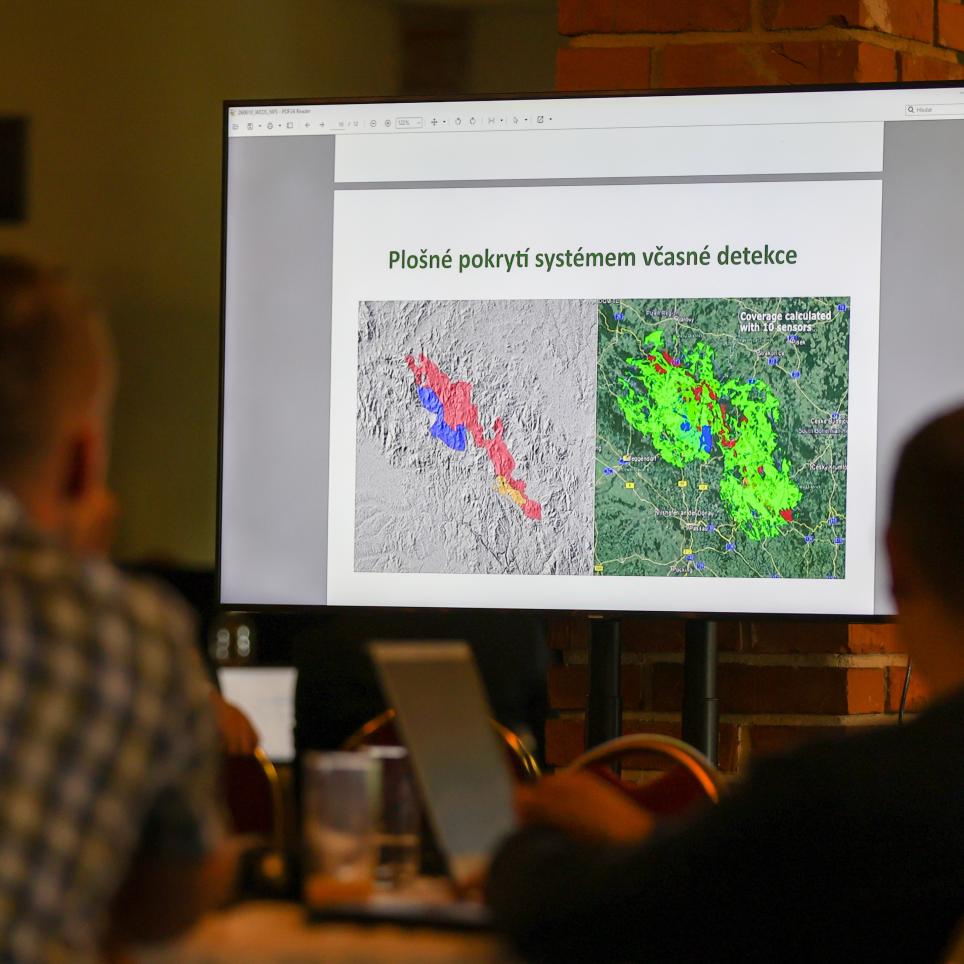
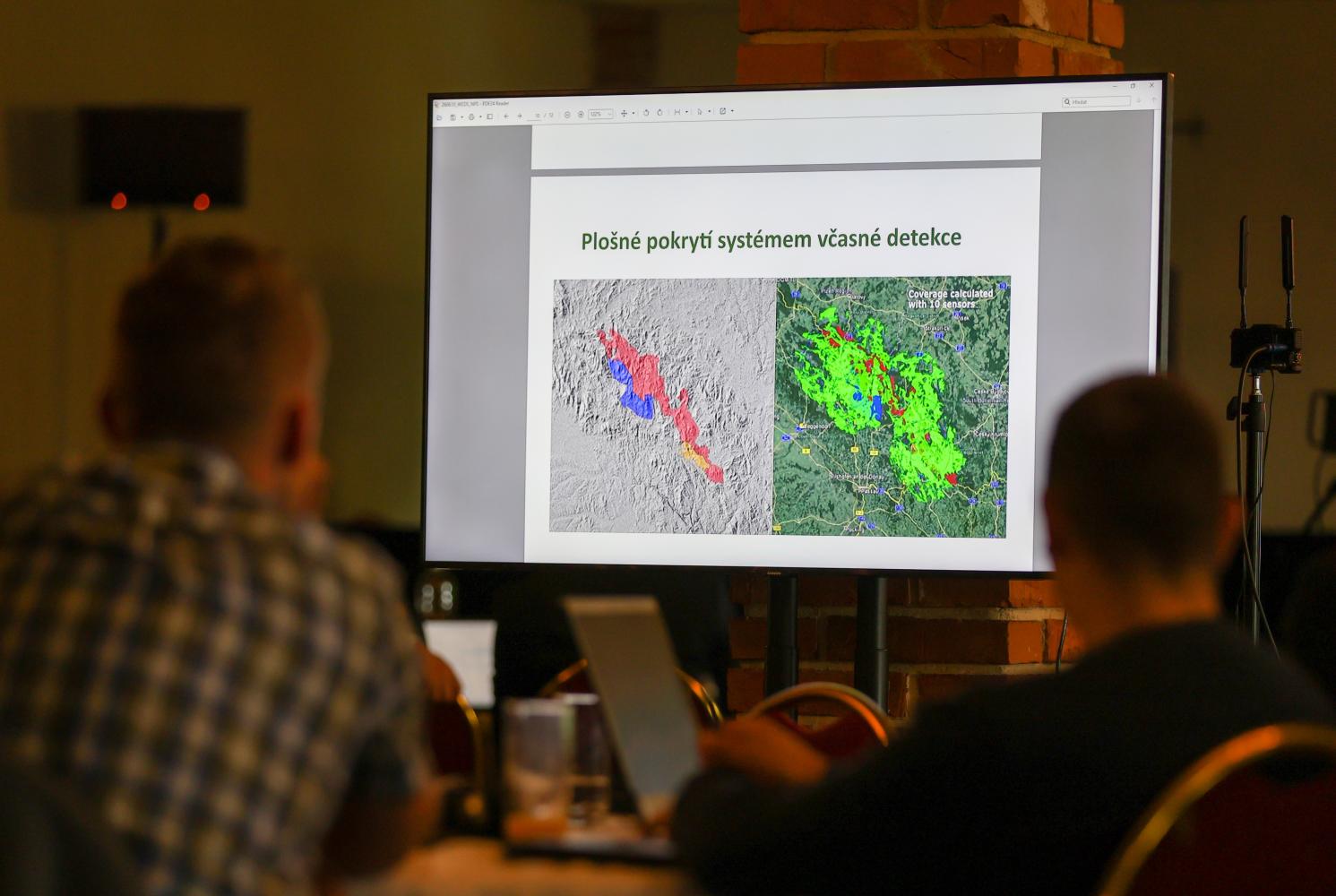
The second presentation in this session offered a different perspective and introduced a different method, focusing on the validation of satellite products for fire detection in the Czech Republic. Satellite detection represents a promising complement to early warning systems for forest fires, as it allows for the monitoring of large areas and, in some cases, the detection of a fire even before it is spotted on the ground. However, verification under Czech conditions has shown that the effectiveness of current satellite systems depends significantly on the size of the fire, cloud cover, and the frequency of satellite overflights, with small fires being difficult to detect (see Fig. 3). Another significant problem is the high number of false alarms caused, for example, by industrial sites, power plants, airports, or other heat sources; therefore, it is necessary to use spatial filters and other methods to eliminate them. Further improvements may come from combining data from multiple satellites, utilizing next-generation geostationary satellites, and employing machine learning algorithms that can be adapted to local conditions thanks to the extensive Czech fire database. Satellite detection is therefore unlikely to replace camera-based and other systems, but as part of an integrated, multi-layered system, it may significantly contribute to faster detection of forest fires in the Czech Republic in the future.
The conference program concluded with two presentations sharing experiences from two Czech national parks. The Šumava National Park has been developing a forest fire protection system over the long term, as climate change and more frequent droughts increase the risk of forest fires. Since 2009, early detection concepts have been gradually created and developed, encompassing prevention, monitoring, patrolling, and rapid response. When designing the system, various technologies were evaluated in terms of coverage, detection speed, operational complexity, and cost-effectiveness, leading to the design of a monitoring network for the highest-risk areas. The preparatory work also included an assessment of investment and operating costs, which serves as a basis for the system’s further development. Experience from the Šumava Mountains confirms that combining prevention, modern detection technologies, and rapid response represents the most effective way to protect areas of high natural value from forest fires.
Following a large-scale fire in 2022, the Bohemian Switzerland National Park significantly strengthened its forest fire protection system and became a pilot area for the implementation of modern early-detection methods in the Czech Republic. The foundation of this protection is a comprehensive approach that includes prevention, patrols, high-quality infrastructure, water sources, and the use of unmanned aerial vehicles (UAVs) for the rapid detection and localization of fires. The park administration uses both mobile and autonomous drones equipped with thermal cameras, which enable continuous monitoring, precise localization of fire sources, and real-time data sharing with firefighters. Practical experience from 2025–2026 has shown that drones can confirm a fire within minutes, pinpoint its location, and significantly speed up decision-making and the management of the response. The experience of the Bohemian Switzerland National Park confirms that unmanned aerial vehicles are a highly effective complement to the fire protection system, and their benefits are greatest when combined with preventive measures and cooperation among the components of the integrated rescue system.
3. Conclusions
The conference covered a wide range of topics, ranging from the growing risk of wildfires in the Czech Republic in connection with climate change, drought, and human activity; an analysis of fire trends, their spatial distribution, seasonality, and the importance of prevention, risk assessment, and early detection; to modern detection methods—particularly camera systems, drones, satellite monitoring, and the use of artificial intelligence. The conference also featured international experiences with fire protection systems, for example from Poland, Slovakia, the United States, and other countries. Czech examples highlighted the potential applications of these technologies, including experiences from the Šumava and Bohemian Switzerland National Parks.
The WEDS project, along with its outputs and conclusions, was also presented and discussed. The project’s conclusions highlight the need for a gradual, realistic, and financially sustainable implementation of an early detection system based on risk analysis and close cooperation among key institutions and forest owners. At the same time, the outputs confirmed the importance of pilot testing the proposed measures and the need to establish a clear institutional and methodological framework for the long-term operation and evaluation of the system. These conclusions were incorporated into the final version of the action plan and into the pilot study during the project’s final phase.
The WEDS project represents the first comprehensive step toward creating a national system for the early detection of forest fires in the Czech Republic. Its value lies not only in the evaluation of available technologies, but above all in the creation of a methodological framework, uniform evaluation criteria, and an action plan that can serve as a basis for future decision-making by government authorities.
The project’s results show that effective protection of Czech forests cannot rely on a single technology. The optimal solution will be a combination of several interconnected detection methods (camera systems, satellite monitoring, unmanned aerial vehicles, and ground-based sensors), supplemented by high-quality information links with the operational centres of the Czech Fire and Rescue Service.
The future early-detection system should significantly reduce the time between the outbreak of a fire and its detection, enable faster response by firefighting units, and thereby help reduce the environmental and economic damage caused by forest fires in a changing climate.