UCP Knowledge NetworkApplied knowledge for action
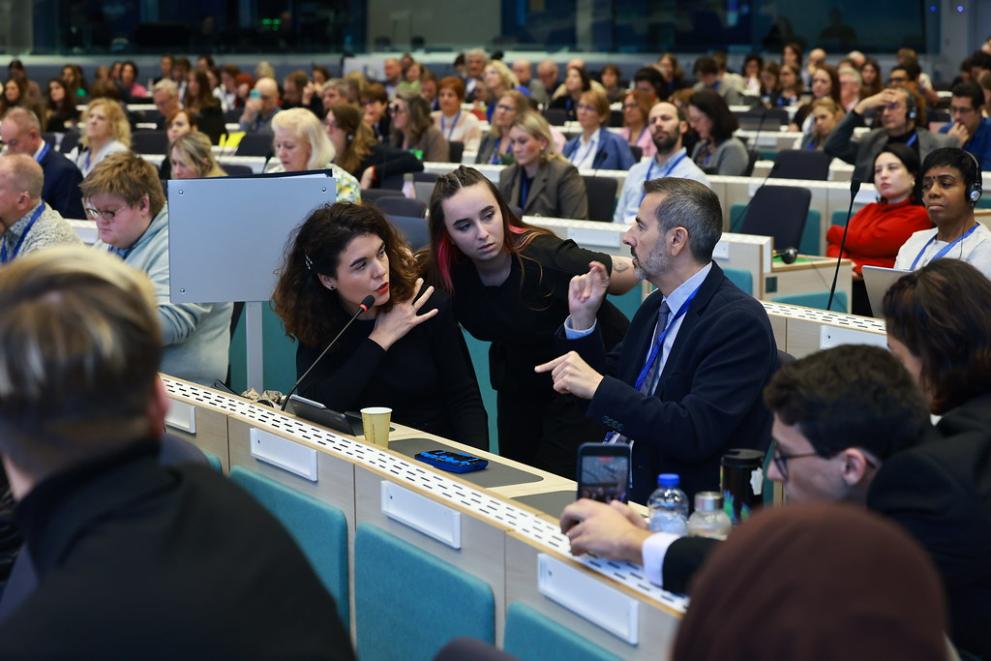
Conference room during the panel on preparedness and disability as photographed from the back. Many people are seated in the room. On the stage is a big screen.

Preparedness and Crisis Management Inclusive of Persons with Disabilities

By Knowledge Network – Staff memberPublished on

As part of the European Day of Persons with Disabilities, a Panel on Preparedness and Crisis Management Inclusive of Persons with Disabilities was held on 5 December 2025 in Brussels. This article highlights the interventions most relevant to the Civil Protection community.
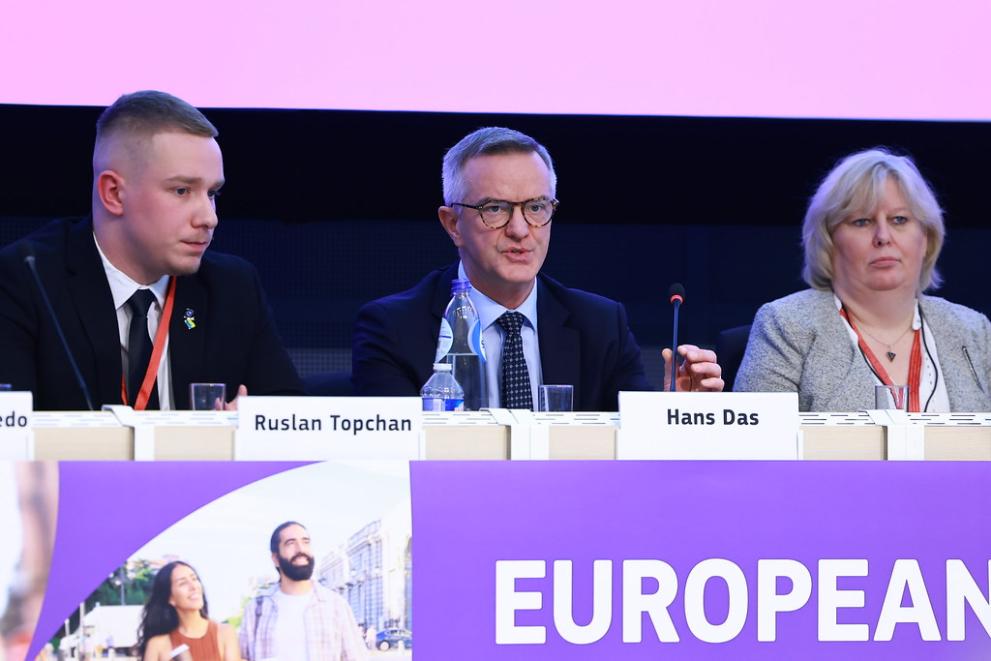
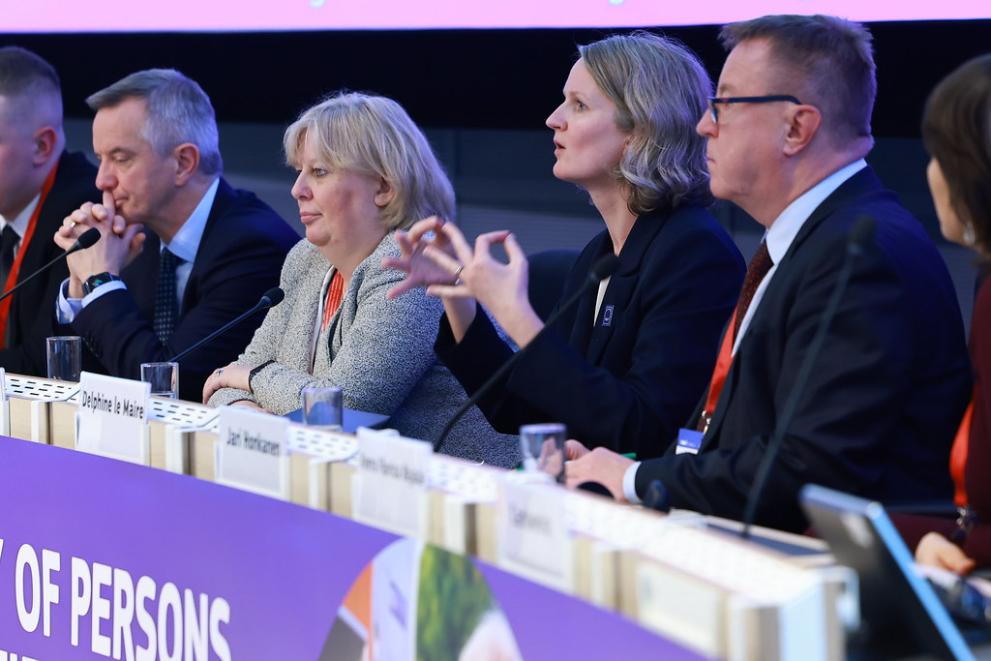
The Panel on Preparedness and Crisis Management Inclusive of Persons with Disabilities opened with a personal testimony from Ruslan Topchan, a veteran of the Armed Forces of Ukraine, who shared his experience of losing both legs during military operations. He emphasised the vulnerabilities of persons with disabilities during emergencies, particularly the lack of accessible warning systems and insufficient knowledge on how to access services. Ruslan highlighted practical measures such as smart watches provided for by the government for persons with hearing impairments to receive timely warnings during air raids, and safety protocols adapted to cognitive disabilities, underscoring that inclusiveness is not a privilege but a necessary factor to save lives. 

During the panel, an audience member noted in response to the guidelines under construction, that during emergencies, the focus is often placed on rescue and public services. There are strict requirements on physical ability to participate in emergency trainings which makes it hard to access critical tools and knowledge for persons with disabilities. He emphasised that disability does not prevent individuals from contributing: “My hearing would not stop me from helping my neighbours in crisis. We want to be active players, not just people who need to be saved.” 

"My hearing would not stop me from helping my neighbours in crisis. We want to be active players, not just people who need to be saved."

Veera Florica Rajala, President of the Finnish Disability Forum, highlighted the importance of practical, individual preparedness. She emphasised that most persons with disabilities can take some actions themselves, even if not everything. Practical training, such as preparing food without fire or managing daily tasks with limited resources, strengthens mental preparedness and resilience. She emphasised that individuals have personal responsibility for preparedness but must be supported by inclusive systems and education.

Delphine LeMaire, Policy Officer at the European Union of the Deaf, highlighted the challenges faced by deaf communities during crises, drawing lessons from the COVID-19 pandemic. While 31 countries eventually provided sign language access to emergency warnings, the approach was often unidirectional and insufficient, and network failures can leave deaf individuals completely cut off. She stressed that early warning systems and emergency communications must cater to the visual first language of the deaf community, involve deaf organisations from the outset, and be supported by legal frameworks. 

Alejandro Moledo del Río closed the panel inviting all participants to contribute to the upcoming workshop on 17 December on disability and inclusive emergency preparedness and response. Feedback from this workshop will be incorporated into the European Commission’s ongoing work.