The RESMAR Story: A Business Continuity Vision from Marmara to Türkiye
RESMAR spent two years in the field making the organised industrial zones of the Marmara Region resilient to disasters. This is how it unfolded.

RESMAR spent two years in the field making the organised industrial zones of the Marmara Region resilient to disasters. This is how it unfolded.
| Project title | Making Industrial Facilities Resilient to Disasters through a Business Continuity Management Approach: Marmara Region Implementation (RESMAR – Resilient Marmara) |
| Lead institution | Disaster and Emergency Management Authority (AFAD), Ministry of Interior, Republic of Türkiye |
| Funding | Co-financed by the EU Civil Protection Mechanism (UCPM) and AFAD – €654,288.59 in EU support |
| Area of implementation | Organised Industrial Zones in the Marmara Region (İstanbul, Kocaeli, Bursa, Tekirdağ) |
| Activity timeline | April 2024 – August 2026 |
| Headline results | More than 1,200 stakeholders trained, tailored business continuity plans for OIZs, and a guide that can be applied nationwide |
| Strategic partners | Ministry of Industry and Technology of the Republic of Türkiye; Organised Industrial Zones Supreme Organisation (OSBÜK) |
The Marmara Region is the heartland of Türkiye’s industrial production and exports. It is also one of the country’s highest earthquake-risk areas. When production stops in an organised industrial zone (OIZ), the consequences reach far beyond the site itself: supply chains, employment and the regional economy are all affected. The earthquakes of 6 February 2023 demonstrated once again that the speed of post-disaster recovery depends directly on the quality of pre-disaster preparedness.
RESMAR was born from exactly this insight. Initiated by the Disaster and Emergency Management Authority (AFAD) and financed under the European Union Civil Protection Mechanism, the project set out to move industrial infrastructure from asking “what will we do if a disaster happens?” to asking “how will production continue when it does?” The instrument chosen for that shift was a business continuity management approach grounded in international standards.
The project rested on three pillars: carrying out business impact analyses and risk assessments tailored to individual OIZs; preparing business continuity plans on that basis and testing them in the field; and embedding the resulting knowledge through training, guidance documents and institutional partnerships.
The starting point: 10 October 2024, İstanbul
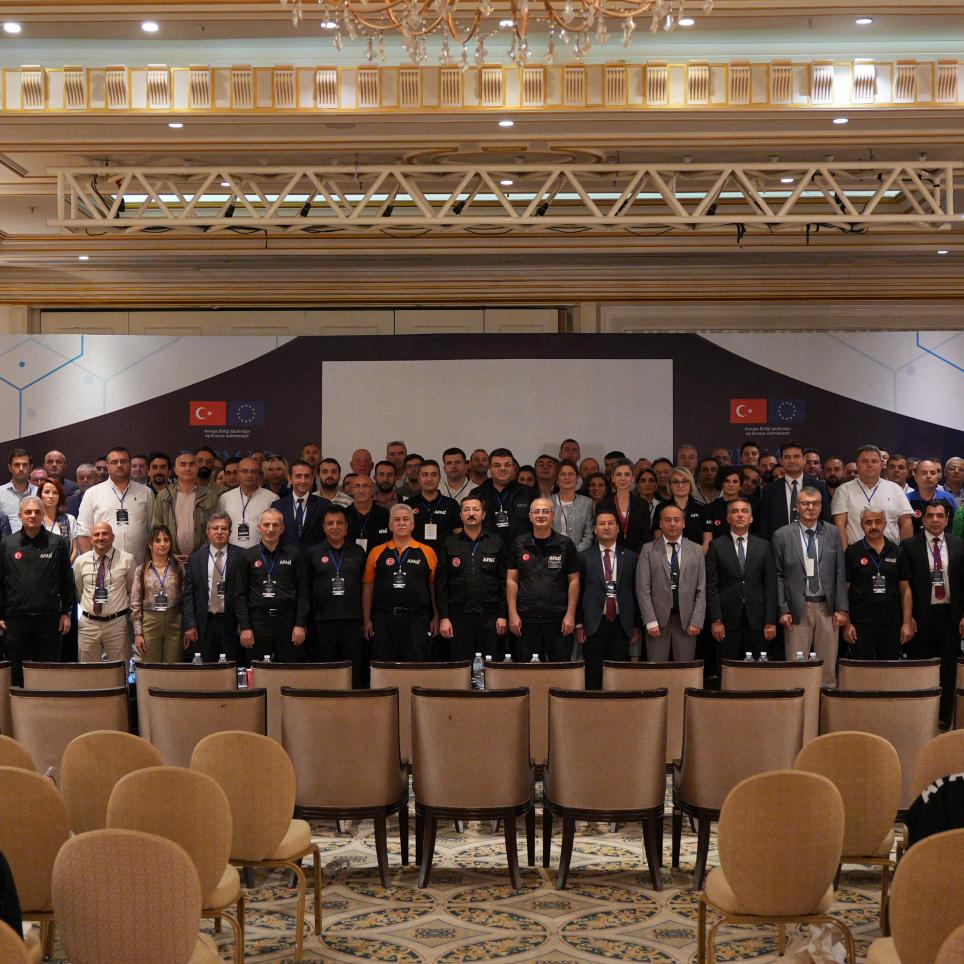
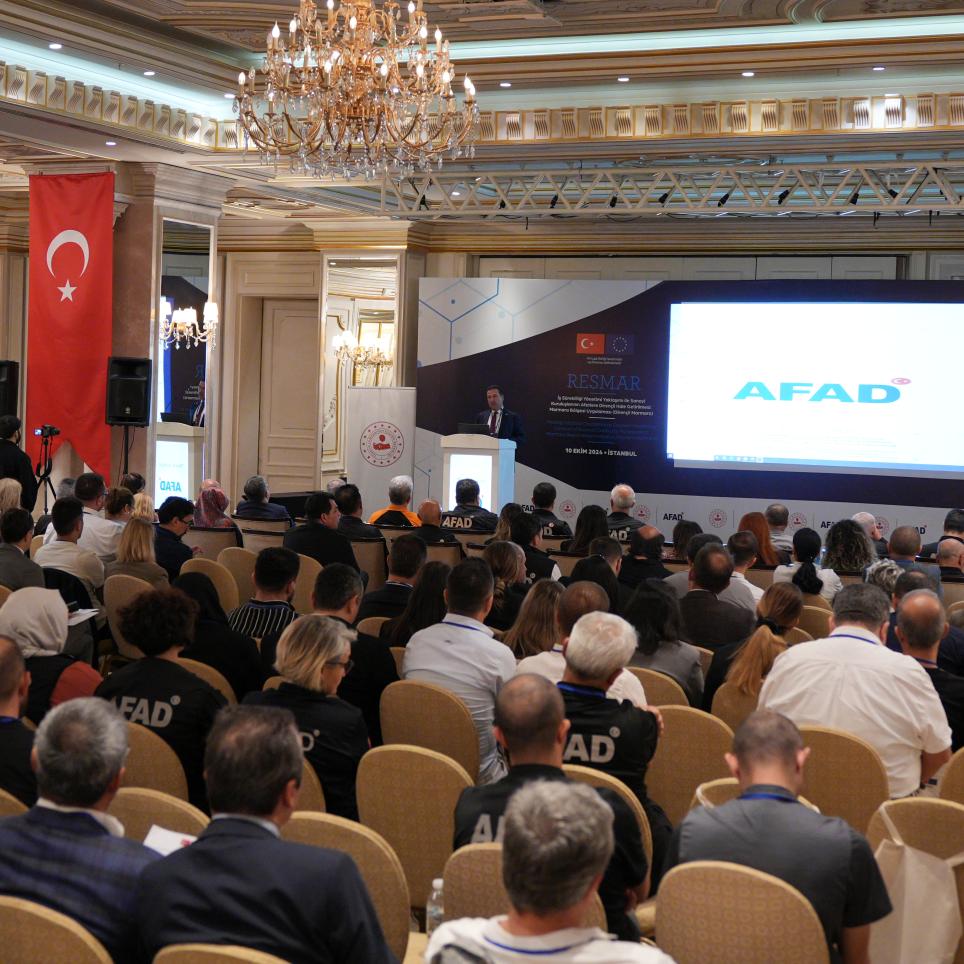
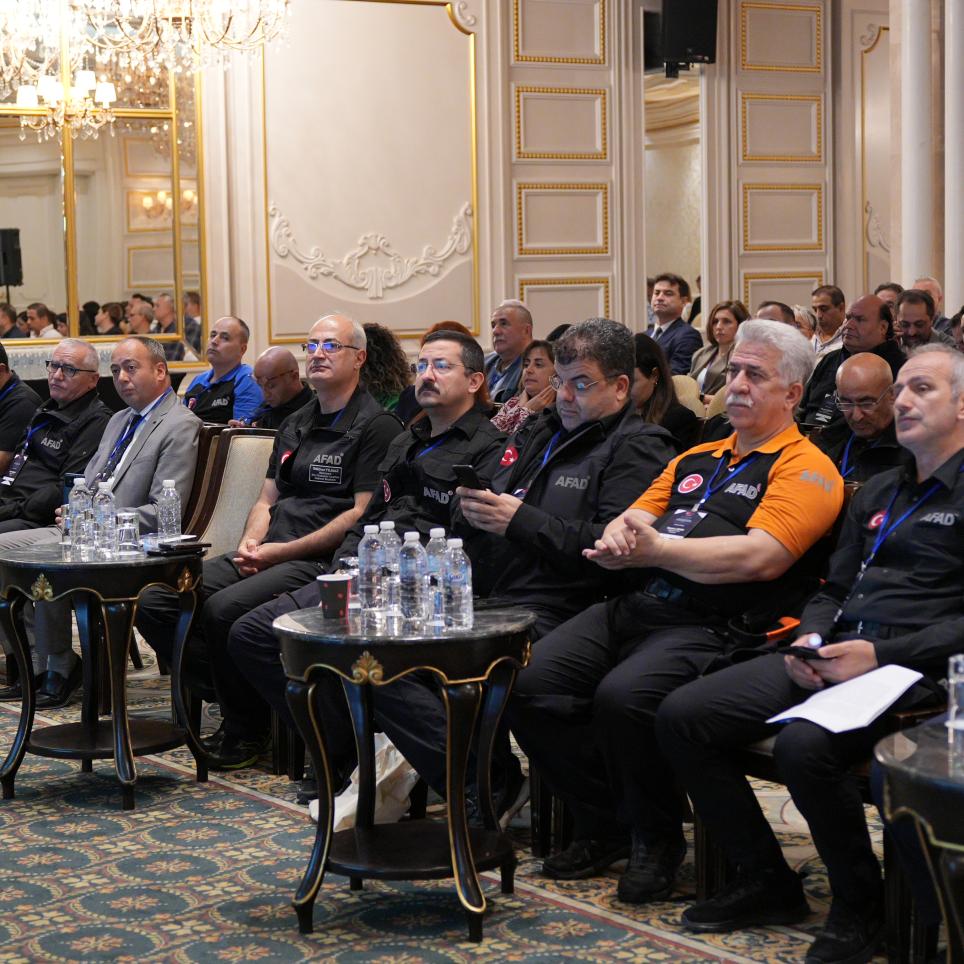
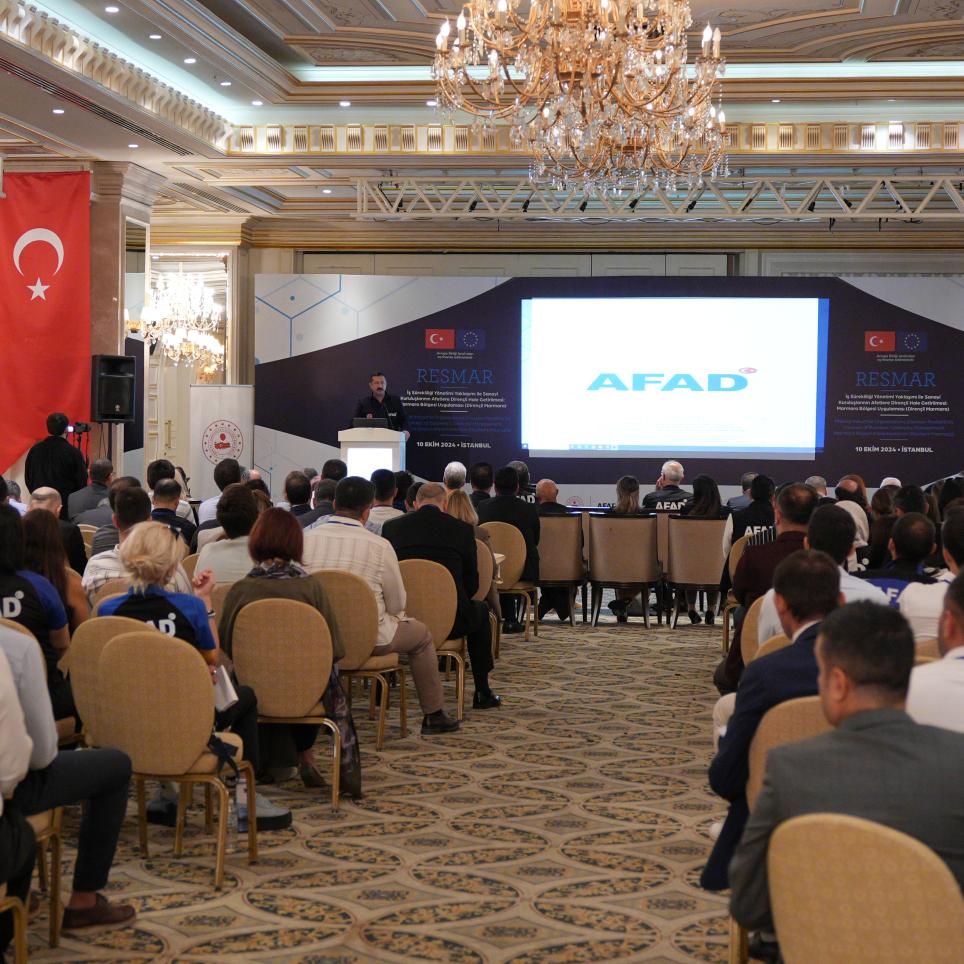
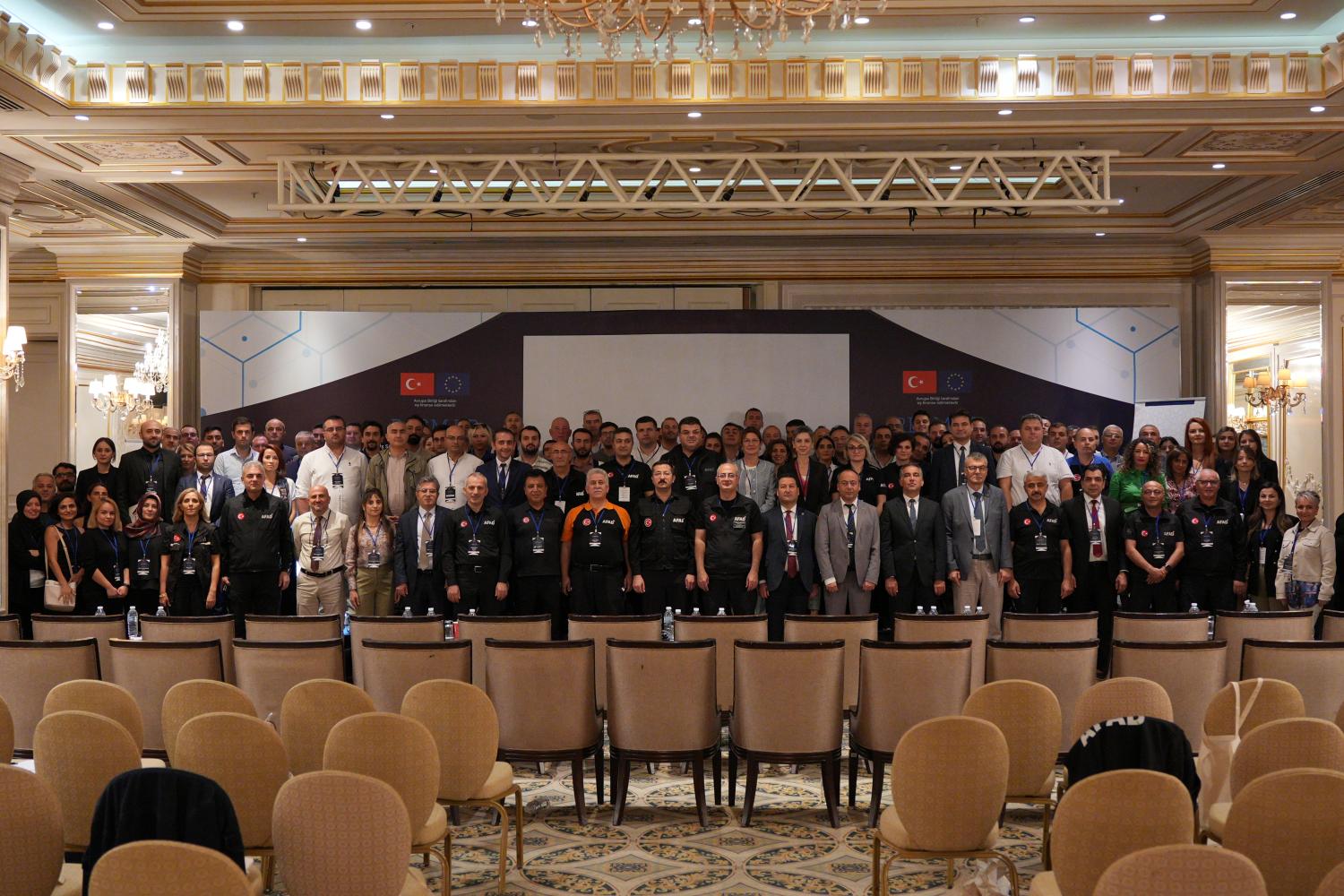
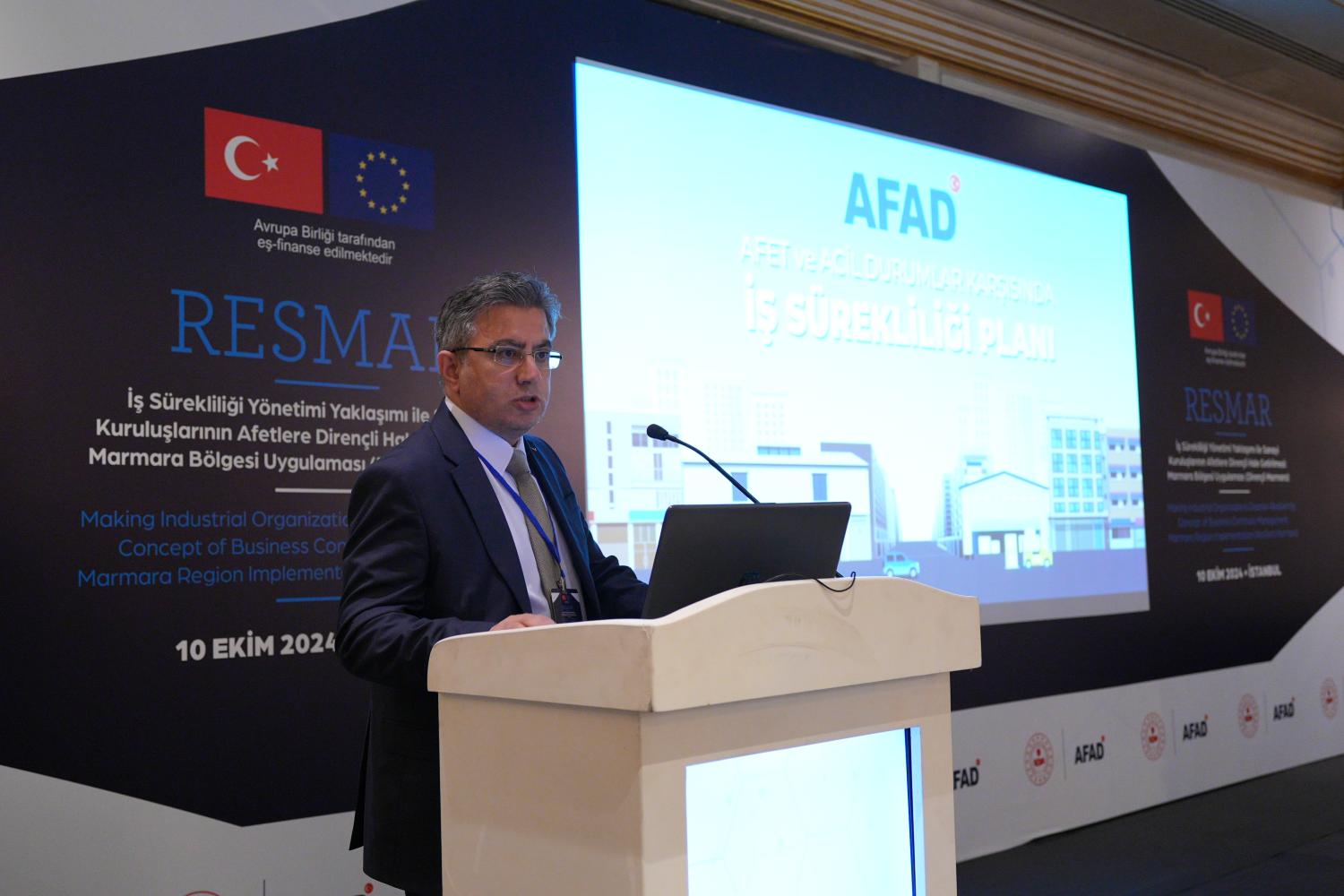
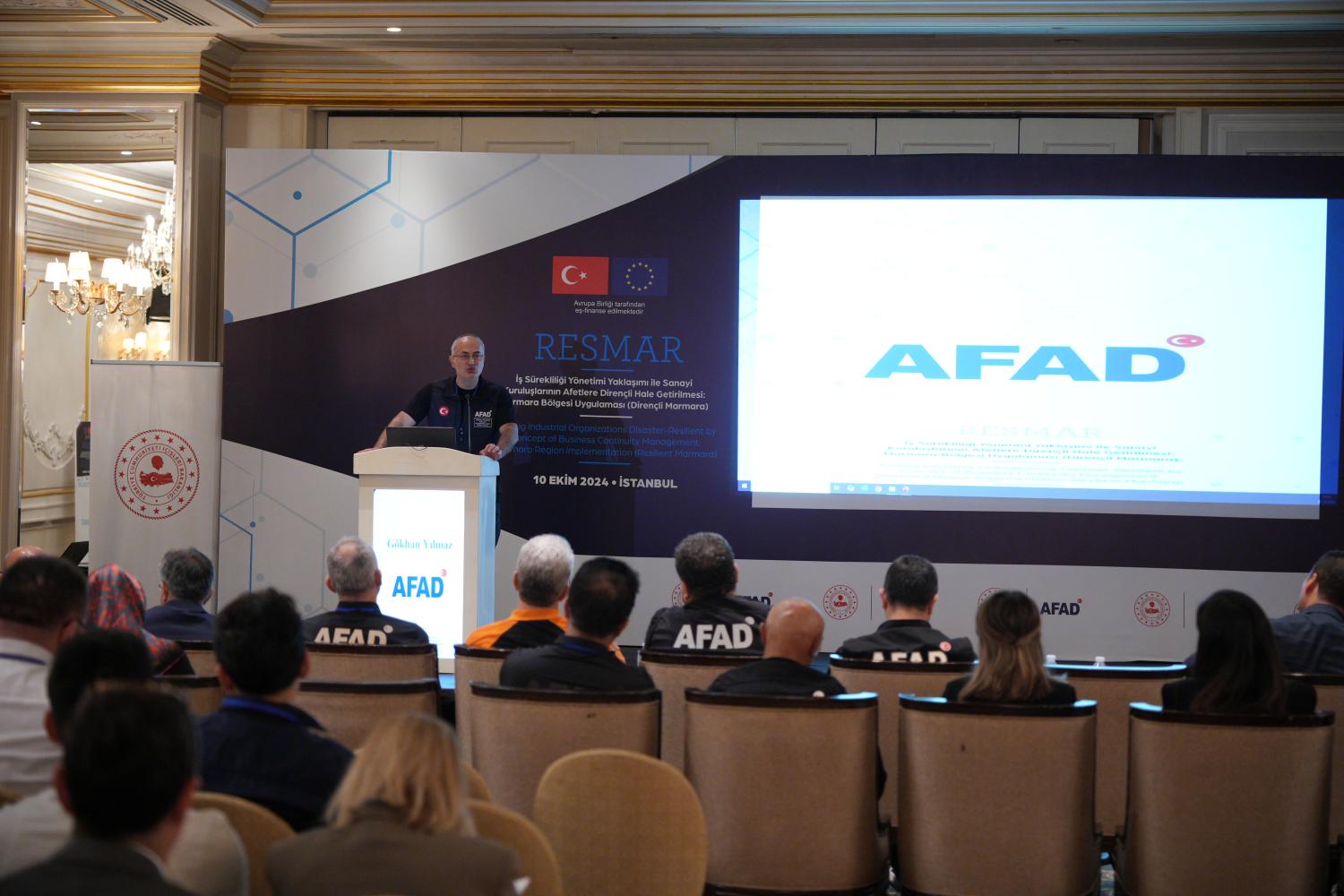
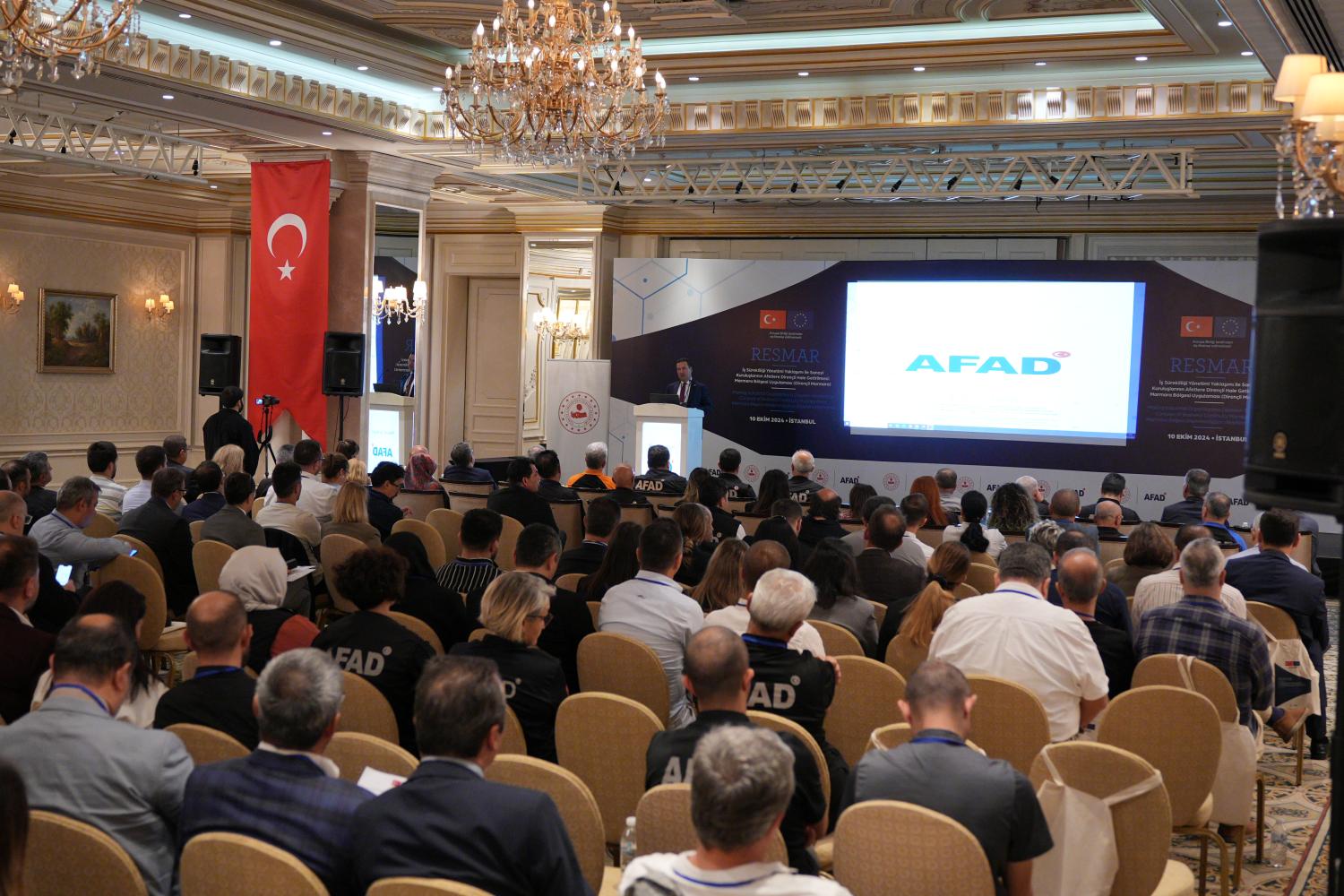
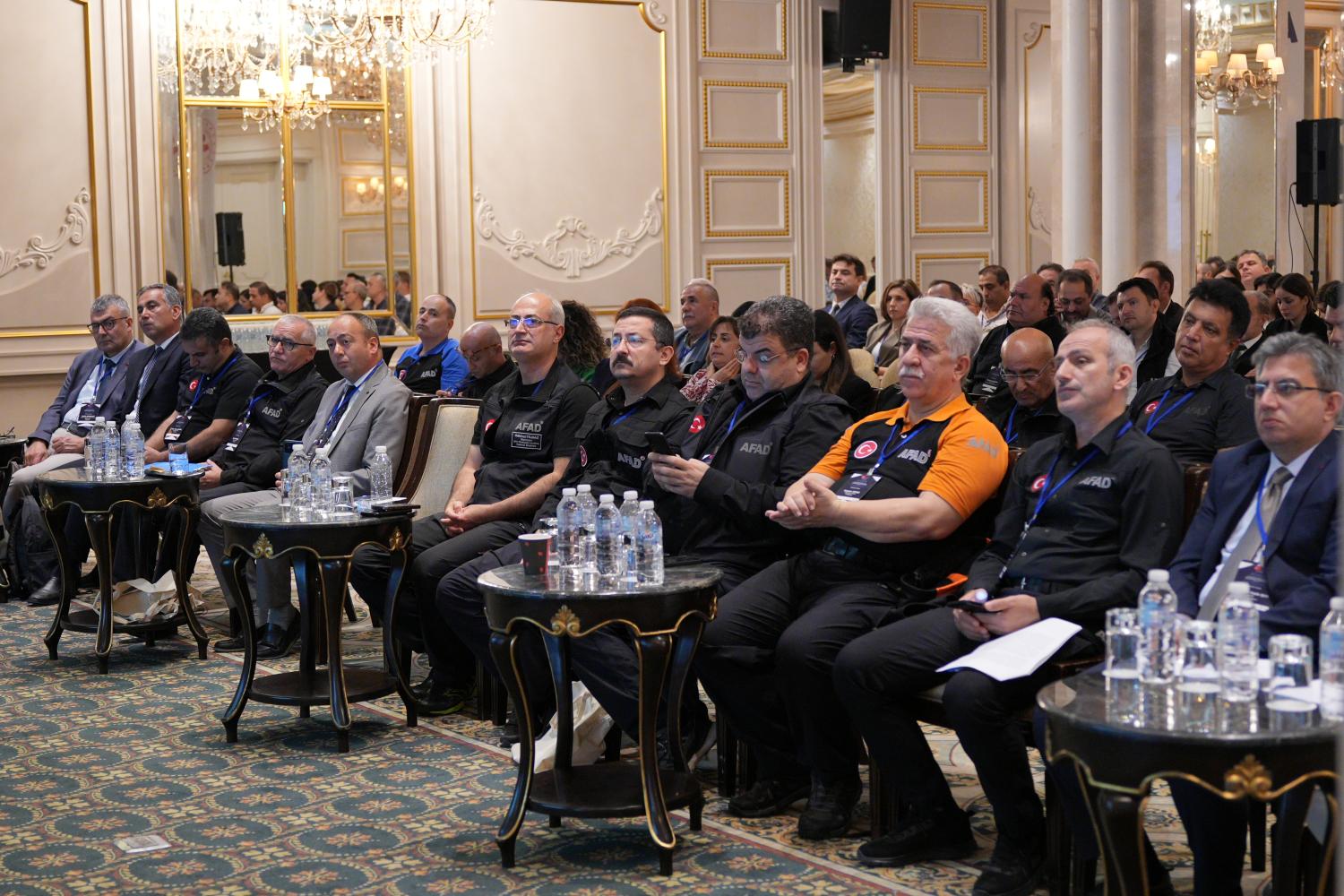
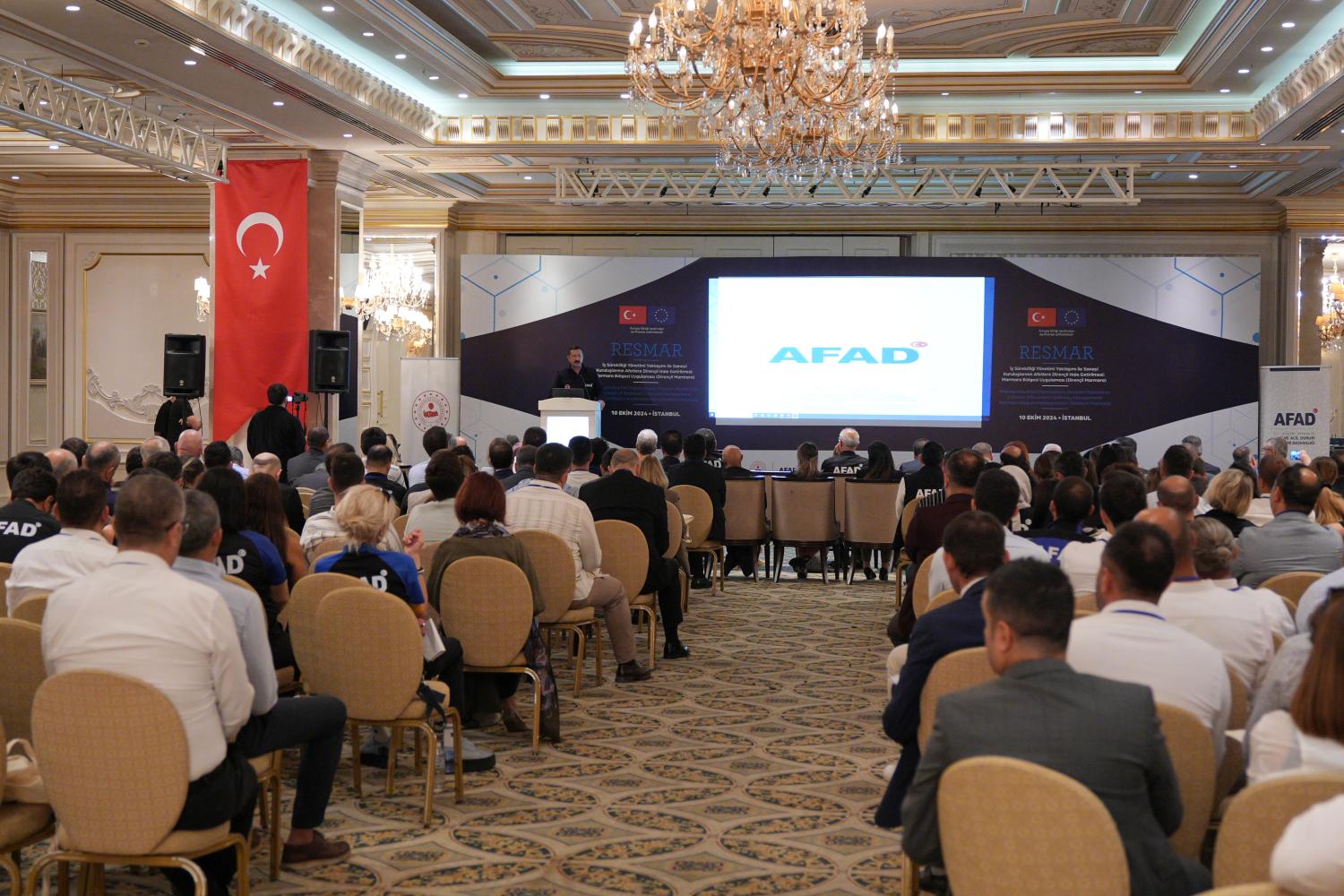
The RESMAR story began with the project’s opening meeting, held in İstanbul on 10 October 2024. The meeting at the Elite World İstanbul Florya Hotel brought together 168 representatives from the public and private sectors, including the Directorate General for Industrial Zones of the Ministry of Industry and Technology, the Organised Industrial Zones Supreme Organisation (OSBÜK), the Provincial AFAD Directorates and Provincial Directorates of Industry and Technology across the Marmara Region, and the organised industrial zones themselves.
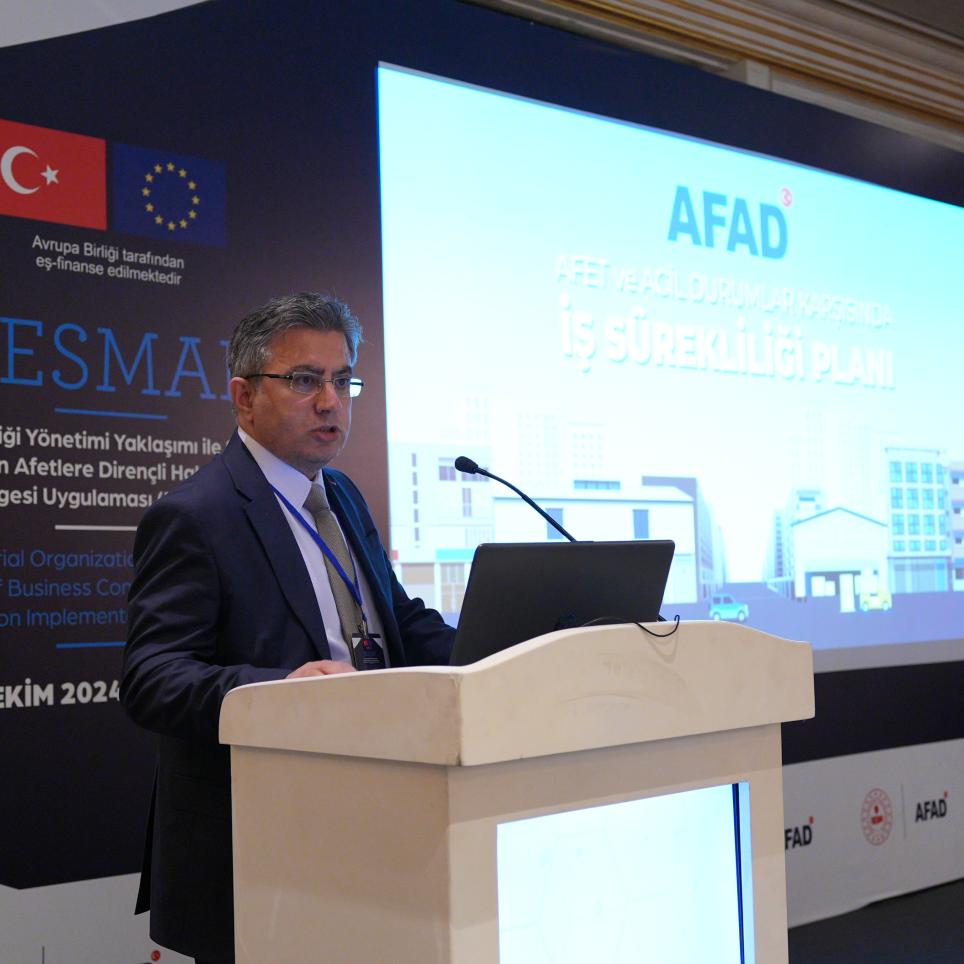
Opening remarks were delivered by Gökhan Yılmaz, Head of AFAD’s Marmara Disaster Risk Reduction Department; Murat Açıkgöz, Head of Department at the Directorate General for Industrial Zones of the Ministry of Industry and Technology; and Abdulkadir Tezcan, Head of AFAD’s Disaster Risk Reduction and Prevention Department.
Gökhan Yılmaz presented the disaster management work carried out in the Marmara Region, referring to the İSPLAN Project supported by the World Bank and to the cooperation protocol signed in 2023 between AFAD and the Ministry of Industry and Technology.
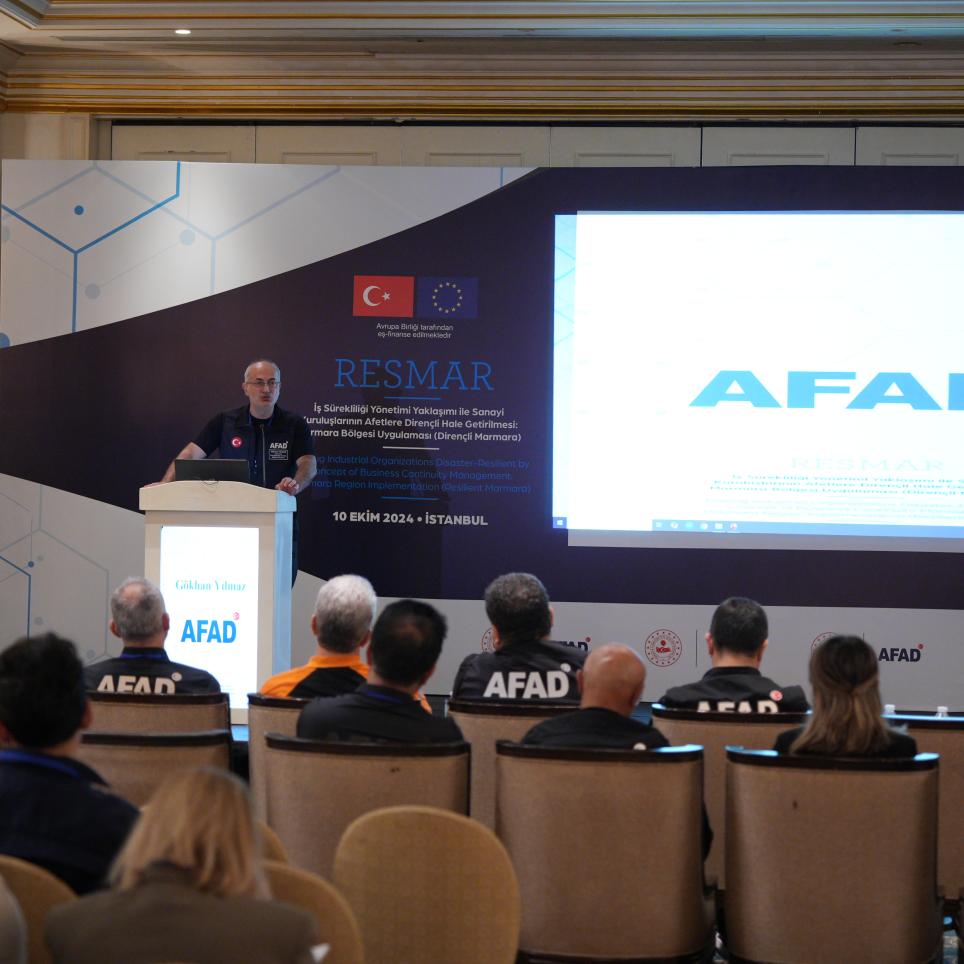
Mehmet Fatih Şen, Head of AFAD’s Technological Disasters Working Group, then set out the importance of business continuity plans with examples from around the worldi
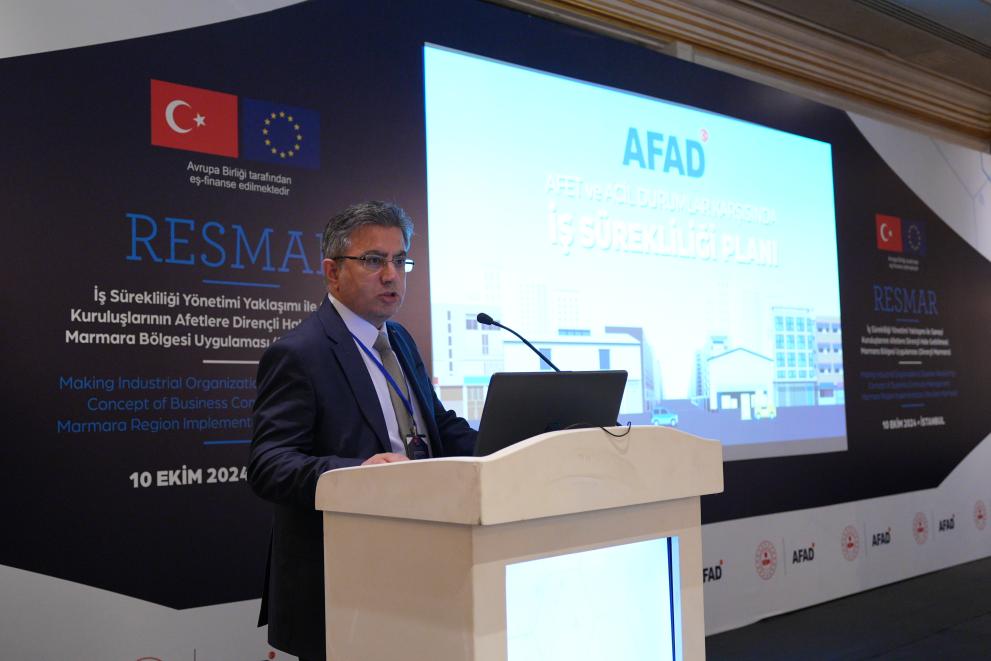
Esen Demirkol Kılıç introduced the aim, scope, duration and work schedule of the RESMAR Project. The institutional framework and the stakeholder network of the project were thus established from the very first day.

RESMAR Project Opening Meeting, Istanbul, 10 October 2024
Into the field: May – July 2025
The project team began not at a desk but on site. On 12 May 2025 a hybrid information and evaluation meeting with Tuzla Chemical Industrialists OIZ (KOIZ) prepared the ground for the first study visit. Attended by Gökhan Yılmaz, then Head of AFAD’s Marmara Disaster Risk Reduction Department, and Prof. Dr. Haluk Özener, İstanbul Provincial AFAD Director, the meeting reviewed both the legal framework and examples of good practice.
Two further steps followed before the month was out. On 22 May, at the OIZ Regional Directors’ Consultation Meeting hosted by OSBÜK in Antalya, RESMAR was introduced to OIZ managers from across Türkiye. On 28–29 May the first two-day site visit took place at Tuzla Chemical Industrialists OIZ, where OIZ management, the Ministry of Industry and Technology, OSBÜK, chambers of industry and commerce and technical experts jointly assessed business continuity, infrastructure capacity, disaster management and risk analysis.
The new RESMAR logo, launched on 2 July 2025, gave the project its visual identity. On 25 July an online information meeting for the regional directors of the designated Marmara OIZs widened the project network.
Building the institutions: August – December 2025
The Business Continuity Plan Preparation and Implementation Training and field visit of 18–19 August 2025 marked a turning point. Over two days, representatives of Tuzla Chemical Industrialists, Güzeller, Demirtaş, GEBKİM, Birlik, İkitelli, Çerkezköy, Anadolu Yakası and Global Karma OIZs came together, bringing theory and field practice to the same table.
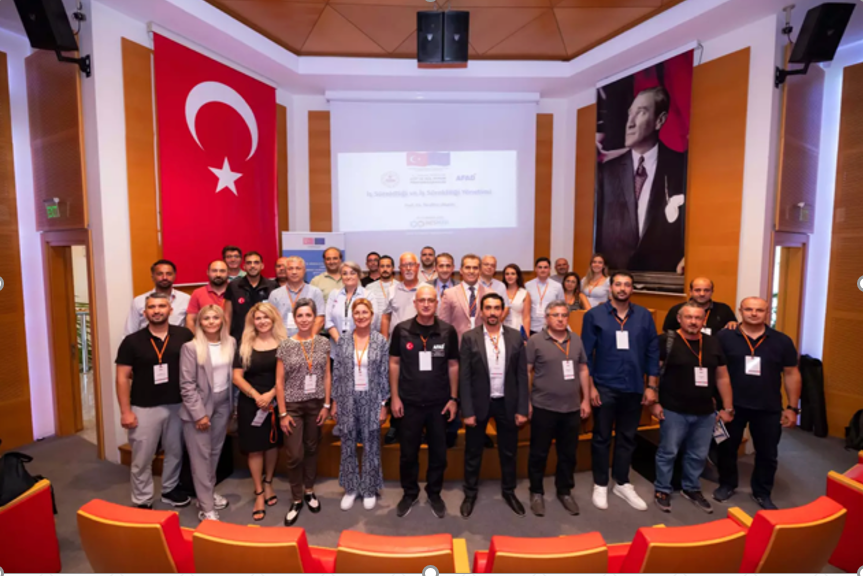
The 1st Steering Committee Meeting on 20 August gave the project a formal governance framework. The presence of managers and representatives from AFAD, the Ministry of Industry and Technology, OSBÜK and the Turkish Accreditation Agency (TÜRKAK) underlined that business continuity is a regulatory agenda as much as a technical one. Days later, on 26 August, the official project website resmar.afad.gov.tr went live, opening all outputs to the public.
In the autumn the focus turned to exercise preparation. On 30 September – 1 October 2025 a preparatory meeting and fieldwork were held in İstanbul: technical assessments at the exercise site on day one, and a briefing for OIZ representatives at the İstanbul Provincial AFAD Directorate on day two. On 8 October the project turned to the public sector, with a meeting on the “Preparation and Dissemination of Business Continuity Plans” attended by representatives of the Ministries of Health, Energy and Natural Resources, Transport and Infrastructure, Industry and Technology, and Trade.
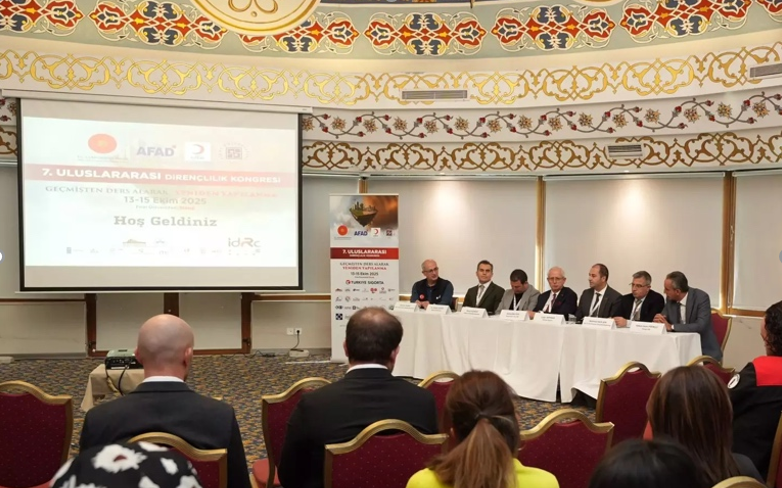
On 13–15 October the team spoke at the “Resilience and Business Continuity” panel of the 7th International Resilience Congress, sharing the lessons of the 6 February earthquakes.
The end of the year was dedicated to a strategic transfer of knowledge meeting international standards. On November 20, 2025, the AFAD Project Team—along with officials from the Ministry of Industry and Technology and relevant Provincial AFAD Directorates—attended the Business Continuity Management (BCLE2000) training in Almere, the Netherlands, delivered by the globally recognized DRI (Disaster Recovery Institute). Reinforced by this international vision, the knowledge acquired was simplified and transformed into practical, concrete guides for the Marmara Region and across the country through the publication '10 Essential Steps for Business Continuity' released on December 26, and the report 'Business Continuity: The Foundation of Organizational Resilience' shared on January 5, 2026.
RESMAR Project Team Participated in Business Continuity Training in the Netherlands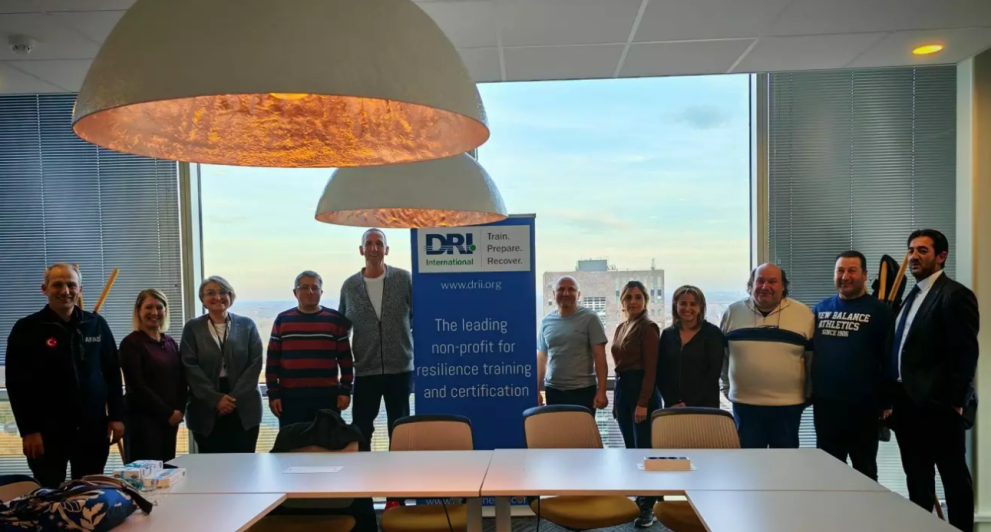
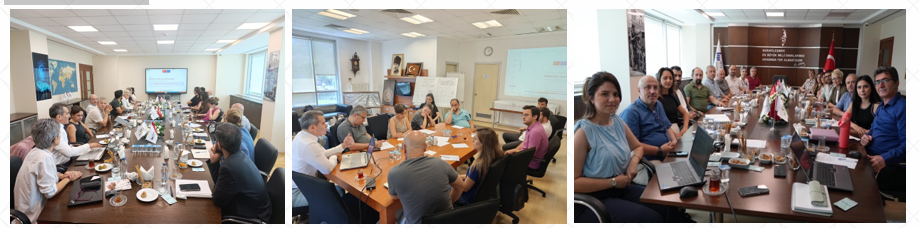
The first half of 2026 was the project’s most intensive field period. Following the 2nd Steering Committee Meeting on 15 January, the team visited the pilot OIZs one by one: Bursa Demirtaş OIZ (DOSAB) on 20–21 January, GEBKİM and Global Karma OIZs on 10 February, Gebze Güzeller OIZ on 13 March and Tekirdağ Çerkezköy OIZ on 16–17 March. At each visit the plans drafted earlier were tested against the realities of the site and revised accordingly.
Technical visits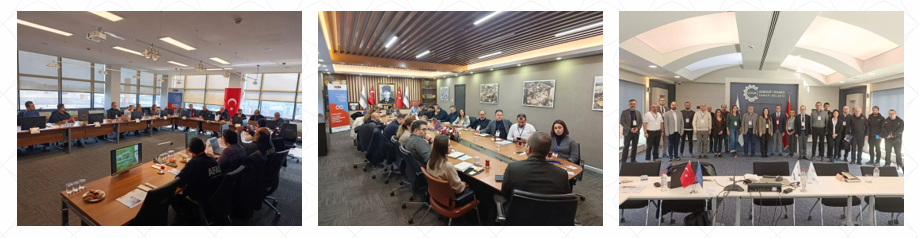
In the same period the project reached beyond Marmara. The business continuity information meeting held in İzmir on 13 March 2026 was the first concrete demonstration that the Marmara experience could be transferred to other regions.
From 13 to 17 April 2026 a nine-member AFAD project team, including Abdulkadir Tezcan, Head of AFAD’s Marmara Disaster Risk Reduction Department, travelled to Spain on a technical study visit to observe disaster management and business continuity practices first-hand. Across five days in Madrid and Barcelona the team held technical meetings with nine institutions, including military emergency response units, civil protection bodies, private companies and international organisations. The visit proved decisive in adapting established EU practice to the Turkish context.
Scenes from the technical study visit to Spain: institutional meetings in Madrid and Barcelona, technical talks with civil protection bodies and site inspections, 13–17 April 2026.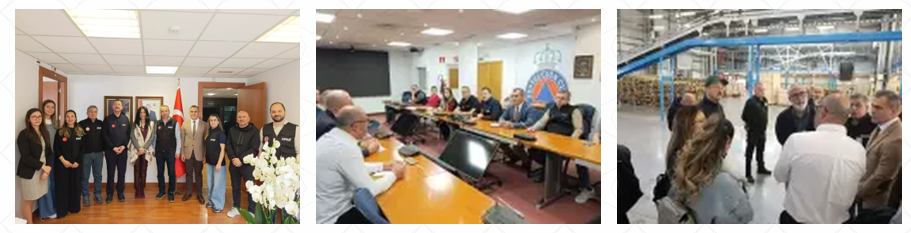
All academic, technical, and field expertise gained over the two-year span of the project has been transformed into a concrete guide through the ‘OIZ Business Continuity Management System Installation and Implementation Guide’— the ultimate deliverable of the RESMAR Project.
Released to the public on April 24, 2026, this Guide provides direction to a broad ecosystem ranging from OIZ Administrations and industrial enterprises to local authorities and all relevant stakeholders. Designed to ensure uninterrupted production, safeguard supply chains during potential disasters and shocks, and drive rapid post-crisis economic recovery, it stands as the most comprehensive roadmap demonstrating step-by-step how to establish and implement a business continuity system.

The closing: 1–2 July 2026, İstanbul
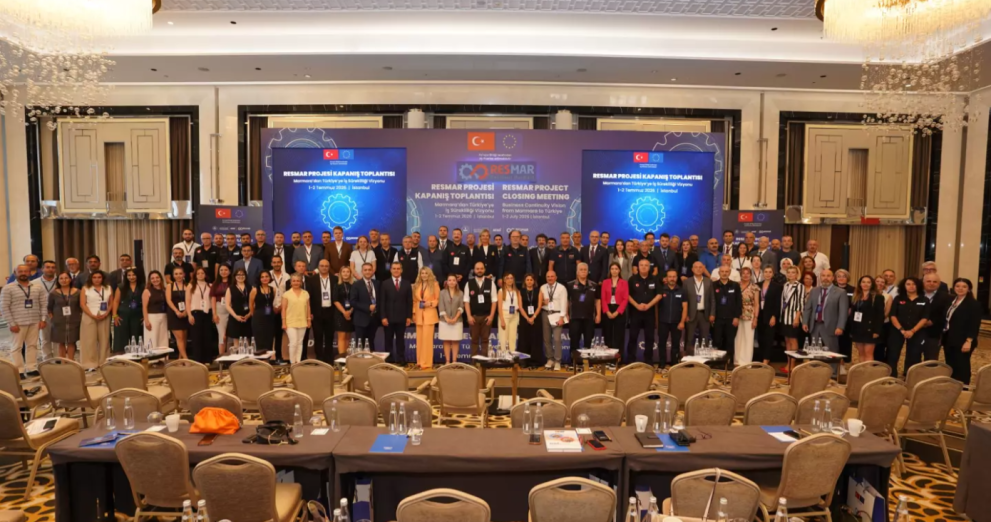
The RESMAR Project Closing Meeting was held on 1–2 July 2026 at the Hilton Bomonti Hotel in İstanbul under the theme “A Business Continuity Vision from Marmara to Türkiye”, bringing together public institutions, international organisations, organised industrial zones, academia, the private sector and project partners.
Day one opened with “RESMAR from Yesterday to Today”, presented by Mehmet Fatih Şen, Head of AFAD’s Technological Disaster Risk Reduction Working Group. In the session “The Resilient Industry of the Future: OIZ Experiences – I”, moderated by engineer Esen Demirkol Kılıç, Ayla Dev (İstanbul Anadolu Yakası OIZ), Kemal Baltepe (Tuzla KOIZ), Serhat Şengül (Bursa Demirtaş OIZ) and Yıldıray Demirkıran (Birlik OIZ) shared their field experience.
Official opening remarks were delivered by Abdulkadir Tezcan, Head of AFAD’s Marmara Disaster Risk Reduction Department; Prof. Dr. Orhan Tatar, AFAD Director General for Earthquake and Risk Reduction; Stephen Cahill, WFP Representative and Country Director for Türkiye; Maria Luisa Wyganowski, Head of Cooperation at the EU Delegation to Türkiye; and Hamza Taşdelen, AFAD Deputy President.
“The RESMAR Project is an excellent example of the strong cooperation between Türkiye and the European Union. Initiated by the Disaster and Emergency Management Authority (AFAD) and financed under the European Union Civil Protection Mechanism, it demonstrates how our partnership can generate practical solutions to shared challenges and deliver tangible results for citizens, institutions and businesses.”

Day two began with “From 6 February to the Future: Lessons in Business Continuity and Resilience”, presented by Hüseyin Doğru, Chair of the Board of MOBSAN. The panel “Global Partnerships for Resilience”, moderated by EU Expert Duygu Yardımcı of the Directorate for EU Affairs, brought together Akif Türkel (Programme Manager, EU Delegation to Türkiye), David Baker (Economic Affairs Officer, UNDRR), Ege Seçkin (Emergency Preparedness and Response Adviser, WFP) and K. Deniz Çiftçi (Project Coordinator, UNDP).
Following a presentation by Balkır Demirkan, Secretary General of DASK, on the role of insurance systems in disaster risk management, the final session — “A Public Sector Perspective on the Road to a Resilient Türkiye”, moderated by Gökhan Yılmaz of the Ministry of Health — gathered department heads from the Ministries of Environment, Urbanisation and Climate Change; Agriculture and Forestry; Industry and Technology; Energy and Natural Resources; and Trade. The meeting closed with remarks by Abdulkadir Tezcan.
Tangible Results
What Comes Next
Two sentences the RESMAR team repeats often also sum up the project’s future: “Our priority is Marmara. Our target is all of Türkiye.” Resilience is not a one-off project but a long-term commitment. The two questions raised at the closing meeting — how these solutions can be scaled across Türkiye and beyond, and how public-private collaboration in disaster risk reduction can be deepened — define the agenda the project leaves behind. The guide and implementation experience developed in Marmara offer a ready starting point for other industrial regions in Türkiye. Cooperation between the EU and Türkiye in civil protection and solidarity will continue.
| Date | Activity |
|---|---|
| 10 October 2024 | The RESMAR Project Opening Meeting was held in İstanbul. With 168 representatives from the public and private sectors — including the Ministry of Industry and Technology, OSBÜK, Provincial AFAD Directorates, Provincial Directorates of Industry and Technology and the organised industrial zones — the aim, scope and work schedule of the project were presented. |
| 12 May 2025 | A hybrid information and evaluation meeting was held with Tuzla Chemical Industrialists OIZ (KOIZ) ahead of the first study visit to the Marmara Region, with the participation of Gökhan Yılmaz, then Head of AFAD’s Marmara Disaster Risk Reduction Department, and Prof. Dr. Haluk Özener, İstanbul Provincial AFAD Director. |
| 20–23 May 2025 | At the OIZ Regional Directors’ Consultation Meeting hosted by OSBÜK in Antalya (22 May), the business continuity approach and the RESMAR Project were presented to OIZ managers from across Türkiye. |
| 28–29 May 2025 | The first two-day site visit took place at Tuzla Chemical Industrialists OIZ, bringing together OIZ management, the Ministry of Industry and Technology, OSBÜK, chambers of industry and commerce and technical experts for assessments on business continuity, infrastructure capacity, disaster management and risk analysis. |
| 2 July 2025 | RESMAR’s new corporate logo was launched, establishing the project’s visibility and communication identity. |
| 25 July 2025 | An online information meeting was held for the regional directors of the designated Organised Industrial Zones in the Marmara Region. |
| 18–19 August 2025 | Business Continuity Plan Preparation and Implementation Training and a field visit were completed for Marmara Region OIZs, with representatives of Tuzla Chemical Industrialists, Güzeller, Demirtaş, GEBKİM, Birlik, İkitelli, Çerkezköy, Anadolu Yakası and Global Karma OIZs. |
| 20 August 2025 | The 1st Steering Committee Meeting was held with managers and representatives of AFAD, the Ministry of Industry and Technology, OSBÜK and TÜRKAK, together with the project team. |
| 26 August 2025 | The project’s official website, resmar.afad.gov.tr, went live. |
| 30 Sep – 1 Oct 2025 | A preparatory meeting for the field exercise and accompanying fieldwork were carried out in İstanbul: technical assessments on the exercise site on day one, and an information meeting with OIZ representatives at the İstanbul Provincial AFAD Directorate on day two. |
| 8 October 2025 | A meeting on the “Preparation and Dissemination of Business Continuity Plans” was organised for public institutions, with representatives of the Ministries of Health, Energy and Natural Resources, Transport and Infrastructure, Industry and Technology, and Trade. |
| 13–15 October 2025 | The project team spoke at the “Resilience and Business Continuity” panel of the 7th International Resilience Congress, discussing the 6 February earthquakes from a resilience and business continuity perspective. |
| 20 November 2025 | The AFAD project team, together with representatives of the Ministry of Industry and Technology and the Provincial AFAD Directorates of Bursa, Sakarya, Kocaeli and İstanbul, attended Business Continuity Management (BCLE2000) training in Almere, the Netherlands. |
| 26 December 2025 | The “10 Essential Steps for Business Continuity” study was published. |
| 5 January 2026 | The briefing paper “Business Continuity: The Foundation of Institutional Resilience” was released. |
| 15 January 2026 | The 2nd Steering Committee Meeting was held with managers and representatives of AFAD and OSBÜK and the project team. |
| 20–21 January 2026 | Technical briefings and business continuity fieldwork were completed at Bursa Demirtaş OIZ (DOSAB). |
| 10 February 2026 | A technical visit was made to GEBKİM (Kocaeli Gebze V. Chemical Specialised) OIZ. |
| 10 February 2026 | A technical visit was made to Global Karma OIZ. |
| 13 March 2026 | A technical visit was made to Gebze Güzeller OIZ. |
| 13 March 2026 | A business continuity information meeting was held in İzmir, extending the project experience beyond the Marmara Region. |
| 16–17 March 2026 | A two-day technical visit was made to Tekirdağ Çerkezköy OIZ (ÇOIZ). |
| 13–17 April 2026 | A nine-member AFAD project team, including Abdulkadir Tezcan, Head of AFAD’s Marmara Disaster Risk Reduction Department, carried out a technical study visit to Spain to examine disaster management and business continuity practices. Over five days in Madrid and Barcelona the team held technical meetings with nine institutions, including military emergency response units, civil protection bodies, private companies and international organisations. |
| 24 April 2026 | The “OIZ Business Continuity Management System Set-up and Implementation Guide” and the “Legislation and Good Practices Report” were published. |
| 5 May 2026 | The TÜRKAK accreditation video was launched. |
| 6 May 2026 | The RESMAR Project video was launched. |
| 1–2 July 2026 | The RESMAR Project Closing Meeting was held in İstanbul at the Hilton Bomonti Hotel under the theme “A Business Continuity Vision from Marmara to Türkiye”. |
| 22–24 July 2026 | During the 7th technical site visit, preparatory meetings for the applied training were held at Tuzla Chemical Industrialists, Birlik and İstanbul Anadolu Yakası OIZs, addressing institutional ownership of the plans, keeping them current, and the fit between scenarios and risk profiles. |
| 29–31 July 2026 | During the 8th site visit, tabletop exercises were held at the same three OIZs; the service Business Continuity Plans and the Integrated Master Plans were run through the scenarios and areas for improvement identified. |
Making Industrial Organizations Disaster-resilient by Concept of Business Continuity Management: Marmara Region Implementation
Risk drivers
Thematic series