UCP Knowledge NetworkApplied knowledge for action
Profile Peer Review document

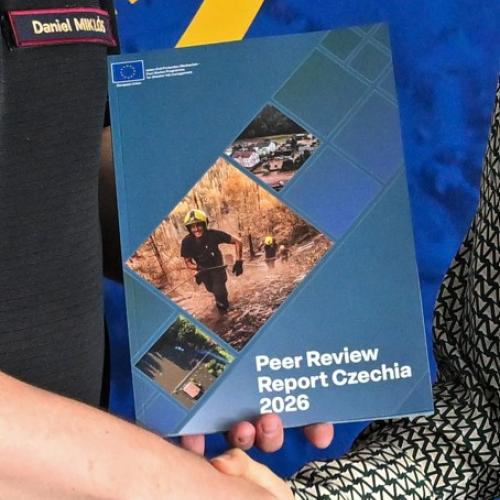
UCPM Peer Review Report handed over to the Czech Fire and Rescue Service

Published on

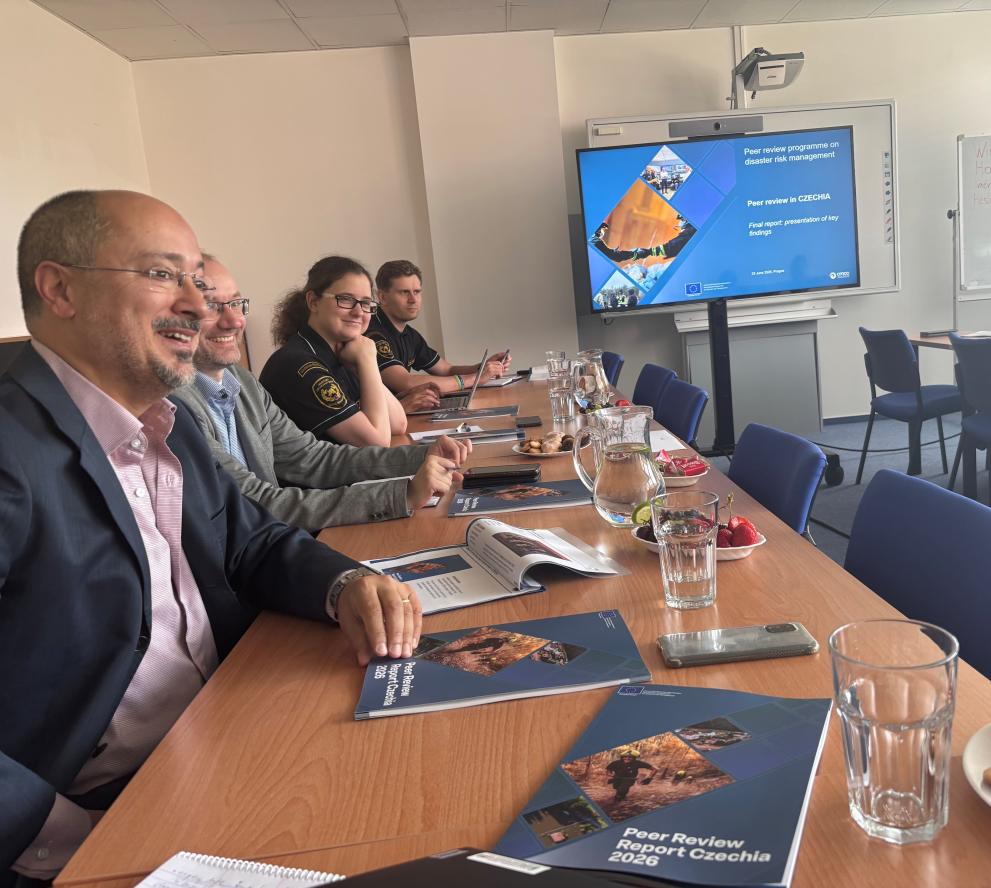
The peer review report of Czechia’s disaster risk management system was formally presented to the Czech civil protection and disaster risk management authorities on 25 June, during a workshop organised by the Fire and Rescue Service of the Czech Republic in Prague.

Wildfires
By Knowledge Network – Staff member

On behalf of the Fire Rescue Service of the Czech Republic, Daniel Miklós confirmed that a number of legal documents will soon be reviewed and the peer review report serves as a good knowledge base for some of the changes envisaged. These changes concern a new concept of population preparedness, revisions to the crisis management legislation, and strengthening civil-military cooperation. 

The event also included a presentation of the peer review report by one of the independent experts (‘peers’), Mr. Paulo Sacadura, head of the Risk and Planning Division at the National Authority for Emergency and Civil Protection of Portugal. This was followed by a presentation by Ms. Cristina Brăilescu, Team Leader at DG ECHO, who outlined the capacity-building tools available to support Czechia in implementing the recommendations. The event concluded with an open discussion, providing stakeholders with an opportunity to share feedback. 

Key findings  

  • The Czech emergency and crisis management system is well-structured and employs a dual approach to address both disasters and conflicts. Drawing on lessons learnt and regular evaluations, the system has undergone significant improvements to strengthen its framework in response to emerging risks and threats.
  • Cooperation between the Fire and Rescue Service and other authorities and stakeholders involved in disaster and crisis risk management is well established at both vertical and horizontal levels. In parallel, significant efforts have been made to strengthen population preparedness, leading to concrete progress in equipping communities to face current and future challenges.  
  • Many good practices have been identified in Czechia, such as the long-standing cooperations between the FRS and research institutions, the development of vulnerability and preparedness maps, the use of a Crisis Management Portal in some regions for sharing risk analysis among relevant authorities, the activity of an experiential education centre where children can practice appropriate behaviour in emergencies (World of Rescuers Karlovy Vary)opens in new tab  operated by an NGO and co-financed by the EU, and many others.   
  • The peers also shared good practices from their own countries, which are reflected in the report, such as the preparedness for businesses campaign in Sweden, the target for annual financing of civil protection and civil defence in Poland, the cell-broadcast alert system of Romania, and population preparedness initiatives in Portugal.  

  • A targeted revision of the legislative, institutional, and procedural framework is recommended to better address evolving risks, including hybrid and geopolitical threats, and to enable integrated crisis management across peacetime and wartime.
  • The national risk assessment should be regularly updated using a combined bottom-up, top-down, and horizontal approach, while adopting a multi-risk, all-hazard perspective that includes hybrid threats to better guide resource allocation. This could be coupled with enhancing transparency and accessibility through tools such as a public WebGIS platform, which would support wider dissemination of risk information.
  • Promoting population preparedness and awareness should be prioritised, replicating successful initiatives such as the Karlovy Vary ‘World of Rescuers’ model and introducing a dedicated ‘Population Preparedness Week’ to engage citizens, institutions, and the private sector. A training programme for the media could be developed as well.

Final report  

The report is now published on the Union Civil Protection Knowledge Network web site in English, and including an executive summary in Czech and a brief on the key messages of the report. 

Through the Peer Review Programme, the European Commission and its DG ECHO support EU Member States, UCPM Participating States, eligible third countries and the European Neighbourhood Policy (ENP) partner countries to review their disaster risk management (DRM) policies and practices by taking stock of strengths and weaknesses and putting forward recommendations to increase their effectiveness. 

Based on an independent analysis conducted by peers from UCPM countries, peer reviews are a strategic tool for strengthening resilience against disasters at the European, national, and sub-national level, with one of the main objectives to exchange knowledge.  

Last updated: 25 June 2026

More details on the analytical framework for conducting UCPM peer reviews and previous peer review reports can be found at: UCPM Peer Review Programme | UCP Knowledge Network.opens in new tab  

1 Like

About the author

The Knowledge Network – Staff member

The Knowledge Network editorial team is here to share the news and stories of the Knowledge Network community. We'd love to hear your news, events and personal stories about your life in civil protection and disaster risk management. If you've got a story to share, please contact us.

Sectors

Search & Rescue