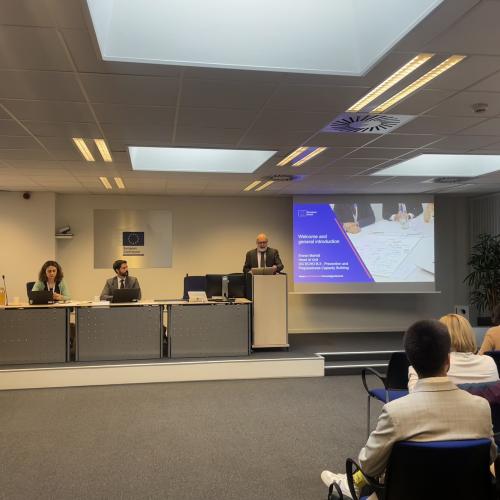
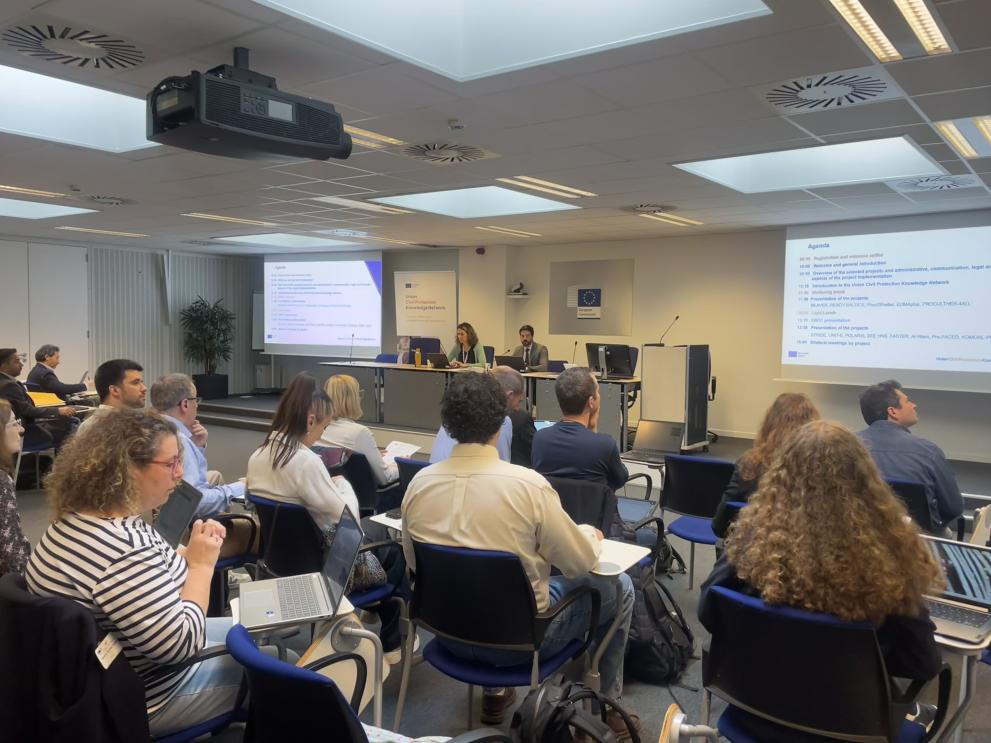
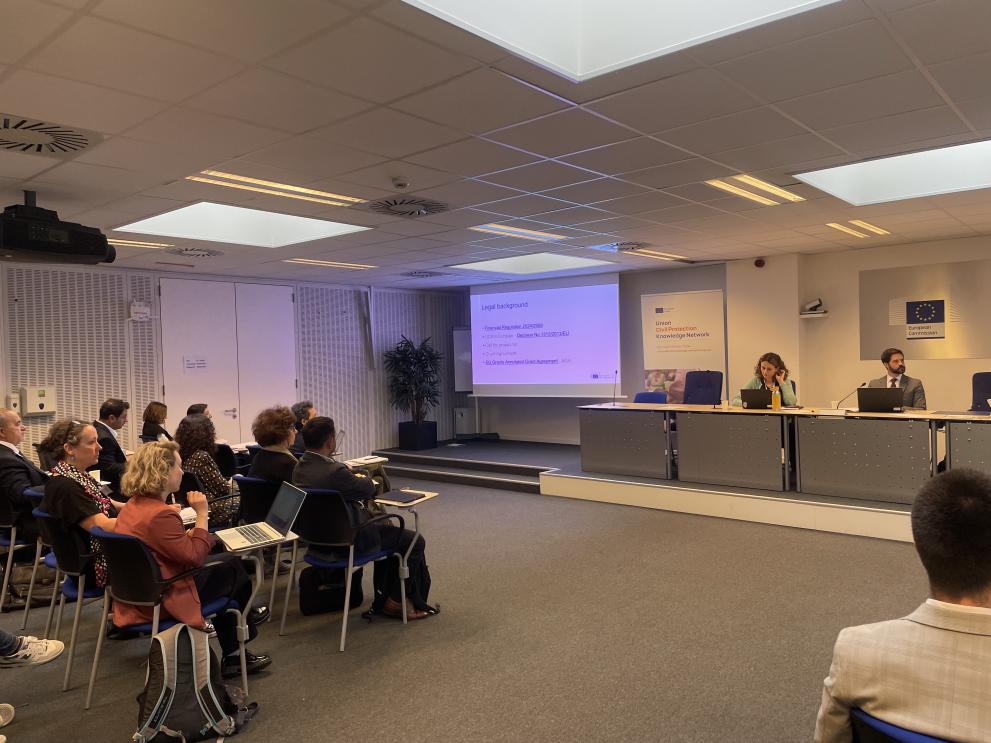
The 2025 awarded projects:
POLARIS :Strengthening Preparedness for Plastic Pellet Spill Emergencies in the Marine Environment
The POLARIS project seeks to strengthen institutional preparedness, response capabilities, and public awareness regarding environmental emergencies arising from plastic pellet spills in European regions. The initiative will enhance operational response through laboratory-based experiments and predictive modelling, develop comprehensive guidelines and digital tools to improve multi-stakeholder coordination, and deliver targeted training programmes for authorities, first responders, and journalists.
FASTER: First impact Assessment Systems and Tools for Earthquake rapid Response
FASTER will develop EU-wide Rapid Response to Earthquakes (RRE) tools to enhance disaster risk planning, early warning systems, and civil protection resilience. Aligned with key call priorities, these tools will provide scalable solutions to bolster the EU’s earthquake preparedness and response.
BEAVER : Bridging prEvention And preparedness in ciVil protEction with adaptation through inclusive proximity Resilience actions
The project aims to strengthen local preparedness by integrating small-scale, community-based adaptation with civil protection door-to-door outreach to promote preventive behaviours, fostering collective stewardship and protecting vulnerable groups.
PROCULTHER-4ALL: Protecting Cultural Heritage from the Consequences of Disasters for All
PROCULTHER-4ALL will expand the existing whole-of-government approach into a more inclusive and whole-of-society model for cultural heritage protection. This participatory approach aims to engage citizens, civil society, the private sector, and the scientific community, aligning with the Preparedness Union Strategy and enhancing cultural heritage protection within the Union Civil Protection Mechanism structures.
STRIDE: Strengthening International Civil Protection Preparedness for Defence Situations
The goal of the STIRDE project is to develop solutions for integrating lessons learned from armed conflicts and defence-related emergencies – at both organisational and individual levels – into existing structures to improve national and international civil protection preparedness for defence situations. By facilitating knowledge sharing and creating a common understanding of civil protection preparedness, the project addresses the emerging threat of armed conflict consequences for civil protection authorities.
UNIT-E: Ukrainian National Initiative for EMTs: Integrating Health Security and Civil Protection for a Stronger Emergency Response
UNIT-E aims to develop Ukraine’s first national emergency medical team (N-EMT) initiative, establishing a sustainable, multi-hazard N-EMT system and digital coordination tools. The initiative will integrate seamlessly with Ukraine’s health and civil protection systems while serving as a scalable model to enhance regional and global emergency response capacities.
Prep2Shelter: Prepare to Shelter - Strengthening Preparedness and Community Awareness for Natural Disaster Sheltering
This project seeks to increase the capacity of civil protection authorities to anticipate, plan for, and respond to emergency shelter needs during natural disasters, to co-develop a multi-criteria methodology and decision-support IT tool for shelter selection and preparedness planning. It incorporates vulnerability and psychosocial factors and validates the tools through local pilots in Portugal, Greece, and Iceland, covering earthquakes, floods, and volcanic activity.
AI-WARN: Holistic AI-driven Early Warning System for Climate-Induced Hazards in Critical Infrastructure and Civil Protection
AI-WARN develops an artificial intelligence-powered early warning system for climate hazards, integrating Copernicus On-Demand Preparedness Mapping and advanced technologies like remote sensing, unmanned aerial vehicles, Internet of Things (IoT), sensors, and AI analytics. To be tested in Belgium and Croatia, it aligns with call objectives by enhancing preparedness through targeted climate hazard monitoring and assessment solutions.
EUMAplus: Creating Open Access Digital Educational Material in Disaster Risk Management and Civil Protection
The EUMAplus project aims to create free, science-based educational resources for the public. With its outputs materials – including a Massive Open Online Course (MOOC), books and a podcast series – EUMAplus aims to contribute to building a culture of preparedness and resilience, in line with the EU Civil Protection Mechanism (UCPM) objectives. The initiative expands on the work of its predecessor, EUMA, by offering even more open-access content.
ODET: Open Decision-Making System for Enhancing Europe’s Preparedness and Response Capacities to ExTreme Wildfires
The objective of the ODET project is to develop easy-to-use tools for supporting decision-making of first responders during extreme wildfire events. By integrating real-time fire data, advanced research, and innovative, user-centered solutions, the project enhances wildfire management. The project will develop a set of capacity-building tools, including guidelines and training materials, to enhance the uptake of new science and knowledge by emergency managers.
SEE HNS: South-East Europe Host Nation Support
This project seeks to enhance cross-border cooperation in Host Nation Support among Bosnia & Herzegovina, Serbia, and North Macedonia. Through harmonisation of legal frameworks, capacity-building initiatives, and regional coordination mechanisms, the project aims to improve these countries' ability to manage international humanitarian aid flows during emergencies, aligning with EU standards. Key activities include Training of Trainers programmes, national training sessions, and regional simulation exercises.
Pre-FACED: Enhancing Preparedness Capacities for Multi-Hazard Effects through the Fusion of Geospatial and AI Technologies.
The project aims to enhance the emergency response capability of civil protection agencies for wildfires, floods, and combined events, while strengthening cooperation amongst EU countries. This will be achieved through the development of an operational remote sensing Geographical Information System (GIS)-based platform that serves as a preparedness decision support system for wildfires and floods.
KOMOAL-PREP: Preparedness and Prevention for Cross-border Wildfire Resilience in Kosovo[1]*, Montenegro, and Albania
KOMOAL-PREP aims to strengthen wildfire risk management and enhancing cross-border cooperation between Kosovo, Albania, and Montenegro. This border area is particularly vulnerable due to a combination of climate stress, socio-economic pressures, and institutional limitations. Despite the proximity and shared risks, the three countries operate with inconsistent fire risk assessments, outdated early warning systems, and limited joint response mechanisms.
READY BALTICS: Building Resilience through Disability-inclusive Civil Protection and Disaster Risk Management in the Baltic Region
READY BALTICS aim to show how disability inclusion strengthens disaster preparedness for everyone, turning resilience into a shared public good. The project works on three levels: improving risk awareness and personal preparedness among persons with disabilities, including those most at risk; equipping civil protection authorities with practical training to embed disability inclusion into policies, procedures, and urban resilience planning; and strengthening advocacy, technical expertise, and structured engagement with Civil Protection/Disaster Risk Management authorities.
[1] *This designation is without prejudice to positions on the status, and in line with UNSCR 1244/1999 and the ICJ Opinion on the Kosovo declaration of independence.