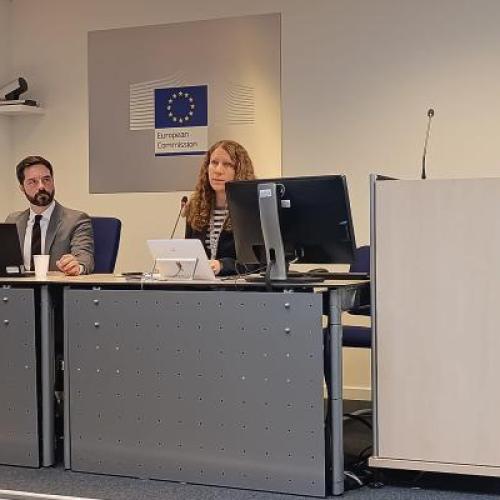
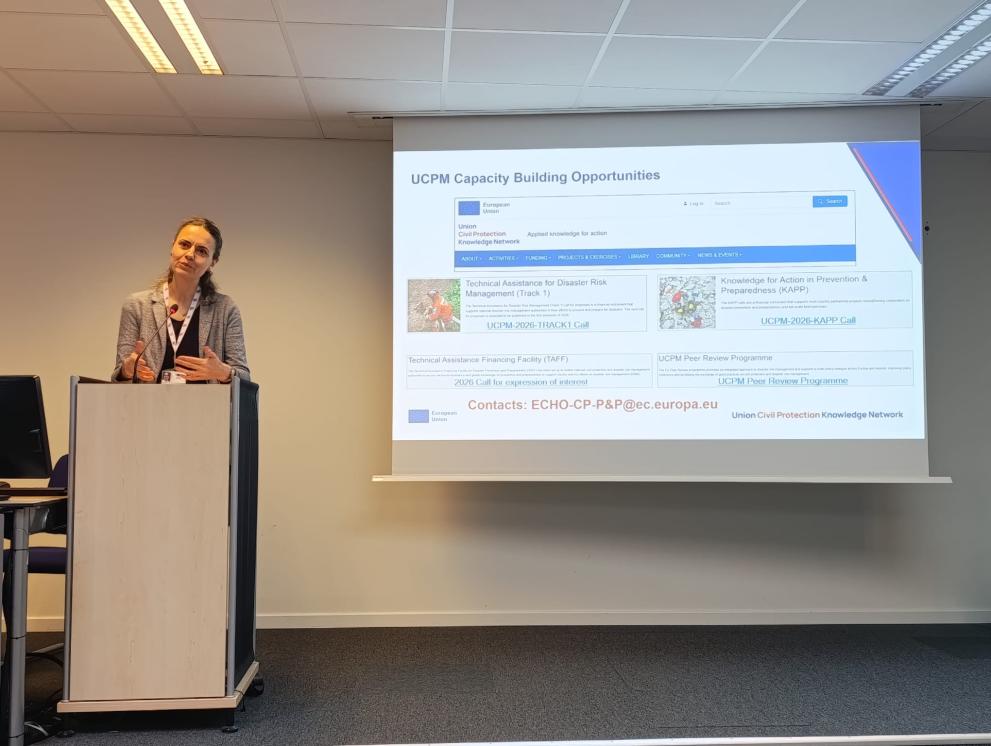
Countries participating in the event included Albania, Belgium, the Czech Republic, Germany, Finland, Iceland, Italy, the Netherlands, Norway, Romania, and Türkiye. Notably, this call marked Iceland’s and the Netherlands’ first successful awards under Track 1.
DG ECHO staff highlighted potential synergies between these Track 1 projects and other ongoing UCPM-funded projects. The session also addressed administrative, communication, legal and financial aspects relevant to implementation.
The kick-off meeting concluded with bilateral exchanges between DG ECHO project officers and technical desk officers and the projects’ representatives.
The awarded projects:
-AKRA-MERANDA (Türkiye): Akkuyu Nuclear Power Plant, Ports and SEVESO Facilities-Oriented Disaster Risk -Management in Mersin: Resilient Society, Resilient City.
AKRA-MERANDA aims to develop a multi-hazard-based integrated disaster risk management model for critical infrastructures located in Mersin - a region in Türkiye with a high disaster vulnerability hosting strategically significant and economically vital infrastructure. In addition, strengthens regional and cross-border security, directly supporting Türkiye’s disaster preparedness and the EU’s UCPM network.
-CAMPER SAFE (Türkiye): Disaster Risk Management Initiative for Campsite Safety
The CAMPER SAFE project aims to develop a multi-risk Disaster Risk Management approach for campsites, enhancing safety and resilience in the vulnerable Thrace region, in Türkiye. By combining scientific risk assessments, policy guidelines for disaster-safe campsite management, and capacity-building programmes, the project seeks to minimise hazards, improve early warnings, and empower stakeholders with critical preparedness skills.
-EICAD (Romania): Enhancing Institutional Capacity to Address Disaster-Related Displacement.
EICAD will develop a coherent policy and operational framework in Romania for the effective management of population displacement, and the development of a risk-specific Action Plan. In addition, the project will reinforce prevention and preparedness at the community level, particularly among vulnerable groups.
-HESTIA (Belgium): Strengthening the Host Nation Support in Belgium.
The project aims to strengthen Belgium’s preparedness to receive international assistance and to align the procedures with the 2024 updated EU Host Nation Support (HNS) Guidelines.
-HNS BRIDGER (Germany): Bridging Legal Frameworks and Practical Readiness in Host Nation Support.
The goal of HNS BridGER is to develop a robust German Host-Nation Support (HNS) system to effectively and efficiently integrate international assistance into Germany’s civil protection system, and to ensure transit of assistance when needed.
-OHNSIC (Iceland): Operationalising Host Nation Support in Iceland
This project seeks to operationalise and strengthen Host-Nation Support (HNS) capacity in Iceland following the 2024 EU HNS Guidelines. OHNSIC will establish functional coordination mechanisms among relevant actors, develop operational capacity at key entry points, and build sustainable HNS knowledge and capacity through trainings.
-CORE (Italy): Continuity for Resilience
The CORE project has the objective to strengthen the operational continuity of the Italian Civil Protection system by developing a structured, scalable, and multisector methodology based on recogniszed international standards.
-DRFC (Norway): Development of Regional Fire and rescue Capabilities and cooperation.
DRFC will enhance crisis management and decrease own vulnerability in Central Norway by developing an integrated framework that combines risk analysis, cross-sectoral cooperation, and scenario-based planning to strengthen disaster risk management. The project will also create digital tools to support decision-making and resource coordination.
-LOCAL-DRM 2 (Albania): Strengthening Disaster Risk Management Capability at Local Level 2
This project expands on the LOCAL-DRM project (2024–2025), which trained all 61 Albanian municipalities, by now institutionalising disaster risk management (DRM) through standardised national frameworks. In this second phase, it will develop and pilot a risk assessment and emergency planning toolkit in Kukës and Qarku Berat, create Albania’s first disability-inclusive DRM strategy with civil society partners, and launch a national awareness campaign with educational materials. This project ensures scalable, inclusive, and sustainable DRM solutions to strengthen Albania’s resilience.
-SIREN (Finland): Strengthening Public Warning and Civil Protection
The SIREN project will upgrade the Finland’s 112 Suomi app to include real-time mobile alerts for airborne (military) threats, filling gaps in the current siren-based system. This faster, nationwide warning solution can later expand to cover risks like wildfire smoke or toxic gases, supported by a public awareness campaign to ensure effective use.
-BRIDGE-IT (Italy): Building Resilience to Increase Disaster management Governance and Emergency preparedness.
BRIDGE-IT will adapt Italy’s emergency strategy in line with EU guidelines, enhancing emergency and crisis governance system, stakeholder preparedness, and societal resilience amid growing natural, human-made, and geopolitical threats. It leverages peer insights, national priorities, and an all-hazards approach to strengthen response capabilities.
-FIRESKILL (Czech Republic): Firefighting Innovation, Resilience and Education
FIRESKILL will enhance Czech wildfire training by adapting Southern European best practices into a standardiszed national curriculum, incorporating advanced technologies and methodologies from Spain, Portugal, and France to ensure EU-aligned, high-quality instruction for all firefighter levels.
-RECOVERY-GUIDE-NL (The Netherlands): Towards national guidelines on recovery, a whole-of-society approach to strengthen resilience in The Netherlands.
RECOVERY-GUIDE-NL has the goal to strengthen the national strategic framework for disaster risk management with the development of a National Guideline on disaster/crisis recovery within five categories of recovery: basic relief, information provision, emotional and social support, practical support, and health care.