Term usage (57)

Modelling harbour waters for pollutant dispersion risk is considered a fundamental activity in the PROMPT project.
And then we forge ahead to modelling the dispersion of HNS and Oil spills in order to determine their volatility status.

Under this activity, PROMPT is dedicated to unveil a comprehensive assessment of water and air pollution.
Under this task, oil spills at sea shall be detected by means of remote sensing analysis of satellite data.
Under this task, thanks to the satellite, the team develops and employs a detection mechanism for floating containers, based on satellite imagery.
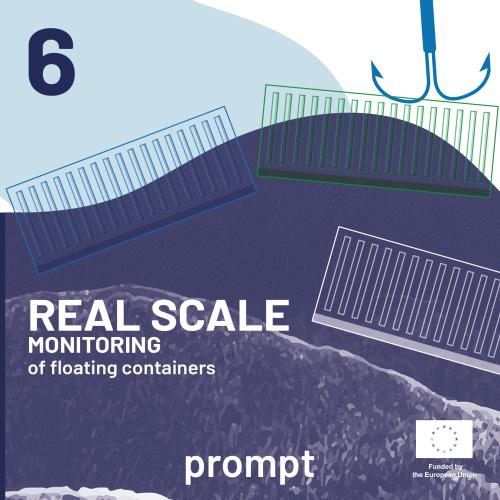
This task is a close complement to the previous task-05 (Detection of floating containers through satellite images).

Task 07 is one of the main important tasks of the project, which is designed to upgrade the communication tool-Decision Support System (DSS).
Task-08 is reserved for the training of end users and evaluation on the Decision Support System (DSS) and the floating container loss detector.

This study proposes an innovative system for the detection of volatile chemical substances aimed at mitigating risks for people and first responders.
The aim of Arctic REIHN is to test, verify and further develop emergency preparedness and response in the case of a nuclear or radiological accident.
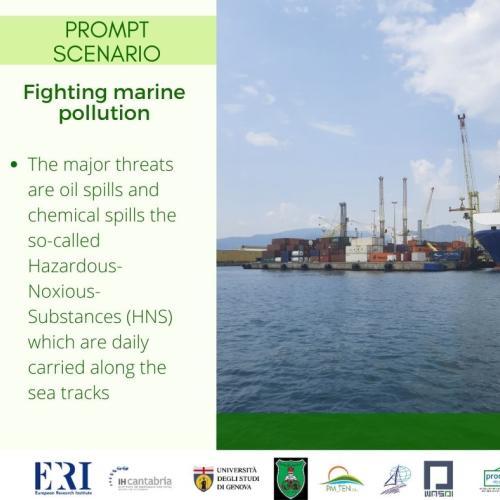
Fighting marine pollution is a priority to safeguarding the environment.


Information brochure from the Norwegian Directorate for Civil Protection with advice on emergency preparedness.
Guidelines and manualsBiologicalChemicalEnvironmentalExtraterrestrialGeohazardsMeteorological & HydrologicalMulti-hazardSocietalTechnologicalPreparednessNorwayEducation & TrainingRisk awareness & communicationChanging security landscapeClimate changeEnvironmental degradationTechnological developments

This worksheet presents a specific operational scenario, in this case gas leaks from a tank wagon.

The fourth out of six specialised workshops will focus on Technological Hazards and Crisis Management.
The aim of this thesis is to observe the general effectiveness of a mass decontamination using only water.
The Sustainable Development Goals (SDGs) are a collection of 17 interconnected global goals set by the United Nations General Assembly in 2015.

Croatia, France, and Poland have joined Finland in hosting the rescEU stockpiles worth in total €545.6 million.
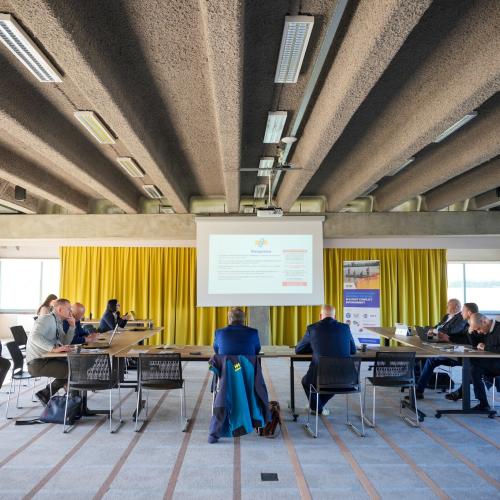
The CROSSFLOOD Post-Conflict Threats Awareness Workshop took place in Valkenburg, The Netherlands on 6-7 May 2026.

The CROSSFLOOD consortium gathered in Bucharest to meet with the main stakeholders from Suceava County, the location where the FSX will take place.
This learning material provides essential information on tactical procedures during CBRN incidents.
EMBRACE (Pan-European Management of Biological toxin incidents through standardization initiatives for Crisis response Enhancement) is a forward-think
Practical training of the FDDO in the field of CBRN with focus on decontamination procedures of vulnerable population incl. their assistive devices
- Organiser
This work proposes the integration of chemical sensors with solid-phase microextraction fibers (SPME) on unmanned aerial vehicles (UAVs).

Case studies on exposure to chemical products and the availability of information on the products